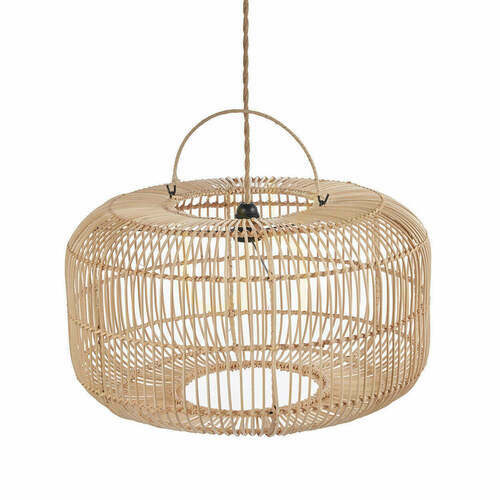
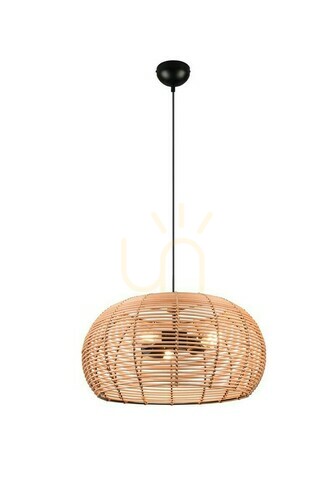
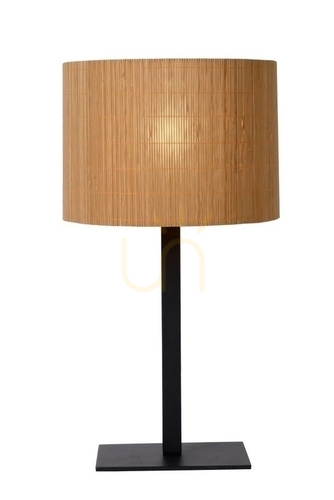
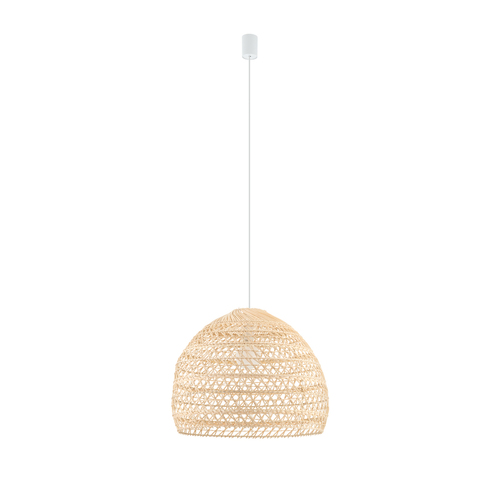
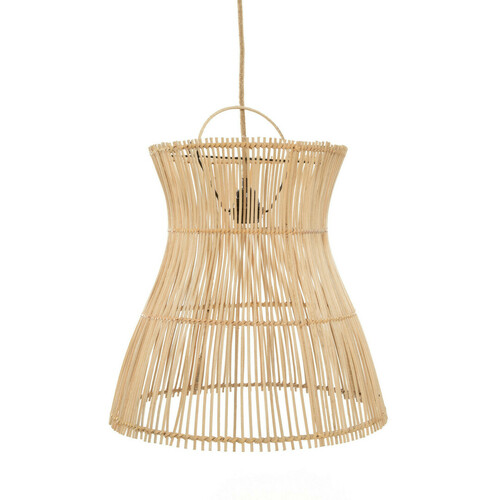
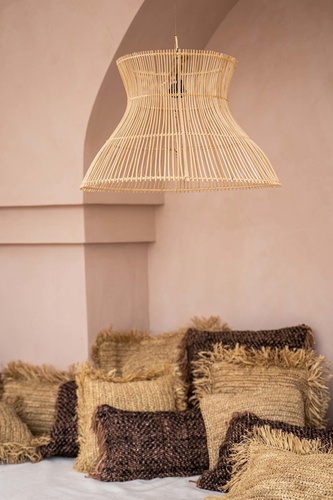
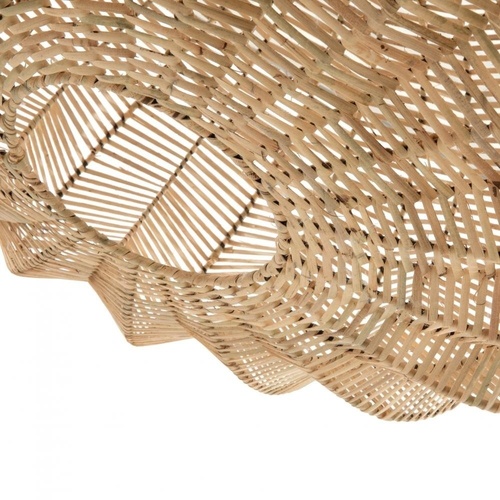
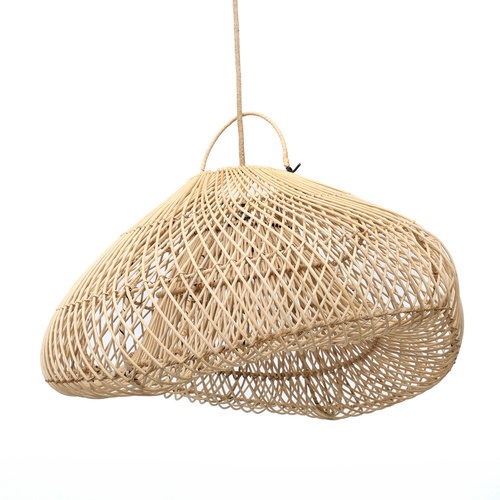
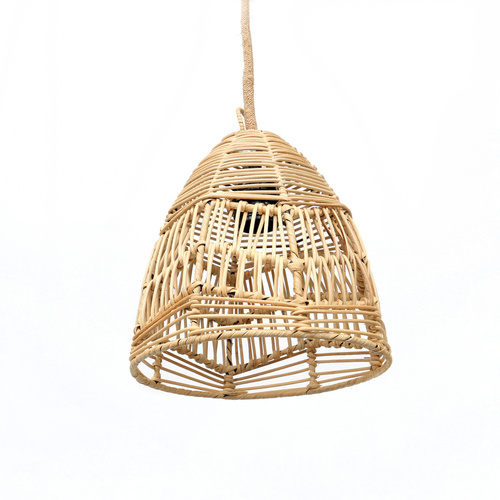
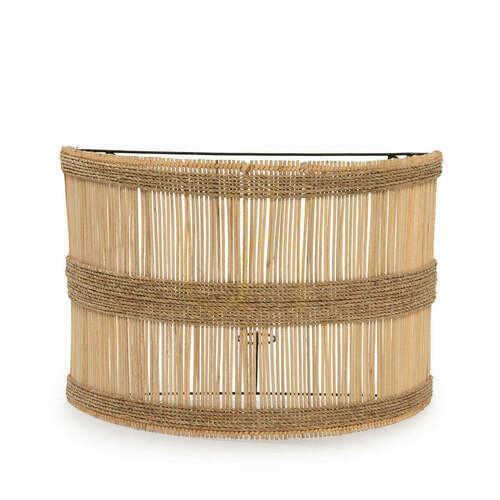
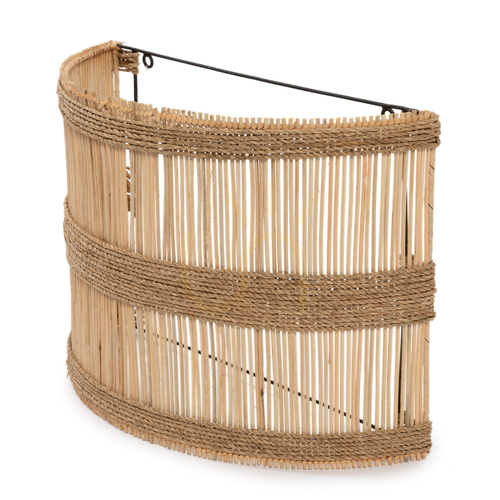
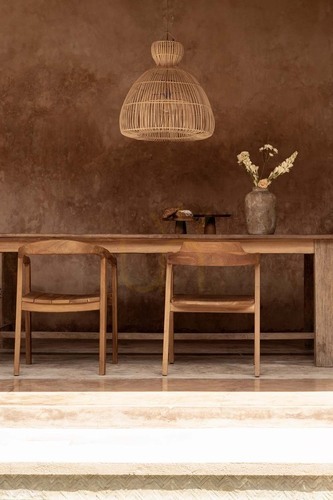
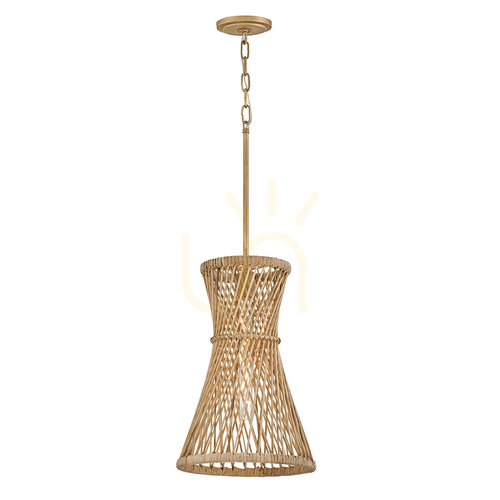
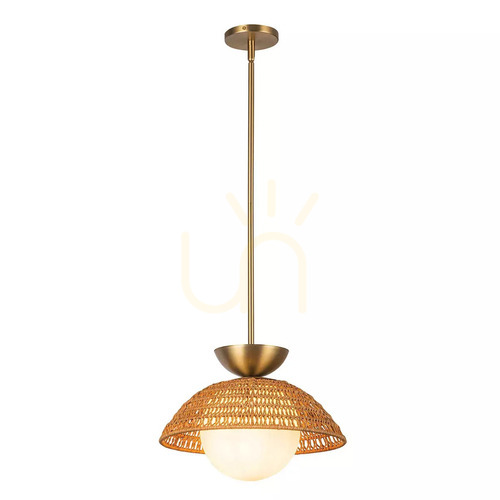
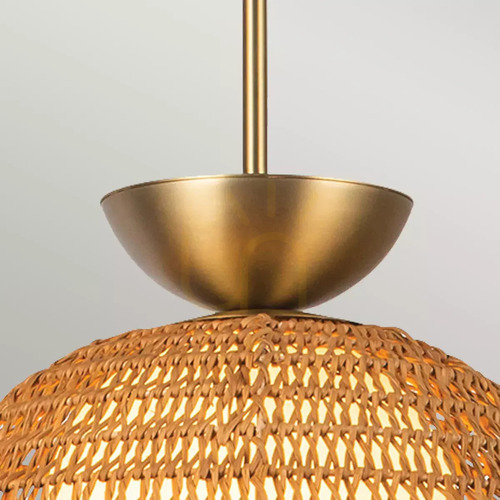
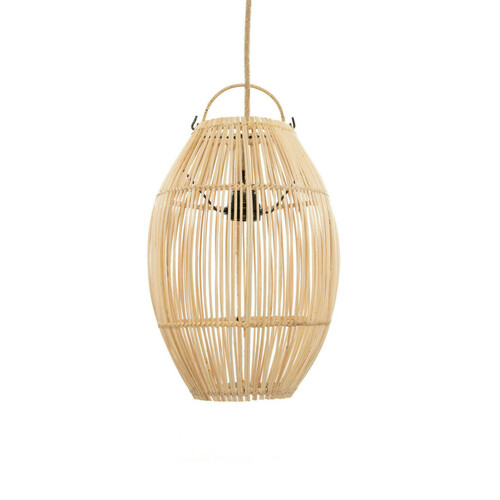
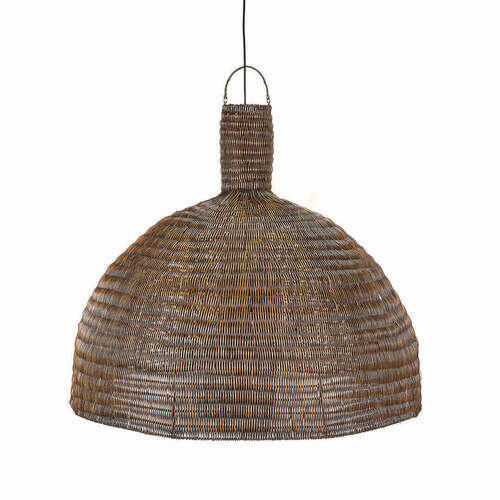
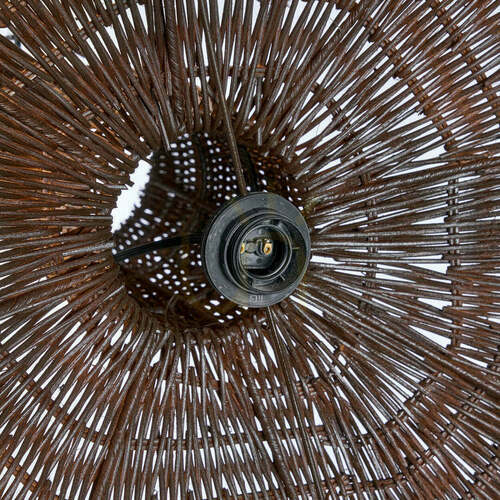
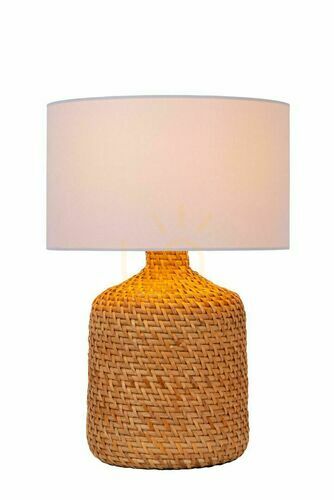
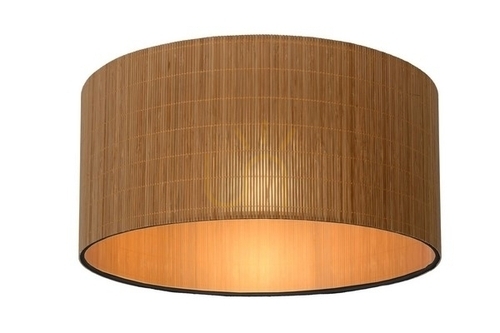
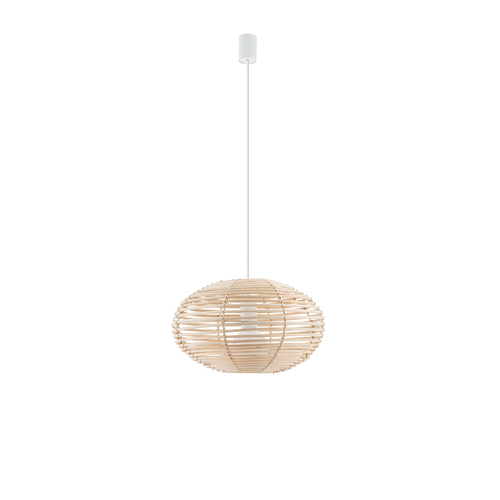
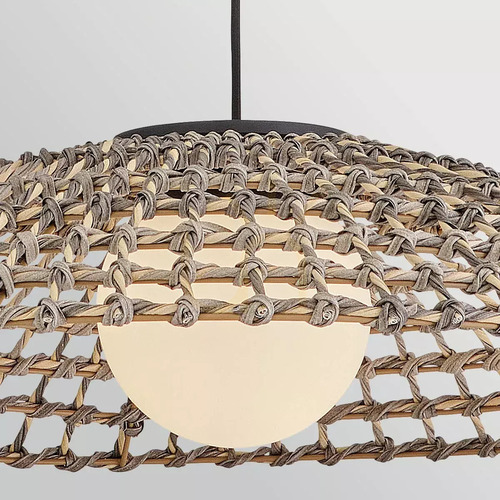
A rattan lamp is any light whose shade is woven from rattan cane, the stems of a climbing palm, so the bulb glows through a natural lattice rather than through glass or fabric. Indoors that gives you warm, textured light and a pattern of shadows on the walls, and the choice comes down to weave, shade size and the bulb you put inside.
Are rattan lamp shades safe?
It is the question people ask first, and the honest answer is yes, used sensibly. Rattan is a plant fibre, so it will burn if it gets hot enough. Modern LED bulbs run cool enough for that not to be a worry, provided you stay within the maximum wattage printed on the fitting and leave a gap between bulb and weave. The risks come from old-style incandescent or halogen bulbs, a shade that has slipped against the bulb, or a large shade squeezed onto a lampholder meant for something smaller.
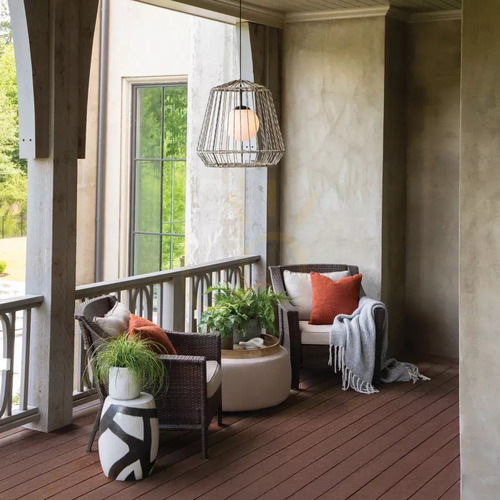
Natural rattan is also an indoor material. Most rattan fittings are rated IP20, which means dry rooms only: no bathrooms, no open porches. If you want the look outside, choose a fitting sold for outdoor use under cover, or synthetic polyrattan.
Rattan, wicker, cane, seagrass: what is the difference?
Rattan is the raw material: solid, bendable stems from palms native to tropical South-East Asia. Cane is the thin outer skin stripped from those stems and used for fine work such as the hexagonal Vienna weave. Wicker describes the weaving technique rather than a fibre, and in the UK it often means willow. Seagrass, bamboo and jute look similar on a shelf but behave differently: bamboo is stiffer, seagrass softer and darker. Rattan holds a large shape without a metal frame, which is why the big statement pendants are usually rattan.
Shades are usually woven by hand, so expect small variations in colour and weave from one piece to the next. Natural rattan also darkens slowly to a deeper honey tone over the years.
Choosing size, weave and bulb
| Where |
Typical shade size |
Weave |
Practical note |
| Living room, average UK ceiling of about 2.4 m |
45–60 cm pendant |
open, for shadow pattern |
keep at least 2.1 m clear underneath where people walk |
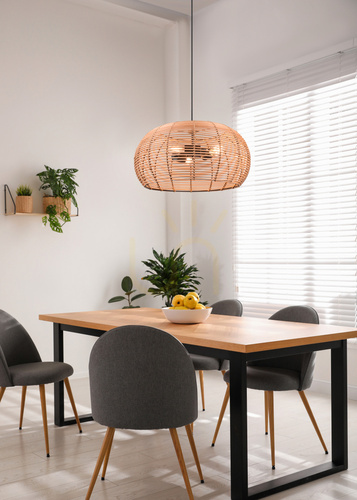
| Over a dining table for 4–6 |
40–60 cm, or two or three 25–35 cm |
open or medium |
bottom of the shade roughly 60–80 cm above the table |
| Bedroom |
35–50 cm pendant or flush fitting |
dense, or with a fabric liner |
no bare bulb visible from the pillow |
| Table lamp on a bedside or sideboard |
20–35 cm |
any |
check the lampholder: E27, E14 or B22 |
| Floor lamp beside a sofa |
35–50 cm |
medium |
a brighter bulb if you read under it |
Warm white LED at 2700–3000 K suits rattan best, bringing out the honey colour of the cane. Cooler 4000 K light makes it look grey. With an open weave you will see the bulb, so pick an opal (frosted) bulb or a decorative filament one.
One UK-specific check: many rattan fittings made for the European market take a screw-in E27 bulb, while a lot of British pendant sets and lamp bases use the bayonet B22. Before ordering a bulb or a replacement shade, look at the lampholder and the size of the shade ring.
Fitting a rattan pendant
If you already have a pendant flex and lampholder hanging from a ceiling rose, you can often fit a rattan lampshade yourself: the shade ring sits over the lampholder and the shade screws or clips in place. Heavier shades need a ceiling hook or a fitting rated for the weight. Replacing the whole fitting means working on the lighting circuit, which is a job for a qualified electrician working to BS 7671.
Care and placement
- Dust with a soft brush, or a vacuum on low power with the brush attachment.
- Wipe marks with a cloth that is barely damp, then let the shade dry. Never soak it.
- Keep it away from steam, direct sunlight, which fades the fibre, and the hot air right above a radiator, which dries it until it cracks.
- In a small room, two smaller pendants at different heights often look lighter than one oversized shade.
Rattan lamp FAQs
What counts as a large rattan lampshade, and how large is too large?
Large shades usually start at about 60 cm. Under a standard 2.4 m ceiling, anything above 70 cm tends to dominate unless it hangs over a big table or sits in an open-plan space.
Can I put a rattan lamp shade on a table lamp or floor lamp?
Yes, if the shade has the right fitting for your base (a shade ring for the lampholder, or a harp or spider fitting) and enough room around the bulb. Measure the ring diameter before buying.
Is a rattan lamp shade a good choice for a bedroom?
It is one of the cosiest options. Go for a tighter weave or a lined shade so the bulb does not glare when you lie down, and a warm 2700 K bulb.
Are rattan lamps suitable for a child's room?
Yes, they are light and do not shatter. Hang pendants out of reach, keep table lamps stable and away from beds where they could be knocked over, and use LED bulbs only.
How do you make a rattan lamp shade?
Cane is soaked to make it pliable, then woven over a mould and left to dry. It is a craft that takes practice; for the electrical part, always use a ready-made, certified pendant set.
Can a rattan lamp go in a bathroom or conservatory?
Not in a bathroom. A dry, well-ventilated conservatory is fine for an indoor-rated fitting, as long as it is out of strong direct sun.
Prefer the look on a bedside or sideboard? See rattan table lamps. For lighting the rest of the home, start from indoor lights.