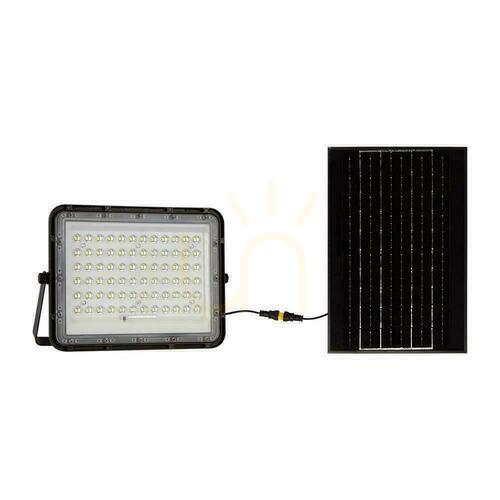
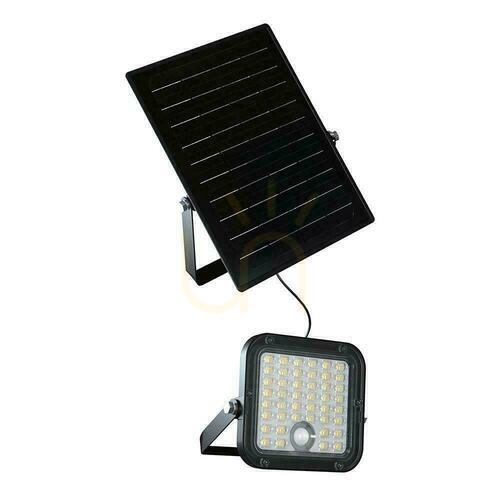
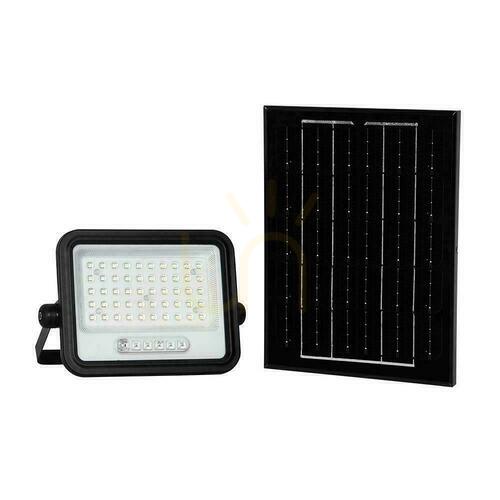
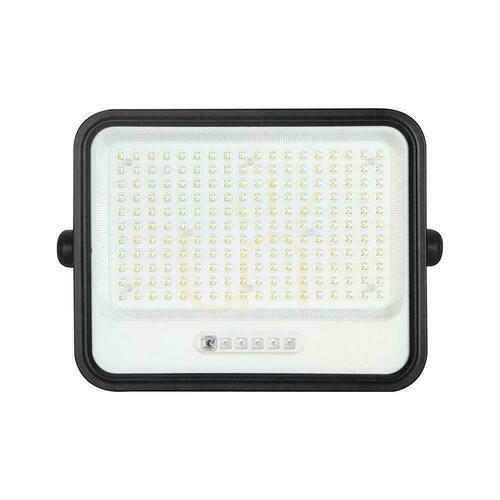
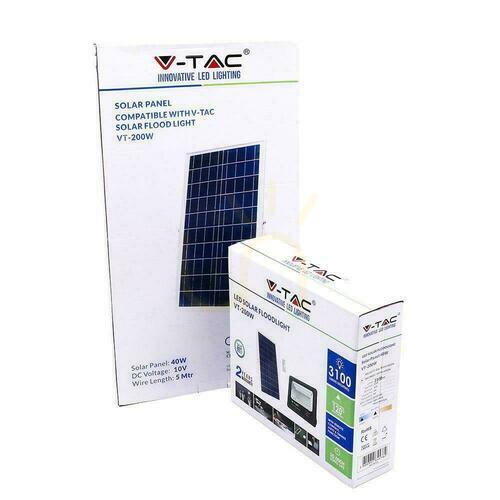
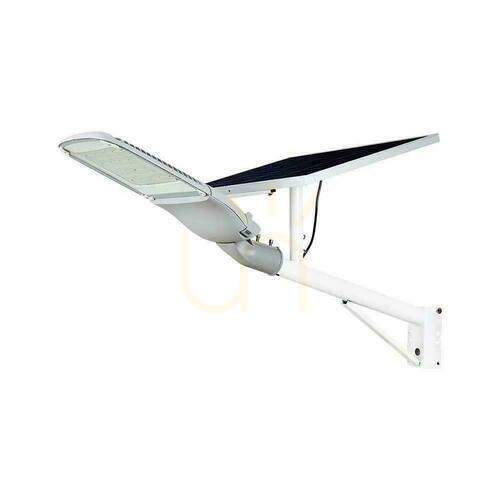
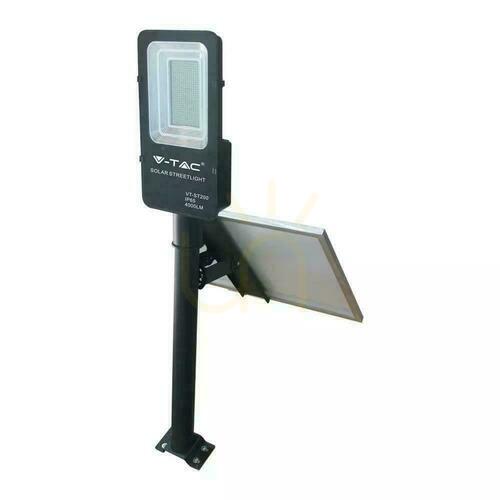
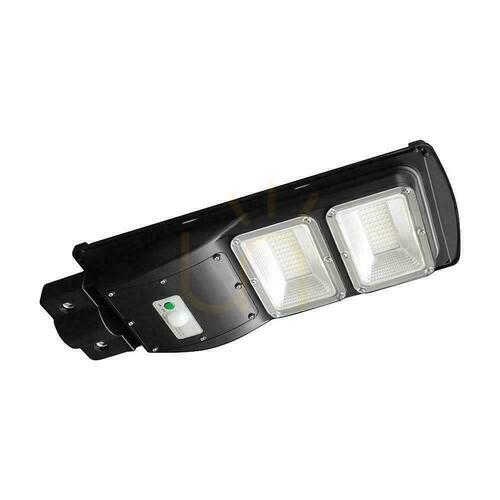
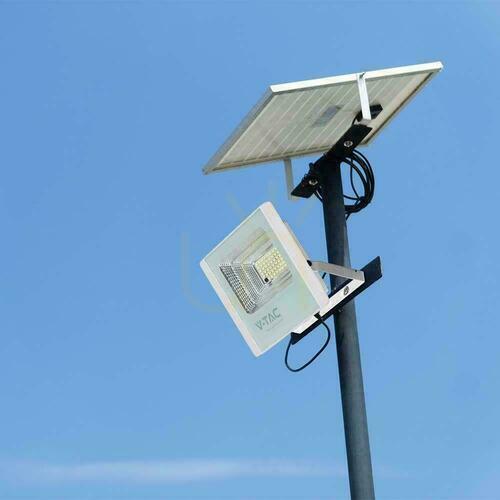
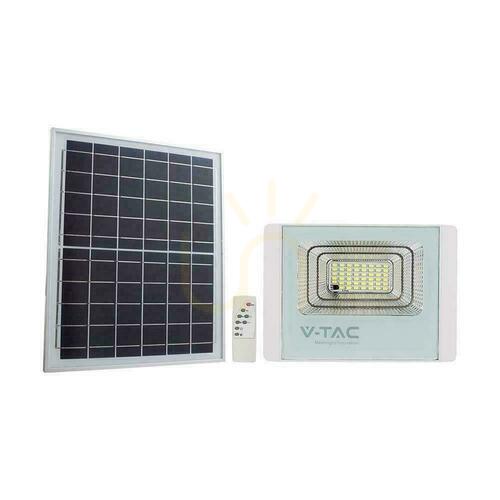
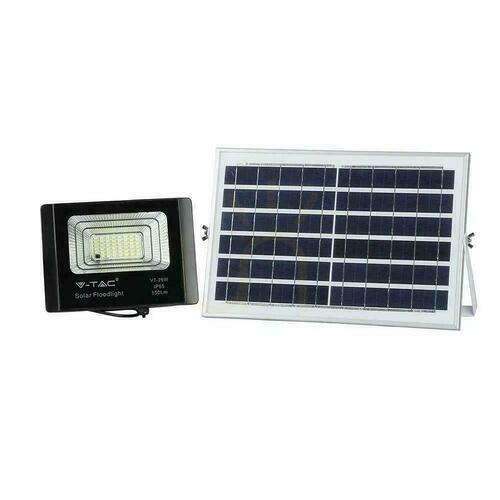
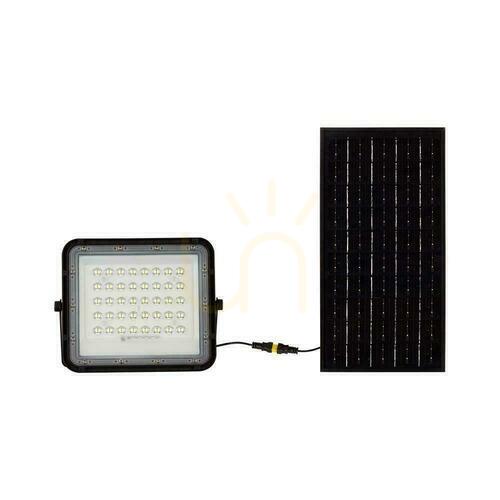
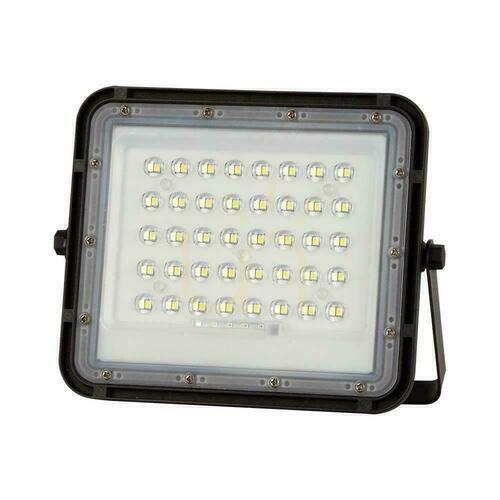
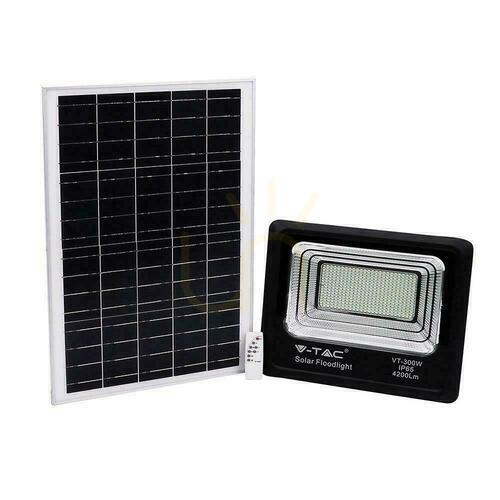
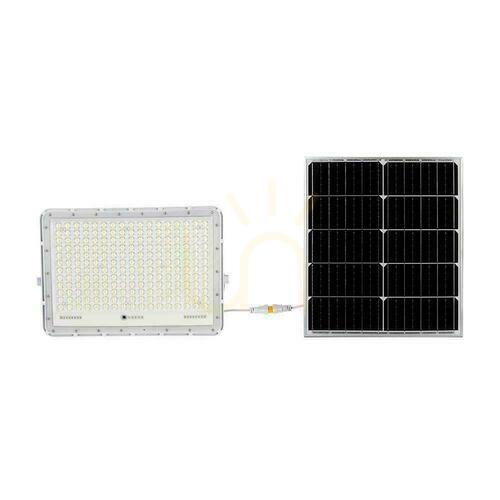
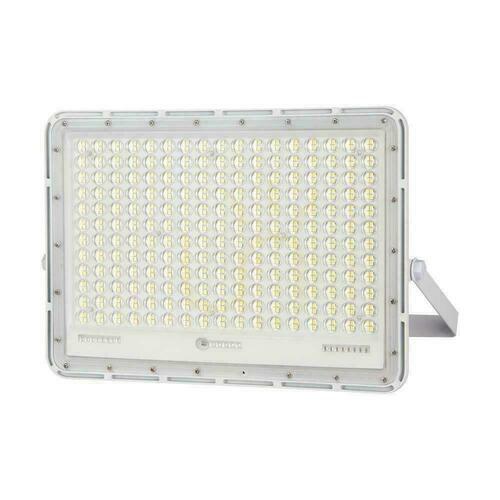
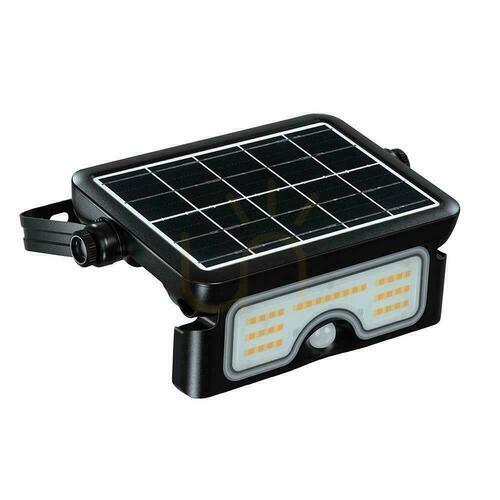
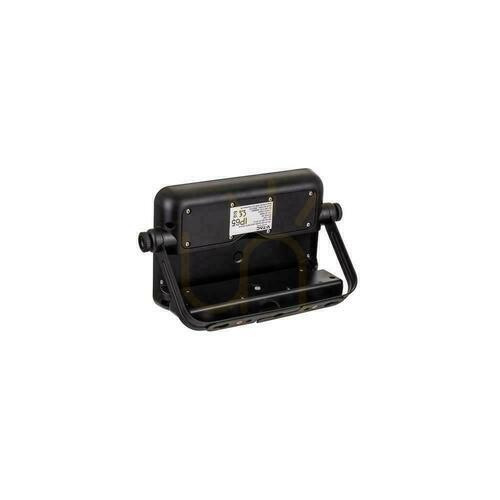
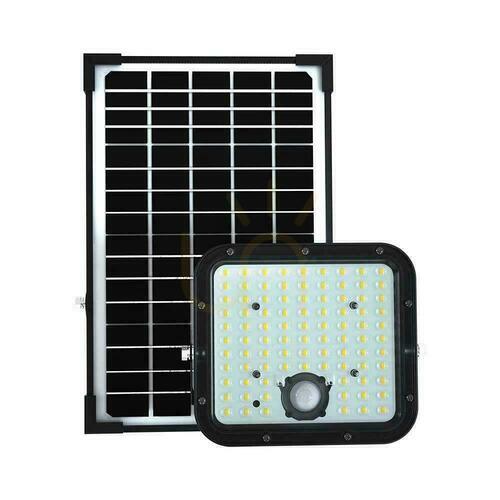
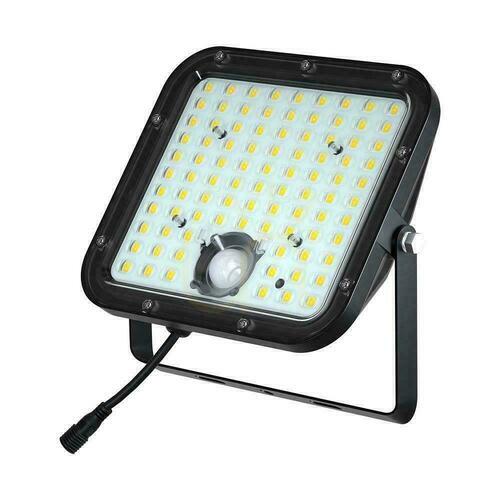
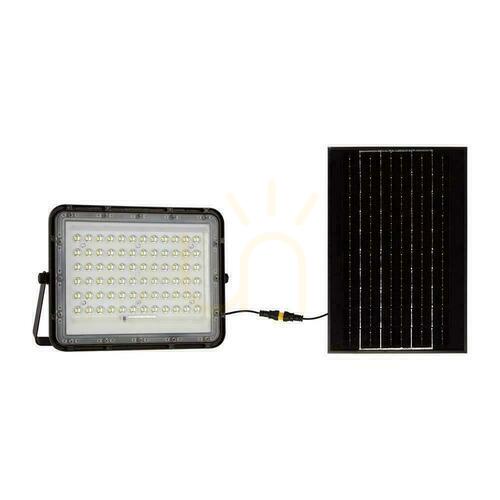
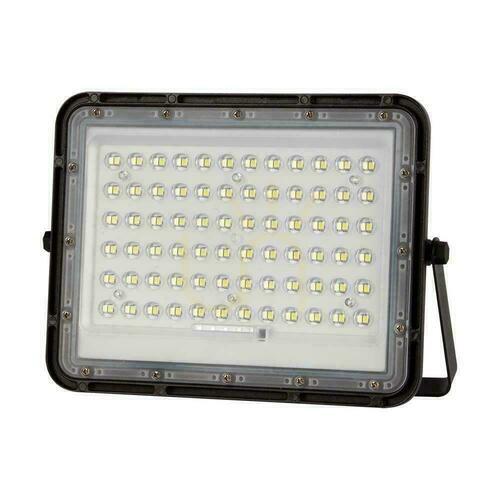
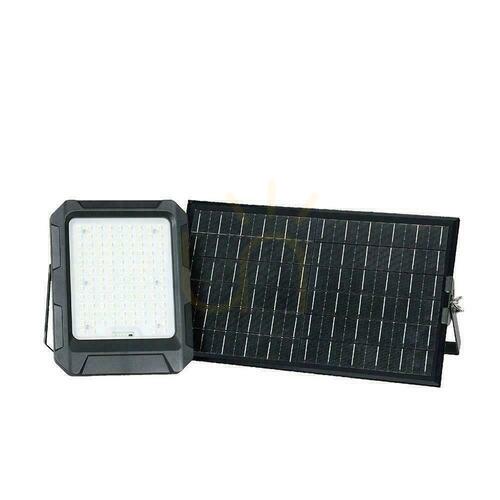
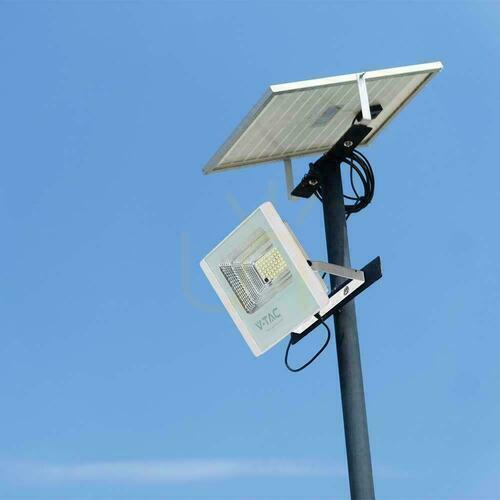
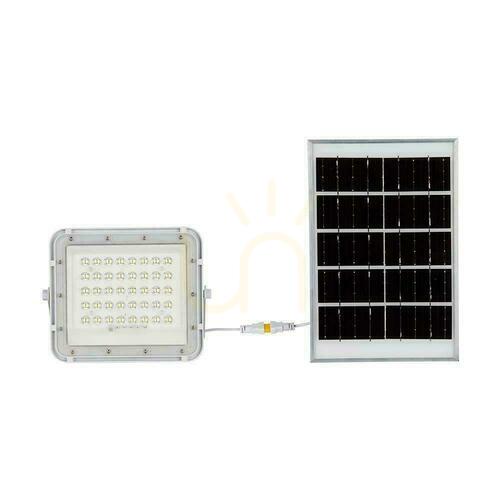
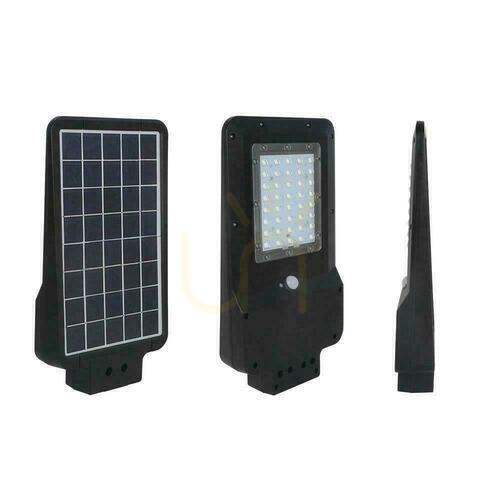
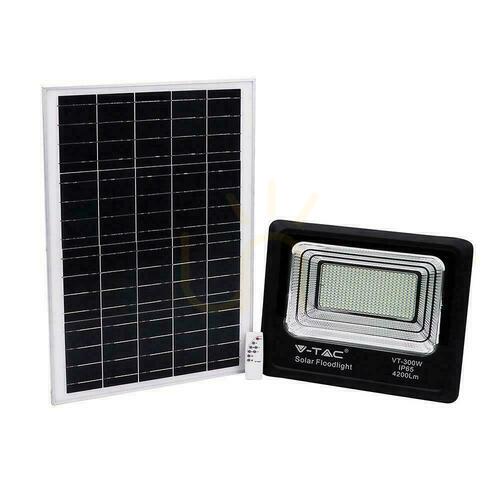
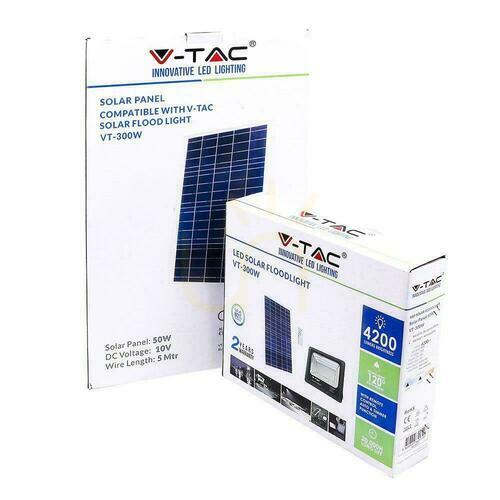
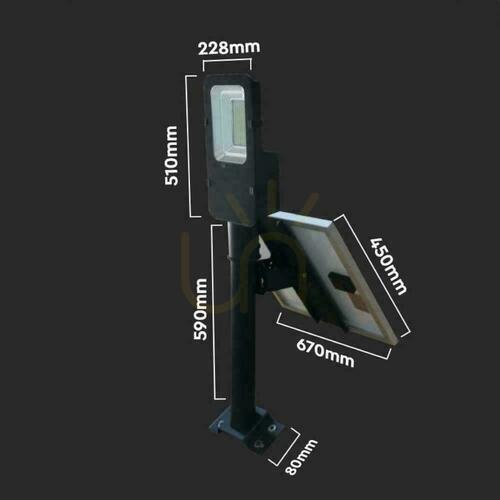
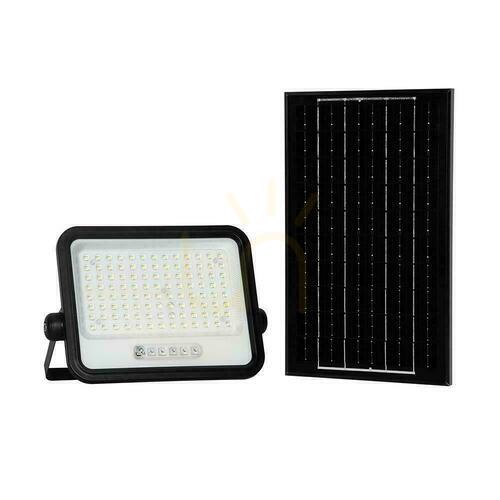
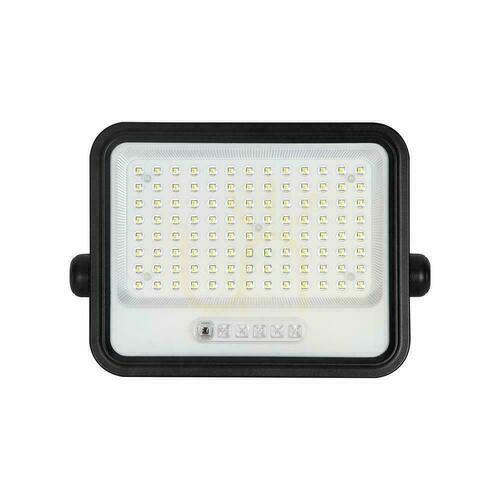
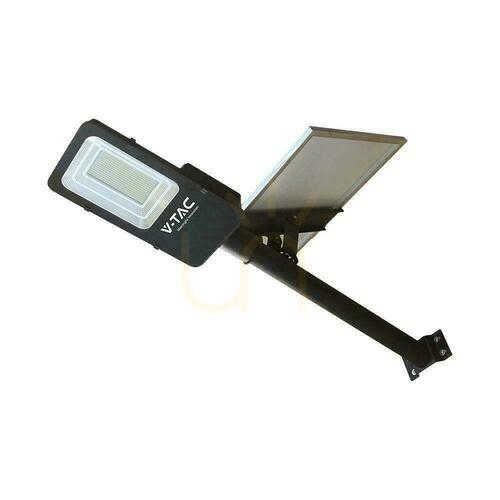
Solar flood lights are the easiest way to light a driveway, shed or log store without running an armoured cable across the garden. The panel charges a battery during the day and the light switches on by itself at dusk. Our range has nearly 100 V-TAC models, and almost every one is rated IP65, so heavy rain is not a problem.
Choosing the right solar flood light
Sunlight on the panel matters more than the LED wattage. A bright head with a small panel will run flat within an hour on a December evening.
| Use |
Typical light output |
Tip |
| Path, gate, steps |
200–500 lm |
a dusk-to-dawn sensor is enough |
| Front door, patio |
500–1,000 lm |
a PIR sensor stretches the run time |
| Driveway, yard |
1,000–3,000 lm |
separate panel on a lead, facing south |
- In the UK, face the panel south at roughly 35–45° for the best year-round charge.
- Winter brings only a few useful hours of daylight, so motion-activated mode beats all-night lighting.
- A remote panel lets you mount the light under the eaves while the panel sits in full sun.
Housing and colour temperature
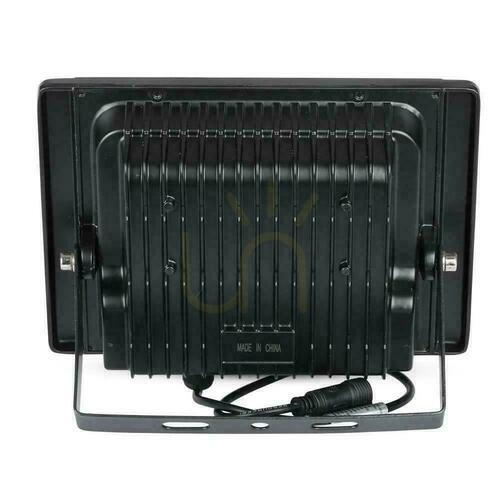
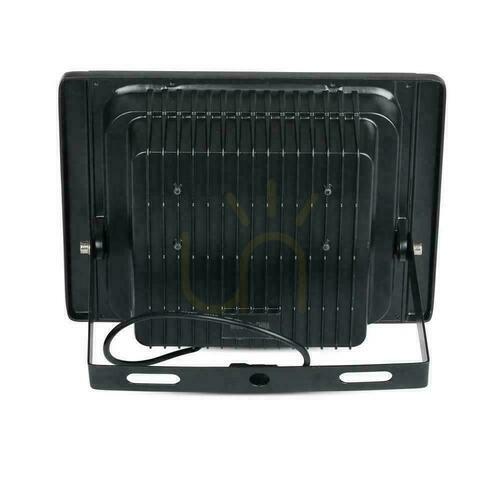
Most models have an aluminium body, many finished in black; some are polycarbonate. Neutral white at 4000–5000K is practical for yards and workshops, while 3000K warm white suits a garden. Tilt the head 10–15° further down than feels natural – it lights the ground better and keeps glare out of the neighbours’ windows.
Frequently asked questions
Do solar flood lights work in winter?
Yes, but for shorter periods. Short, grey days only partly charge the battery.
How long do they stay on?
In summer, usually all night on a dimmed setting. Actual run time depends on battery capacity and brightness.
Do I need an electrician?
No. They run at low voltage from their own battery, so a drill and wall plugs are all you need.
Prefer mains power? See our LED floodlights.