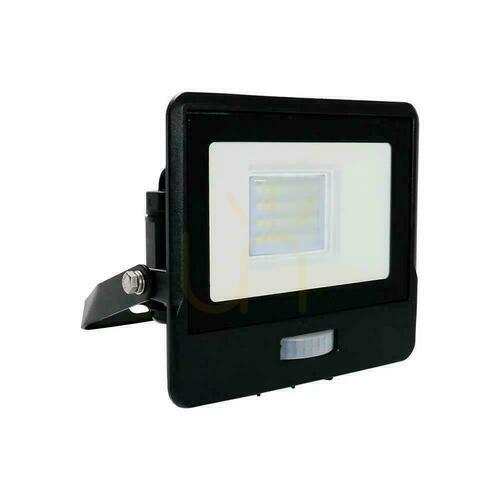
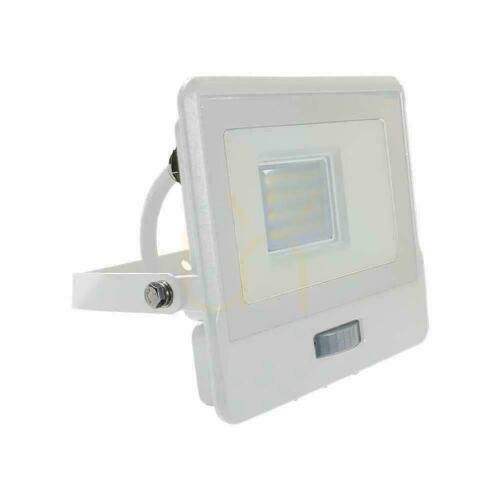
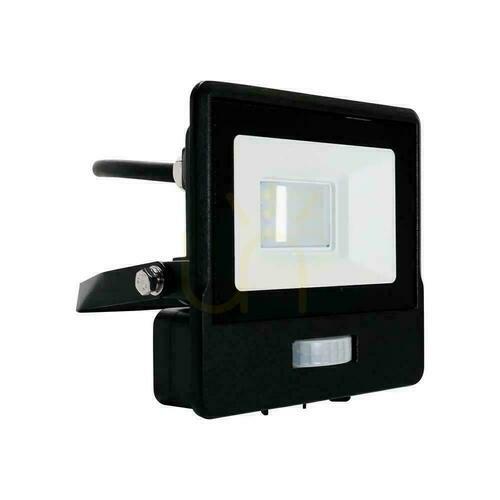
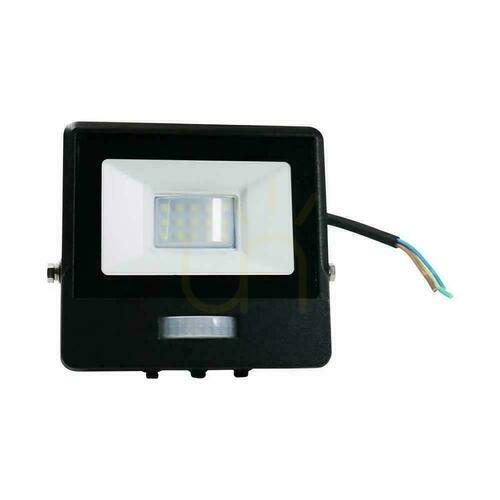
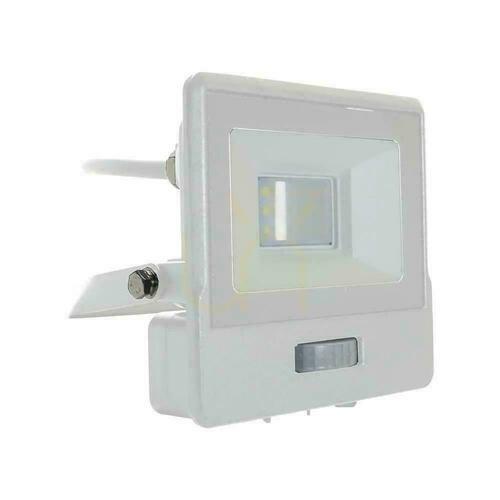
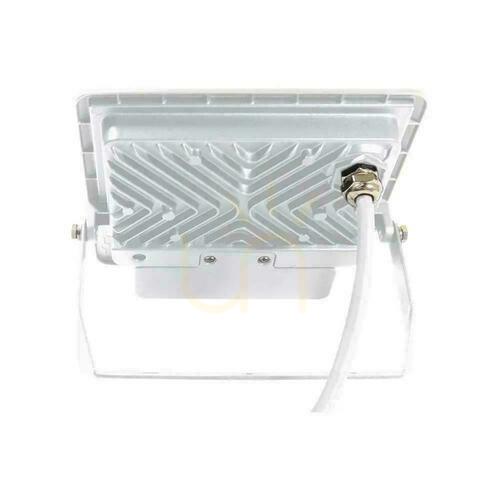
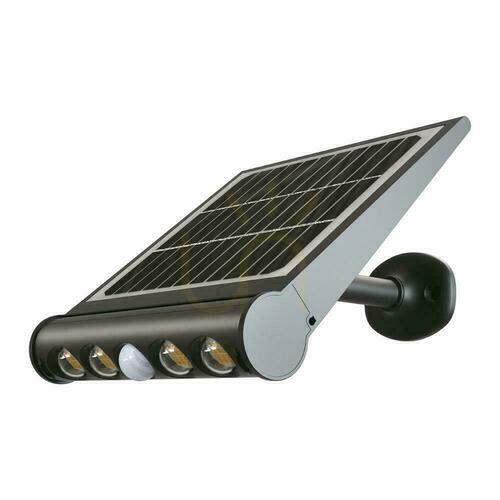
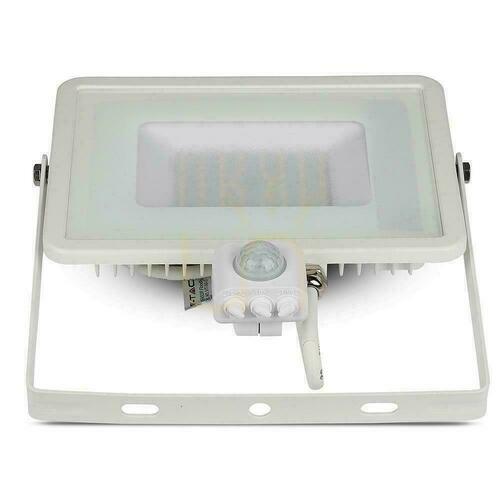
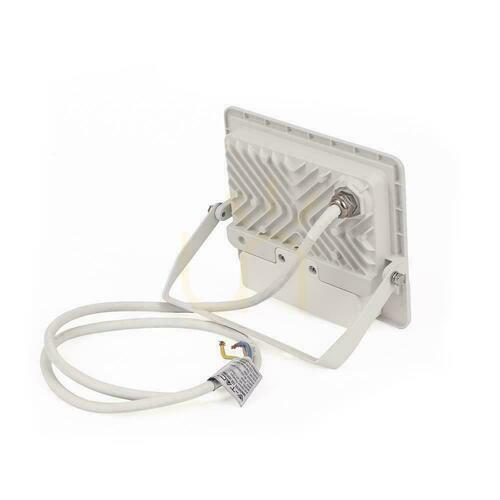
A PIR floodlight is a directional outdoor light with a passive infrared sensor that switches it on when someone moves within range and off again once the timer runs out. The twist with an aimed light is that you are setting up two things at once – where the beam lands and what the sensor watches – and on a house wall those are rarely the same spot.
Get both right and the drive, side passage or back door lights up as you reach it, not after you have fumbled for your keys in the dark.
Where the sensor sits makes the difference
Outdoor spotlights and floodlights with a PIR come in a few distinct layouts, and the right one depends on the wall you are fixing to:
-
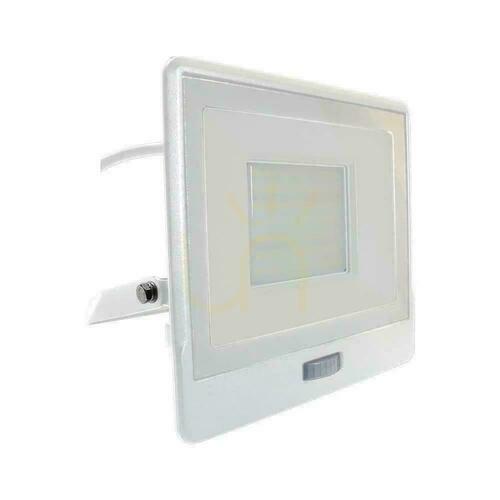
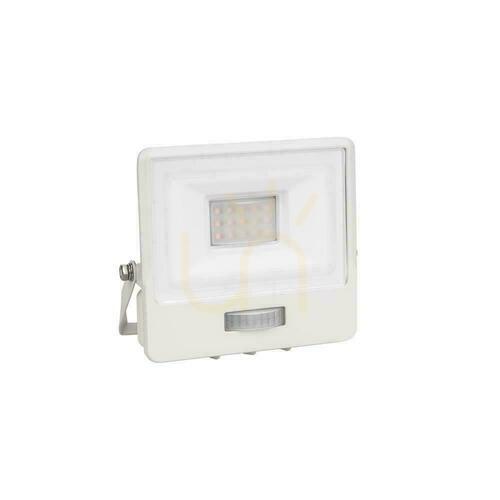
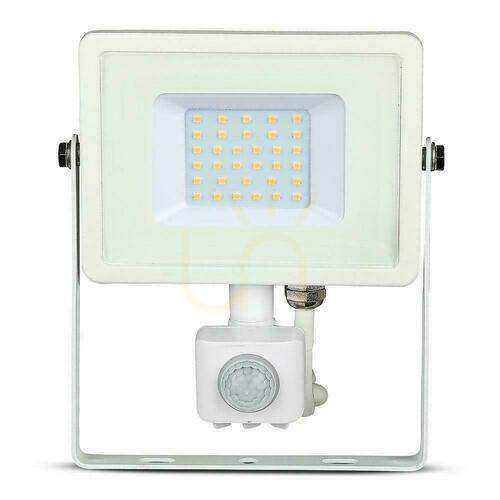
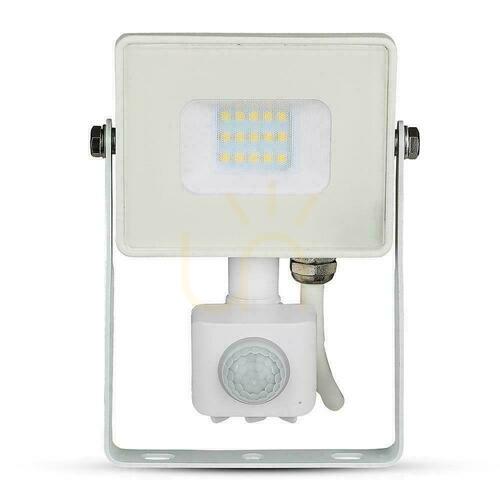
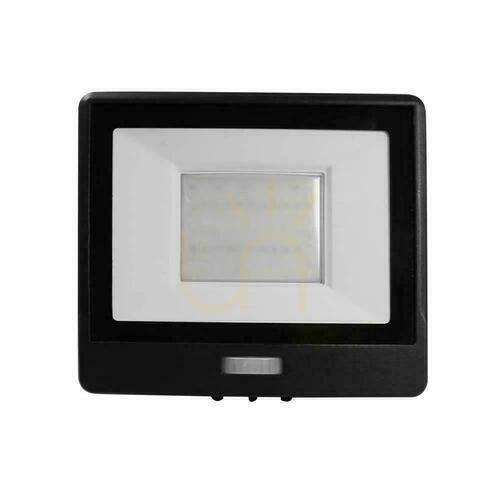
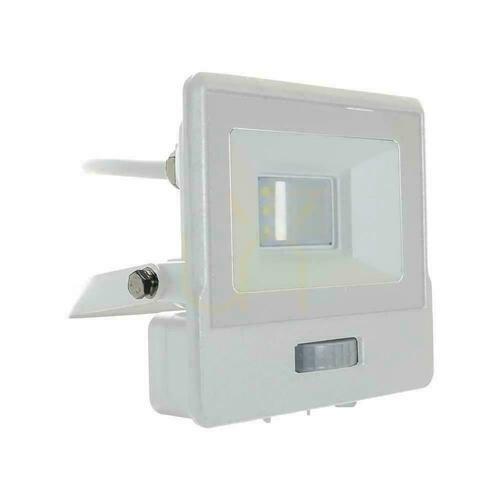
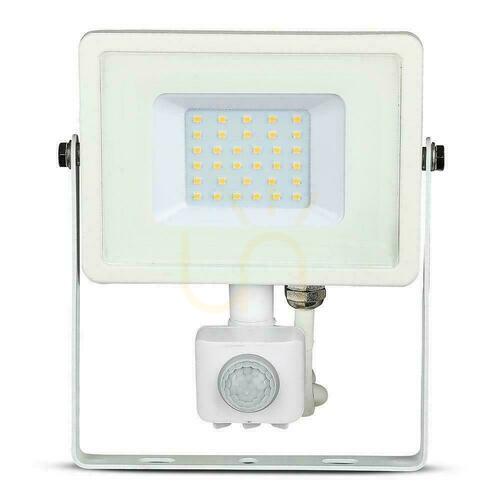
Built-in sensor: neat and compact, but it looks wherever the lamp head points. Fine above a porch, where the lit area and the approach are one and the same.
-
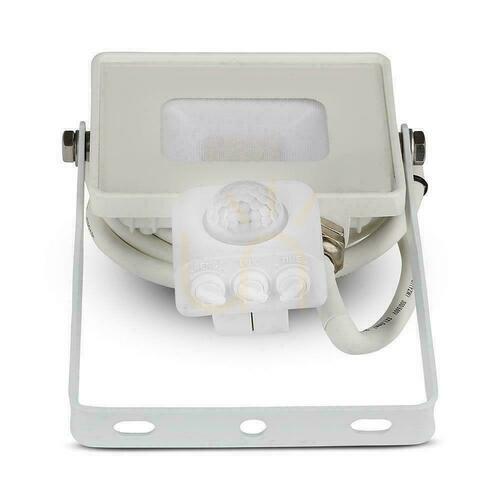
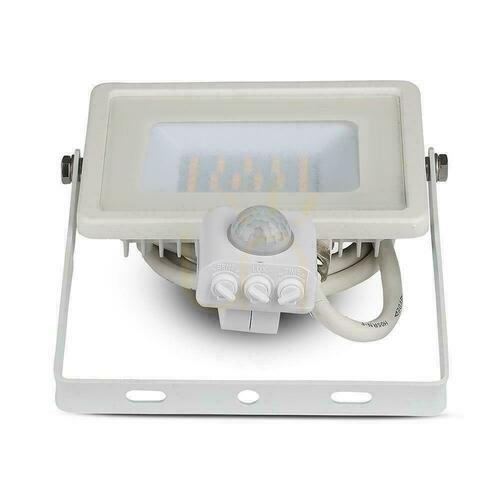
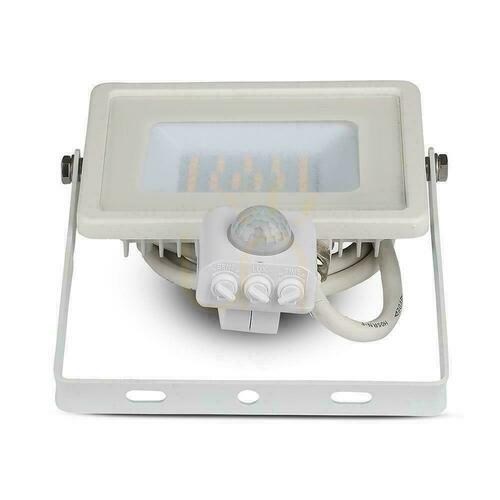
Sensor on its own swivel: usually adjustable up–down and side to side, so the light can cover the drive while the sensor watches the gate people walk in through.
-
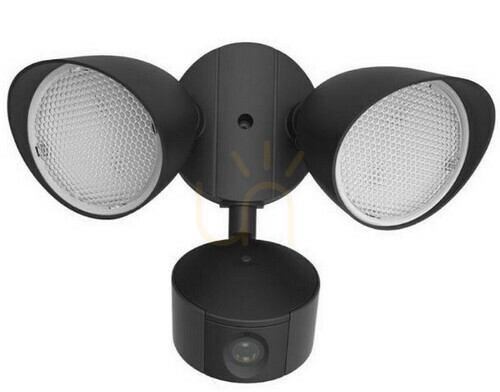
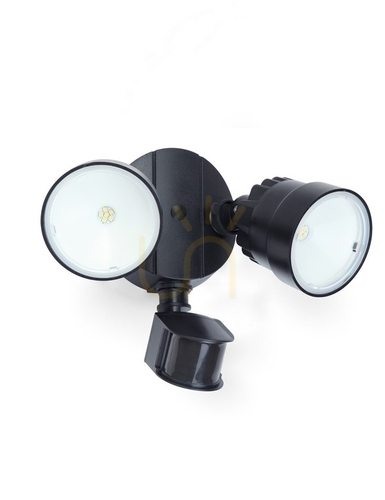
Twin-spot security light: two heads on one bracket sharing a sensor – the classic choice for the corner of a house or a path that turns.
-
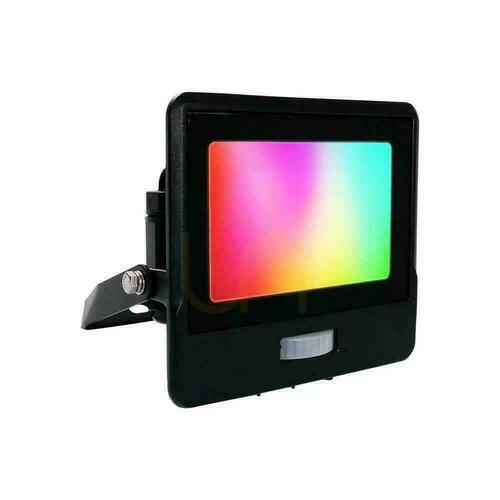
Plain floodlight plus a separate PIR: worth it when the best place for the light is not the best place to catch movement, or when one sensor should trigger several lights.
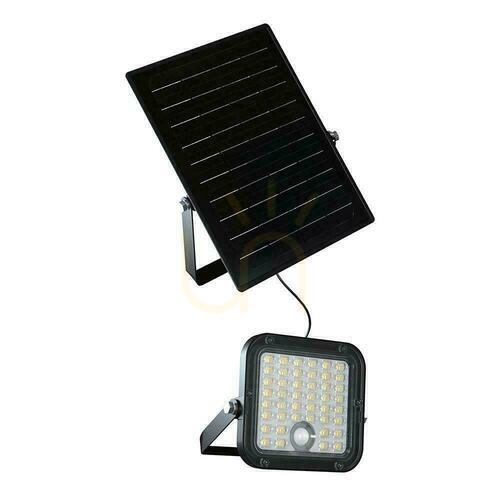
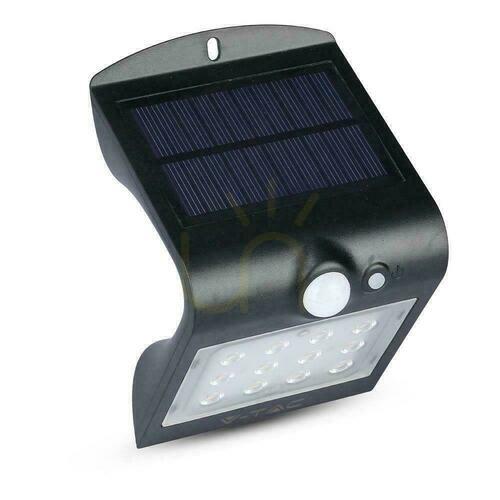
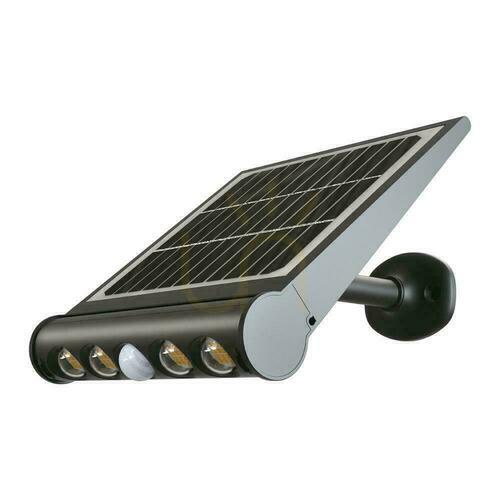
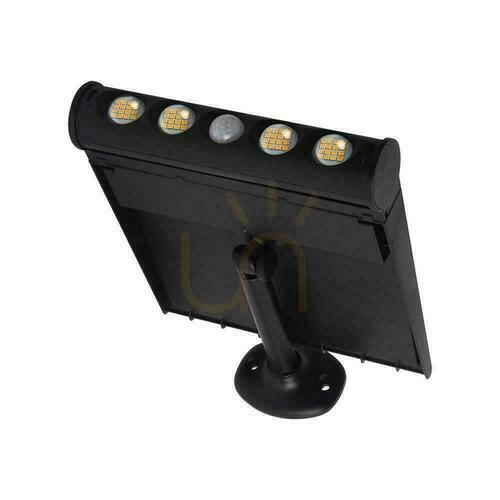
Spike-mounted garden spots with sensors and solar units for sheds and gates also exist. If a fitting takes GU10 bulbs, check that the sensor copes with low LED loads; some relays leave low-wattage bulbs flickering or faintly glowing.
Sizing it for a typical UK home
Compare lumens rather than watts – efficiency varies between fittings. As a rough guide, 10 W of LED gives 800–1000 lm and 50 W something like 4000–6000 lm. For a semi or detached house:
| Location |
Light output |
Sensor coverage |
Fixing height |
Colour |
| Front door or porch |
about 600–1200 lm |
100–140°, 6–8 m |
2–2.5 m |
2700–3000 K |
| Side passage or garden gate |
about 800–1500 lm |
90–120°, 6–10 m |
2–2.5 m |
3000–4000 K |
| Drive or garage front |
about 1500–3000 lm |
140–180°, 10–12 m |
2.2–3 m |
3000–4000 K |
| Back garden or yard |
about 2000–4000 lm |
180–240°, up to 12 m |
2.5–3 m |
4000 K |
Under a canopy IP44 is enough; on an open wall or post go for IP65. Very bright, cool 6000 K floodlights suit a workshop yard more than a family home. For high-output units aimed at large areas, see LED floodlights with motion sensor.
Fitting and setting it up
A PIR picks up changes in heat, and it is far better at spotting someone walking across its view than someone heading straight towards it. That is why a light fixed dead centre above the front door often reacts late. Mount it to one side of the path instead.
- Tilt the sensor down by roughly 10–15° and give it a clear view – downpipes, guttering and climbing plants all eat into the range.
- Keep it away from the pavement, the road, boiler flues and extractor vents.
- Aim the beam down onto your own property. Light shining into a neighbour's bedroom is the commonest complaint, and in England and Wales artificial light can count as a statutory nuisance.
- To test, turn TIME to minimum and LUX to its daylight setting, walk the approach, nudge the sensor a few degrees at a time, then set the final values.
Wiring to the mains is a job for a qualified electrician working to BS 7671. In England and Wales a brand-new outdoor circuit is notifiable under Part P of the Building Regulations; swapping a like-for-like fitting usually is not.
Common snags and upkeep
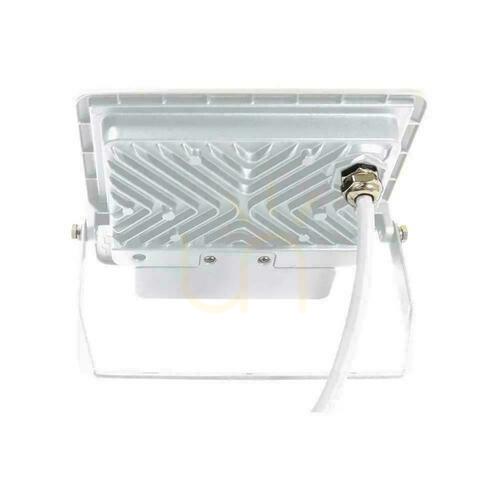
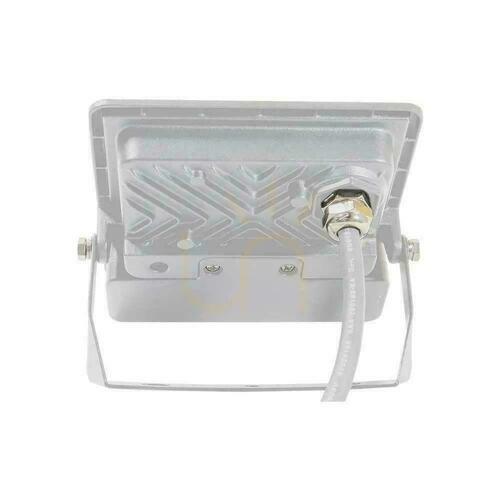
A light that keeps tripping is usually seeing swaying shrubs, passing cars, cats or warm air from a vent. Turn the sensitivity down, re-aim the head or mask part of the lens with the shutters some models include. Once or twice a year wipe the lens with a soft cloth, clear cobwebs and check the seals; a loose cable gland is how most water gets in.
PIR floodlight questions
Why does my PIR light come on in daylight?
The LUX (photocell) control is set too high, so the sensor thinks it is dark enough to switch. Turn it towards the moon symbol or minimum. Also check that the sensor is not in permanent shade under an eave while the rest of the garden is bright.
How do I connect a PIR motion sensor to a light?
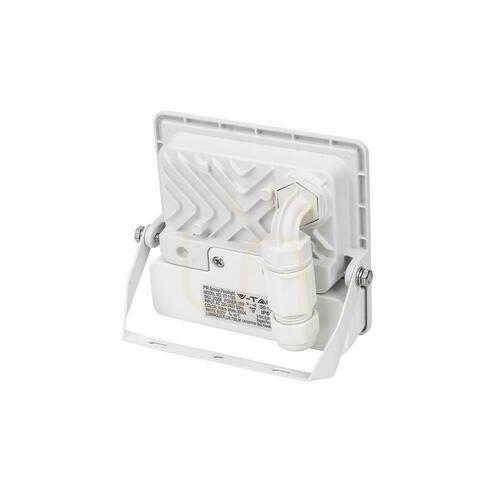
A floodlight with a built-in PIR is wired like any fixed light: live to L, neutral to N, earth to the earth terminal. A separate PIR sits between the supply and the lamp – the supply goes in, the switched live comes out to the light. Any wall switch feeding the circuit must be left on.
Do floodlights deter burglars?
A light that suddenly snaps on removes the cover of darkness and makes someone easy to see from the street or a neighbouring window, which is why motion-triggered lights are a common part of home security advice. It works best alongside good locks and clear sightlines; a light nobody can see from outside achieves little.
How do I keep a PIR floodlight on permanently?
Many units have a manual override: switch the wall switch off and back on quickly and the light stays on, typically until dawn or for several hours. Switching off for a few seconds returns it to sensor mode. The exact sequence varies, so check the instructions.
Twin spot or single floodlight?
Twin spots let you light two directions from one fixing point, such as a corner or a drive that bends. A single floodlight gives a wider, more even spread across one open area.
What is a good detection range for a house?
Most homes are well served by 8–12 m and an angle of 110–180°. More range is not always better – a sensor that reaches the road will switch on with every passing car.
If you are still deciding on the style of light itself – narrow spot, wide flood or spike light for the border – start with outdoor spot lights.