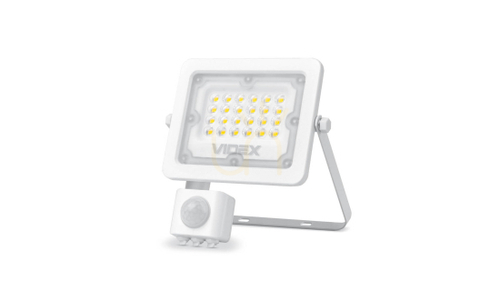
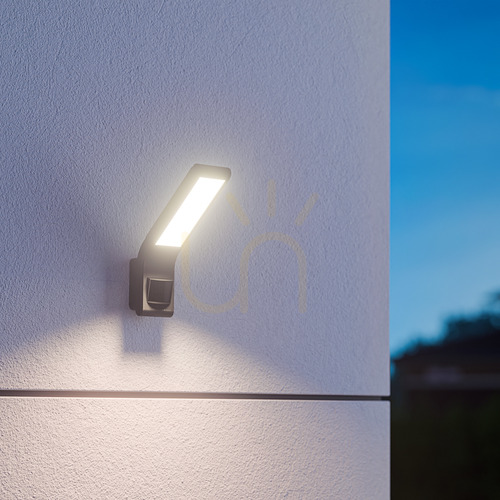
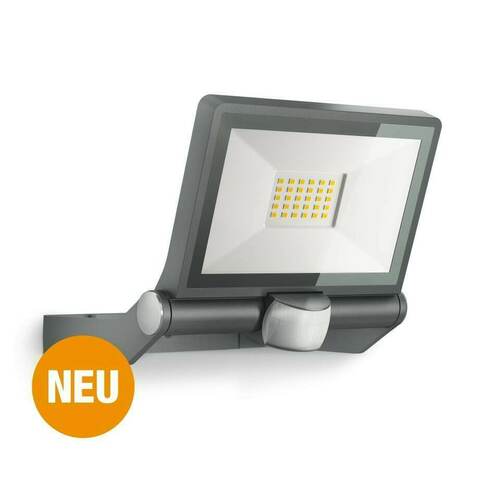
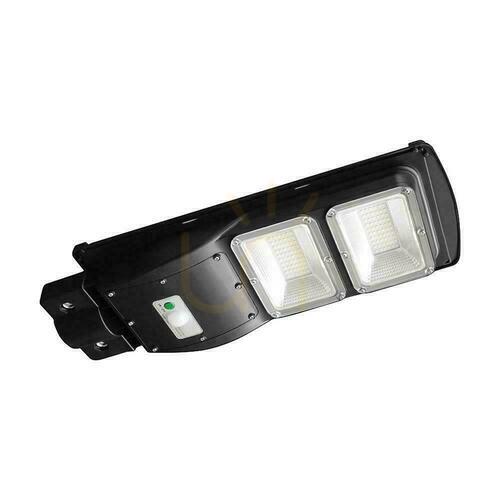
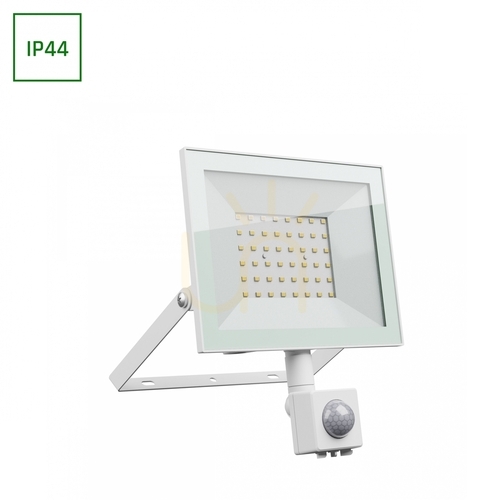
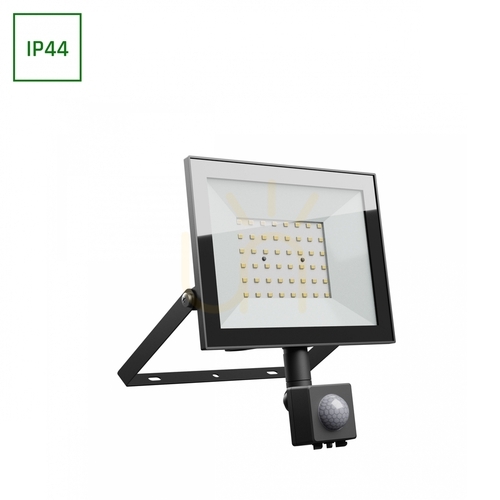
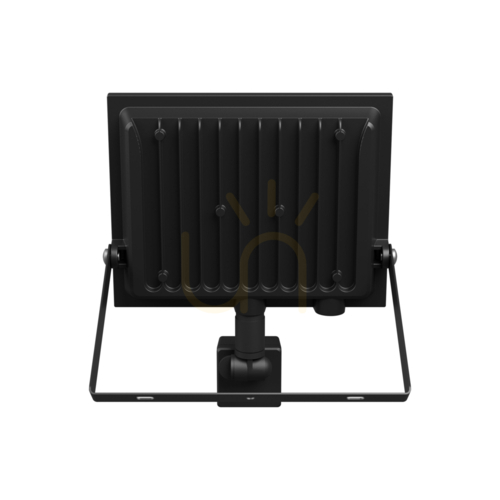
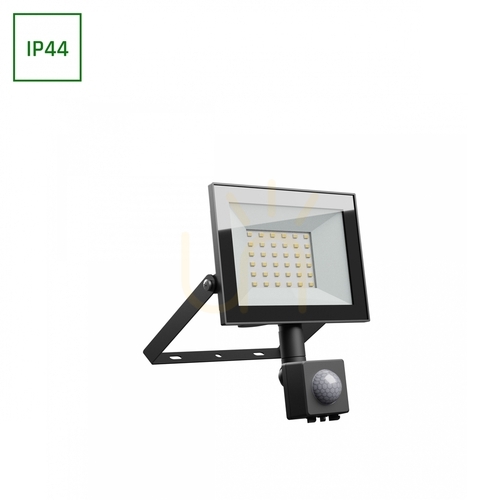
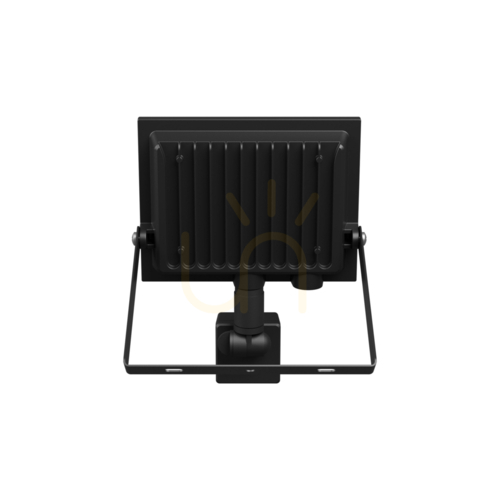
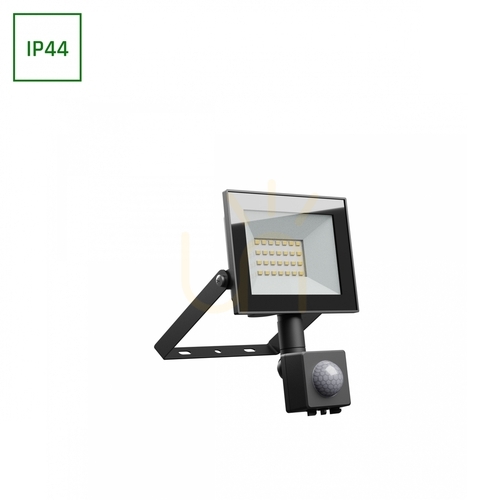
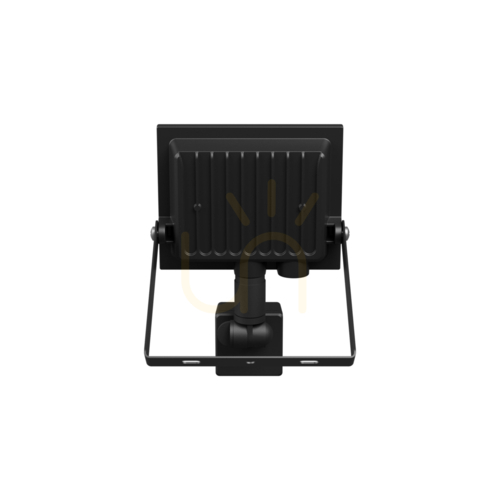
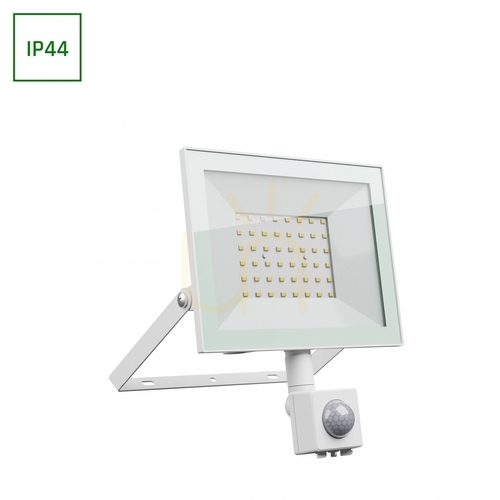
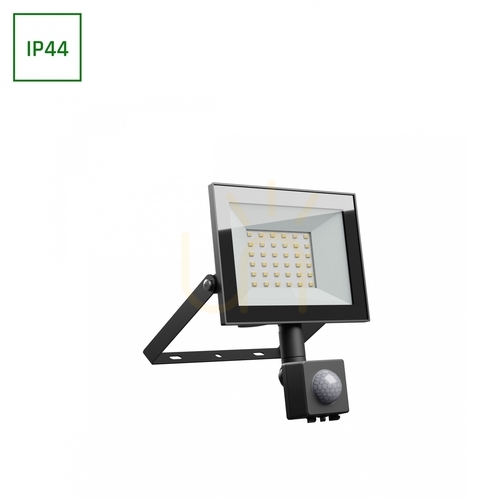
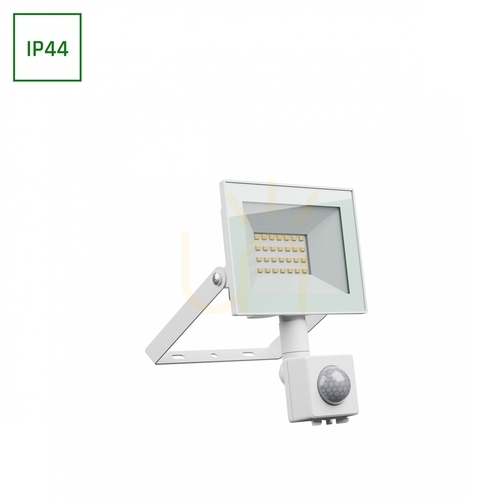
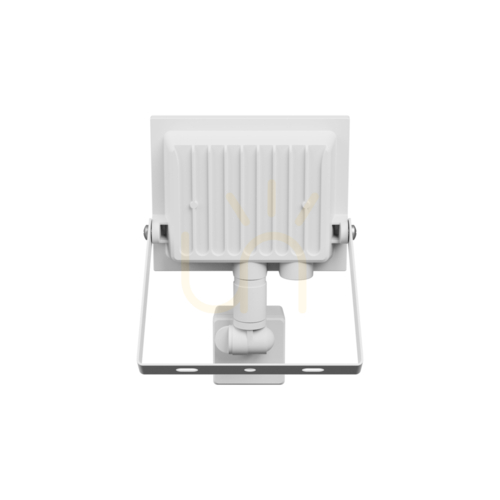
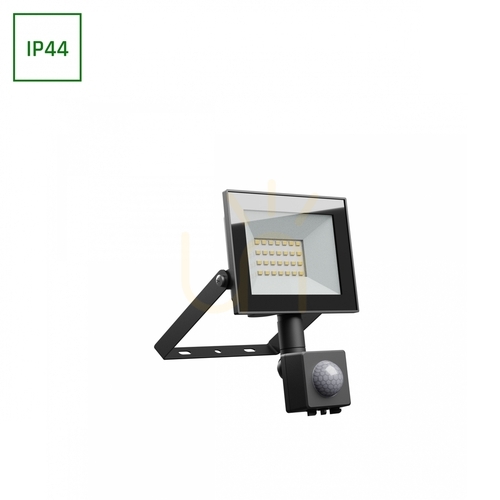
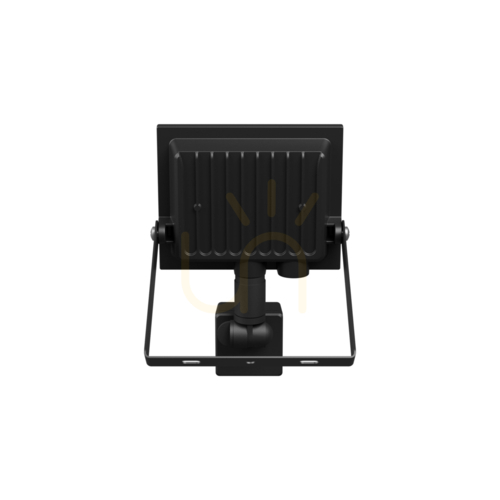
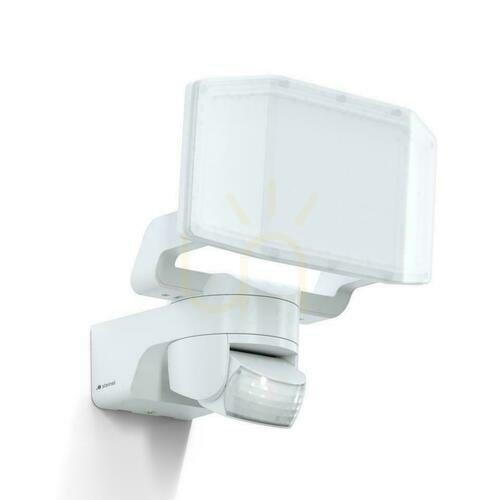
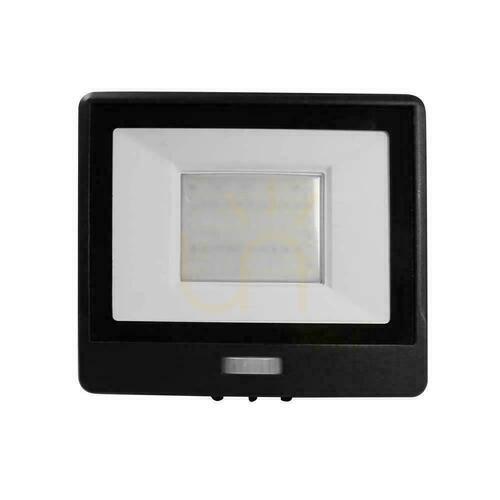
A PIR security light with sensor control stays dark until someone walks into its field, then floods the drive, yard or back door with light for a set time before switching itself off. On an LED floodlight that changes the whole job: instead of burning all night, the fitting works as a deterrent and a welcome light at once, and only when there is something to see.
PIR floodlight or plain floodlight?
Floodlights cover a wide, deep area, so the sensor on them has to watch a similar patch of ground. Nearly all use a PIR (passive infrared) detector: a sensor behind a faceted lens that picks up a warm body moving across its view. It does not transmit anything and does not record pictures. Typical coverage is 110–180°, with a range of around 8–12 m; budget units are often adjustable from about 2 to 8 m, while larger ones reach 15–20 m.
A PIR spots someone walking across its field much sooner than someone walking straight towards it, which is worth remembering when you choose the spot. A few floodlights use microwave (radar) sensors instead. These ignore temperature and can see through thin timber or glass – handy in a carport, but they may also react to people on the pavement behind your fence.
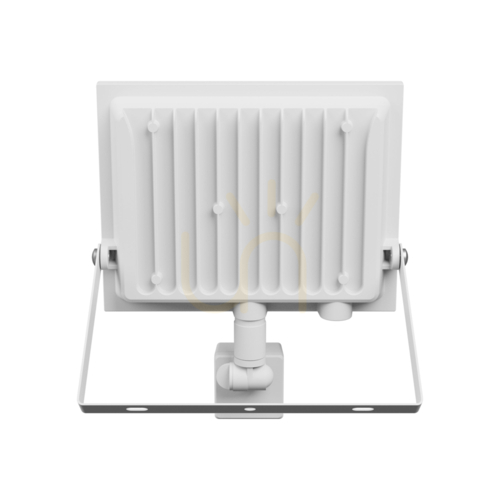
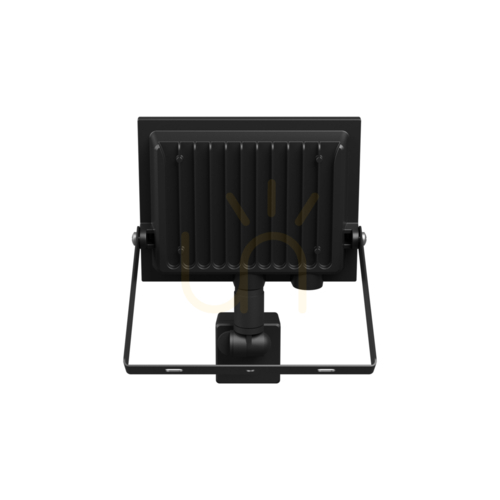
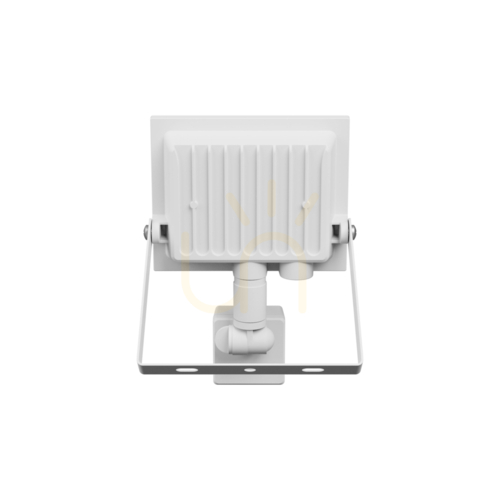
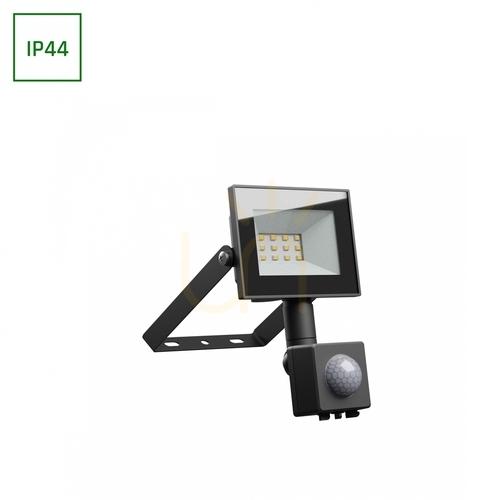
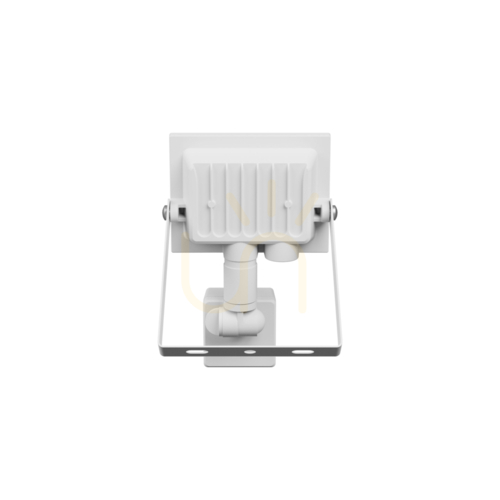
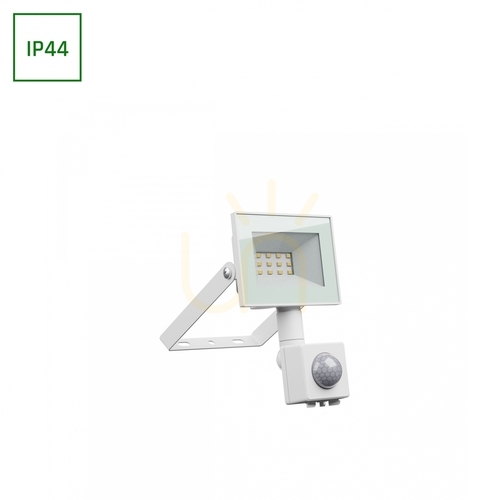
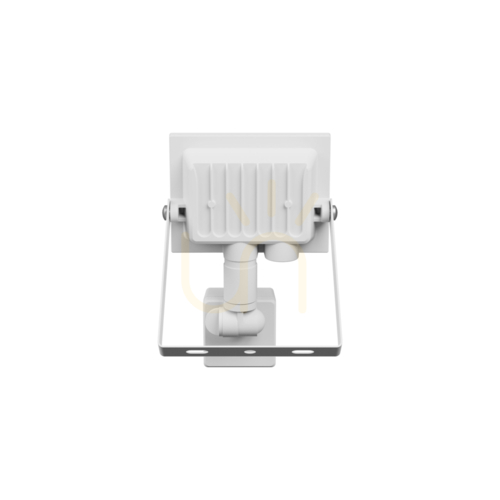
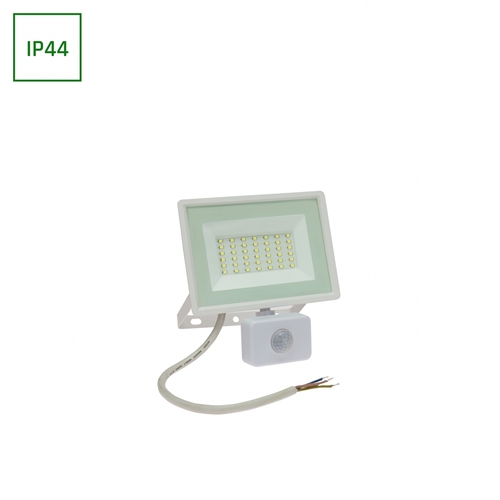
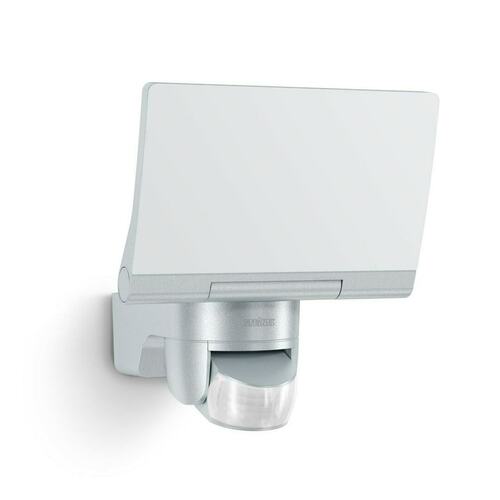
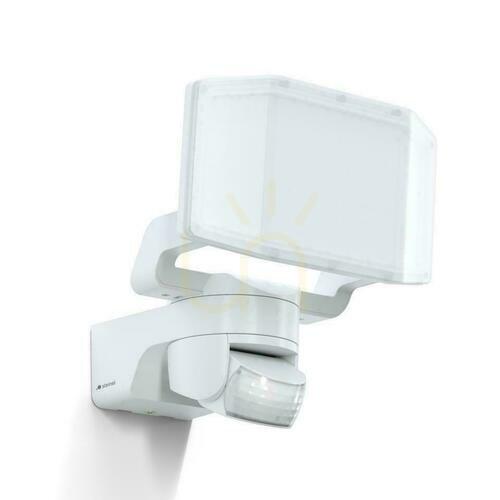
The sensor may sit under the body, on a swivel head or on a short arm of its own. A separately adjustable head lets you light the driveway while the sensor watches the path to the front door. Some floodlights can also be linked so that one detector switches several lights.
Choosing brightness, colour and protection
Compare lumens rather than watts or “halogen equivalents”, which every maker calculates differently. A decent LED floodlight gives about 80–130 lm per watt; the old halogen tubes managed 15–20 lm/W.
| Where |
Light output |
Mounting height |
Colour |
IP rating |
| Front or back door under a porch |
800–1500 lm |
2–2.5 m |
warm white, about 3000 K |
IP44 |
| Driveway, garage door |
1500–3000 lm |
2.5–3 m |
3000–4000 K |
IP65 |
| Rear garden, side return |
1500–3000 lm |
2.5–3 m |
3000–4000 K |
IP65 |
| Yard, parking area, outbuildings |
4000 lm or more, or two lights |
3–4 m |
cool white, 4000–5000 K |
IP65 |
As a rule of thumb, 10 W of LED gives roughly 800–1000 lm, 20 W about 1600–2000 lm and 50 W about 4200–6000 lm. Cool white around 4000 K shows faces and number plates more clearly, which helps if a camera covers the same area; warm white is kinder at the front door. On an exposed wall facing the weather, go for IP65. Near the coast, look for fittings rated for salt spray.
Setting the sensor up
Most PIR floodlights have three small dials. TIME sets how long the light stays on after the last movement, usually from about 10 seconds to several minutes. LUX sets the light level at which the sensor becomes active, from about 5 lx (dark only) up to daylight – in effect a built-in dusk sensor. SENS controls sensitivity, and with it the real detection range.
Set it up in daylight: LUX to the sun symbol, TIME to minimum, then walk the area and adjust SENS and the head until it triggers only where you want. Then turn LUX to the moon symbol and lengthen the time.
Fitting tips and common snags
- Mount it about 2–3 m up. Higher, the blind spot directly beneath grows; lower, the sensor is easy to knock or cover.
- Angle the light downwards so it does not shine into neighbours’ windows or dazzle drivers.
- Keep the sensor away from boiler flues, heat pump fans, the road and shrubs that move in the wind.
- A PIR cannot see through glass, so it will not work from inside a conservatory.
- Bring the cable in from below and make the connection in an outdoor junction box with a matching IP rating.
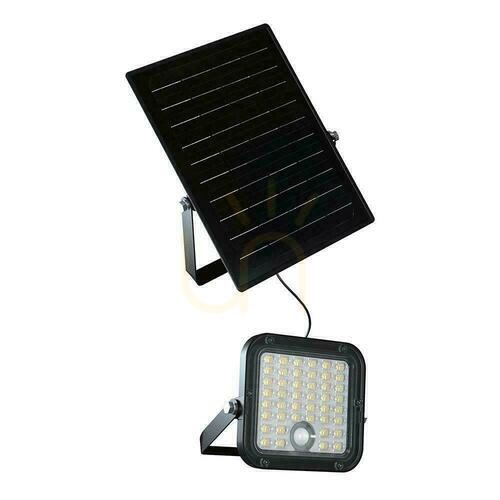
Mains floodlights run on 230–240 V. Have a qualified electrician fit them, with the work done to BS 7671. Where there is no cable, a solar or battery light is the fallback, though with far less output.
Security light FAQs
What would make a security light stay on?
Usually something keeps re-triggering it – branches, warm air from a flue, cars passing – while TIME is set long. Cover the lens with black tape: if the light goes off after the set time, lower SENS or re-aim the head. If it stays on, suspect the wiring or a stuck relay and call an electrician. Many models also have a manual override that keeps the light on until it is reset.
What should I look for in an outdoor PIR security light?
Coverage that matches the area, enough lumens, a sensor head you can aim separately from the lamp, IP65 for an exposed wall and easy-to-reach TIME, LUX and SENS dials.
What is the best LED light for outdoor use?
For security, an IP65 LED floodlight with a PIR. It uses a fraction of a halogen’s power, runs cool and has no tube to replace.
Can I get a wireless security light with sensor?
Yes, in solar or battery versions. They suit sheds and fences away from the mains, but give less light and need a sunny spot or regular charging.
How do I put a PIR floodlight on permanently?
On many models, switching the wall switch off and straight back on puts the light into manual override. The exact sequence varies, so check the instructions.
Does frequent switching shorten LED life?
No. LEDs cope well with switching on and off; heat and driver quality matter far more.
More on pairing a PIR with a separate dusk sensor: LED floodlights with motion and dusk sensor. For brightness, beam angle and colour on floodlights in general: LED floodlights.