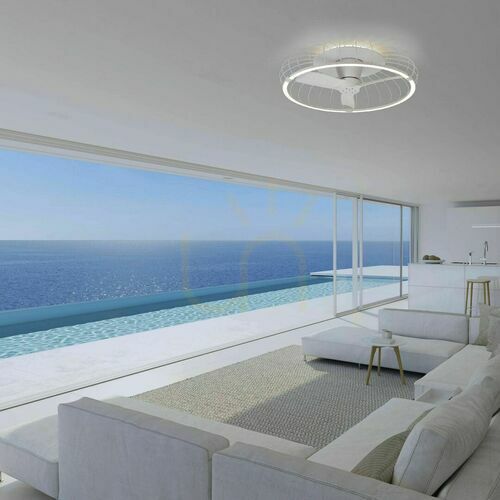
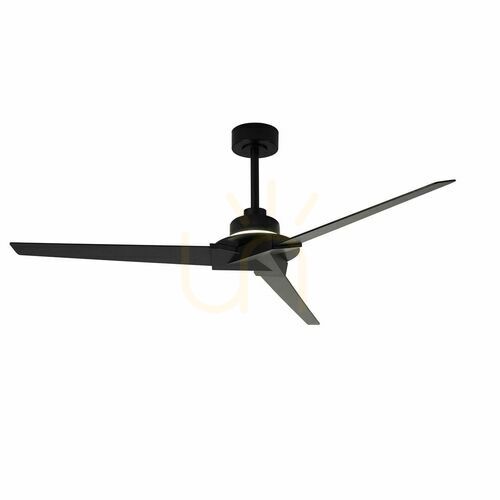
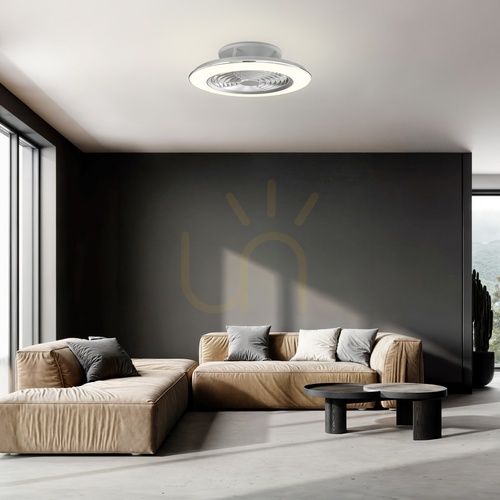
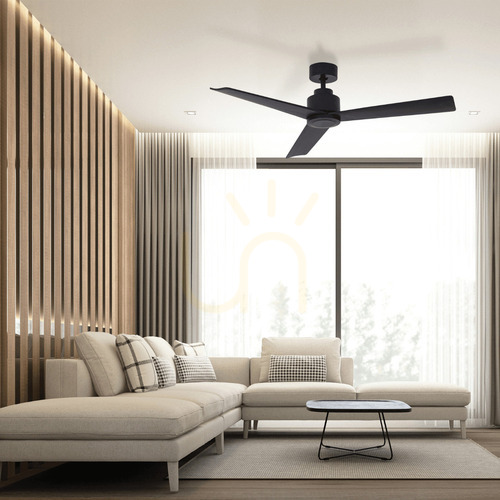
A living room ceiling fan with a built-in light does two jobs from one ceiling point: it is the room's main light, and on a close summer evening it moves enough air to make the sofa bearable without a portable unit humming in the corner. What changes in a living room, compared with a bedroom or a study, is scale and mood – a bigger floor area to cover, warm dimmable light for the evenings, and a motor quiet enough to sit under while the television is on.
Why the living room asks more of a fan
British homes were rarely built with cooling in mind, and many living rooms – especially loft conversions, south-facing extensions and top-floor flats – now hold heat well into the night. A ceiling fan does not lower the air temperature, but air moving across your skin at around 1 m/s feels a few degrees cooler, for a fraction of the electricity an air conditioner draws.
The living room is also usually the largest room in the house, and often open to a kitchen or dining area. A compact fan that works well in a bedroom will run flat out here, get noisy and still barely reach the sofa. So the usual answer is a larger blade span and a motor with several speeds, so you can leave it on a low setting most of the time.
Sizing it to your room and ceiling
Manufacturers' room ratings are rough guides, but they are a sensible starting point. Measure the whole open space if the room flows into a kitchen or dining area.
| Room or ceiling |
Typical choice |
Notes |
| Living room up to 15 m² |
90–105 cm blade span |
terraced house front room, small flat |
| 15–20 m² |
105–122 cm |
the most common size of lounge |
| 20–30 m² |
122–132 cm |
through lounge or living-dining room |
| Over 30 m² |
132–152 cm, or two fans |
open-plan spaces work better with one fan per zone |
| Ceiling about 2.4 m |
flush (hugger) mount |
typical new-build height |
| Ceiling 2.7 m and above |
downrod |
Victorian and Edwardian rooms |
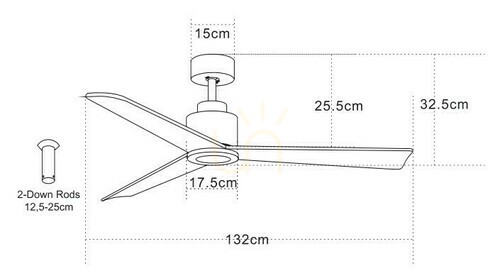
Aim for the blades to sit at least 2.1 m, ideally 2.3 m, above the floor and roughly 25–30 cm below the ceiling so the fan can draw air freely. In a new-build with a 2.4 m ceiling, that leaves room only for a flush-mounted model. In a period property with a 3 m ceiling, a fan without a downrod stirs the warm air near the ceiling and you feel very little at sofa height. Keep the blade tips about 50 cm from walls and tall furniture.
Motors, noise and controls
AC motors are the traditional option: usually 50–80 W at top speed, three speeds, a pull cord or wall control. DC motors typically use somewhere between a few watts and the low thirties, offer five or six speeds and come with a remote, timer and reverse function. For a room where you watch films and talk, a DC fan on a low setting is close to silent; at full speed most fans land somewhere around 35–50 dB.
Blade count and material matter too. Five or six blades shift the same air at lower revs, and timber blades tend to be quieter than plastic or metal.
Getting the light right
Treat the fan light as general lighting rather than the whole scheme. For evenings, 2700–3000 K is the comfortable range. Colour-tunable fans usually switch between around 3000, 4000 and 6500 K, so save the cool end for cleaning. As a rule of thumb, a living room needs roughly 100–150 lm per m² of general light – about 2000–3000 lm for a 20 m² lounge. If the fan gives less, add floor lamps, wall lights or LED strips. Check whether the light is dimmable before you buy: not every integrated LED module is.
Placement and installation
Hang the fan over the seating area rather than the geometric centre of a long room, and not directly above a hob in an open-plan kitchen. If there are downlights in the ceiling above blade level, the turning blades will cast a flickering shadow, so plan spotlights outside the fan's sweep.
A fan is heavier than a pendant and moves, so it must be fixed to a joist or a proper fan-rated bracket, never hung from plasterboard or an ordinary ceiling rose alone. For a sloped ceiling in a loft room, check the maximum angle the mounting allows. Wiring must comply with BS 7671; have a qualified electrician fit it, particularly if you want separate wall control for the light and the fan.
Common mistakes and care
The usual regrets are a fan that is too small, no downrod under a high ceiling and a light that cannot carry the room on its own. Dust collects on the leading edges of the blades, so wipe them every few weeks with a damp cloth, and check the screws twice a year. A wobble can usually be cured with a balancing kit.
FAQ
Should I put a fan in my living room?
If the room overheats in summer and you would rather not install air conditioning, yes. A ceiling fan uses tens of watts rather than hundreds, takes no floor space and doubles as the main light.
Are ceiling fans an American thing?
They are far more common in hot climates, but warmer British summers and slimmer DC models have made them a practical choice here too, especially in rooms that trap heat.
What is a smart ceiling fan?
One you can control from a phone app or a smart home system over Wi-Fi or Bluetooth, usually with schedules, a timer and separate control of light and fan.
How quiet is a quiet ceiling fan?
On its lowest setting a good DC fan is barely audible. At full speed, expect around 35–50 dB, depending on the motor, the blades and how carefully it was fitted.
Can I use a ceiling fan in winter?
Yes. In reverse mode at a low speed, it pushes warm air from under the ceiling down along the walls – useful with a high ceiling or a wood-burning stove.
Which styles suit a living room?
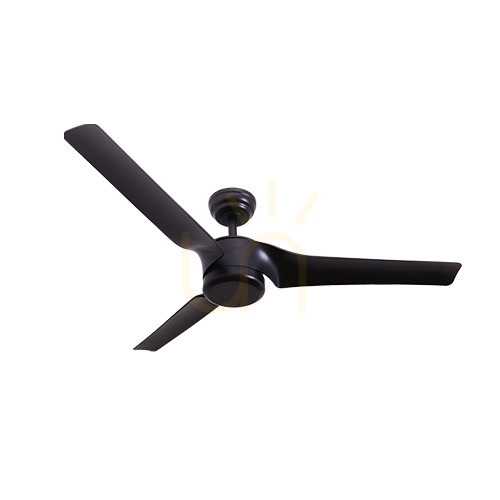
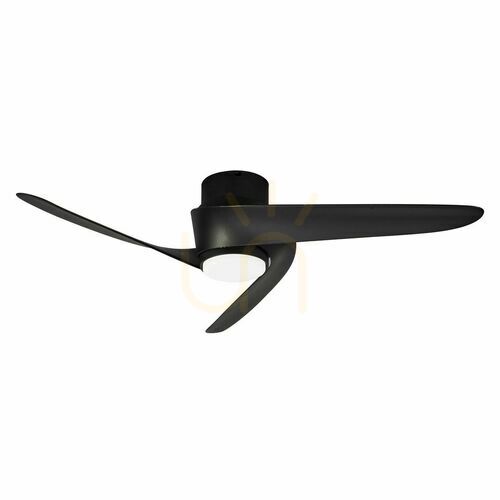
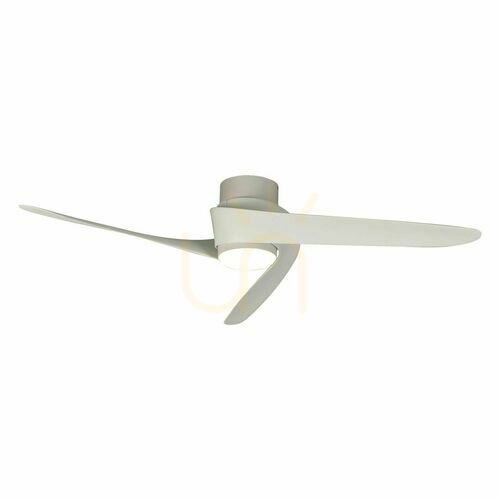
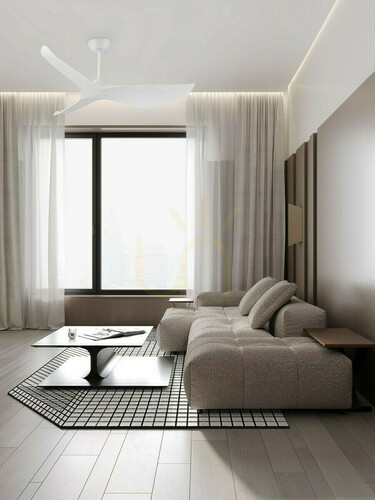
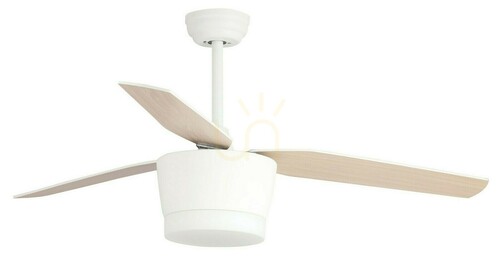
Anything from a timber-bladed fan in a cottage to a slim matt-black or white one in a contemporary flat. Pick the blade finish as you would pick a pendant.
For sizes, motors and controls in general, see ceiling fans with light; for clean-lined designs, see modern ceiling fans with lights.