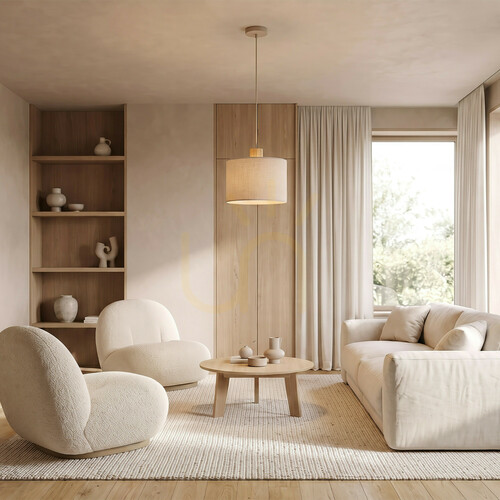
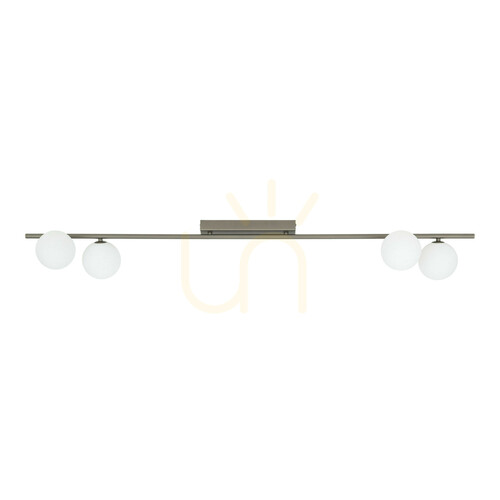
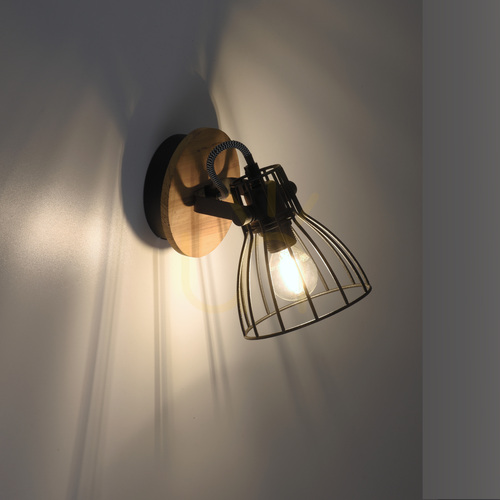
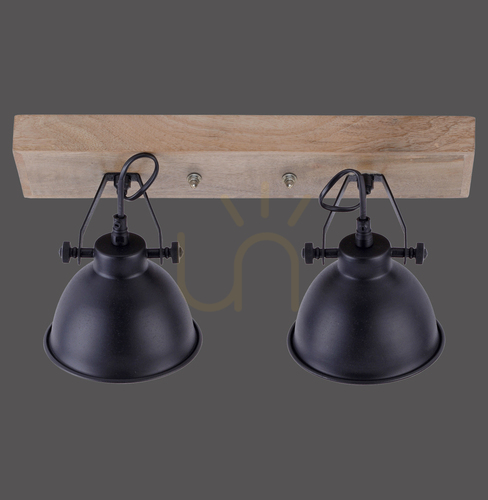
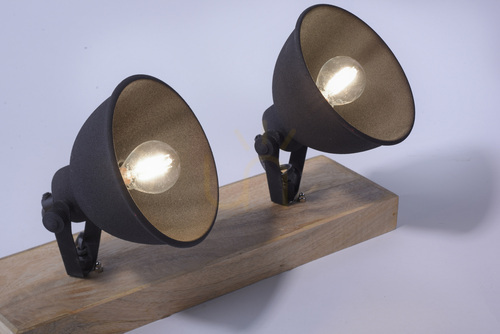
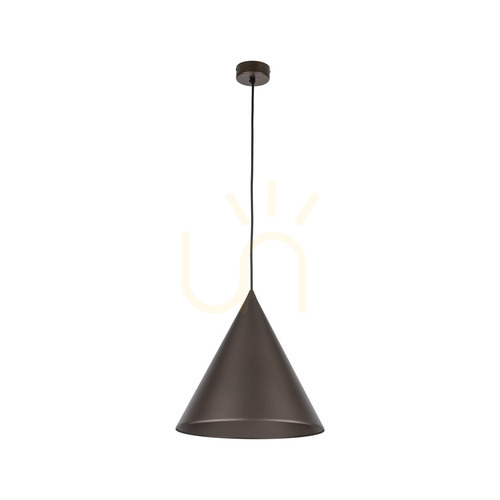
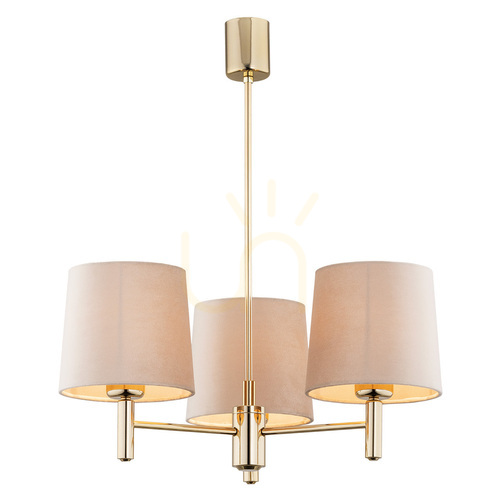
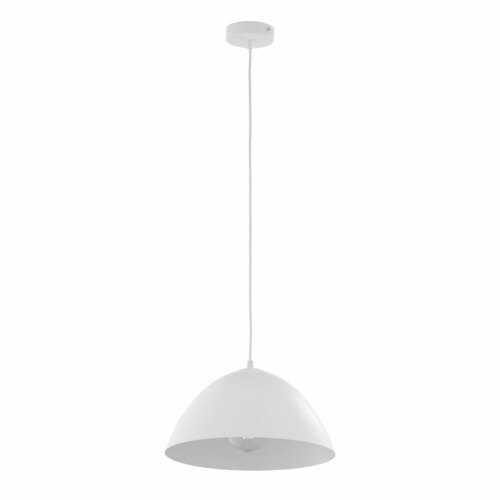
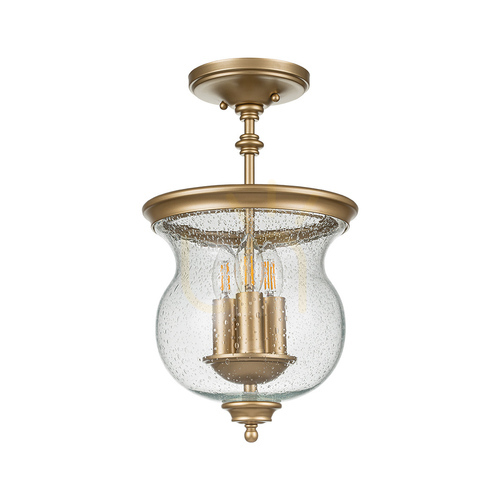
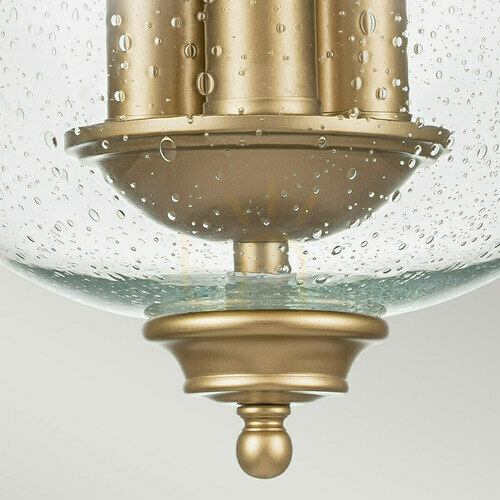
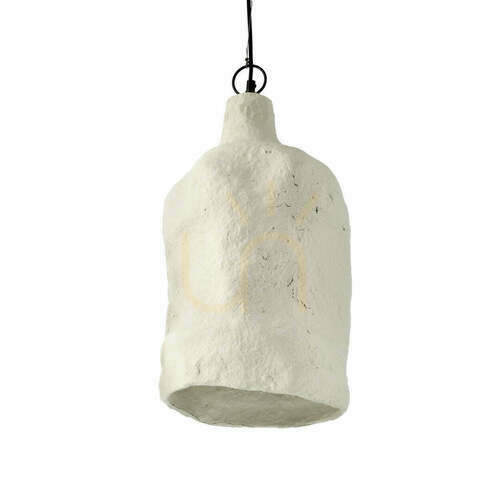
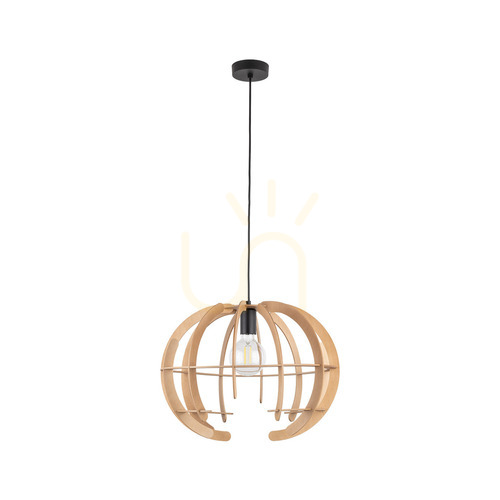
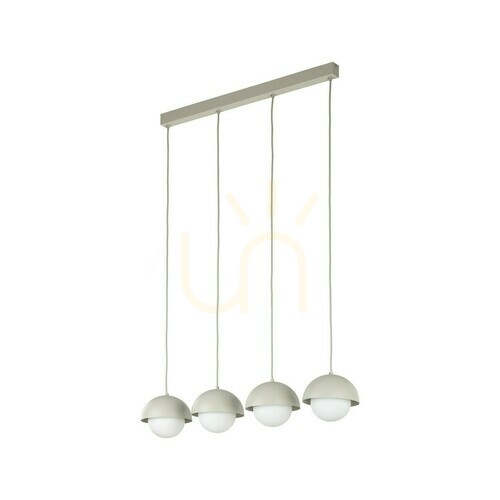
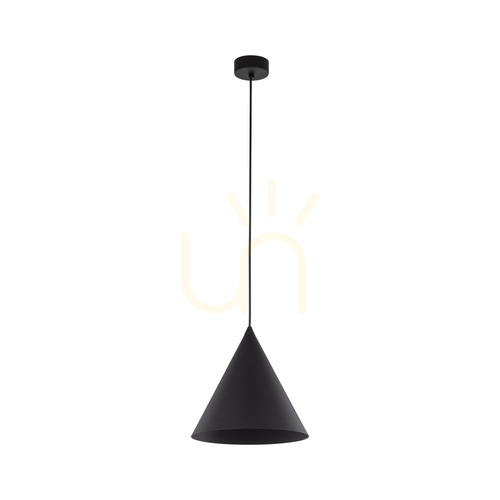
Rustic ceiling lights cover several very different fittings that happen to share one material language: blackened and forged steel, oak and pine, woven or parchment shades, matt finishes, and a shape that looks made rather than moulded. Because "ceiling light" is the broad category, the first decision is not which model but which form — a suspended pendant, a multi-arm frame and a close-fitting plafond solve completely different problems, and the ceiling height in your room usually decides for you.
Choose the form before you choose the model
Rustic overhead forms compared
| Form |
Typical drop |
Minimum ceiling it suits |
What it is good at |
Where it fails |
| Single pendant on chain or rod |
40 to 120 cm, usually shortenable |
240 cm over a table, 260 cm elsewhere |
Concentrated light on a table or island; the cheapest way to get the style overhead |
Lights one zone only, so a whole room needs several |
| Multi-arm forged frame |
50 to 100 cm |
260 cm, and 280 cm for anything two-tier |
Filling a room from one point, and doing the decorative work at the same time |
Weight — it needs a proper structural fixing, not a plasterboard anchor |
| Timber beam or wheel bar |
30 to 80 cm |
250 cm |
Long tables and kitchen islands; spreads several lamps along an axis |
Wrong over a round table, where it leaves the corners dark |
| Semi-flush plafond |
15 to 30 cm |
230 cm |
Hallways, landings, bedrooms and anywhere people walk under the fitting |
Broad soft light with no drama; it will not be the feature of the room |
| Surface spots on a bar |
10 to 20 cm |
220 cm |
Aiming light at a stone wall, a beam or a worktop |
Reads as a modern device unless the bar and heads are matt black or bronze |
What the ceiling height actually decides
Measure floor to ceiling before anything else, then work down. Under a 240 cm ceiling, treat 210 cm as the lowest point any part of a fitting may reach in a walking route, which leaves 30 cm of drop and rules out every suspended form except over a table where nobody walks. Between 240 and 270 cm you can hang a pendant over a dining table at 75 to 85 cm above the tabletop and still clear heads at the edges. Above 270 cm the multi-arm frames come into their own, and a fitting that looked oversized in a showroom starts to look correct.
The second measurement is the one people forget: the distance from the ceiling rose to the centre of the table. A rustic pendant is heavy enough that swagging it sideways on a hook looks deliberate rather than improvised, which is a genuine advantage of the style — a chain and a ceiling hook are part of the vocabulary, so an off-centre outlet is a solvable problem here in a way it is not with a slim modern pendant.
What this filter actually holds
150 models sit behind this page, and the attribute counts below are floors rather than percentages, because catalogue attributes are filled in unevenly. Read each figure as "at least this many models".
-
Single-lamp designs lead. 81 models carry one light point, but 19 carry three, 16 carry four, 14 carry six and 7 carry five — so the multi-arm end of the range is real, not token.
-
Steel is the backbone. 61 models are recorded in steel and 16 in unspecified metal, with 21 in wood, 28 in moulded plastic used for shade and beam-effect elements, and small numbers in glass, brass and aluminium.
-
E27 is the socket to plan around. 119 models take E27, 18 take a G9 capsule, 7 take GU10 and 3 take E14.
-
Dry rooms. 146 models are IP20, with 2 at IP44 and one at IP65 — so only a handful are suitable anywhere near steam or weather.
-
No lamp in the box. 145 models ship without a bulb, and 149 run on 230 V mains.
-
The palette holds. 39 models are recorded white, 33 black, 32 beige, 17 brown and 8 in a brick tone.
TK-Lighting supplies the bulk of the range, with Lucide, Fabbian, Lunares, Mantra, Keter Lighting, Famlight and Nowodvorski each contributing a smaller number of designs.
How much light the room needs
A rustic fitting is usually shaded in wood, metal or fabric, all of which absorb light, so the same lumen figure goes less far than it would in an open glass fitting. As a starting point, allow roughly 100 lumens per square metre for general living-room light and 300 for a kitchen work surface. A 20 m2 living room therefore wants about 2000 lm from the ceiling if the ceiling light is doing all the work — that is four E27 lamps at around 470 lm, or one at 1900 lm behind a shade that gives most of it back.
In practice the honest answer is that no single rustic ceiling fitting should be doing all the work. The style depends on pools of warm light against dark material, which means a ceiling fitting at half output plus rustic wall lights on a separate switch. Wire the two circuits separately if the walls are open; retrofitting a second circuit later is the expensive version of the same decision.
Colour temperature and the finish
Blackened iron, waxed bronze and oiled oak are all warm-toned surfaces, and they are physically incapable of looking right under cool light. 2700 K is the safe choice, 2200 K reads as candlelight and suits an evening-only room, and 3000 K is the practical limit in a kitchen where you also need to see what you are chopping. At 4000 K the same fitting turns grey and the timber goes lifeless, which is why so many rustic kitchens look wrong after someone replaces the lamps with whatever the supermarket had.
Common questions
Which form should I choose for a 250 cm ceiling?
Over a dining table, a pendant or a beam bar, hung 75 to 85 cm above the tabletop. Anywhere people walk, a semi-flush plafond. A tall multi-arm frame is the one form to avoid at this height, because either it hangs into the room or you shorten the chain until the proportions collapse.
Can rustic ceiling lights go in a kitchen with steam?
Above a hob you want a fitting rated at least IP44, and only 3 models on this filter carry a rating above IP20. Elsewhere in a well-ventilated kitchen an IP20 fitting is normal practice; it is the position directly over a hob or in a shower zone that changes the requirement.
Is a chain suspension adjustable?
Almost always, by removing links — which is a job for the installer, not something to do after the fitting is up. Measure the drop you want with the fitting on the floor, add the height of the canopy, and take the links out before lifting it.
How does rustic differ from vintage overhead?
Rustic is forged iron and bare timber, vintage is aged brass and smoked glass, and the two read as different rooms even at the same brightness. The forms available differ too, which the comparison on vintage ceiling lights sets out.
What if I want one statement fitting instead of several?
Then you are looking at the multi-arm end, where the weight and ceiling-fixing question becomes the deciding factor. Rustic chandeliers covers what each type of ceiling can actually carry and how to size a frame against a room.