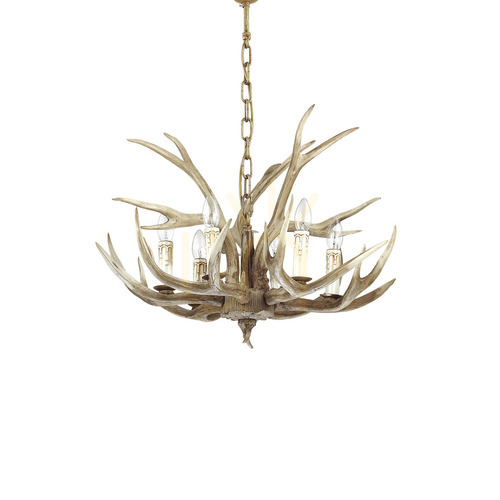
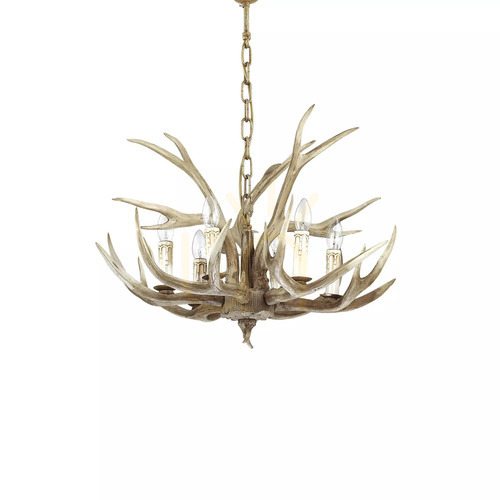
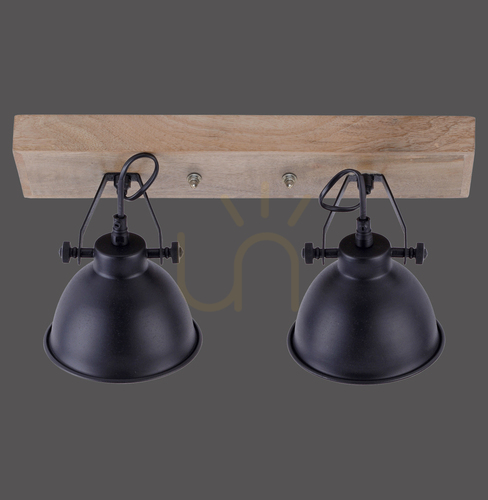
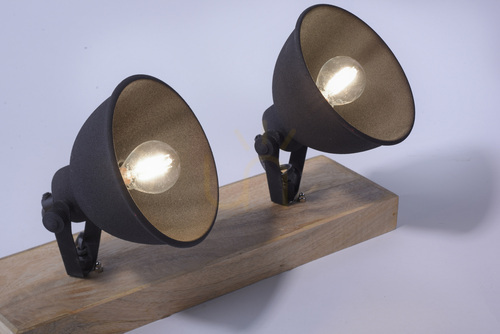
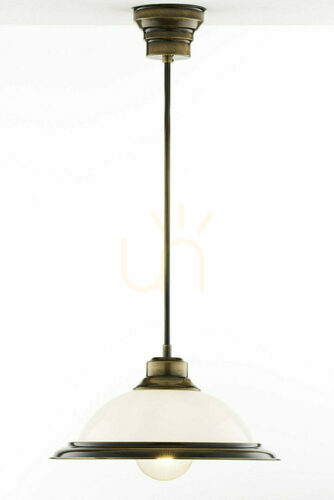
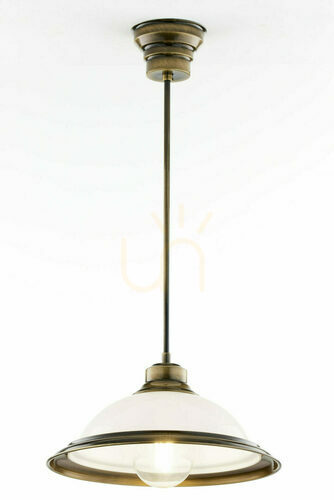
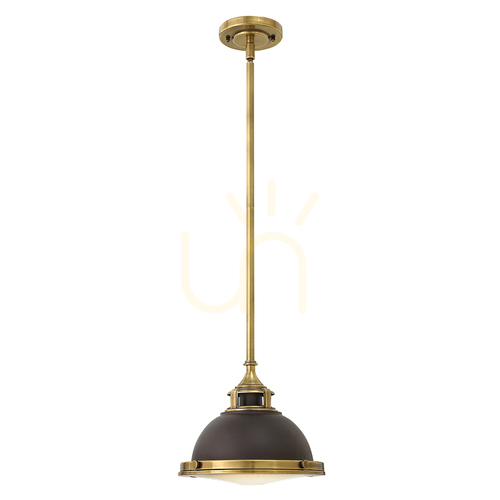
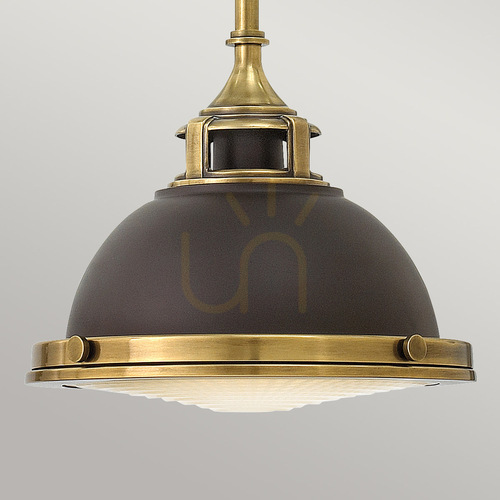
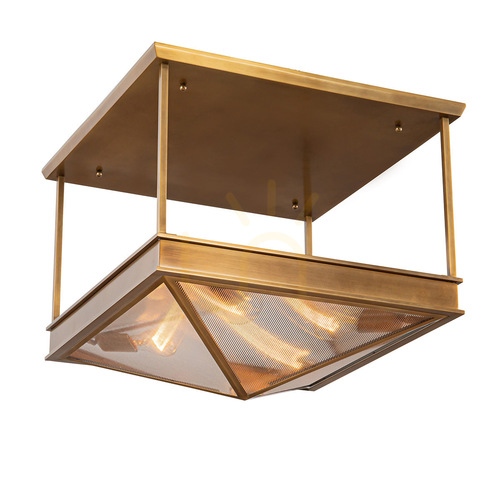
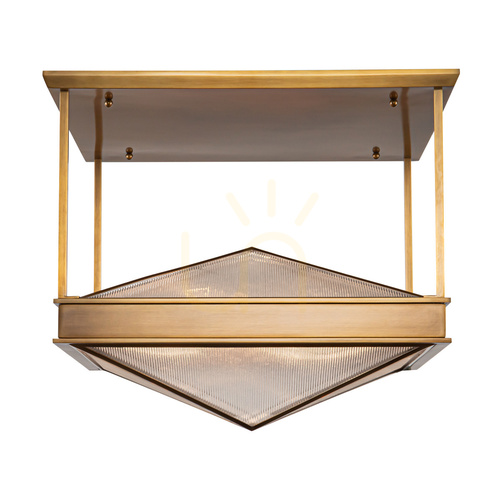
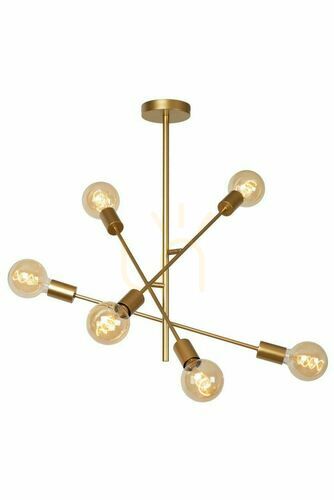
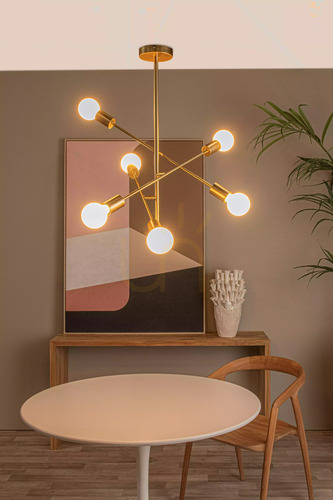
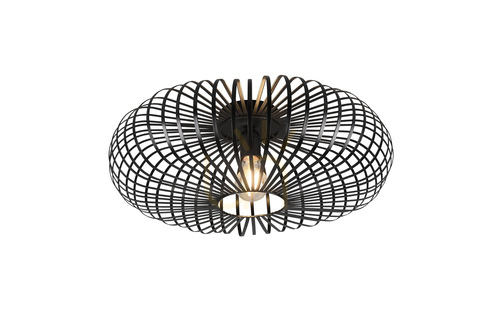
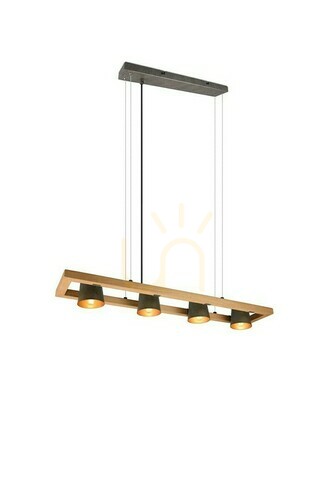
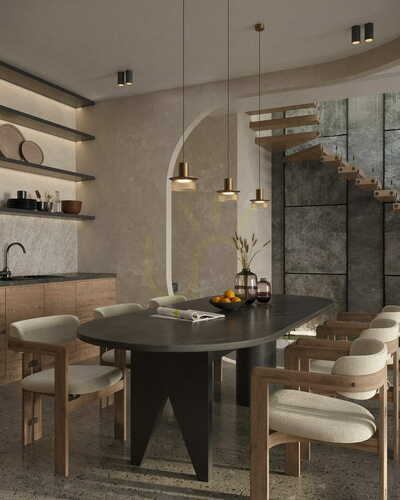
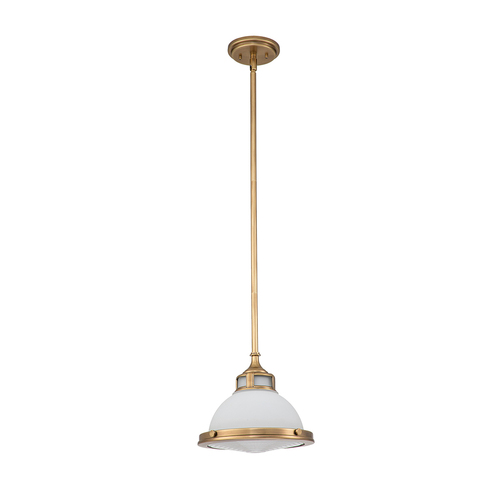
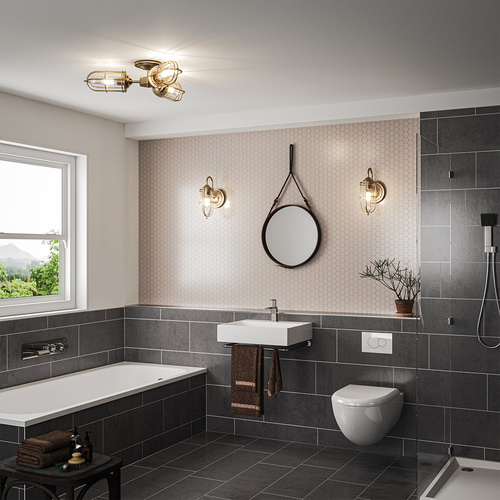
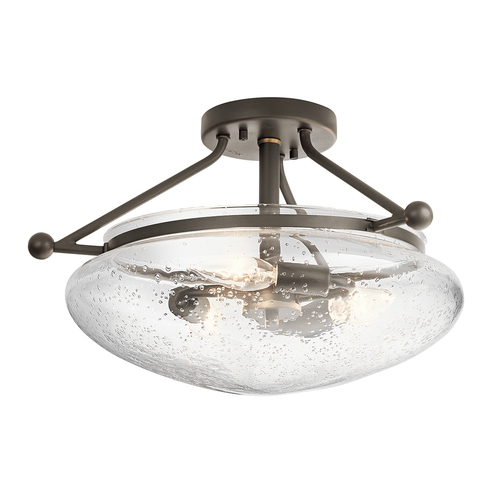
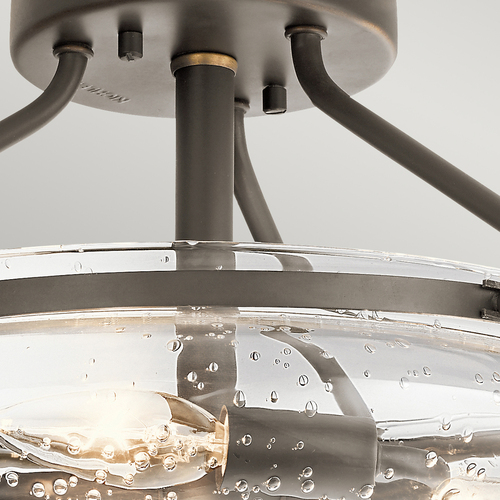
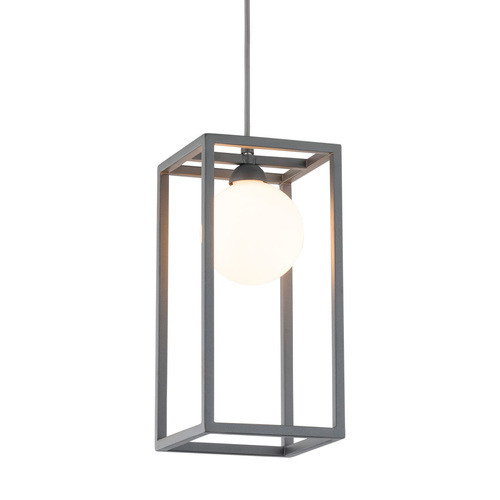
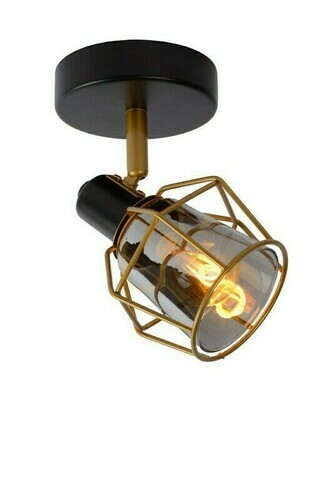
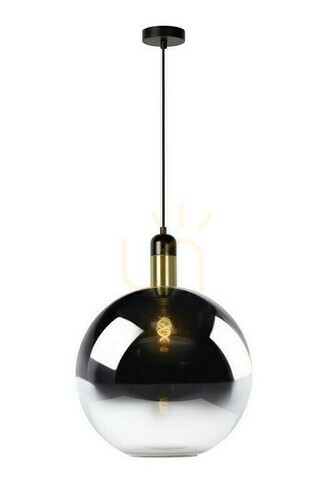
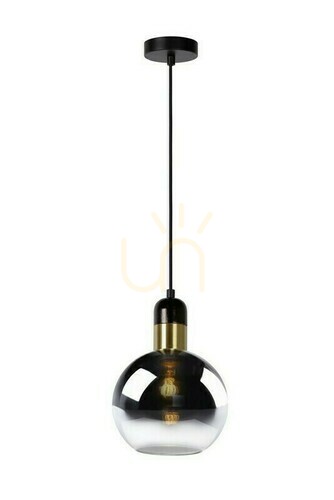
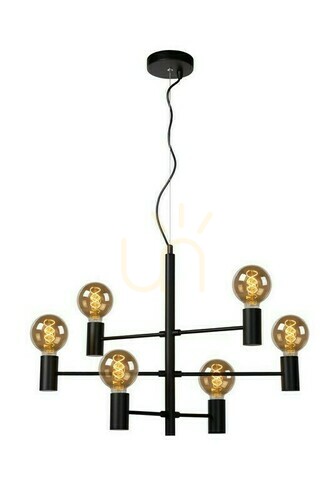
Vintage ceiling lights are the fittings that look as though they were already in the building when you moved in: aged brass and blackened steel, smoked or ribbed glass, enamelled shades with a visible edge, cage guards over the lamp. Vintage is a surface condition rather than a decade — it describes how a fitting reads, not when it was made — and that is why the same page holds a low pendant over a kitchen table, a flat plate on a hallway ceiling and a multi-arm fitting over a stairwell.
Which fitting the ceiling can take
This is the broad ceiling category, so the first decision is the form, not the finish. Get it wrong and no amount of patina rescues it.
Choosing the mounting type
| Ceiling height |
Over a table or island |
Over open floor |
What not to do |
| Under 2.4 m |
A shallow metal shade or a small glass dome, bottom edge 70 cm above the tabletop |
Flush or semi-flush only |
Anything on a rod or chain over walking space |
| 2.4 to 2.7 m |
A single wide shade, or a row of three small ones |
Semi-flush on a short stem |
Deep enclosed shades that finish below 2.05 m |
| 2.7 to 3.2 m |
A large shade, a cluster, or an adjustable chain suspension |
A multi-arm fitting starts to make sense here |
A small flush disc, which vanishes into the ceiling |
| Over 3.2 m or a stairwell |
A long drop on chain or cable |
A wide multi-arm frame, sized to be seen from below and from the side |
A single small pendant on a long flex, which reads as a mistake |
Of the fittings on this page whose form is recorded, 54 are hanging pendants and 15 are flush or semi-flush mounts, so the suspended shapes dominate. If your ceiling rules out a drop entirely, filter to the flush forms early rather than falling in love with a pendant you cannot hang.
What the range is actually made of
133 products carry the vintage style on this category. The attributes behind the numbers below are filled in sparsely, so read each figure as a floor — at least this many — rather than as a share of the whole.
-
Metal first, glass second. 92 models are recorded as metal and 36 specifically as steel, with 31 carrying glass and 15 using wood. Brass, marble, resin and leather appear on a handful. That is the vintage palette exactly: a metal shade, sometimes with a glass diffuser or a wooden element, and very little else.
-
Black dominates the finishes. 86 are listed as black, then gold on 11 and brass on 9, with beige, white, clear glass, chrome and grey behind them. Blackened steel with a brass or gold detail is the default vintage combination, and this range follows it.
-
Mostly single-lamp fittings. 68 take one lamp. After that the counts run 16 with four lamps, 13 with six, 13 with three, seven with eight, and a couple with ten — so multi-arm frames are a real part of the range, not an afterthought.
-
Everything runs on 230 V, and 124 are rated IP20, which is the dry-room rating. Two carry IP54 and are the only ones with any splash protection at all, so a bathroom or a covered porch needs the rating checked on the individual product rather than assumed from the style.
Bulbs and light source
96 fittings take an E27 cap and 21 take E14, with a dozen built around an integrated LED module and a couple on G9. That matters more here than on most style pages, because a vintage fitting usually shows you the lamp.
-
122 are supplied without a bulb. Only eight include one, so on almost every product on this page the light source is a separate decision — and on a fitting with an exposed lamp, it is the decision that sets the whole character.
- 106 are recorded as taking a replaceable LED lamp, which is the useful outcome: you can change colour temperature later without changing the fitting.
- Where the lamp is on show behind clear or smoked glass, a filament-style LED at 2200 to 2400 K is what makes the fitting read as old. A modern frosted lamp at 4000 K in the same shade reads as a new fitting in a dark colour.
- Where the shade is closed or the glass is opal, none of that is visible, so choose on output instead: 2700 K, and enough lumens for the room rather than for the look.
- An E27 cap will take almost anything, including large decorative globes. Check the internal height of the shade before buying a 125 mm globe lamp for a shade that has 90 mm of room.
Who makes what is here
Two suppliers account for most of the range: Italux with 56 products and Lucide with 53. Behind them sit Endon with seven, and Fabbian and Ideallux with five each, then Quintiesse, Nowodvorski and Keter Lighting with one or two apiece. In practice that means two distinct registers on the same page — the heavier blackened-steel industrial-leaning fittings on one side, the softer glass-and-brass European domestic pieces on the other — and it is worth deciding which of the two you are actually after before filtering on anything else.
Vintage, industrial and mid-century are not the same request
These three words get typed interchangeably and pull up different fittings.
Vintage
Age in the surface. Patina, smoked glass, chipped enamel, exposed rivets, a cage over the lamp. The fitting is designed to look as though it has a history, whatever decade it was actually made in.
Industrial
Function without decoration, from the factory rather than the house: raw steel, deep enamel reflectors, conduit and cage. Heavier and colder. Industrial ceiling lights covers the domestic version of that language.
Mid-century
A period geometry — opal globes, spun cones, splayed legs, thin brass — and crucially it looks new. Mid century ceiling lights is the page for that, and it is the opposite instinct to this one.
Questions people ask
Will a vintage fitting work in a modern room?
Better than the reverse. One aged brass or blackened steel fitting against plain plaster and pale walls reads as deliberate; a modern fitting in a period room reads as a repair. The failure mode is quantity, not context — three different vintage fittings in one room start to look like a reclamation yard.
Can I use one in a bathroom or on a covered porch?
Only if the individual product says so. Almost everything here is IP20, which means dry indoor rooms only, and just two products in the range carry IP54. Check the rating on the product page rather than on the style.
Do I need to buy the bulb separately?
On this page, almost certainly. The overwhelming majority of these fittings ship without a light source, which is normal for European lighting and is the reason the cap type — E27 on most of them, E14 on a good number — is worth noting before you order.
Where do the other rooms go?
Once the ceiling is settled, the same finish family runs on. Vintage pendant lights covers drops and diameters over a table in detail, vintage wall lights handles corridors and bedsides, and vintage chandeliers takes the multi-arm frames for halls and stairwells.
How heavy are these fittings?
Heavier than a modern equivalent, because the shades are metal rather than plastic and the multi-arm frames are steel. Anything over a couple of kilos wants a fixing into a joist or a rated cavity anchor, and a chain suspension puts the whole load on one point.