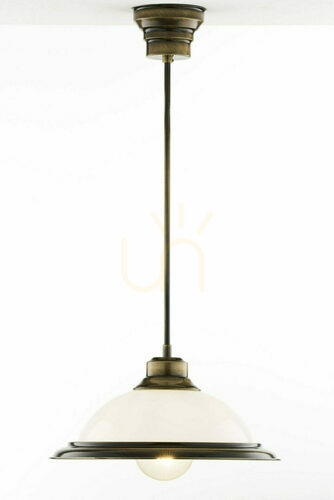
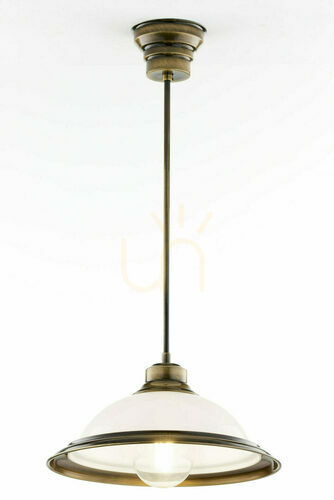
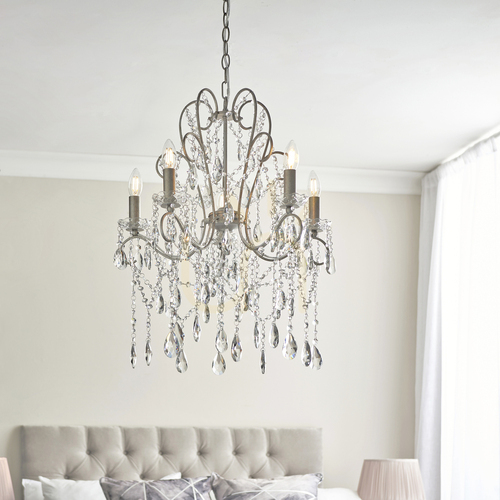
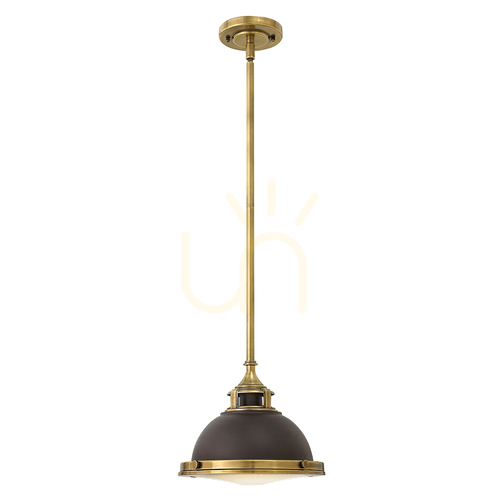
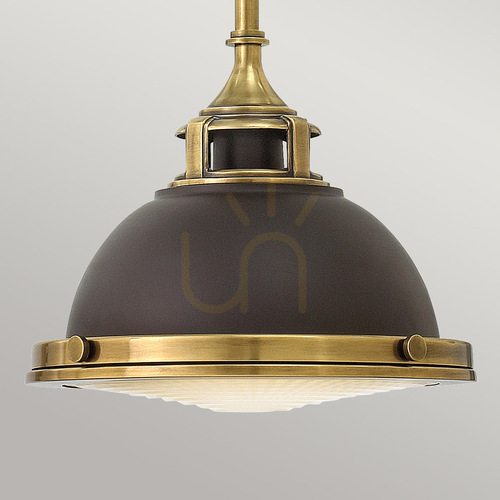
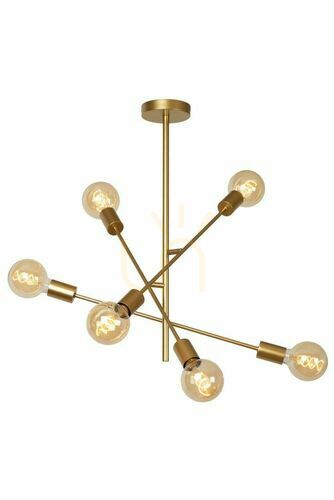
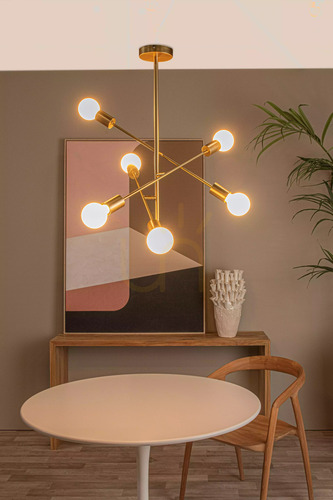
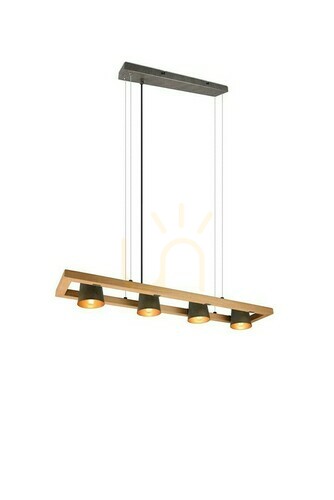
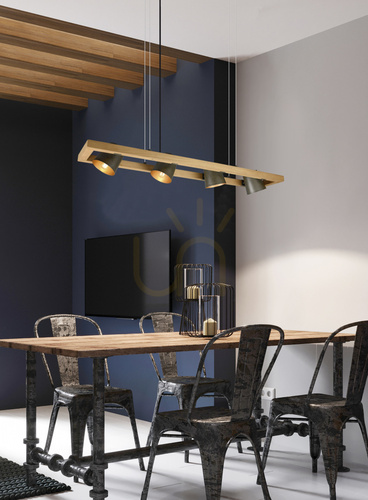
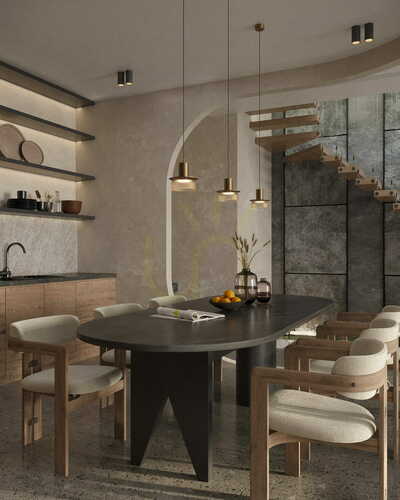
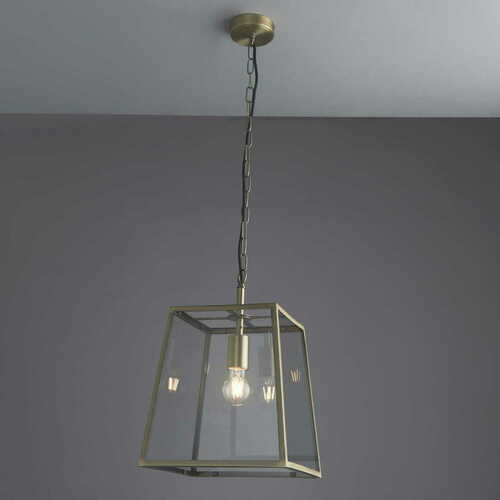
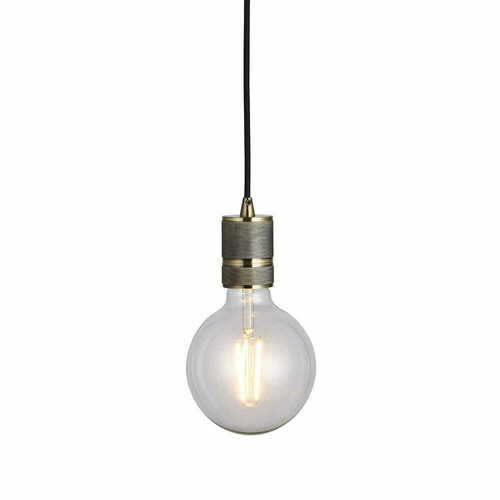
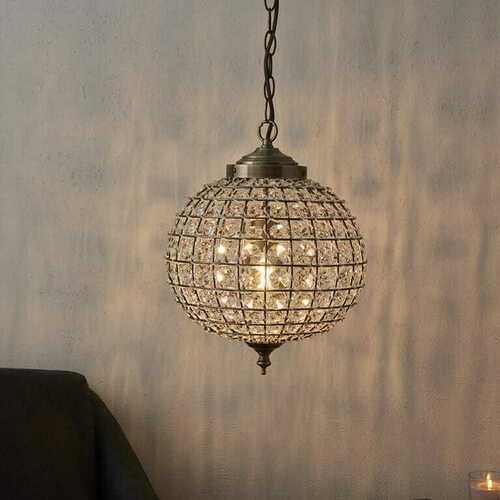
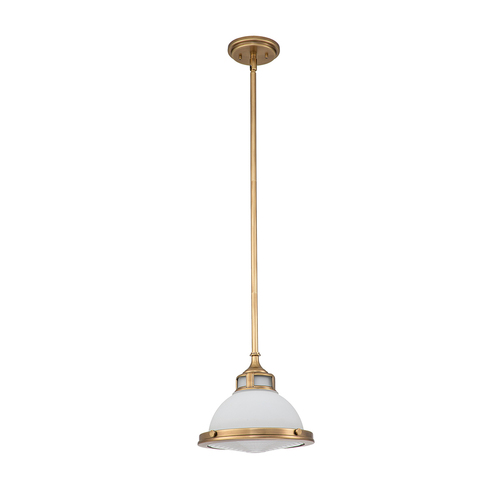
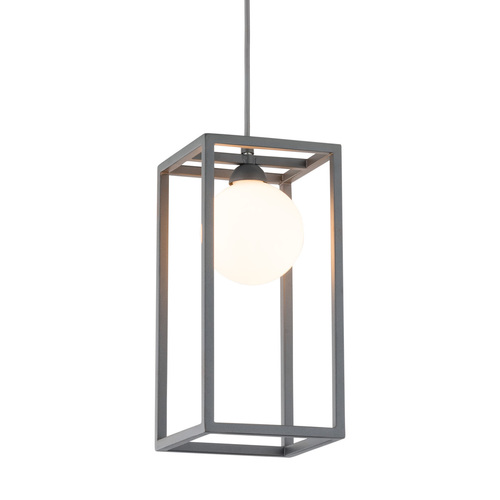
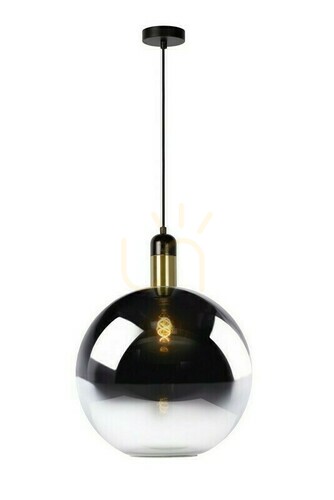
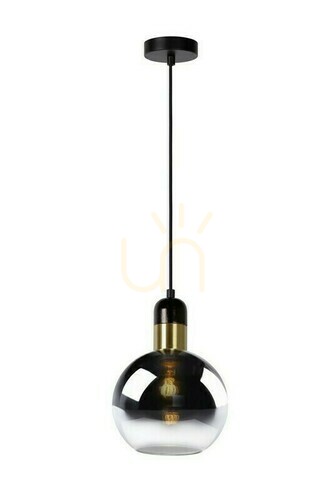
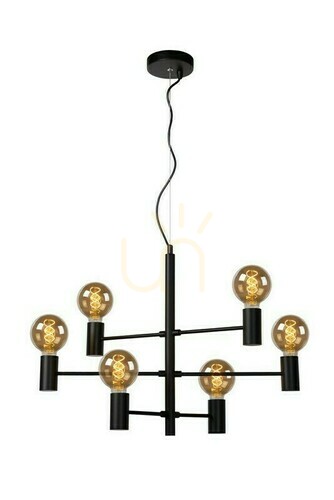
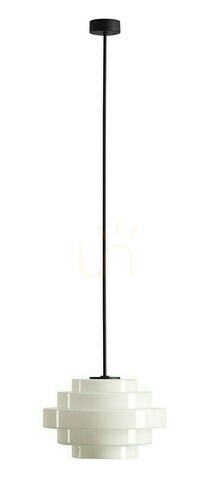
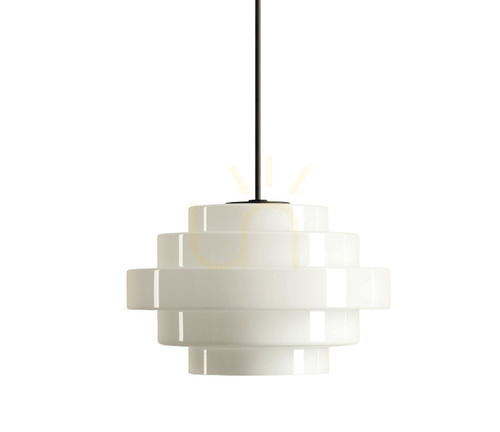
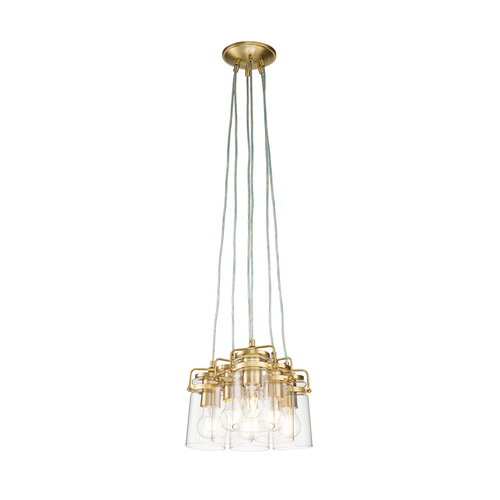
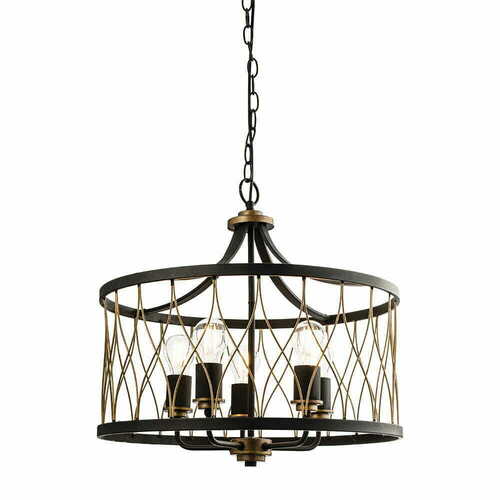
Vintage pendant lights hang the whole style at eye level, which is why this is where people usually start. A blackened steel dome on a chain, a ribbed glass shade with a brass gallery, a cage guard over a filament lamp, an enamelled reflector with a rolled edge — the shade is close enough to be read as an object, and the surface is the point. Vintage describes a condition rather than a decade: the fitting is built to look as though it has been in the room longer than the kitchen has.
Size it against the table
Diameter is where most of these decisions go wrong, because a shade that fills a photograph is often 40 cm across in life. Fix the scale before the finish.
Shade diameter and number against table size
| Table |
One shade |
A row |
Drop |
| Round, 90 to 110 cm |
30 to 38 cm, centred |
Not a row — a circle never resolves under a line of shades |
Bottom edge 70 to 75 cm above the top |
| Rectangular, 120 to 150 cm |
38 to 45 cm |
Two small shades at 20 to 25 cm, set in 30 cm from each end |
70 to 80 cm above the top |
| Rectangular, 160 to 200 cm |
45 to 55 cm |
Three at 18 to 25 cm, evenly spaced, outer two set in 30 cm |
70 to 80 cm above the top |
| Kitchen island, 180 cm and up |
Rarely enough on its own |
Three at 20 to 28 cm, or two larger at 35 cm |
75 to 85 cm above the worktop, because people stand here |
| Open floor, no furniture under it |
Any diameter the room carries |
Cluster at staggered heights, above 2.7 m only |
2.05 m of clear headroom, minimum |
What this range is made of
87 products carry the vintage style in the pendant category. The attributes are filled in sparsely, so each figure below is a floor rather than a percentage of the range.
-
Metal and glass, in that order. 54 are recorded as metal and 28 specifically as steel, while 30 carry glass and seven use wood. Brass, marble, resin and leather turn up on a handful of models each.
-
Black is the dominant finish, on 52 products, followed by brass on eight and gold on six. Beige, clear glass, chrome, natural wood and a single blue account for the rest. Blackened metal with a warm metal detail is the register this range is built in.
-
Single-shade fittings lead but do not monopolise. 46 take one lamp; after that come nine six-lamp frames, eight with four, seven with three, five with eight and a pair with ten. The multi-lamp frames are the ones for a stairwell or a wide island, not for a small kitchen table.
-
Dry rooms. 79 are IP20 and only two carry IP54, and every fitting whose voltage is recorded runs on 230 V. A covered terrace or a bathroom needs the rating checked on the individual product.
Chain, rod or flex
Chain
The most convincing vintage suspension and the most adjustable: links come off, so the drop can be set on site rather than guessed. The cable runs alongside or through the chain, which is a visible detail — a braided flex looks right against blackened steel, a white PVC one does not.
Rigid rod
Usually supplied as sections you combine to a fixed length. It holds a heavy metal shade dead still, which matters over a table where a chain-hung shade will swing every time a door closes. The drawback is that you must know your ceiling height before ordering, because the sections are stepped.
Fabric-braided flex
Lightest and cheapest to adjust, right for small shades and for clusters at different heights. Check whether the flex is shortenable at the ceiling rose: a fixed 150 cm drop is unusable in a 2.4 m room and cannot be fixed after the fact.
The lamp is on display
70 of these fittings take an E27 cap and eight take E14; five are built around an integrated LED module. 83 arrive without a bulb, so on nearly every product here the light source is a separate purchase and a separate design decision. On a vintage pendant that decision does more work than on any other fitting in the house, because the shade is usually open at the bottom and the lamp is visible from a seated position.
- Behind clear, smoked or ribbed glass, or inside a cage, use a filament-style LED at 2200 to 2400 K. The visible coil is what makes the fitting read as old; a modern frosted lamp in the same shade reads as a new fitting painted black.
- Over a dining table, comfort beats theatre. If people sit under it every evening, a frosted lamp inside the shade is worth more than an exposed filament, however good the filament looks in a photograph.
- 70 models are recorded as taking a replaceable LED lamp, so colour temperature stays reversible. Fittings with an integrated module take that choice away for good, which is worth knowing before choosing one.
- Check the internal depth of the shade against the lamp you plan to use. A 125 mm decorative globe will not disappear inside a shallow enamelled reflector, and a filament lamp that hangs below the rim glares straight into the room.
- 400 to 800 lumens is enough over a table at a 75 cm drop. The short distance does the work; a brighter lamp at that range simply makes the pool of light harsher.
Where these come from
Italux supplies 38 of the products here and Lucide 27, with Endon on six, Fabbian and Ideallux on five each, and single entries from Nowodvorski, Keter Lighting and Elstead Lighting. Those two leading suppliers pull in different directions — heavier blackened steel and cage work on one side, softer glass-and-brass domestic pieces on the other — so it is worth deciding which of the two readings you want before filtering on colour or diameter.
Questions people ask
Should the pendant be centred on the ceiling rose?
Only if the rose happens to sit over the table, which it usually does not. A hook above the table with the flex or chain run diagonally back to the existing point is a period-correct solution rather than a compromise — swag-hung pendants were sold that way for decades.
Will a single pendant light a whole kitchen?
No. A shade open at the bottom throws a defined circle downward and leaves the worktops dark. Treat the pendant as the light over one surface and add something else for the room — that division of labour is exactly what these fittings were drawn for.
Cage guard or glass shade?
A cage shows the lamp completely and diffuses nothing, so it is a decorative fitting that happens to emit light. A glass shade, even a lightly smoked one, softens the source and can actually be sat under. In a kitchen, cages over a passage and glass over the table is a combination that works.
How does this differ from mid-century?
Mid-century is period geometry that looks freshly made — opal globes, spun cones, thin brass. Vintage sets out to show wear. Mid century pendant lights covers the first of those if it is the cleaner look you are after.
What lights the rest of the room?
The same finish family runs across the ceiling and the walls. Vintage ceiling lights compares the pendant against flush and multi-arm forms for the rooms where nothing can hang, and vintage wall lights covers corridors, bedsides and the wall beside a kitchen table.