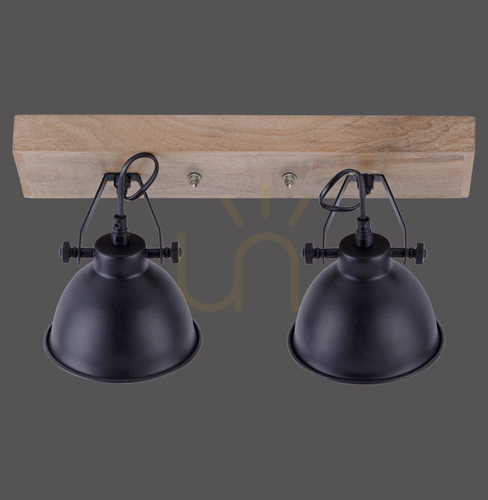
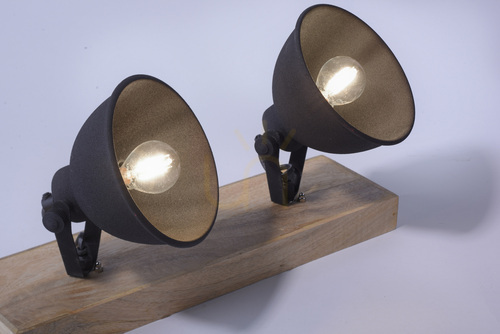
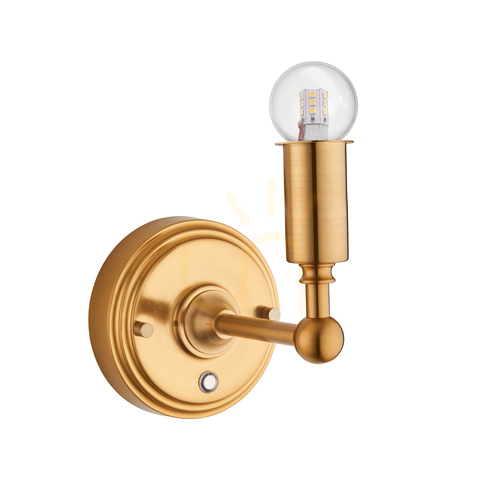
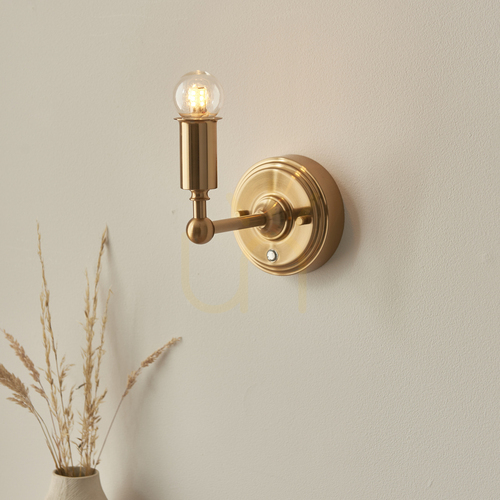
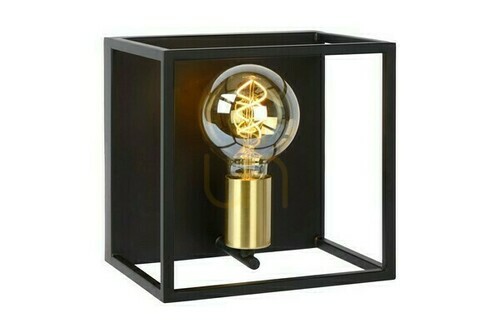
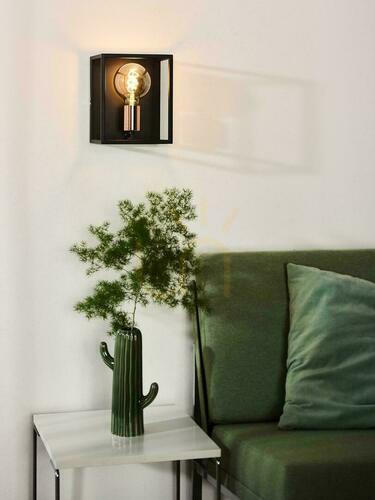
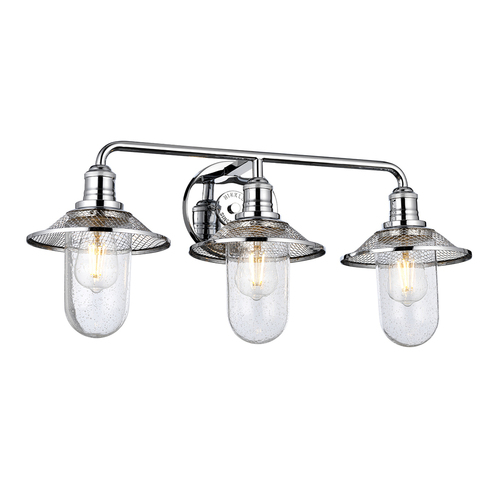
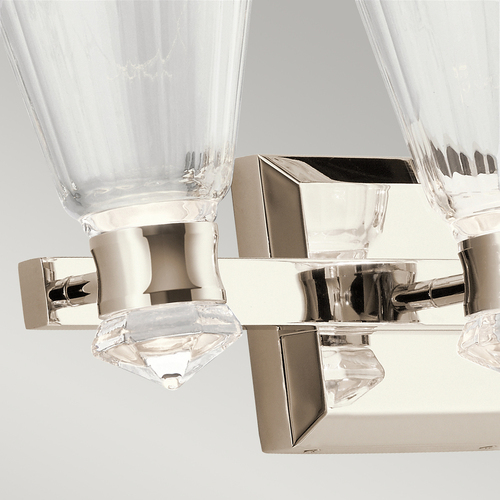
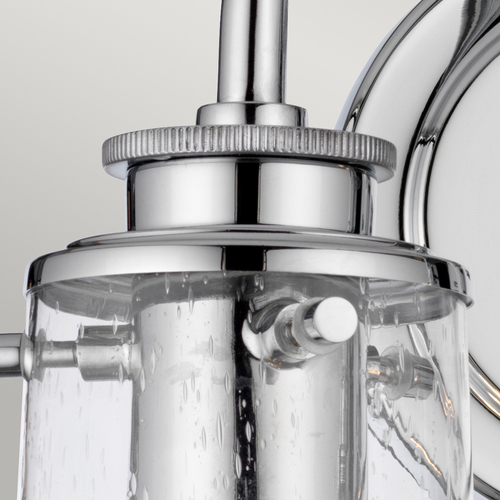
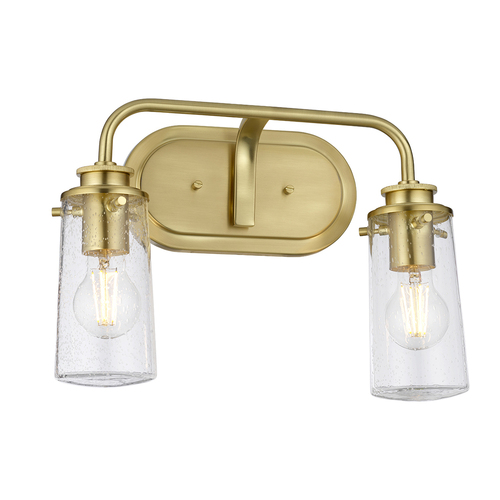
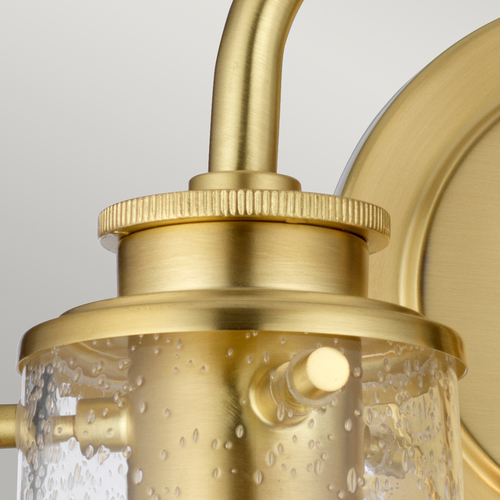
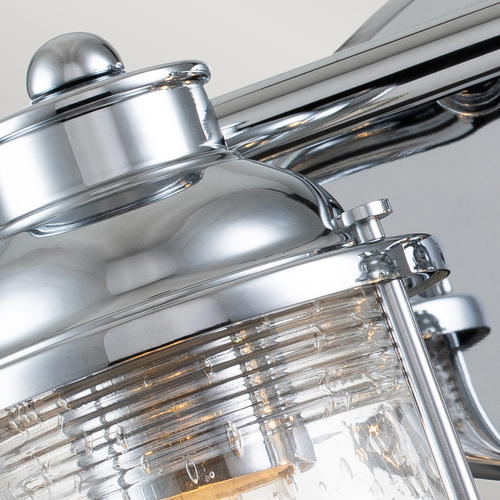
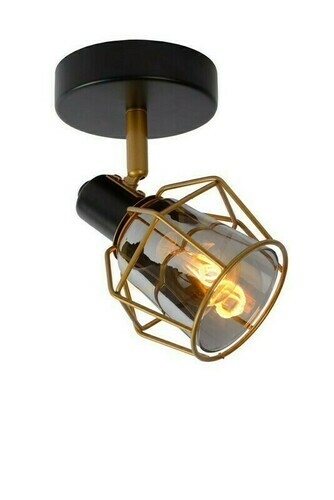
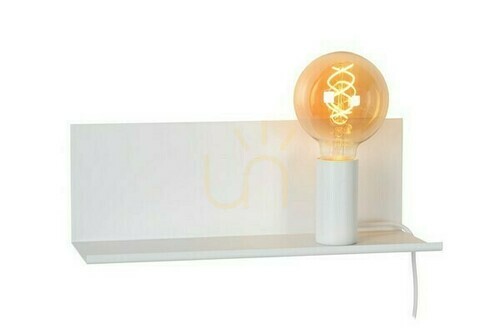
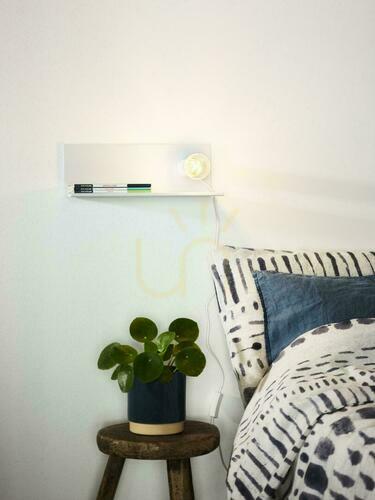
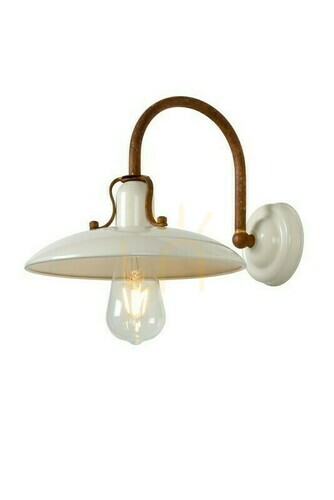
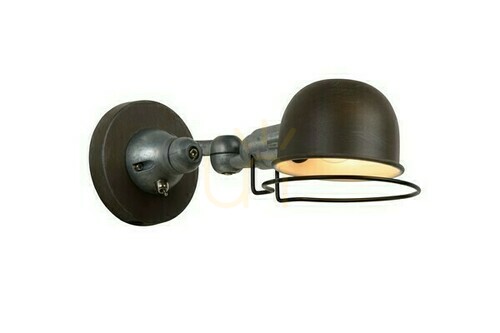
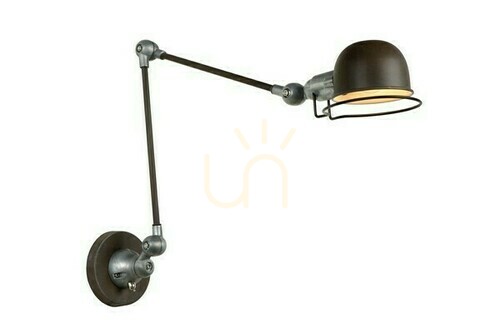
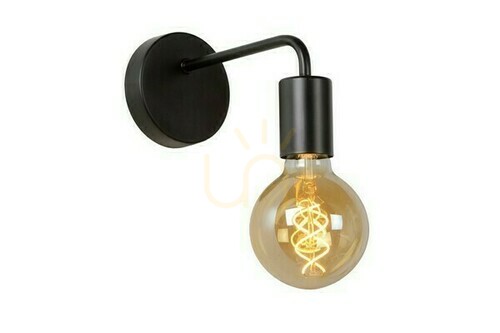
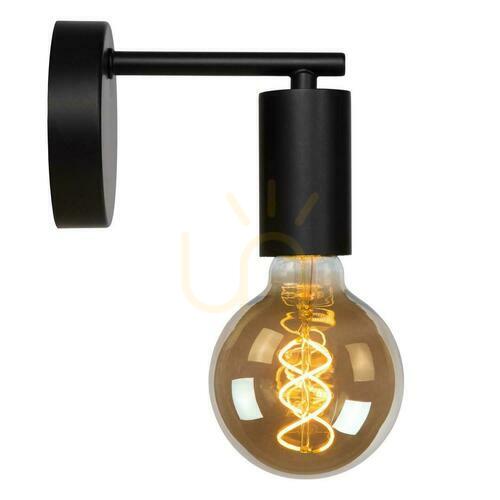
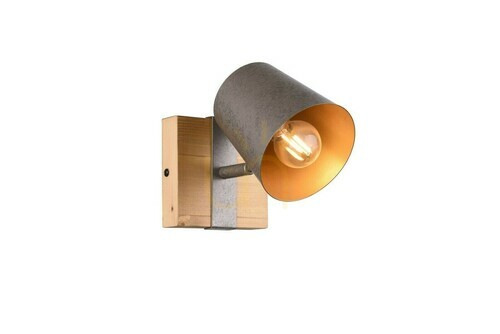
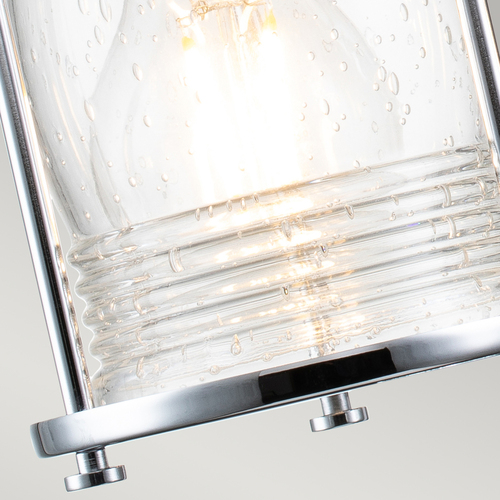
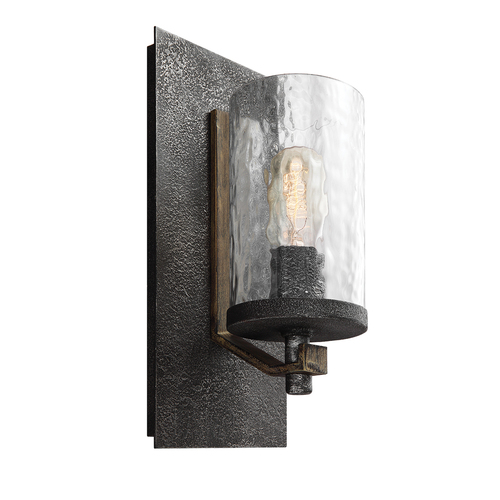
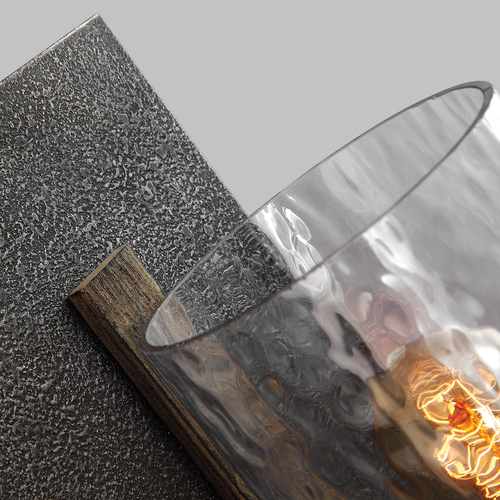
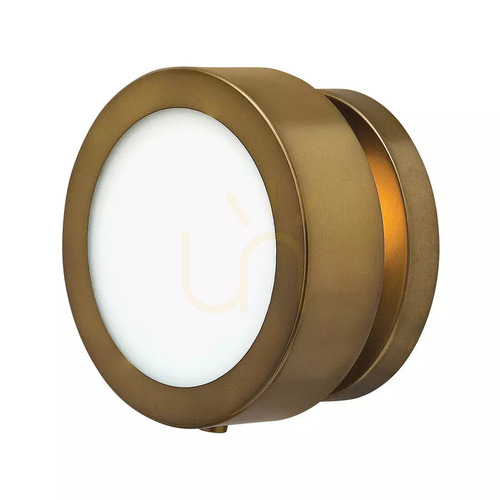
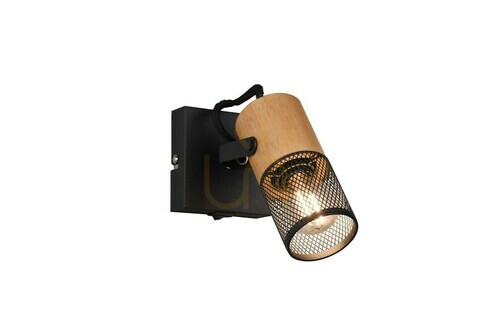
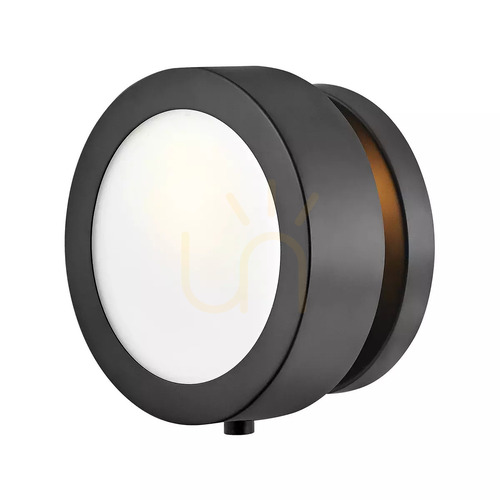
Search for wall lights vintage and what you are after is a bracket that looks as though it predates the wall it is fixed to: blackened or aged metal, a small enamelled reflector or a ribbed glass shade, a visible screw fixing, sometimes a cage over the lamp. Vintage is a surface condition rather than a period, which is why the same page holds a plain steel plate for a corridor and a brass-collared glass dome for the wall beside a mirror. What they share is the intention to look used.
Height is the decision that costs money to change
A wall light is drilled into plaster. Get the height wrong and the fix is filler, paint and a second set of holes, so it is worth marking the position with tape and living with it for an evening before anybody starts. All figures below are to the centre of the backplate, from the finished floor.
Mounting heights by position
| Position |
Height |
Spacing and notes |
| General light along a wall |
1.5 to 1.7 m |
Every 2.5 to 3 m. Above 1.7 m an open-topped shade shows you its inside from standing height |
| Beside a bed |
1.1 to 1.25 m, or 50 to 60 cm above the mattress |
Reading needs the shade in front of your shoulder, not behind it |
| Flanking a mirror |
Centre 1.6 to 1.7 m |
75 to 100 cm apart. Two lights at the sides fill the shadows under the eyes; one above does the opposite |
| Corridor |
1.6 to 1.8 m |
Nothing projecting more than about 10 cm below shoulder height, or people walk into it |
| Stairs |
1.6 to 1.8 m above the tread directly below |
Measure from the step under the fitting, never from the landing, or the run steps unevenly |
| Above a picture |
15 to 20 cm above the frame |
The arm must clear the frame or the top of the canvas burns out and the bottom stays dark |
What is actually in this range
40 products carry the vintage style on wall lights. These attributes are filled in sparsely, so read the counts as floors rather than as shares.
-
Metal, with glass as the softener. 22 are recorded as metal and 16 specifically as steel, with ten carrying glass. Wood, aluminium and resin appear on one or two each. There is no fabric in this range at all, which is what separates it from a period-revival bracket with a shade.
-
Black leads by a wide margin, on 25 products, then brass on three, and white, grey, brown and beige on two each, with single entries in anthracite and silver. If you want a warm metal rather than a dark one, the brass end of the range is small and worth filtering for early.
-
Almost all single-lamp. 36 take one lamp, three take two, and one is a six-lamp frame. These are accent and circulation fittings, not room lights, and the product mix says so.
-
Dry rooms by default. 38 are IP20, with one IP44 and one IP54. Every product runs on 230 V.
Bathrooms and the protection rating
A wall light near water is governed by its IP rating, not by taste, and this is where the vintage look runs into a real constraint. Inside the zone immediately around a bath or shower, and for 60 cm beyond it, a fitting needs at least IPX4 — protection against splashing from any direction. A light beside a basin mirror is normally specified at IP44 for the same reason. This range has only two fittings with any splash rating at all, so if the wall you have in mind is in a bathroom, check the rating on the individual product before anything else. A brass finish in an unventilated bathroom will also bloom within a couple of years whatever its rating says; chrome and nickel survive that room far better. Anything in a bathroom is work for an electrician, everywhere in the EU.
The lamp, and the fact that none of them include one
All 40 products here arrive without a bulb. 27 take an E27 cap and eight take E14, with a couple each on G9, GU10 and an integrated LED module. 37 are recorded as taking a replaceable LED lamp, so the light source stays a reversible decision on nearly everything in the range.
- 2700 K, or 2200 to 2400 K where a filament lamp is visible through clear or ribbed glass. A wall light sits 10 cm from the paint, so it is effectively lighting the wall colour at close range and a cooler source turns warm plaster grey-green immediately.
- Any fitting with a visible lamp at eye level wants a frosted or opal bulb unless the whole point is the filament. This is the worst position in the house for a bare high-output source, and a corridor is the worst room for it.
- A pair beside a bed should be on the same dimmer, at the same colour temperature, from the same batch. Mismatch is far more visible in a symmetrical pair than anywhere else.
- Check the maximum wattage where a shade sits tight against the wall. Heat has nowhere to go, and against plaster that limit is not theoretical.
Hard-wired or plugged in
This split has nothing to do with style and everything to do with whether you can drill. A hard-wired bracket sits over a recessed box on a switched circuit and commits you to the position. A cord-and-plug version runs a visible flex to a socket, usually with a switch on the cable — the answer for renters, and a period-correct detail rather than a compromise, since braided flex clipped down a wall was how these fittings were installed at the time. Check which one a product is before ordering; converting between them is not a job for the buyer.
Who supplies this range
Lucide and Italux carry 17 products each — most of the page between them — with Endon on three, Ideallux on two and Quintiesse on one. The two leaders read differently: one leans towards softer glass-and-metal domestic brackets, the other towards heavier blackened steel with visible fixings. Decide which of those two a room wants before filtering on colour.
Questions people ask
How many wall lights does a room need?
Fewer than most plans show. A pair beside a bed, a pair flanking a fireplace or mirror, or an evenly spaced run down a corridor. Trying to light a whole living room from the walls gives you a ring of bright patches and a dark middle, and with 36 of these being single-lamp fittings, that is what the range is built for.
Should a pair mirror each other?
If the fitting has a direction — an asymmetric arm, a shade that tilts, a hinge — a mirrored pair looks composed and two identical units look like an oversight. Symmetrical shapes can simply be repeated. Many models are not made handed, so check before assuming.
Can I put a vintage bracket on a dimmer?
Only if the lamp says it is dimmable. With retrofit LED lamps a trailing-edge dimmer is the usual answer, and every dimmer has a minimum load, so a single low-wattage lamp on an older dimmer will buzz or flicker at the bottom of its range. Two fittings on the same circuit usually solve that.
What lights the rest of the room?
Wall brackets are a supporting layer. Vintage ceiling lights covers the overhead fitting they are meant to supplement and sets out which forms a given ceiling height can take, and vintage table lamps handles the surfaces where a wall fixing is not possible.
What if I want something heavier and more industrial?
Then the register is different: raw steel, mesh guards, conduit and deep reflectors. Industrial wall lights covers the domestic version of that language, which shares the metals but not the softness.