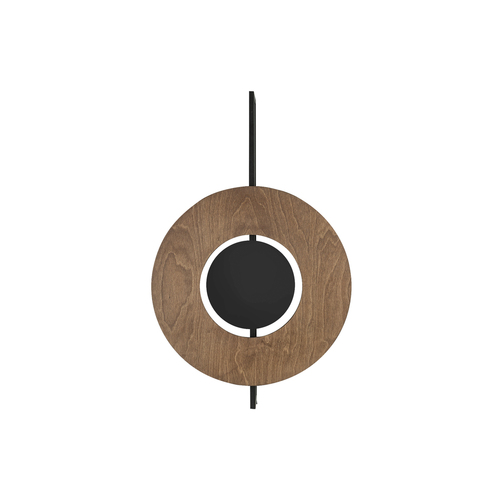
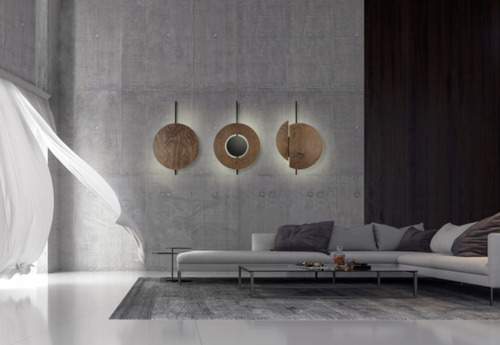
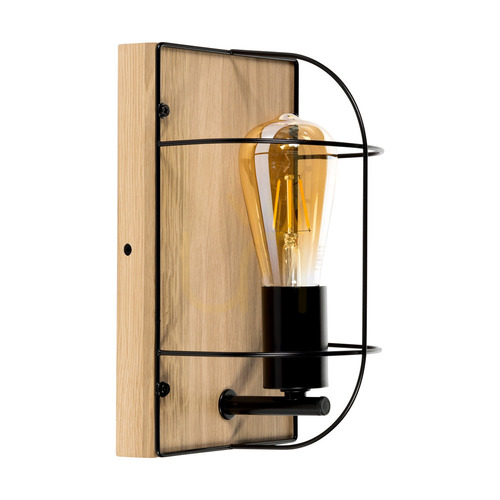
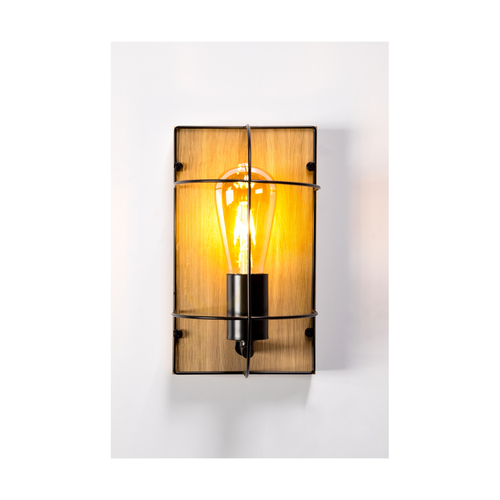
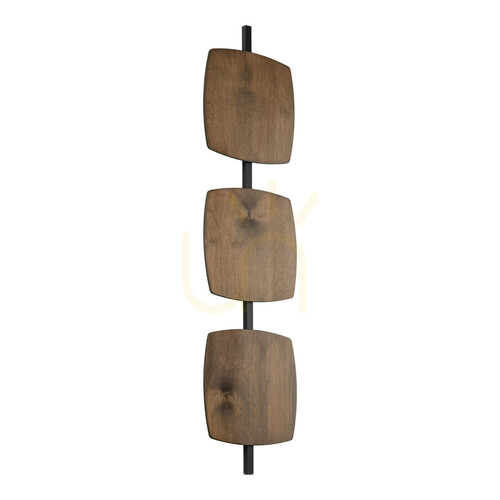
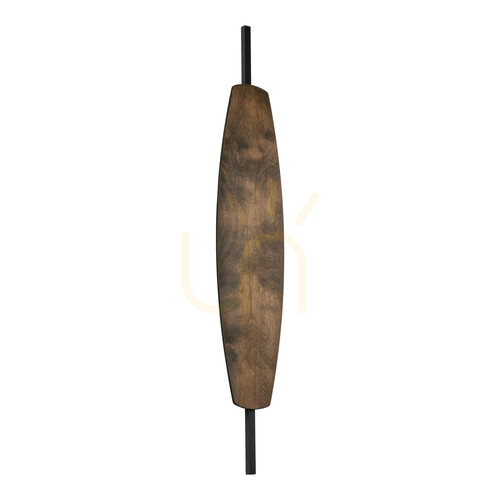
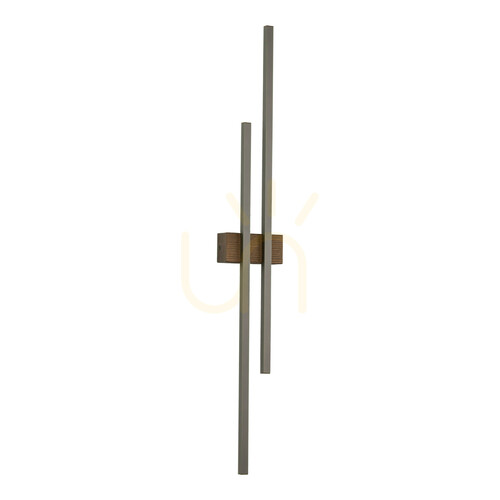
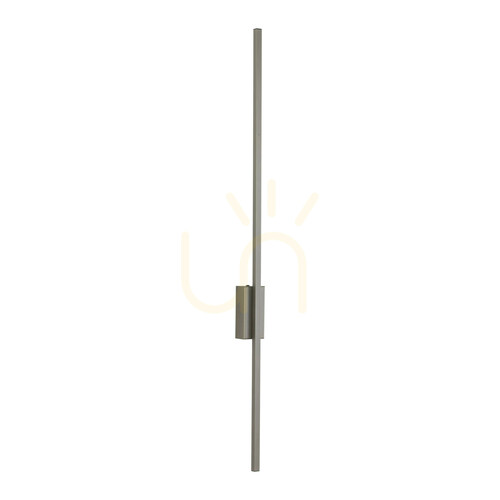
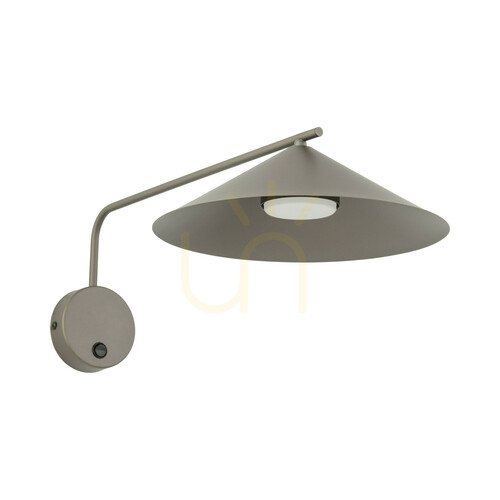
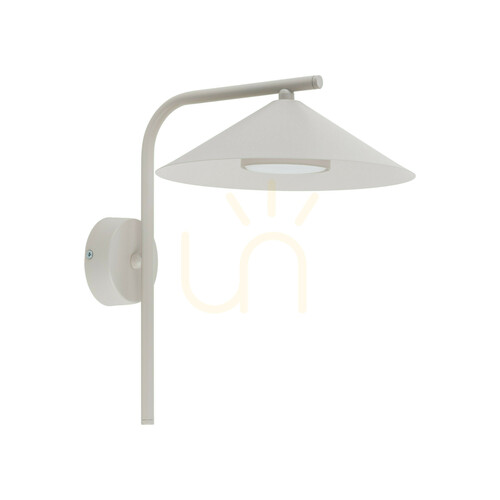
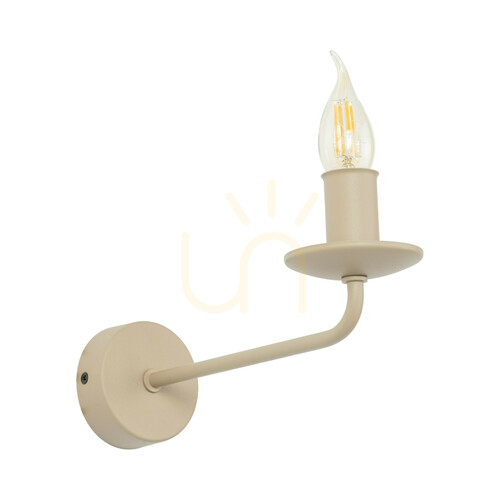
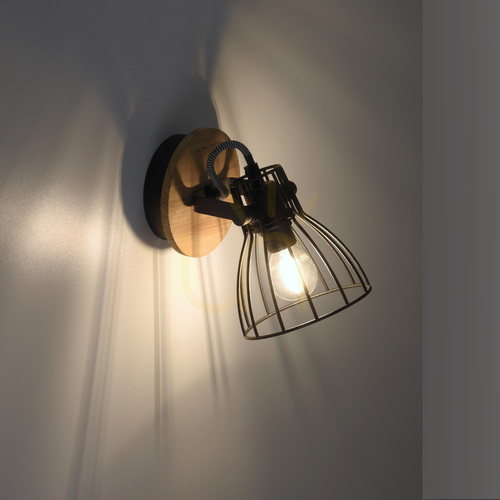
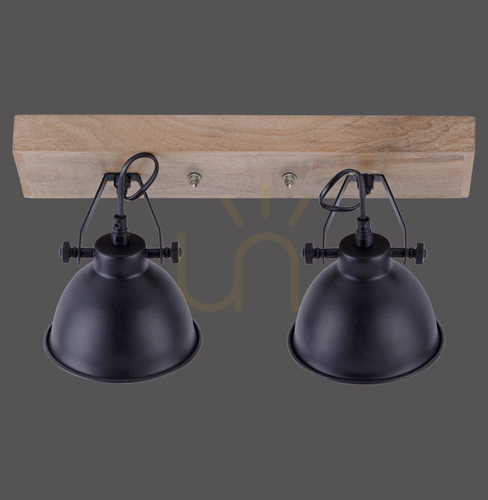
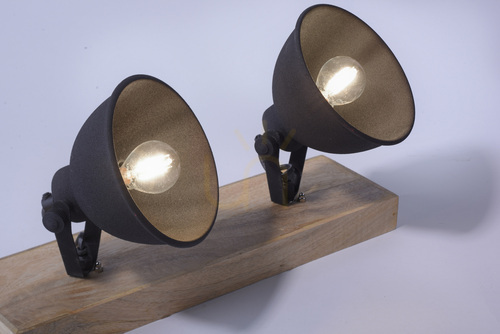
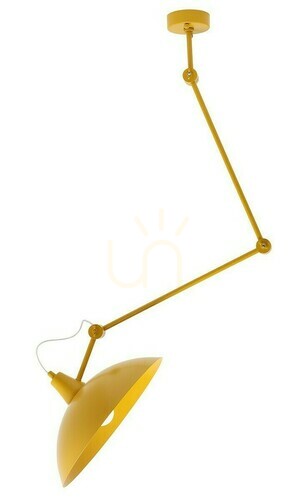
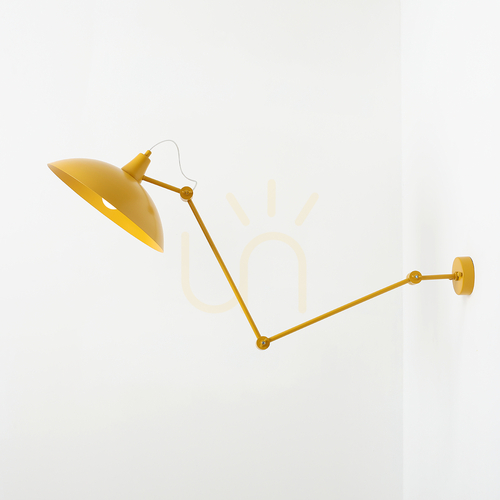
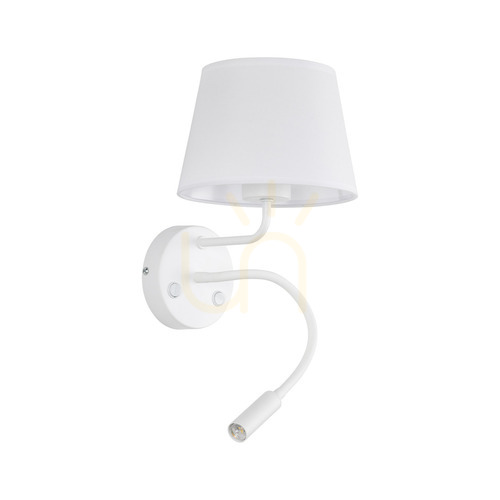
Industrial wall lights for a home are the domesticated version of the factory bracket: the same black steel, exposed screws and open shades, but scaled down and softened — mesh where the original had a heavy cage, brass details where it had bare galvanising, a diffuser where it had nothing at all. The loft reading of the style exists because a converted building has hard walls and visible services, and a bracket that admits to being a piece of equipment sits better against brick or concrete than one pretending to be furniture.
Four families, and what each one is for
The word covers fittings that behave very differently. Working out which family the wall needs takes about a minute and saves the wrong purchase.
The wall fitting families in this style
| Family |
Form |
What the light does |
Best position |
| Up-and-down washer |
A short cylinder or box open at both ends, usually two lamps |
Two soft triangles on the wall, almost nothing into the room |
Corridors, stairs, an exterior-facing wall indoors; architectural rather than practical |
| Open shade on a short arm |
A spun or pressed metal cone, often tilting |
A directed pool, downward or angled |
Above a sideboard, beside a bed, over a work surface |
| Caged or meshed bulkhead |
A glass or acrylic dome behind a metal guard, fixed flat to the wall |
Even and undirected |
Passages, utility spaces, anywhere the fitting could be knocked |
| Adjustable arm or spot |
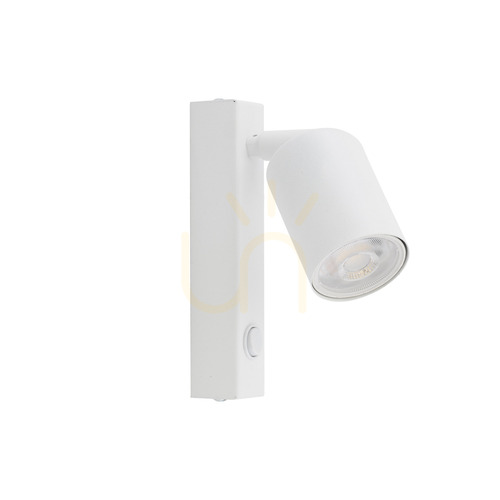
A jointed arm or a single head on a ball joint |
Aimed light on a defined target |
Reading, artwork, a splashback |
321 products carry this style on wall lights, and 89 of those whose type is recorded are wall brackets proper. The attributes behind every figure here are filled in sparsely, so treat each count as a floor rather than as a share of the range.
The two-lamp fitting is the signature
213 products in this range take a single lamp, but 73 take two — a far higher proportion than in most styles, and it is the up-and-down washer that accounts for it. That form is worth understanding before you buy one, because it is the fitting people most often put in the wrong place. It lights the wall, not the room. On brick, concrete or textured plaster it looks superb and gives a corridor rhythm without glare. On smooth painted plasterboard it shows every imperfection in the surface, and it will not help you read a single word.
Sockets, and what they say about the fitting
90 fittings here take G9 capsules and 89 take E27, with 42 on GU10, 14 on GX53 and 11 on E14; another 40 are built around an integrated LED module. The split is informative. G9 and GX53 are compact sources, which means a small sealed body — usually a washer or a slim box. E27 means a real shade with a real bulb behind it. GU10 means a directional head with a beam angle to choose.
- 67 of these products include a light source, which is unusually high; 220 do not. Check which before ordering, because a two-lamp washer needs two lamps and they are not always the ones you would have chosen.
- 89 are recorded as taking a replaceable LED lamp and nine have an integrated module. An integrated fitting fixes the colour temperature for its life, so if 4000 K arrives and you wanted 2700 K, there is no correction available.
- Of the products that record a light colour, 32 are warm, nine neutral, three colour-changing and two cool. Where the choice is yours, 2700 K on brick and warm plaster, 3000 K where the wall is grey concrete — a cool source on warm brick turns it a flat pink.
- GU10 beam angles run from roughly 24 to 60 degrees. Narrow for a picture or a splashback, wide for general light. This is the specification that decides whether a spot arrangement looks considered or patchy.
Mounting heights and projection
-
General light along a wall: centre of the backplate 1.5 to 1.7 m from the floor, repeated every 2.5 to 3 m.
-
Beside a bed: 1.1 to 1.25 m, or 50 to 60 cm above the mattress top. For reading you need an adjustable head or at least 30 cm of reach; a flush washer at that height lights the headboard and nothing else.
-
Corridors: nothing projecting more than about 10 cm below shoulder height. This is why the flat washer and the bulkhead exist, and why they dominate this part of the range.
-
Stairs: 1.6 to 1.8 m above the tread directly beneath the fitting, not above the landing, or the run steps unevenly up the wall.
-
On brick or concrete: the fixing is easier than on plasterboard but the cable route is harder. Surface conduit run deliberately is part of this style rather than a failure of it, and it is often the only way to get power to the position you actually want.
Damp rooms and outdoors
303 of these products are IP20 — dry rooms only. Ten carry IP44, one IP54 and one IP23, and exactly one is recorded as an outdoor wall light. A bathroom needs at least IPX4 inside the zone around a bath or shower and for 60 cm beyond it, and a fitting beside a basin mirror is normally specified at IP44. With a range this size, that means the handful of rated products is worth filtering for directly rather than hoping a given design happens to qualify. A bare metal bracket in an unventilated bathroom will also corrode at the fixings within a couple of years, whatever its rating says.
What is in the range
-
Steel and metal dominate: 108 recorded as steel, 92 as metal, 28 as aluminium. Glass appears on 46, wood on 15 and brass on seven, with plastic and acrylic largely accounting for diffusers rather than visible bodies.
-
Black leads, on 126 products, with white on 64 — the second colour matters here, because a white washer on a white wall disappears and reads as light rather than as a fitting. Brown on 28, brass on nine, beige on nine, grey on eight and gold on seven fill in the warmer end.
-
Suppliers: TK-Lighting carries 147 of them, then Nowodvorski on 42, UMMO on 33, Antigo on 20, Italux on 17, Aldex on 13, Ramko on ten and Lucide on six. The volume names cover black steel washers and shades; the smaller ones carry the plaster, concrete and brass pieces that pull the style towards the domestic end.
Questions people ask
Will an up-and-down washer light a corridor properly?
It will make a corridor look good and it will not make it bright. Two triangles of light on the wall give you enough to walk by and a strong sense of rhythm, which is exactly what a passage needs. If the corridor also holds a coat rail or a door lock you have to find in the dark, add a ceiling fitting.
Hard-wired or plug-in?
Most of this range is hard-wired, sitting over a recessed box on a switched circuit. A cord-and-plug version runs a visible flex to a socket, which is the answer for renters and — in this style specifically — a period-correct detail rather than a compromise, since exposed cable is part of the language.
How is loft different from industrial?
Intention rather than vocabulary. The industrial original is factory equipment with no concession to the room: raw steel, heavy cages, deep enamel reflectors. The loft version keeps the shapes and makes them habitable — black instead of galvanised, mesh instead of cage, brass details, warmer glass. Industrial chandeliers covers the heavier reading.
Can a bracket replace a bedside lamp?
Only an adjustable one. A fixed washer or bulkhead at bedside height lights the wall behind you, which is pleasant and useless for reading. Look for a jointed arm with at least 30 cm of reach, or a spot head that tilts down onto the page.
What else belongs on the same walls?
The ceiling comes first in practice, because it sets the level everything else fills in around. Industrial ceiling lights compares pendants, flush fittings, spot bars and track for the same style, and vintage wall lights is the neighbouring register if you want the metals aged rather than newly painted.