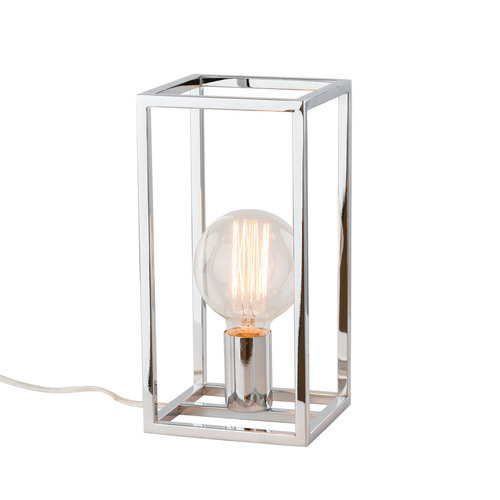
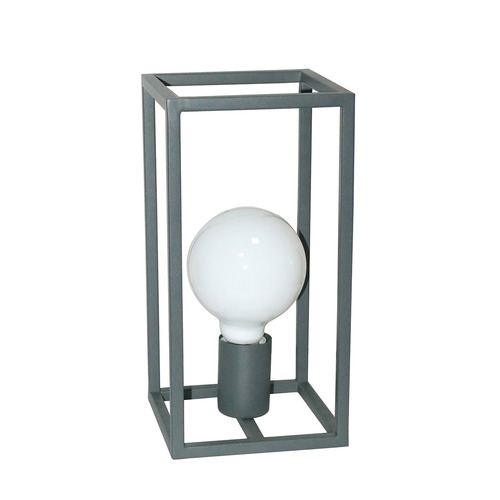
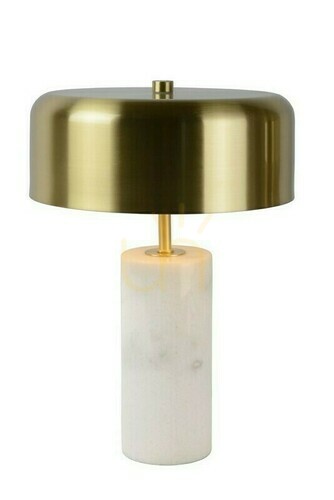
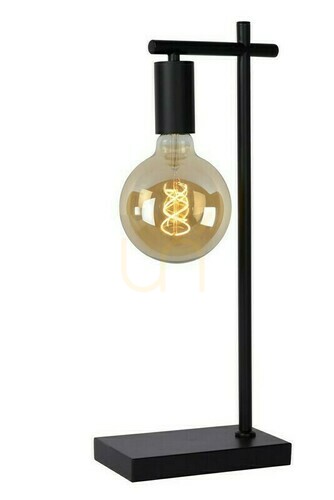
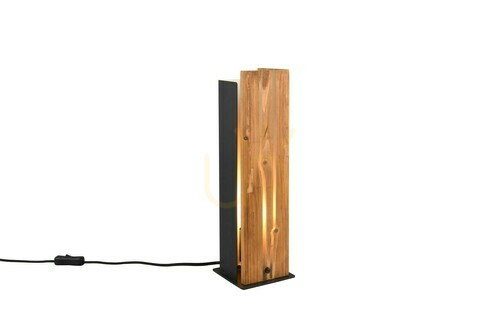
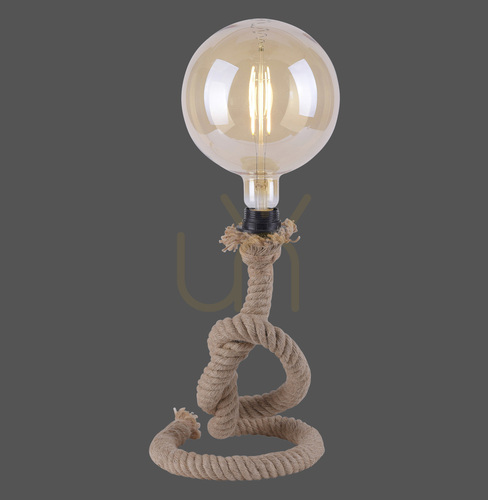
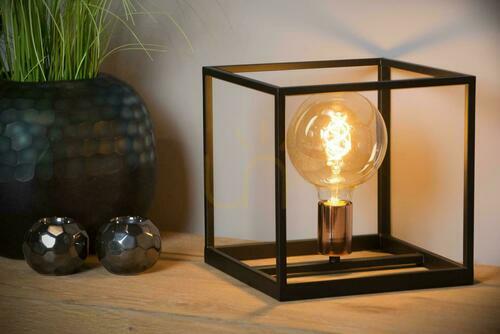
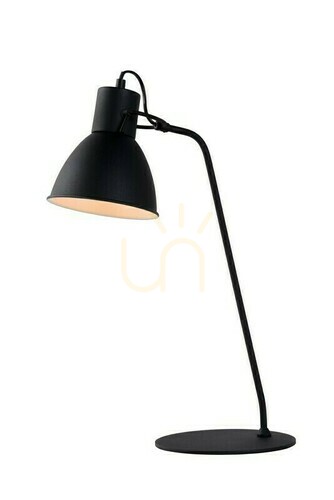
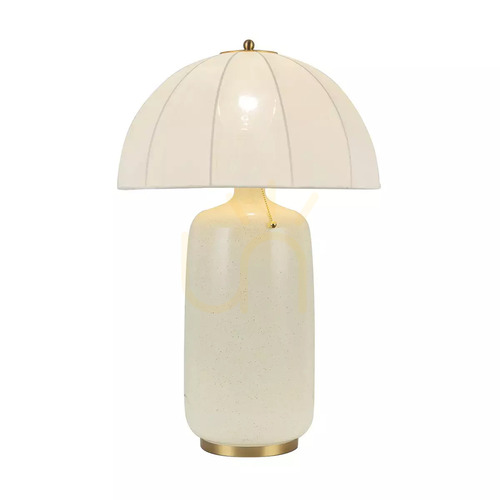
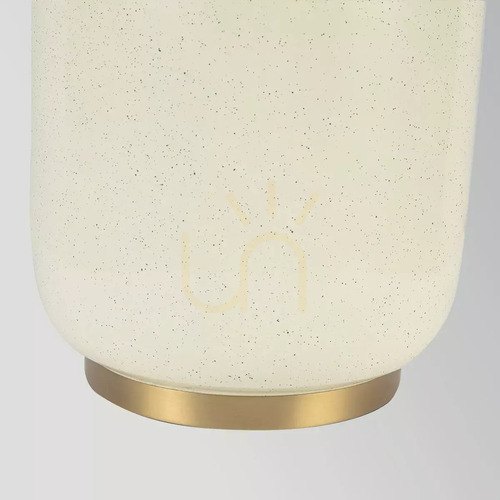
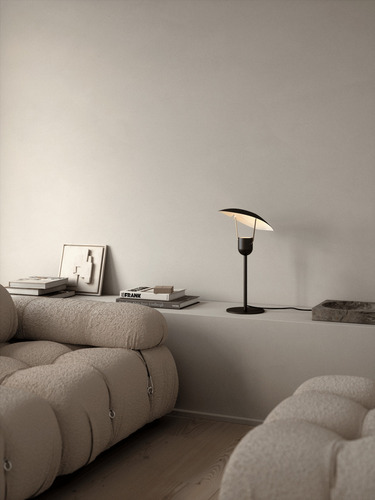
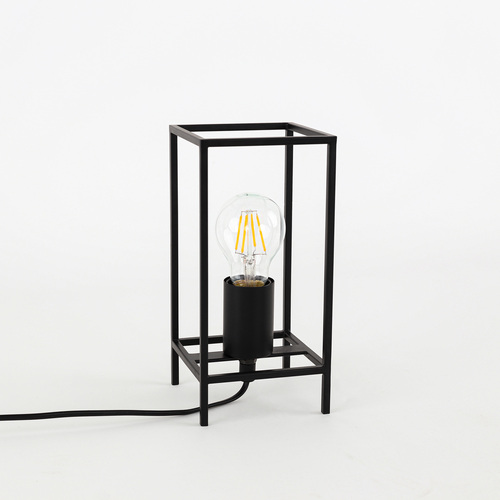
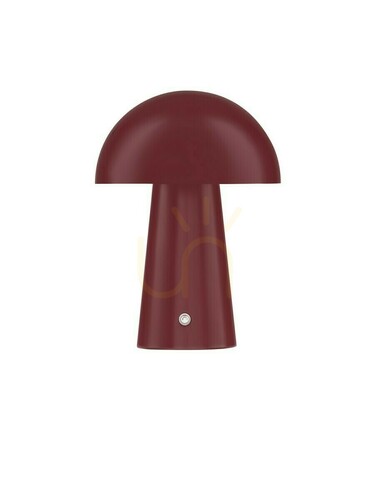
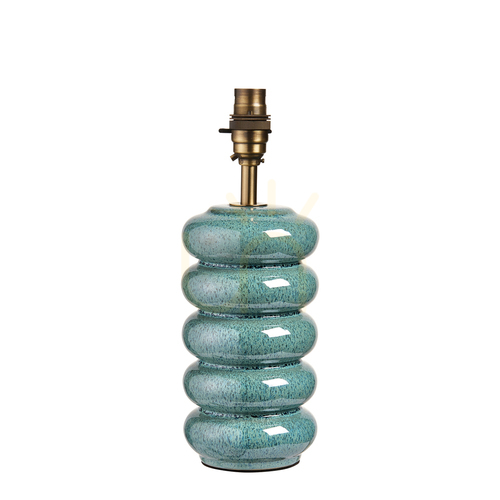
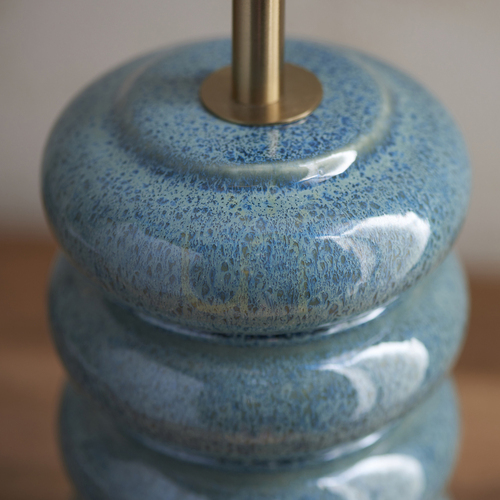
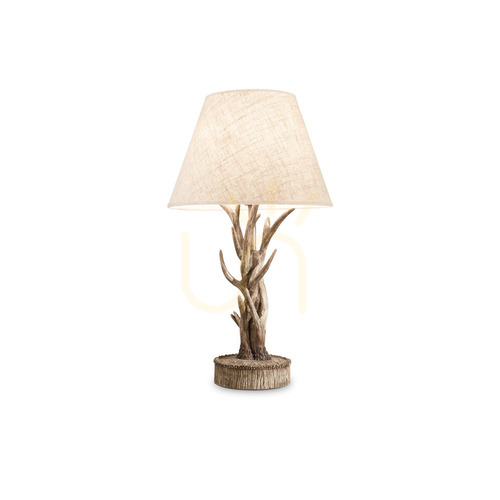
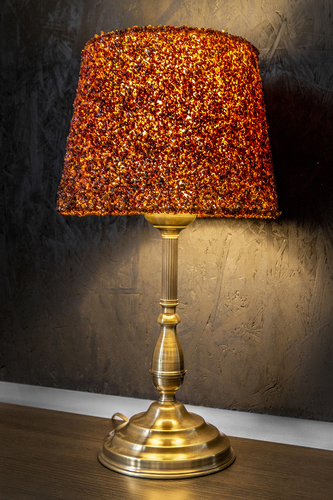
Vintage table lamps put the aged surface where you can actually touch it. On a ceiling fitting the patina is four metres away; on a sideboard it is at arm's length, so the finish has to survive being handled — a blackened metal body that shows its machining, a marble base with the veining left visible, smoked or amber glass, a brass collar that has been allowed to darken rather than lacquered bright. Vintage here describes how the lamp reads rather than when it was made, and the whole effect lives or dies on the base.
Decide what the lamp is for first
Three jobs hide behind one word, and buying on looks alone is how a beautiful lamp ends up in the wrong room. Roughly a third of the products on this page are recorded as desk lamps rather than as table lamps, which tells you the split is real and not theoretical.
The three jobs a table lamp does
| Job |
Total height |
Output |
What it needs |
| Decorative, on a sideboard or console |
45 to 65 cm |
300 to 500 lumens |
To be seen. An opaque metal shade is fine, because the point is a pool of light on the surface |
| Reading, beside a chair or a bed |
50 to 70 cm on a side table around 50 cm high |
500 to 800 lumens |
The bottom of the shade below eye level when seated, and a switch you can find without looking |
| Task, on a desk |
Adjustable, 40 to 60 cm at working position |
600 to 1,000 lumens on the page |
An arm or a tilting head. A fixed shade lights a 40 cm circle and leaves the rest of the page in shadow |
What this range is built from
19 products carry the vintage style in the table lamp category, so this is a small and fairly specific selection rather than a broad one. The attributes below are sparsely filled — treat every figure as a floor.
-
Marble is unusually well represented. Ten products are recorded as metal and five as steel, but five also carry marble, with glass on three and wood on two. A single fabric shade appears in the whole range. That is the tell: this is a heavy-base, hard-material selection, not a base-and-linen-shade one.
-
Black is the default, on 12 of them, with single entries in green, white, gold, amber, chrome, grey and beige. The coloured pieces are one-offs rather than a family, so if a colour matters, filter for it early — there may be exactly one.
-
Almost all single-lamp. 17 take one lamp and two take three. Every product is IP20 and runs on 230 V, which is to say indoor, dry rooms, ordinary domestic wiring.
Why the base material changes how the lamp behaves
Marble and stone
Heavy enough that the flex can be pulled without the lamp moving, which matters on a bedside table more than anywhere. Marble also reads as cool rather than warm, so it sits better against black metal than against brass. It marks: a stone base in a kitchen picks up oil, and the mark stays.
Blackened and aged metal
The most forgiving surface in the house, because it is designed to look worn and every additional mark reads as more of the same. It conducts heat from the lamp into the body, so a small enclosed metal shade gets genuinely warm around a 60 W-equivalent lamp.
Smoked and amber glass
The one material here that changes the colour of the light rather than the look of the object. An amber glass body around a filament lamp puts a warm cast into the whole corner, which is the effect people are usually after and is very hard to achieve with a bulb alone.
The light source is a separate purchase
18 of the 19 products arrive without a bulb. 16 take an E27 cap, one takes E14 and two use G9 capsules, and 17 are recorded as taking a replaceable LED lamp. On a lamp that sits at eye level, that replaceability is worth more than it sounds: a colour temperature you dislike is a two-euro correction rather than a returned parcel.
- 2700 K against blackened metal and warm wood; 2200 to 2400 K where a filament lamp shows through clear, smoked or amber glass. The visible coil is what makes the object read as old.
- A frosted lamp inside an open-bottomed metal shade. A bare filament in a shade you sit beside every evening looks better in photographs than it feels in the room.
- Check the maximum wattage on the lampholder before fitting a large decorative globe lamp inside an enclosed body. Heat has nowhere to go in a closed glass or metal shell.
- An inline dimmer on the flex is the cheapest useful upgrade a table lamp can have, and it is what turns a decorative object into an evening light.
- A 125 mm globe lamp needs a shade with the internal depth to swallow it. Measure before ordering the lamp, not after.
Where they come from
Lucide accounts for 11 of the products here and Italux for six, with single entries from Lunares and Ideallux. With a range this size, that effectively means two design registers on one page — the softer glass and marble pieces on one side, the heavier blackened metal on the other — and it is quicker to decide which of those a room needs than to work through the range by colour.
Placing them in a room
Two or three low light sources beat one bright ceiling fitting, and a vintage table lamp is the easiest of those to add because it needs no drilling and no electrician. A pair flanking a sofa on matching side tables, or one on a sideboard behind it, with the ceiling fitting off — that is the arrangement these lamps are drawn for. Keep a pair at the same height; let lamps across the room from each other differ. Repeat one material rather than one model, and the room reads as composed rather than matched.
Questions people ask
Is a marble base worth the extra weight?
Beside a bed, yes — it will not move when the flex catches on the duvet, and a knocked-over lamp with a hot lamp in it is the failure this prevents. On a high shelf it is a liability rather than a feature, and on a delicate console it is more load than the top is designed for.
Can I use one of these as a bedside lamp?
Most of them, provided the height suits the bed. The shade should sit below eye level when you are propped up on pillows — usually a total height of 45 to 55 cm on a bedside table of 55 to 60 cm. The other requirement is the switch: on the lampholder or on the flex, not underneath the base where you cannot find it in the dark.
Do these come with a bulb?
All but one arrive without. That is normal for European lighting and it is the reason the cap type — E27 on most of this range — is worth checking before you order, along with the internal size of the shade if you want a decorative lamp inside it.
What else goes with them?
The same finish family runs up the wall and across the ceiling. Vintage wall lights covers the case where there is no surface to stand a lamp on, and vintage ceiling lights sets out which overhead forms a given ceiling can take.
How does this differ from a mid-century table lamp?
Mid-century is a proportion exercise that looks freshly made: a turned teak or ceramic base under a truncated cone shade, with everything bright and new. Vintage is about visible age in a hard material. Mid century table lamps is the page for the first of those, and the two rarely suit the same room.