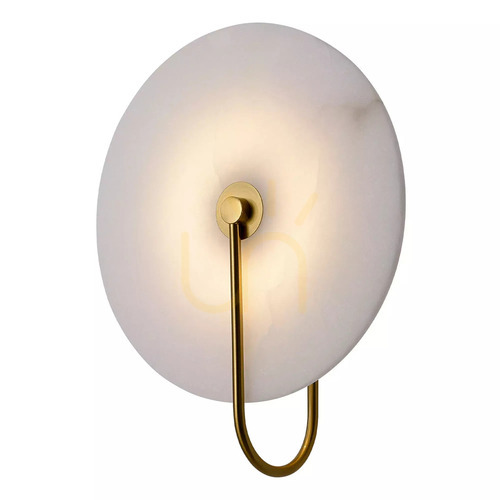
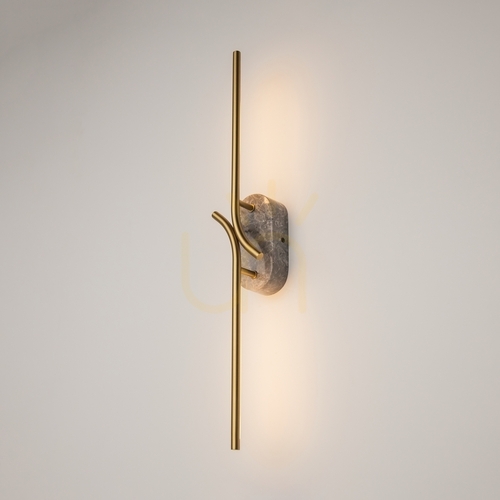
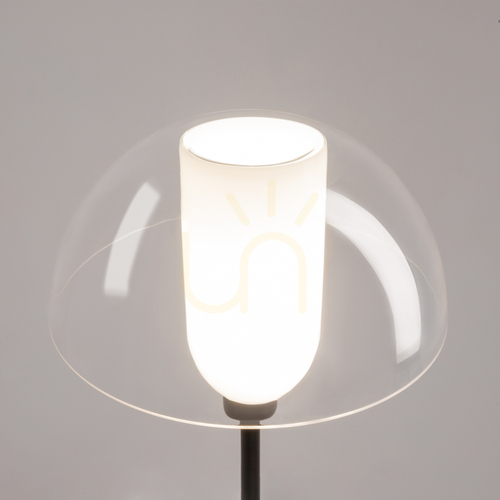
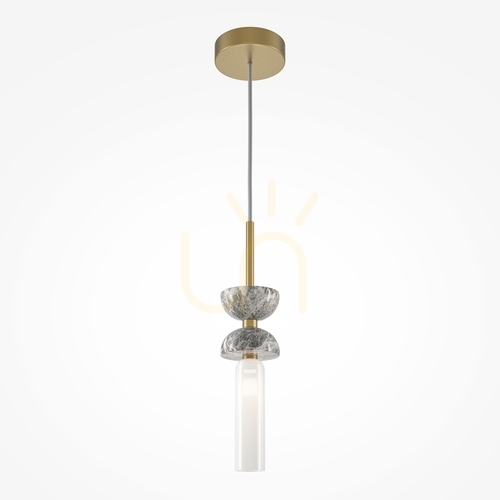
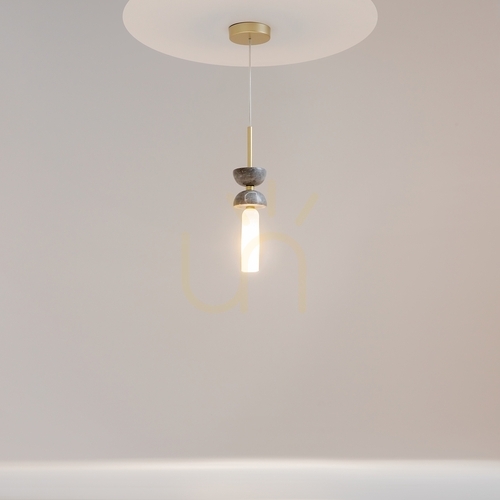
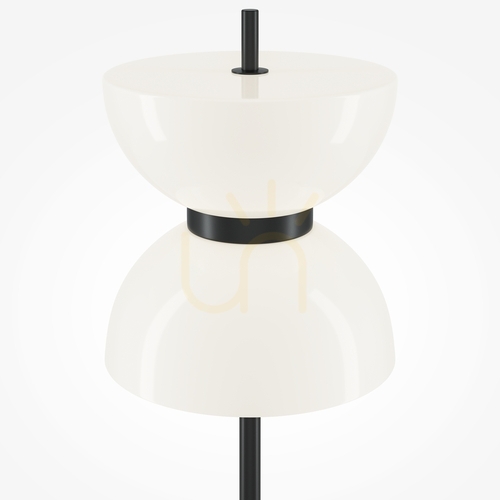
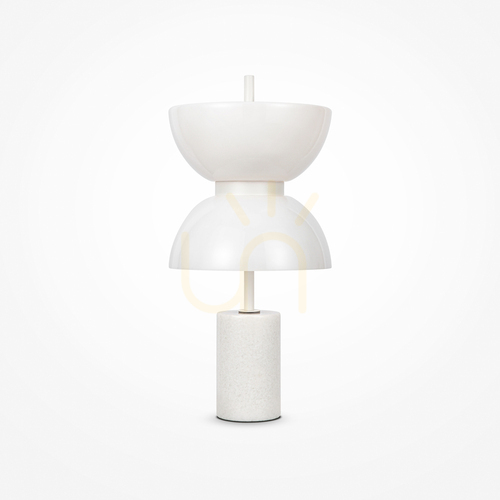
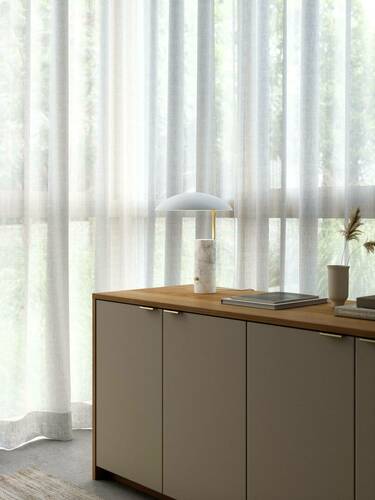
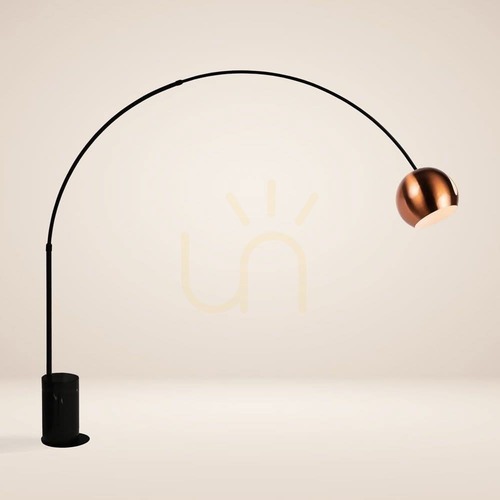
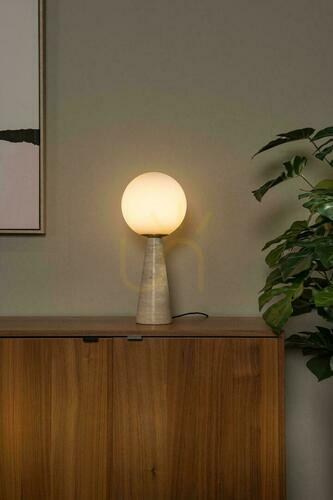
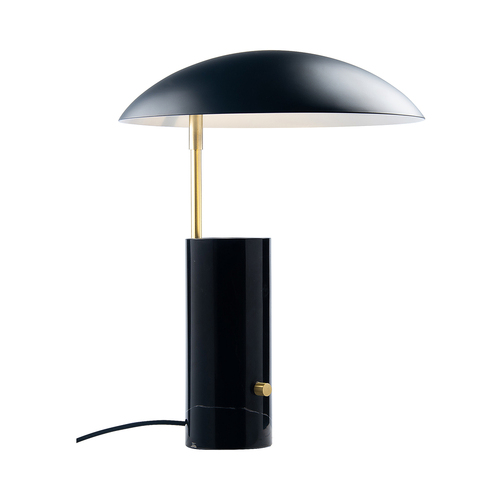
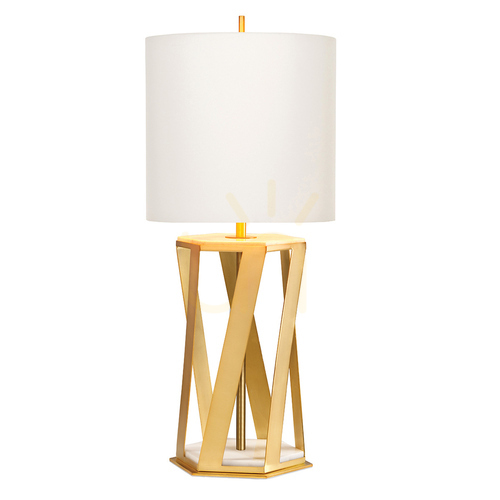
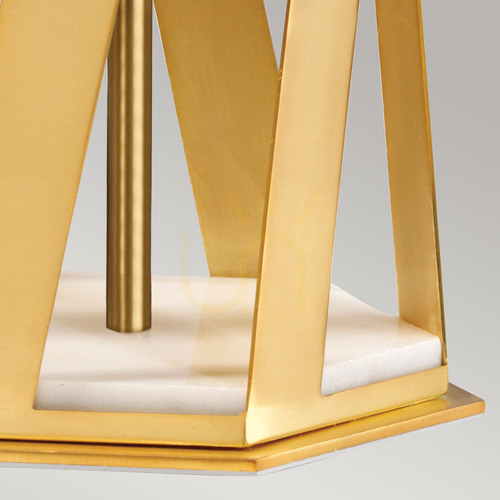
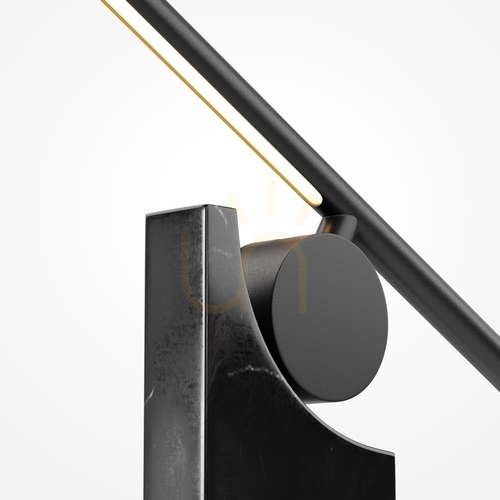
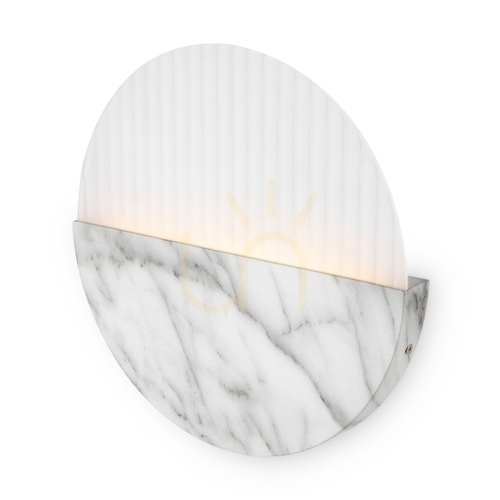
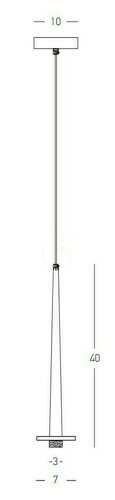
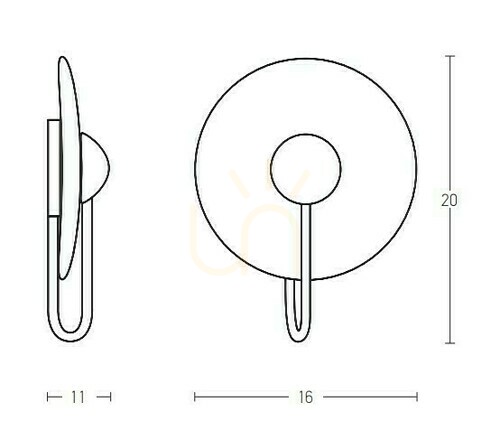
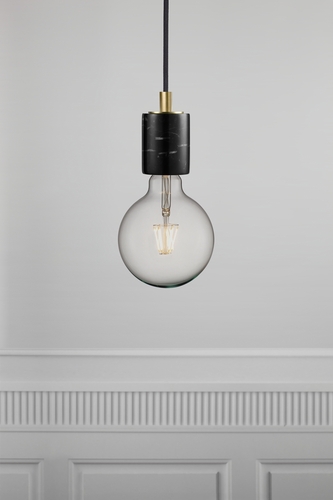
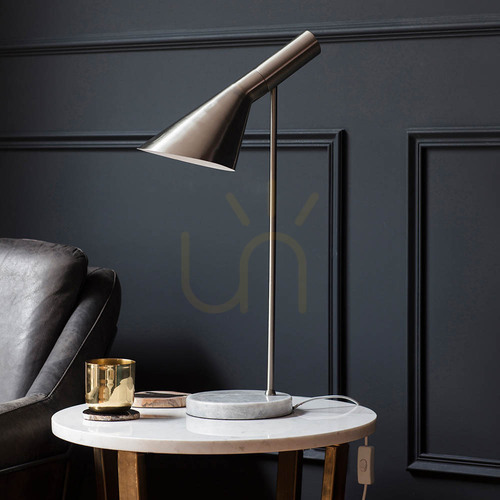
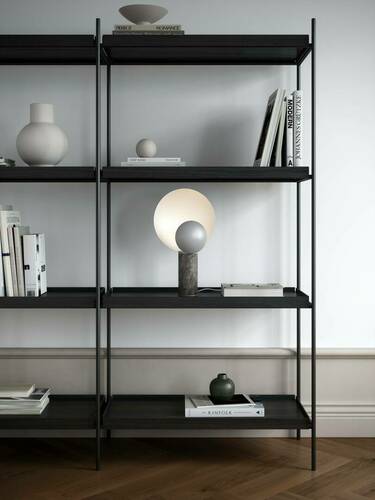
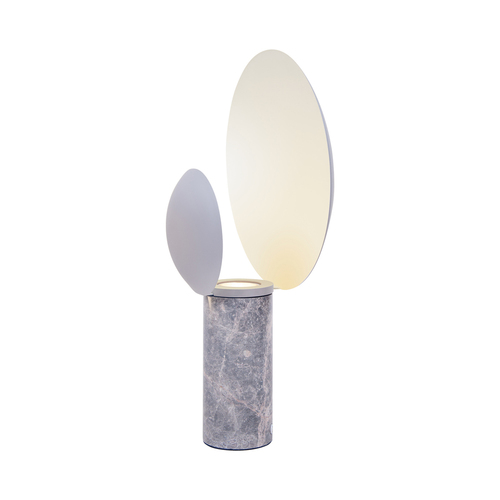
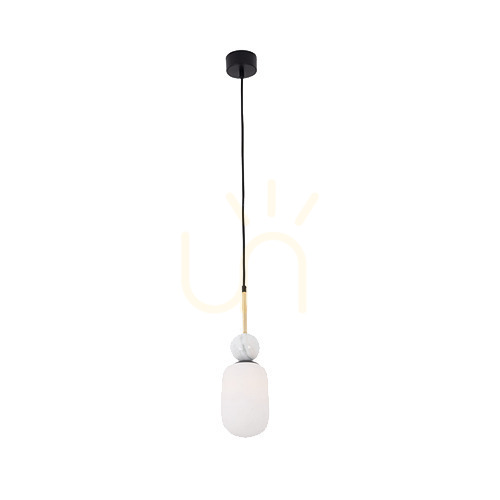
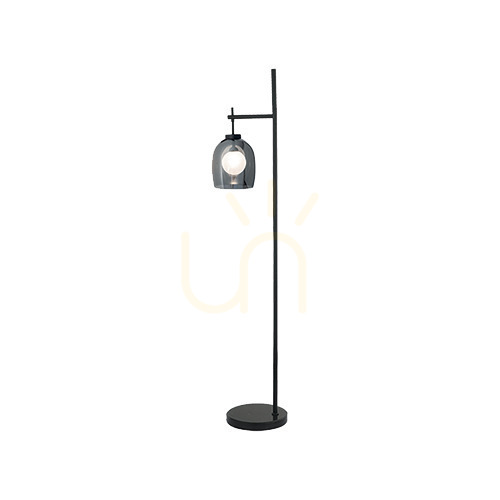
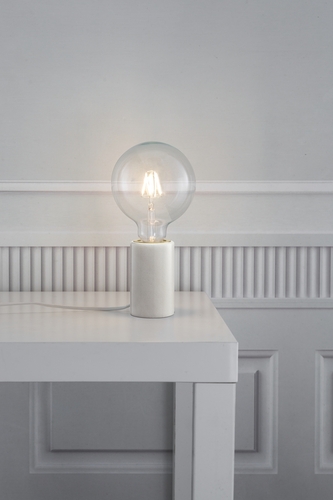
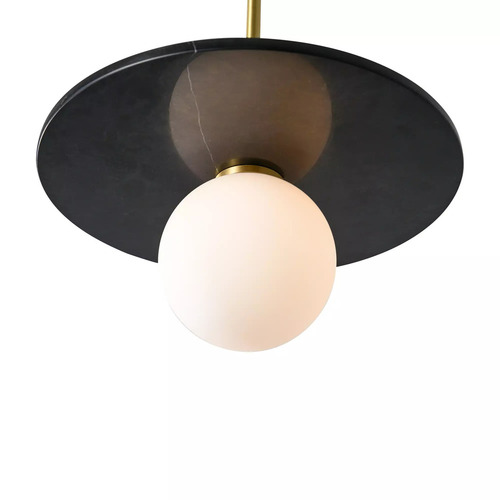
A marble lamp uses real stone as part of its build, most often as the heavy base of a table or floor lamp, and sometimes as the back plate of a wall light or the canopy of a pendant. The stone changes how steady the lamp stands, how its light falls and how you clean it, so it is worth knowing what you are buying before you choose by looks alone.
Because marble is a natural material, the veining differs from piece to piece. Two lamps from the same design will never be quite identical, and that is part of the appeal.
Real marble, marble effect and other stones
On the high street you will often see ‘marble effect’ lamps: ceramic, resin or printed glass made to look like stone. They are lighter and shrug off acidic cleaners, but they are a different product. Genuine marble feels cold to the touch and stays cool, is surprisingly heavy for its size, and its veins run over the edges without repeating. A printed pattern tends to repeat and stop at the edge.
Alabaster and onyx are often sold alongside marble. Both are translucent, so a lamp made from them glows through the stone. Marble at normal thickness lets very little light through, which is why a marble shade throws light downwards or onto the wall, and the soft glow comes from an opal glass globe or a fabric shade instead.
Choosing a marble lamp room by room
| Room |
Typical marble lamp |
Size and light |
| Bedroom |
Small table lamp with marble base |
40–55 cm tall; 2700 K warm white, around 400–470 lm for reading |
| Living room |
Table lamp on a sideboard, floor lamp by a chair |
55–75 cm on a sideboard; arc or reading floor lamps balanced by a heavy stone foot |
| Dining room, kitchen island |
Pendant with marble canopy, ring or shade |
Bottom of the shade roughly 60–80 cm above the table; 2700–3000 K |
| Hallway, landing |
Wall light with marble plate |
Indirect light washing the wall; integrated LED or G9 capsule |
| Home office |
Desk lamp with marble base |
Adjustable head; 3000–4000 K for focused work |
Lamp holders vary with the design. Table and floor lamps usually take E27 or E14 screw bulbs, and lamps made for the UK market may use a B22 bayonet cap, so check before you buy spare bulbs. Small pendants and wall lights often use G9 capsules, and slim wall plates usually have integrated LEDs. Warm light (2700 K) flatters cream, beige and brown marble; a cooler 4000 K brings out the grey veining in white stone.
Weight, stability and fitting
Marble is dense, weighing about 2.7 g per cubic centimetre. Even a modest bedside lamp base can weigh 1–3 kg, and a large table lamp with a stone plinth 6–8 kg. That weight keeps a tall lamp with a wide shade upright when someone catches the cable, but a floating shelf may not be rated for it. Stick felt pads under the base, as stone scratches lacquered wood and glass.
Plug-in table and floor lamps need nothing more than a socket. If a lamp comes with a continental two-pin plug, have it replaced with a fused three-pin plug rather than living with a travel adaptor. Ceiling pendants and wall lights wired into the mains are a job for a qualified electrician working to BS 7671. Ask them to check the fixing for a heavy pendant: a plasterboard ceiling needs proper cavity fixings or a fixing into a joist. In bathrooms, only lights with a suitable IP rating for the zone belong near water; most marble lamps are IP20 and made for dry rooms.
Caring for marble
Marble is calcium carbonate: fairly soft, porous and sensitive to acid. Vinegar, lemon juice, limescale removers and many bathroom sprays etch the polish and leave dull marks that will not wipe away.
- Unplug the lamp first and keep moisture away from the lamp holder and flex.
- Dust with a soft dry cloth; for marks, use a barely damp cloth and a pH-neutral stone cleaner.
- A stone sealer helps against grease and water rings, but it does not stop acid etching.
- Small chips on edges can be filled by a stonemason; do not try to sand polished marble at home.
Frequently asked questions
Do marble lamps provide good lighting?
The light itself comes from the bulb and shade, not the stone. A marble lamp with an opal globe or fabric shade gives soft, diffused light; one with a solid marble shade gives directed light for reading or for washing a wall.
How much is a marble lamp worth?
Value depends on whether the stone is genuine, how much of it there is, the quality of the metalwork and wiring, and for older pieces their age and condition. Solid stone bodies and hand-finished brass cost more to make than a thin marble disc on a steel stem.
Is a marble lamp right for a living room?
Yes, and it is where it does most. A pair of matching table lamps on a sideboard or a floor lamp with a marble foot beside an armchair adds weight to a room without taking floor space.
Should I rewire an antique marble lamp?
If it has old fabric flex, a cracked holder or no earth where one is needed, have a qualified electrician rewire it and fit a modern plug before daily use. The stone itself rarely needs anything beyond a gentle clean.
Are small marble lamps stable?
Usually more so than metal lamps of the same size, because the stone keeps the centre of gravity low. They work well on narrow bedside tables and window sills.
Will white marble turn yellow?
Discolouring tends to come from grease, smoke or unsuitable cleaners rather than light. Regular dry dusting and avoiding acids keep white stone bright.
More on wall lights with stone back plates: marble wall lights. Other kinds of light for the home: indoor lighting.