
Outdoor lighting control – dusk sensor, timer or app?
Garden lighting should not require a daily walk around the house with a switch. A well-chosen dusk sensor can turn it on when daylight fades, a timer can switch it off late at night, and a motion sensor or app can adapt it to the household. This guide explains how to plan garden lighting control, how an outdoor-light photocell differs from a basic timer, astronomical clock and smart system, and how to avoid flickering LEDs, false switching and lights left running all night.

Contents
- Four control methods – which one should you choose?
- How does a dusk sensor work and where should it be fitted?
- Fixed timer or astronomical clock?
- App control: Wi-Fi, Zigbee and scenes
- How do you combine dusk, time and motion?
- A zone-by-zone garden control plan
- Solar lights – automation without wiring
- LED loads and electrical safety
- Setting up the system step by step
- Common problems and their causes
- Questions and answers
- Summary
Four control methods – which one should you choose?
Each method answers a different question. A dusk sensor checks whether it is dark enough. A time switch follows a set clock time. An astronomical clock calculates sunrise and sunset for the date and location. A smart controller runs schedules and scenes saved through an app and can often accept signals from other sensors.
The simplest selection guide is:
- house number, drive and entrance lit from dusk – dusk sensor;
- decorative lighting that must always go off at 23:00 – time switch;
- year-round façade lighting without seasonal corrections – astronomical clock;
- several zones, dimming levels and seasonal scenes – smart control;
- security light needed only when someone passes – motion sensor with a dusk inhibit;
- a place without electrical wiring – solar light with its own light sensor.
You do not have to choose just one. The most useful systems combine two or three: dusk permits operation after dark, a timer defines the hours, and motion determines when full output is needed.
How does a dusk sensor work and where should it be fitted?
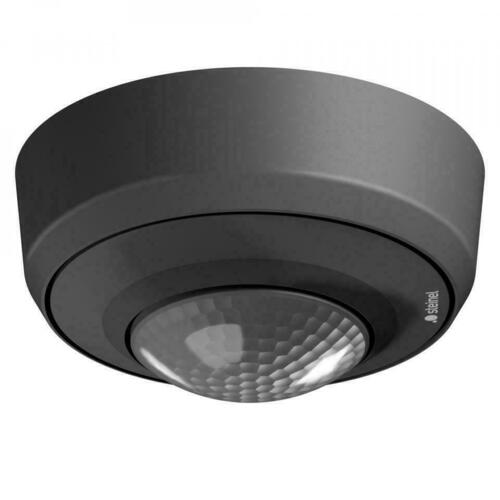
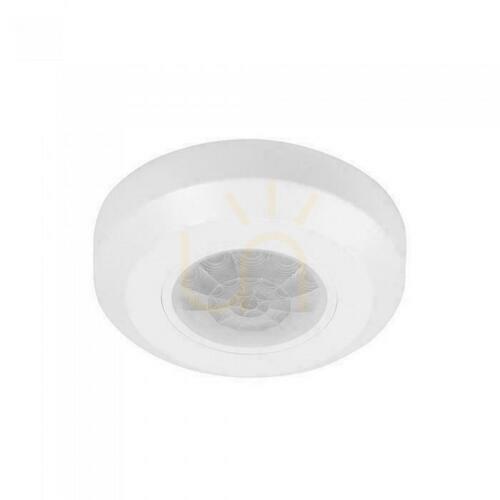
A dusk sensor, also called a photocell, uses a light-sensitive element to assess illuminance in lux. When light falls below the selected threshold, its controller may operate an internal relay or send a signal to a separate switching device; it reverses the action as daylight returns. Output type and adjustment vary by model: some have a sun-to-moon dial, while more precise units accept a numerical threshold.
A threshold alone is not enough. A good controller uses switch-on and switch-off delays and separate values for the two actions. This prevents car headlights, lightning or a brief gap in the clouds from making the lamps cycle. A one-minute delay is barely noticeable but makes the system stable.
Position matters more than fine adjustment:
- expose the sensor to natural daylight, but not direct sun;
- keep it outside the beam of the lamps it controls, otherwise it may create an on-off loop;
- avoid a deep eave, drainpipe shadow or a bright window;
- a north- or east-facing wall often works well if it is not permanently shaded;
- use an enclosure and cable entry intended for outdoor conditions.
Set it at the actual evening light level at which you want the lamps to start, then observe it on clear and overcast days. The goal is not maximum sensitivity but a repeatable, useful switching point.
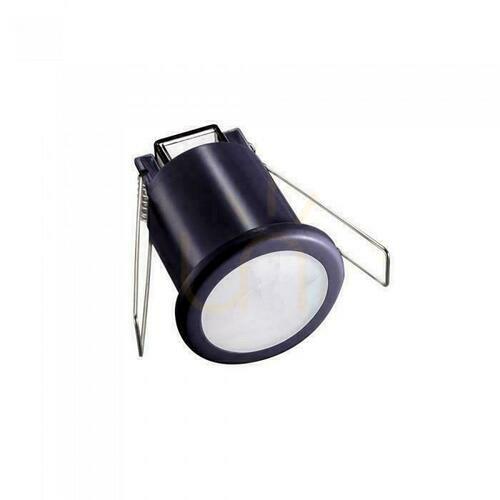
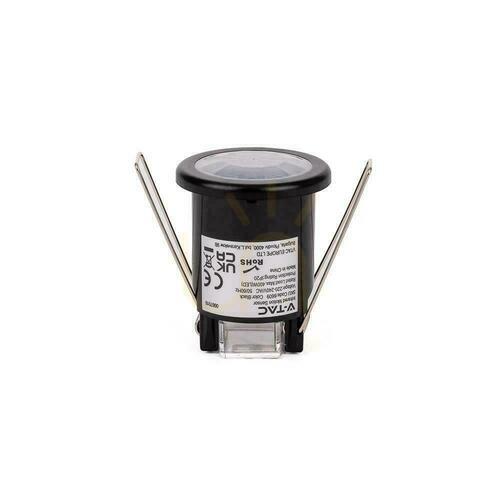
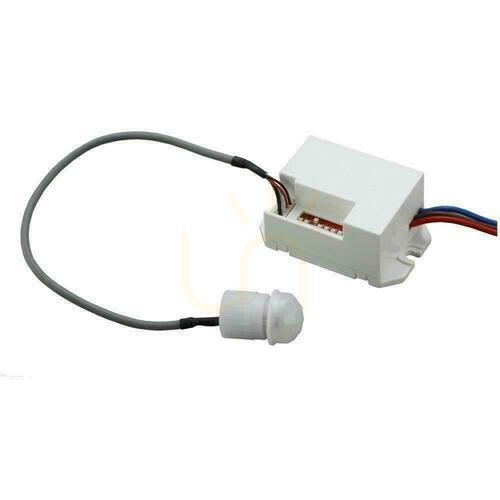
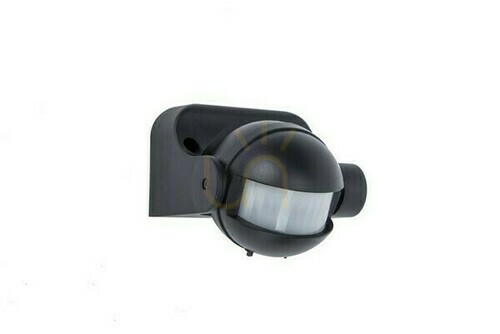
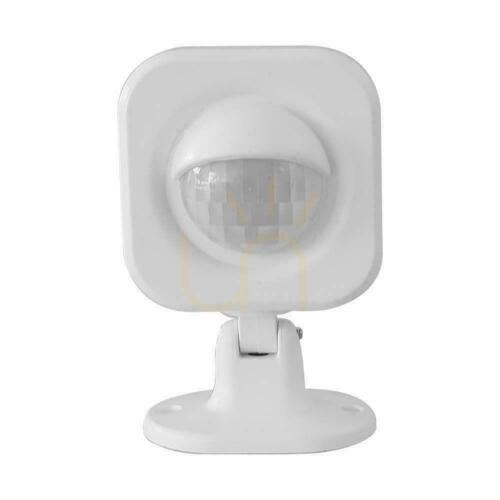
Separate sensors and motion detectors with twilight control are available in Motion and twilight sensors.




Fixed timer or astronomical clock?
A basic outdoor lighting timer repeats clock times, for example switching on at 18:00 and off at 23:30. It is inexpensive and predictable for decorations or premises used at fixed hours. In a garden its limitation soon appears: 18:00 is broad daylight in summer but well after dark in winter, so the programme needs seasonal correction.
An astronomical clock does not measure brightness. It calculates sunrise and sunset from the date, time and geographical position. It can switch on 15 minutes after sunset, turn off at 00:30 and run again 30 minutes before sunrise. A covered or dirty sensor cannot upset it, but neither can it recognise an unusually dark storm—it follows the calculation.
Look for automatic daylight-saving adjustment, an offset from sunrise and sunset, separate weekday and weekend programmes, a night interruption, temporary manual override without deleting the schedule, and clock backup after a power cut.
Choose a photocell when current weather and actual brightness matter. Choose an astronomical clock when maintenance-free seasonal tracking matters. Combined devices can use astronomy as a plan and measured light as a condition. Time controls for lighting circuits are grouped in Timers.
App control: Wi-Fi, Zigbee and scenes
An app is only the interface. The lamp is switched by a relay, smart socket, in-wall module, hub or smart luminaire. Entrance and path schedules should be stored and executed locally in that hardware. The cloud may provide remote viewing and editing, but a cloud or internet outage must not disable essential lighting.
Wi-Fi is easy to start with because a device connects directly to the router, but outdoor coverage and local schedule storage must be checked. Zigbee or another hub-based system adds a gateway yet handles many sensors and scenes efficiently. In a large garden, practical range, local operation and independence from one vendor’s cloud matter more than the protocol name.
Useful scenes solve real tasks:
- Arriving home – after dark, movement at the gate turns on bollards and the entrance light for a few minutes;
- Evening on the terrace – circulation lights dim while the dining area remains under manual control;
- Night – decorations switch off, the entrance drops to a low base level and motion restores full output;
- Away – essential automation continues while notifications and presence simulation follow a separate plan;
- Christmas – decorations receive start and end dates plus a firm switch-off time.
Use a unique password, install updates and place IoT devices on a separate network if your router supports it. Never make access to the house or basic safety lighting depend on one app.
How do you combine dusk, time and motion?
The logic between controls is crucial. For an entrance, full light should be allowed when it is dark AND the permitted time window is active AND motion is detected. If the luminaire supports a base level, dusk and the schedule may hold 10–20% output while motion temporarily raises it to 100%.
Façade lighting needs a different rule: dusk switches it on and a timer switches it off at 23:00 even though it remains dark. A second period, such as 05:30 until sunrise, may be added for the morning. This is more economical than all-night operation.
Do not connect the outputs of several controls together unless the manufacturer expressly provides such a circuit. Sensors, timers and smart modules may energise terminals in different ways. A suitable controller, relay or contactor selected by an electrician should implement multi-input logic.
A zone-by-zone garden control plan
One controller for the whole plot is simple but rarely convenient. Divide lighting by function:
- Entrance, gate and house number – orientation lighting from dusk with a night break; motion can bring the entrance to full output briefly.
- Drive and paths – limit motion detection to the route, not the public pavement. Several modest lights show obstacles better than one dazzling floodlight.
- Terrace – give users a manual override. Dinner lighting must not switch off merely because nobody crossed a PIR beam.
- Façade and planting – decorative light should go off earlier than circulation lighting and point at the subject, not the sky or a neighbour’s windows.
- Shed and service area – motion control is usually enough; continuous light adds little value.
Every zone should allow temporary manual operation for maintenance and have clearly labelled protection at the distribution board. Use names such as “gate”, “terrace” and “north path” in the app, not “relay 1”.
Solar lights – automation without wiring
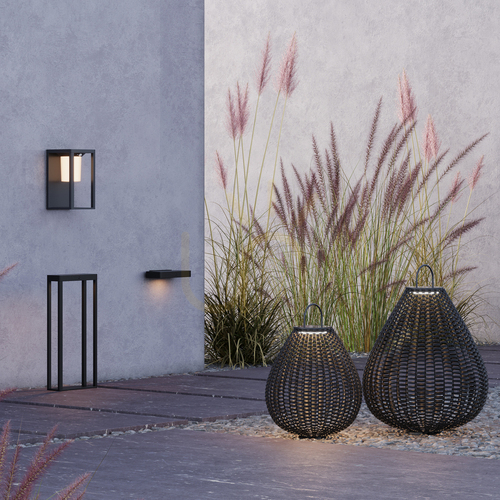
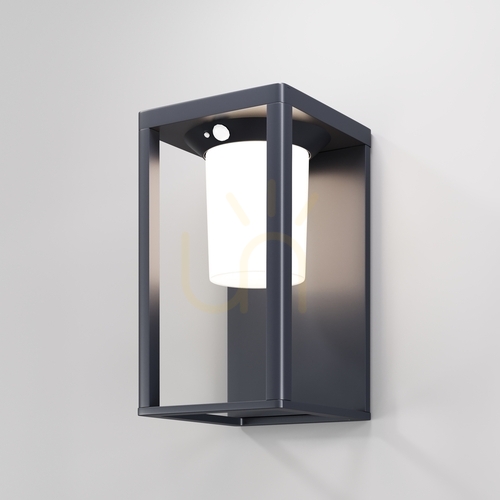
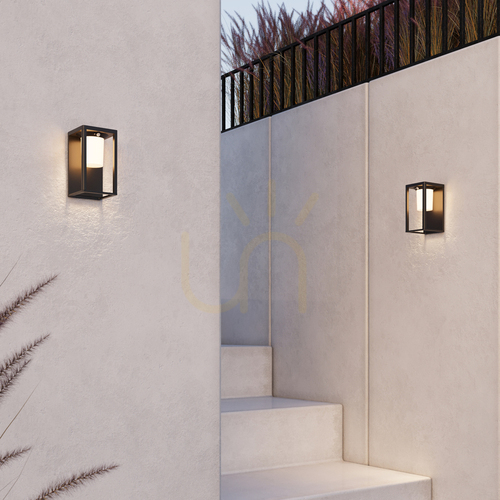
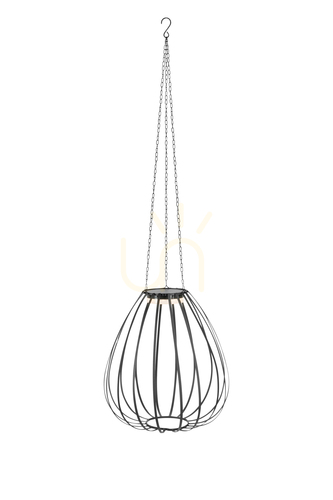
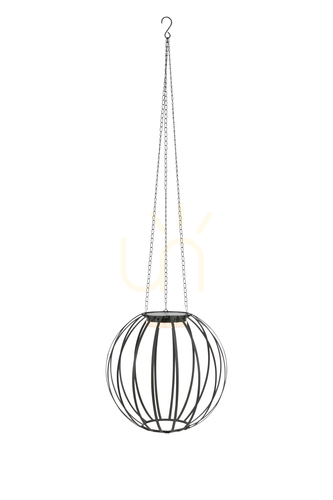
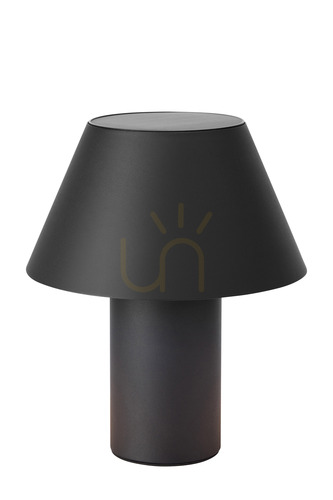
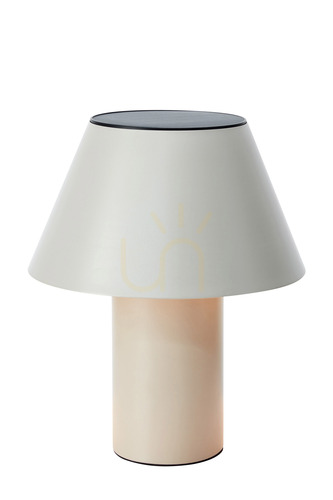
A typical solar light combines a panel, battery, LED and dusk sensor. It charges by day and switches on as daylight falls. Motion versions may remain dim and brighten when someone approaches, or stay off until movement is detected.
They are useful where running a cable would be disproportionately expensive. Their stated operating time is not guaranteed every night: sunlight, temperature, battery age, panel dirt and selected brightness all matter. Short winter days, low sun and snow can greatly reduce stored energy.
Place the panel where it receives several hours of direct sun and away from controlled lamps. A bright wall light can fool its sensor into thinking it is still daytime. Clean the panel and inspect seals before winter.
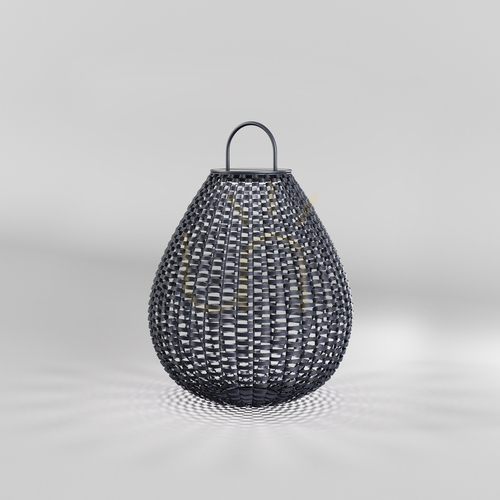
See luminaires with integrated panels and controls in Solar Lamps.
LED loads and electrical safety
“Maximum 10 A” does not guarantee that a controller can switch any LED installation. LED drivers may draw a brief, high inrush current, so manufacturers often specify a lower LED load and a maximum number of drivers. For a large group, the sensor output may need to operate a properly selected contactor rather than feed every luminaire directly.
Also check whether a neutral conductor is required, the minimum load for a small LED, output type and LED compatibility, weather protection of boxes and cable glands, operating temperature and behaviour after a power cut.
A faint glow or flicker while switched off can be caused by current through a two-wire electronic control, an illuminated switch or cable capacitance. Do not hide the symptom with a random resistor. Use a compatible control, the manufacturer’s compensator or corrected wiring after diagnosis.
Equipment operating at mains voltage, distribution boards and outdoor circuits must be installed by a qualified electrician under local rules and product instructions. Outdoor wiring needs suitable shock protection, overcurrent protection and an appropriately selected RCD. Automation never replaces a safe installation.
Setting up the system step by step
- Define every zone’s job: circulation, work, security or decoration.
- Write down the desired hours: separate evening, deep night and morning before opening an app.
- Set the dusk threshold: do it in real conditions, not at midday with a hand over the sensor.
- Add a simple schedule: dusk or sunset to 23:00, then add a morning period or exceptions only if needed.
- Configure motion: use the shortest useful range and time; test both approaches, cars, animals and moving branches.
- Test failures: disconnect the internet, restart the router and interrupt power. The system should return to a safe, predictable state.
- Observe it for a week: one evening cannot reveal behaviour in rain, cloud or at weekends.
Record successful values and photograph settings in the distribution board. Months later it is easy to forget whether the threshold was 10 or 30 lx and why.
Common problems and their causes
- The lamp cycles on and off – its sensor sees the light it controls; reposition or shield it.
- It switches on during an overcast day – the threshold is too high or the sensor is permanently shaded.
- Car headlights make it switch off – the off delay is missing or too short.
- The timer is one hour wrong – check time zone and daylight-saving settings.
- The astronomical clock starts too early – correct location and sunset offset instead of programming each date.
- Motion starts the light in daytime – the LUX threshold is too high or the light sensor is covered.
- The app loses the garden device – test radio range with windows closed; a metal enclosure attenuates it further.
- An LED glows after switch-off – diagnose leakage through the control and the wiring.
- Solar lights die before midnight – the panel lacks sun, output is too high or the battery has aged.
Questions and answers
Does a dusk sensor consume electricity? Yes. Its electronics use a small standby power. Check the manufacturer’s value; it is usually minor compared with the energy saved by switching lights off.
Can dusk and motion sensors be combined? Yes, and many luminaires integrate both. With separate devices, an electrician must verify the circuit and loads; dusk normally inhibits motion switching in daylight.
Photocell or astronomical clock—which is better? A photocell follows actual brightness but needs a good mounting position. Astronomy ignores shade and dirt but follows a calculation rather than current weather. A year-round system often combines an astronomical schedule with a night break.
Does app control always need the internet? No. It depends on the product and where schedules run. Prefer equipment that executes essential rules locally and uses the internet mainly for remote access.
Can one photocell control several lights? Yes, if total load and inrush remain within its ratings. Larger groups are commonly switched through a suitable contactor.
Does a solar light need another timer? Usually not: it has its own dusk sensor and controller. Better models add timed or motion modes; an external timer cannot compensate for an empty battery.
Summary
A good system begins not with an app but with three questions: where, when and why is light needed? Choose a dusk sensor when actual brightness matters, a timer for a fixed switch-off, and an astronomical clock when the schedule should follow the seasons. Smart control is valuable across several zones provided essential rules run locally. Motion should call for full output only after dark, decoration should go off overnight, and a terrace should retain manual control. Designed this way, automation reduces wasted energy and makes the garden legible and safe precisely when somebody uses it.
Components for such a system are available in Motion and twilight sensors, Timers and Solar Lamps.
Dawid Skłodowski


Maybe you will be interested in products from these categories?
Motion and twilight sensors, Timers, Outdoor Solar Lights
Tags & Blog Categories