
Salt lamps (Himalayan) – do they really work and how to choose one?
The salt lamp is one of the most popular “wellness” lighting gadgets – and one of the most myth-encrusted. Air ionisation, allergen removal, healing minerals: sellers promise a lot, science confirms very little. In this guide we honestly separate facts from marketing, explain which salt lamp to choose, how to care for it so it doesn’t “weep”, and what to put on your chest of drawers if what you’re really after is warm, atmospheric light.

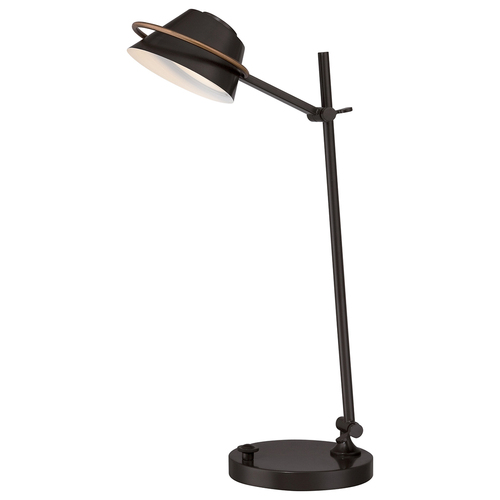
Pictured: an amber glass table lamp – a maintenance-free alternative to a salt lamp, covered later in this article.
Do salt lamps work? The short answer: as a mood light with a very warm glow – yes, brilliantly. As an ioniser, air purifier or “home halotherapy” – no, there is no evidence for that. The details and reasoning are below, and if you’re mainly after atmospheric light with zero upkeep – skip to the alternatives.
Table of contents
- What is a salt lamp and where does it really come from?
- What does a salt lamp definitely give you?
- Do salt lamps work? Myths about ionisation and air purification
- Himalayan lamp reviews – why so much praise?
- Which salt lamp? Choosing step by step
- Which bulb for a salt lamp?
- Safety: moisture, furniture, children and pets
- Care – so the lamp doesn’t “weep”
- When is a salt lamp a bad idea?
- Alternatives: a warm glow without a block of salt
- Frequently asked questions
- Summary
What is a salt lamp and where does it really come from?
A salt lamp is a block of rock salt with a hollowed-out centre holding a small light source. It owes its orange-pink colour to traces of iron and other minerals, and every block is different – it’s natural stone, not a cast.
A fun fact worth knowing before you buy: in the vast majority of cases, “Himalayan” salt doesn’t come from the Himalayas at all, but from the Khewra mine on the Potohar Plateau in Pakistan – one of the largest salt mines in the world, a good few hundred kilometres from the main Himalayan range. The name is a marketing shortcut, though the material itself is entirely genuine: rock salt hundreds of millions of years old.
You’ll also find lamps made of European rock salt – usually paler, with a less intense colour, but cheaper and just as decorative.
What does a salt lamp definitely give you?
Let’s start with what is beyond dispute – because a salt lamp has real advantages, they just lie elsewhere than the descriptions of “ionising miracles” suggest:
- Very warm, subdued light. The salt block acts as a natural filter – it lets through mainly warm, orange-amber tones with a colour temperature close to candlelight. Light that never glares or overstimulates.
- Evening-friendly light. The less cool, blue light before bed, the easier it is to wind down in the evening – that mechanism is actually well documented. A dim, warm lamp as the only light source for the last hour of the day is a good habit, and a salt lamp plays that role superbly.
- A natural decoration. Every block is unique, and even switched off the lamp remains an ornament – like a stone sculpture.
- A relaxation ritual. Switching on a warm light in the evening signals “the day is over” – simple, pleasant and effective, regardless of whether physics or just psychology is at work.
In short: a salt lamp is a very good mood light. And that is its true, honest category.
Do salt lamps work? Myths about ionisation and air purification
The phrase “do salt lamps work” breaks records in search engines, so let’s answer directly, point by point:
- “A salt lamp ionises the air” – there is no reliable evidence for this. A 15–25 W bulb warms the block by barely a few dozen degrees, and there are no credible measurements confirming that a salt lamp in home conditions produces ion quantities of any significance for health or air quality.
- “A salt lamp cleans the air of allergens and dust” – no evidence. Salt is hygroscopic – in humid air it absorbs water (hence lamps “weeping” in summer) – but absorbing water vapour is not the same as filtering out pollen, dust mites or smog. There is a lack of solid research confirming that a salt lamp improves indoor air quality.
- “A salt lamp helps with asthma and allergies” – this is an echo of halotherapy, i.e. sessions in salt chambers where a salt aerosol of controlled concentration is inhaled. A salt lamp does not aerosolise salt – a block sitting on a dresser has about as much in common with a salt chamber as a seashell with the sound of the sea. And even for halotherapy itself, the scientific evidence is limited.
- “Himalayan salt emits valuable minerals” – minerals give the salt its colour, but they don’t “emit themselves” into the air. A block of salt at room temperature is chemically inert.
Let’s say it plainly: a salt lamp is not a medical device and will not replace asthma or allergy treatment, nor an air purifier. If you want a real effect on the air in your home – humidification, fragrance, purification technology – choose devices designed specifically for that job. You’ll find them in the Healthy Air at Home category.
Himalayan lamp reviews – why so much praise?
If ionisation is a myth, why are Himalayan lamp reviews so positive? Because users praise them for what they actually get:
- “I fall asleep so easily next to it” – yes, because subdued amber light doesn’t stimulate the way ceiling lighting or a phone screen does.
- “The room feels so cosy now” – yes, a warm pool of light in the corner of a room is the simplest cosiness trick there is, known from every interior design guide.
- “It helps me unwind after work” – yes, an evening ritual with warm light genuinely relaxes – that’s habit and atmosphere, not ions.
The disappointed are almost exclusively those who bought the lamp “for allergies” or “to purify the air”. The conclusion is simple: buy a salt lamp as a beautiful mood light and you’ll be happy. Buy it as medical equipment – and you’ll feel cheated.
Which salt lamp? Choosing step by step
Now that you know what to expect, the choice is simple. Here’s what to look at:
1. Weight matched to the room. Salt lamps are sold by the kilogram, and weight translates directly into the size of the block and the reach of its glow:
- 2–3 kg – desk, bedside table, small room; roughly 15–20 cm tall,
- 4–6 kg – medium living room, chest of drawers, windowsill; roughly 20–25 cm,
- 7–12 kg and up – large living room, a “light sculpture” effect; over 25 cm.
Rule of thumb: better a kilogram more than less – a small block in a big room gets lost and looks like a random gadget.
2. Colour of the block. The darker the salt, the more strongly it filters the light: light-orange blocks glow more brightly, dark-orange and reddish ones give a more intimate, subdued effect. Avoid blocks with an unnaturally even colour – natural salt has streaks and variations. White salt lamps (from salt without iron traces) are rarer, glow brightest and tend to be noticeably more expensive.
3. Shape. A natural block looks the most “rock-like” and each one is unique. Spheres, cones or cuboids are more predictable in modern interiors, but polishing takes away some of the natural character. A separate category is salt tealight holders – a cheaper way to get the same ambience, with no electrics.
4. Base and build quality. A good lamp stands on a wide, stable base of solid wood, with the block firmly screwed (not glued) to it. The cord should have a switch, and better models a dimmer – very practical, as it lets you tune the mood from a faint night glow to full brightness.
5. Electrical safety. The socket, cord and plug should carry CE marking, the manufacturer’s details and a stated maximum bulb wattage. This is where “bazaar” lamp makers cut corners most often – and it’s the only part of a salt lamp that can genuinely be dangerous.
Which bulb for a salt lamp?
Here lies the most common technical trap. In the LED era we’d instinctively screw in an energy-saving bulb – and that’s precisely the mistake:
- Choose an incandescent or halogen E14 bulb of 15–25 W. A classic bulb gives off heat as well as light, continuously evaporating the moisture the salt absorbs. It’s a built-in drying system for the lamp.
- A cool LED will make the lamp “weep”. Without heat, the hygroscopic salt gathers moisture until it starts dripping onto the base and furniture. If you must use an LED (e.g. in a USB-powered lamp), accept that you’ll be drying the block more often.
- Match the wattage to the block’s weight – 15 W is enough for a 2–3 kg lamp, 25 W is better for 5+ kg, but always within the maximum wattage stated by the socket’s manufacturer. The bulb’s colour matters little: the salt will filter the light down to a warm orange anyway.
- Keep spares. Bulbs in salt lamps work in elevated temperature and humidity, so they burn out more often than in a regular lamp. When buying the lamp, buy 2–3 bulbs straight away.
Safety: moisture, furniture, children and pets
A salt lamp is safe as long as you respect three properties of salt: it attracts water, corrodes metal and… tastes good to animals.
- Don’t put it in the bathroom, kitchen or next to a humidifier. In humid rooms the lamp will be permanently wet – a straight road to a puddle of brine, a corroded socket and damaged furniture. The best spots are the bedroom and living room.
- Always use a coaster. Even a well-kept lamp can occasionally get damp, and brine can permanently discolour wood and dull varnish. A ceramic or glass mat under the base is a must, not an option.
- Watch out for cats and dogs. Pets happily lick the salty block, and regular doses of salt can lead to dangerous sodium poisoning. If you have an acrobatic cat at home, place the lamp truly out of reach – or skip it altogether.
- A stable spot out of small children’s reach. A stone weighing several kilograms knocked off a dresser is not the same as a toppled plastic night light.
- Don’t leave the lamp on during longer absences – as with any device pairing an incandescent bulb with cheap electronics. A few hours of work each evening is its natural rhythm.
Care – so the lamp doesn’t “weep”
All salt lamp care boils down to one rule: keep it warm and dry.
- Light it regularly. A few hours a day is enough for the bulb’s heat to evaporate moisture as it comes. A lamp that sits switched off for weeks will, in a humid climate, begin to dissolve.
- Clean dry or almost dry. Collect dust with a soft, barely damp cloth, then immediately wipe the block dry. Never wash the lamp under running water – it’s soluble rock.
- Going on holiday – switch off and protect. For longer absences (especially in a humid summer) unplug the lamp and wrap the block in foil or put it in a sealed bag. On your return, unwrap it and light it for a few hours.
- Rescue a “weeping” lamp with warmth. If the block is wet: wipe it dry, light it for several hours and move it somewhere drier. A white residue on the surface is crystallised salt – it wipes off with a dry cloth.
When is a salt lamp a bad idea?
An honest guide should also say who we don’t recommend a salt lamp to:
- you live in a damp flat (ground floor, old building, laundry drying in the room) – the lamp will be wet more often than dry,
- you have a cat or dog that licks everything – the risk of sodium poisoning is real, and a cat will jump anywhere,
- there are small children at home – a heavy, salty block within reach of little hands is a bad combination,
- you want maintenance-free lighting – a salt lamp needs regular lighting, drying and a coaster,
- you’re counting on a health effect – as explained above, there is no evidence for one.
If even one point sounds familiar, head to the alternatives below – you’ll get the same ambience with no compromises.
Alternatives: a warm glow without a block of salt
If after reading this you conclude that what you’re really after is warm, atmospheric light rather than salt – you have more options, often more practical ones. An amber glass table lamp gives a very similar honeyed glow, yet needs no drying, poses no threat to furniture and takes any dimmable bulb. Night lamps with a warm bulb and a fabric shade, and lanterns with a candle, build a similar mood.
What to look for to recreate the “salt” effect? A very warm colour temperature (1800–2700 K), modest light output (up to ~400 lm), dimming capability, and a shade of amber glass, fabric or rattan that diffuses the light into honeyed tones.



You’ll find more light decorations – from lanterns to garlands and LED decor – in the Decor category.
Frequently asked questions
Do salt lamps work? As a mood light – superbly. As an ioniser, air purifier or “home halotherapy” – no, there is no evidence for that, and any measured effects are negligible.
Can a salt lamp stand in the bedroom? Yes, the bedroom is the best place for a salt lamp – as long as the room isn’t exceptionally humid. Subdued warm light supports winding down in the evening.
Why is my salt lamp wet? Salt absorbs moisture from the air. A lamp “weeps” when it’s lit too rarely, stands in a humid room or runs on a cool LED bulb. The fix: a 15–25 W incandescent bulb, regular lighting and a drier spot.
Does a salt lamp wear out? The block practically doesn’t “evaporate” – with good care it will last decades. Only the bulbs, and possibly the cord and socket, genuinely wear out.
A salt lamp or a salt tealight holder? The tealight holder is the same material and ambience without electrics – cheaper, but it needs supervision like any candle. The electric lamp is more convenient day to day.
Is a salt lamp harmful? To people – no, it’s ordinary rock salt and a low-wattage bulb. The risks concern pets licking the block (sodium poisoning), furniture (brine from a “weeping” lamp) and shoddy electrics in the cheapest units.
How many hours a day should a salt lamp be lit? At least a few hours daily – the bulb’s heat keeps drying the block as it goes. The more often the lamp is lit, the smaller the risk of “weeping”. Many people leave it on all evening, and that is its natural working rhythm.
Summary
A salt lamp doesn’t ionise, doesn’t heal and doesn’t purify the air – and it doesn’t have to in order to make sense. It’s simply a beautiful, natural mood light that does exactly what we need in the evening: it gives warm, subdued light that helps you unwind. Choose a block whose weight matches the room, with a solid base and safe electrics, run it on a 15–25 W incandescent bulb, keep it away from moisture and pets – and it will serve you for years. And if all you care about is the ambience of warm light, amber table lamps and light decorations will build it just as well – with zero upkeep.
Michał Smykowski


Maybe you will be interested in products from these categories?
Decor, Healthy air
Tags & Blog Categories