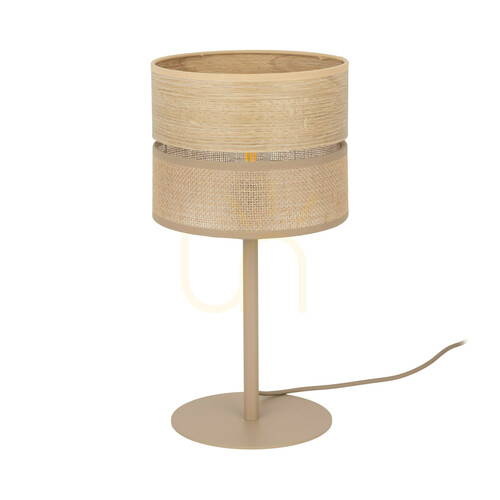
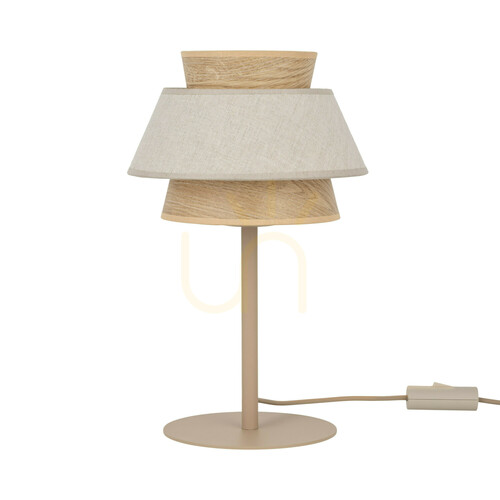
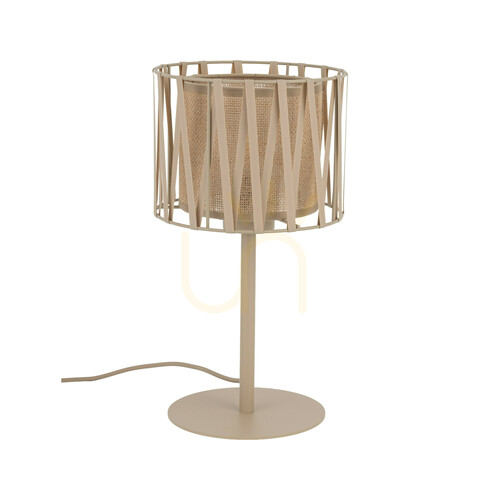
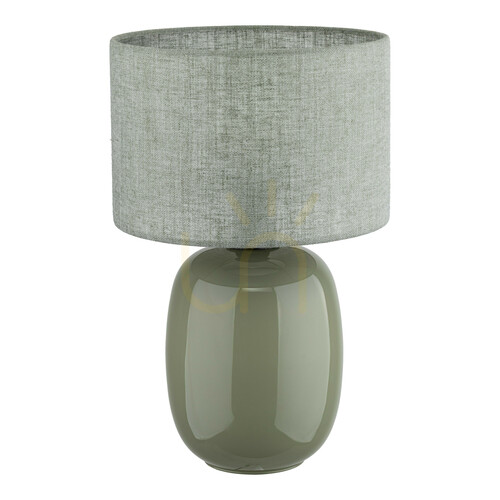
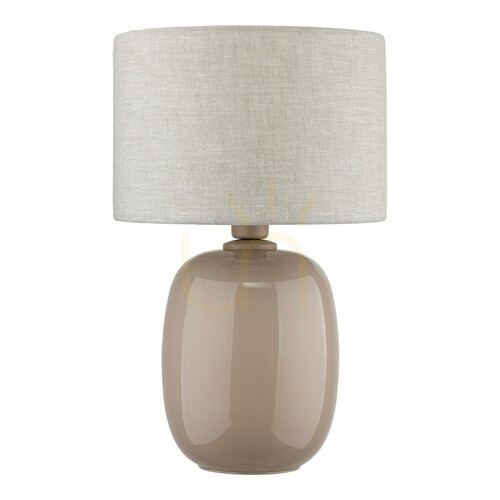
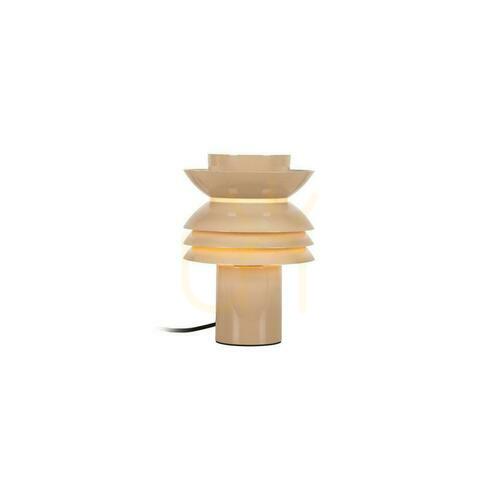
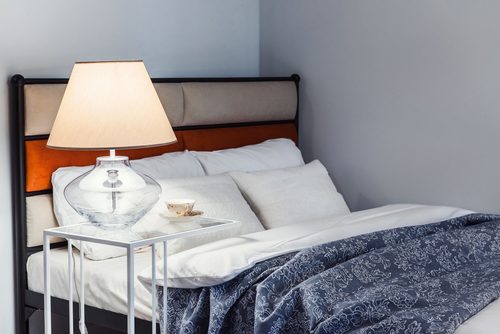
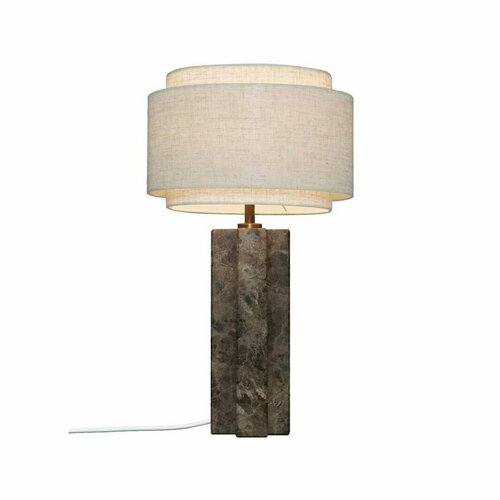
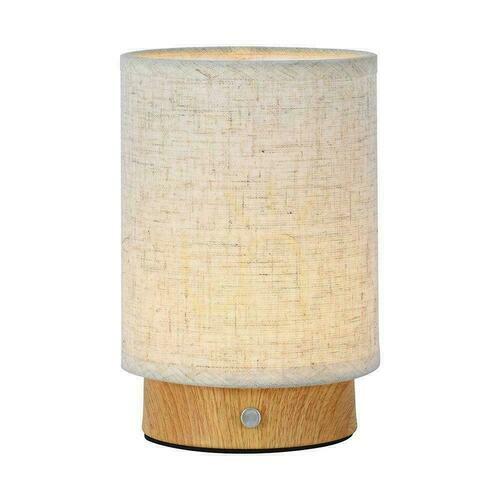
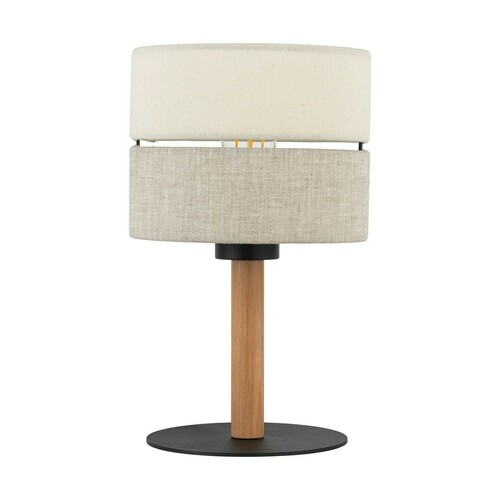
A beige table lamp on the bedside table gives you warm, diffused light to read by and a colour that settles into the room instead of competing with it. Beige also changes the light itself: a beige fabric shade lets through a little less light than a white one and tints it towards cream, so the lamp feels softer when you switch it on at night.
That softness is why beige, cream, stone and oatmeal lamps turn up in so many bedrooms. Getting one that looks right, though, comes down to three things: the undertone of the beige, the material of the shade and base, and the bulb you put in it.
Beige, cream, stone or taupe?
Retailers use these names loosely, so judge by undertone rather than label. Warm beiges (sand, cream, ecru, camel, oatmeal) lean yellow or pink and sit well with oak, walnut, terracotta and brass. Cool beiges (stone, greige, taupe, mushroom) lean grey and suit grey walls, white bedding and chrome or black metal. Put a warm cream lamp against a cool grey wall and it can look grubby, even when it is spotless.
A quick test: hold a sample of your bedding or a paint chart next to the lamp in daylight. If the two look related, the lamp will work after dark too.
Shade and base materials
-
Linen or cotton shades diffuse light evenly. A thick or lined shade throws more light down onto the table and less sideways.
-
Bouclé and velvet add texture and absorb more light, so they read as cosy rather than bright.
-
Pleated and paper shades glow all round and wash the wall behind the headboard.
-
Rattan and wicker bring a natural sandy beige and cast patterned shadows – lovely for winding down, less practical for reading.
-
Ceramic and stoneware bases, matt or glazed, give weight and stability; with a beige base the shade can be white or natural linen.
-
Silicone or plastic is typical of small rechargeable lamps and children's night lights, often with touch dimming.
Sizing and specifying a beige bedside lamp
UK lighting guides tend to suggest taller bedside lamps than you might expect. The figures below are typical starting points, not rules.
| What to check |
Typical guide |
Why it matters |
| Overall height |
usually 45–70 cm |
the shade's lower edge should sit around eye level when you sit up in bed |
| Width |
about a third of the bedside table |
leaves room for a phone, glass and book |
| Bulb fitting |
B22 bayonet, E27 or E14 |
check before buying spare bulbs; many compact and touch lamps have built-in LEDs |
| Colour temperature |
warm white, 2200–2700 K |
cooler light (4000 K and up) makes beige look grey and flat |
| Brightness for reading |
roughly 400–800 lm |
150–300 lm is plenty for a low evening glow |
| Colour rendering |
CRI 90 or higher |
linen and wood keep their true colour |
| Switch |
inline, touch or dimmer |
you should find it in the dark without sitting up |
A dense, darker beige shade swallows light, so pair it with a bulb near the top of the range. With thin linen or paper you can go lower.
Pairs, placement and styling
With two people in the bed, a lamp on each side lets one read while the other sleeps. The lamps don't have to match exactly, but they should be similar in height and in the same shade of beige, or the headboard wall looks lopsided. On a narrow bedside table, a slim ceramic lamp or a wall light keeps the surface clear.
Beige works best with one stronger partner: sage or olive walls for a calm, natural scheme, dark wood for contrast, navy or bottle green so the lamp becomes the bright point in the room. Brass and gold warm beige up nicely – think a brass base with a linen shade.
Looking after it
Dust fabric shades with a lint roller, a soft brush or the upholstery tool of a vacuum. Dab marks with a barely damp cloth and never soak a glued shade. Old-style hot bulbs can yellow pale fabric from the inside over time; LEDs run much cooler, and you should always stay within the maximum wattage marked on the lamp. Wipe ceramic bases with a damp cloth and dry them; brush rattan rather than washing it. Any new wiring for wall lights by the bed is a job for a qualified electrician under BS 7671.
Beige bedside lamps: common questions
Is cream or beige better for a bedside lamp?
Neither is better in itself. Cream is lighter and slightly yellow; beige is deeper and can be warm or cool. Choose whichever matches the undertone of your bedding and walls.
Are touch bedside lamps worth it?
They are handy if you fumble for switches in the dark, and many offer three brightness steps. Check how the lamp is dimmed, as some only work with their own built-in LED.
Should a pair of bedside lamps match?
Not necessarily. Matching lamps look formal and tidy; coordinated ones in the same beige and similar height feel more relaxed.
How tall should a bedside table lamp be?
Roughly the height of the bedside table, so usually 45–70 cm overall. What matters most is that the bottom of the shade sits near eye level when you read.
Can a large cream table lamp work beside the bed?
Yes, on a wide bedside table or chest of drawers. On a small table it will crowd the surface and may light your partner's face.
What bulb suits a beige linen shade?
A warm white LED around 2700 K with a high CRI. It brings out the warmth of the fabric without making it look yellow.
Sizing, fittings and switches apply to all bedside lamps, whatever the colour. If you'd like beige to pick up a natural material, wooden bedside lamps are worth a look next.