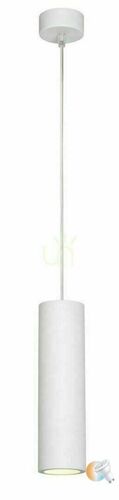
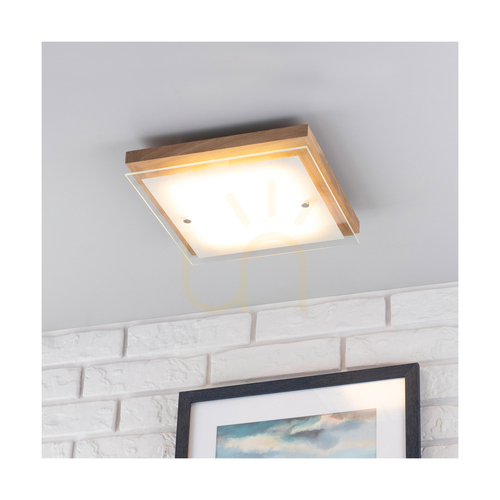
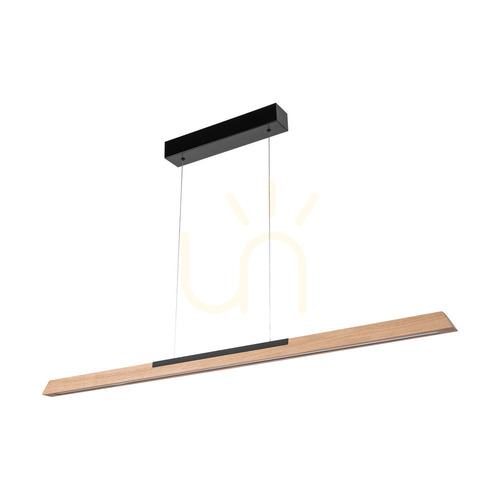
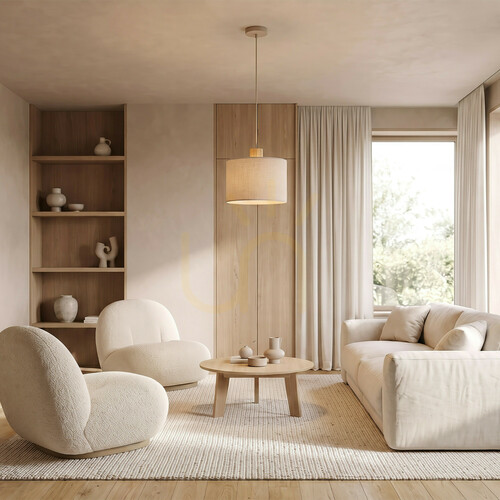
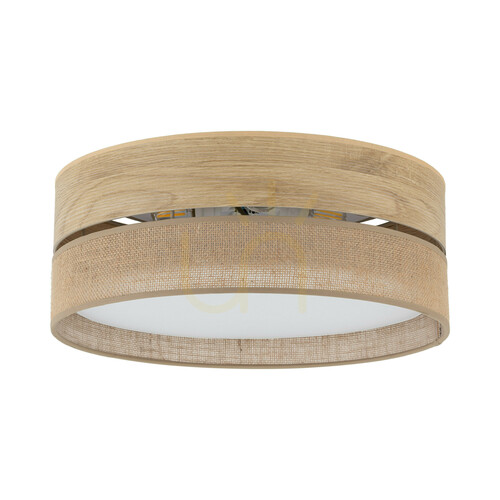
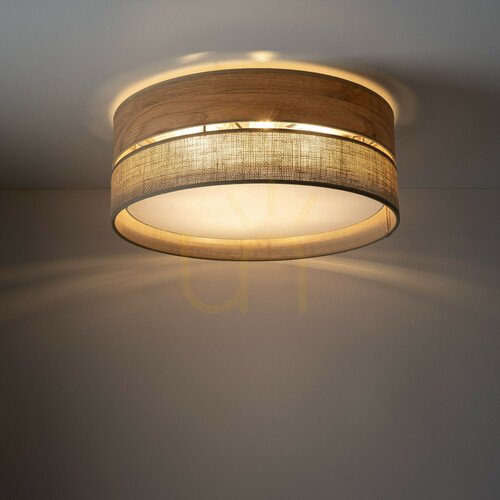
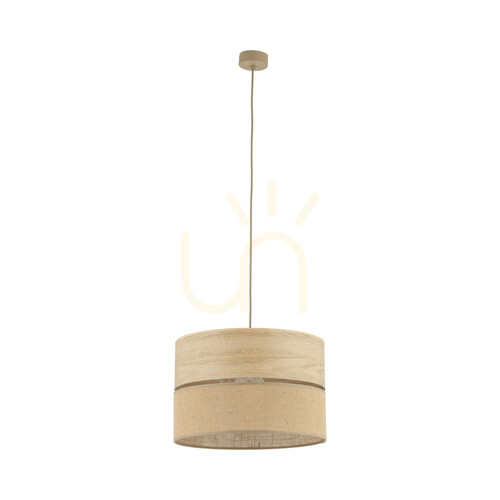
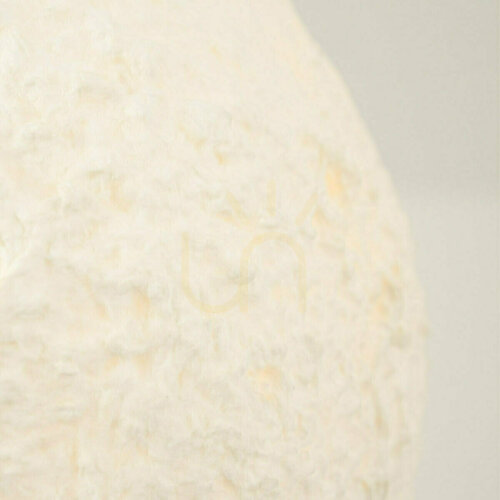
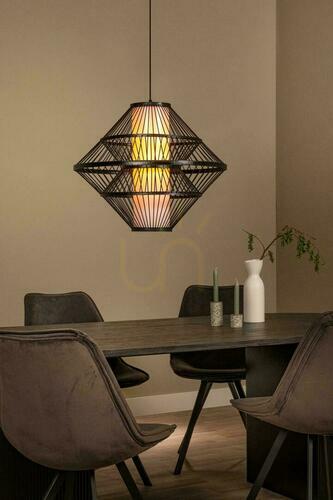
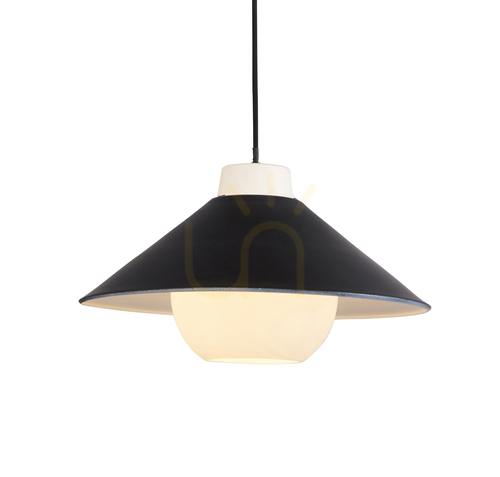
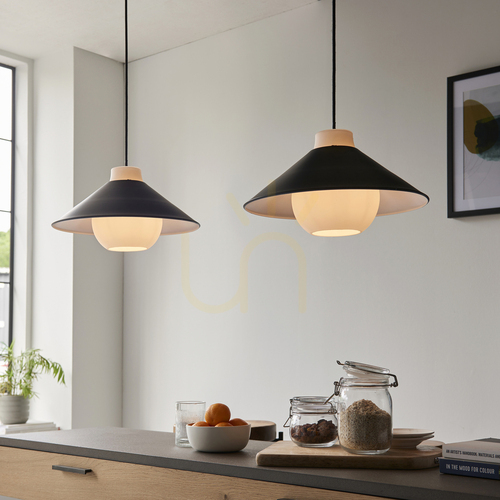
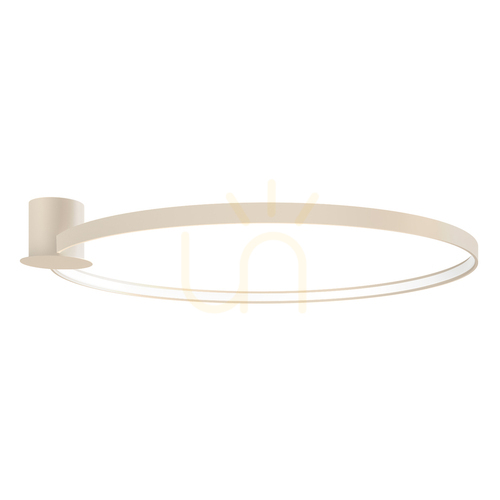
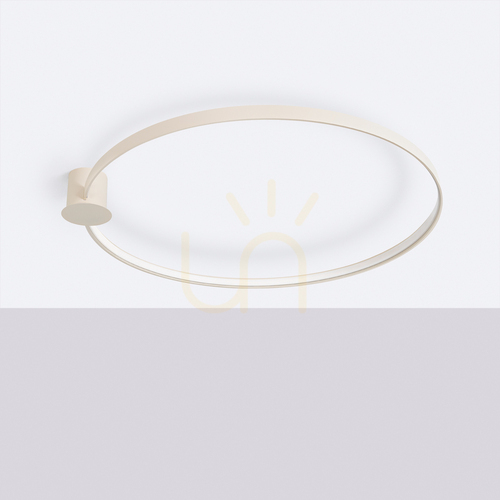
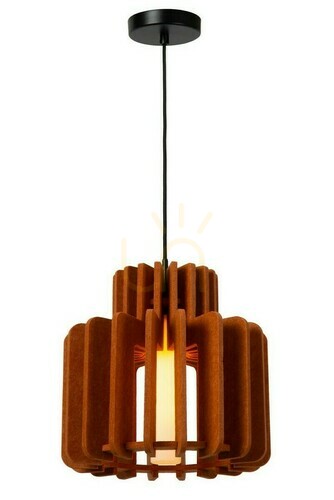
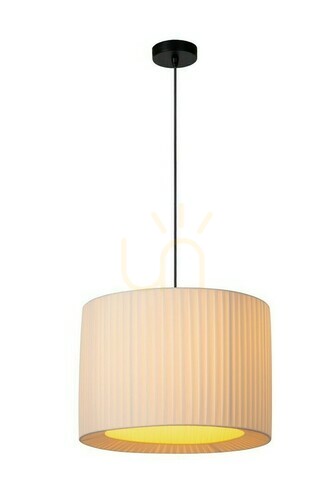
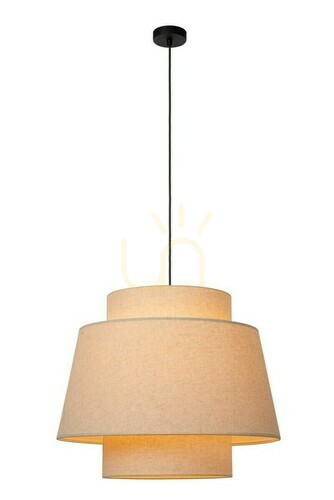
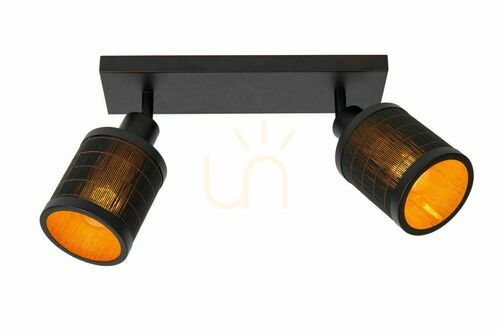
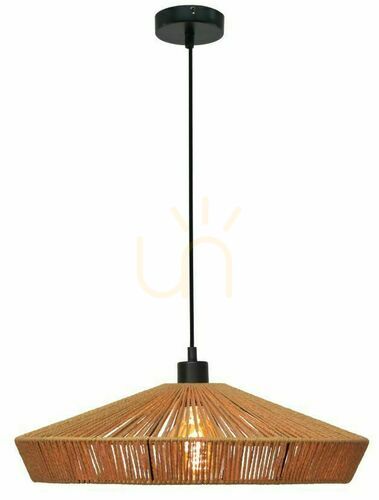
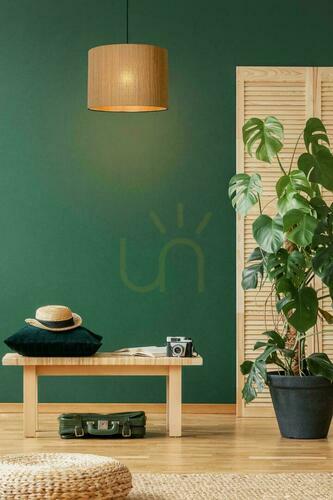
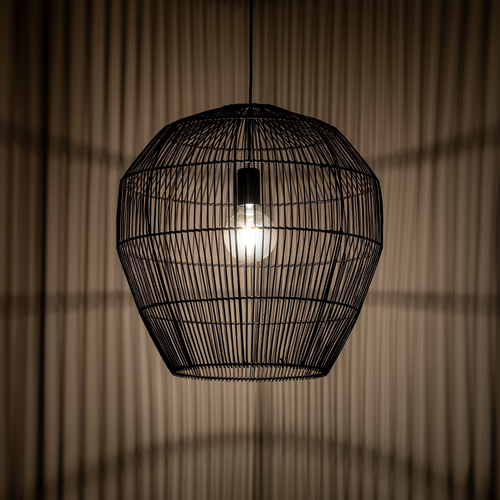
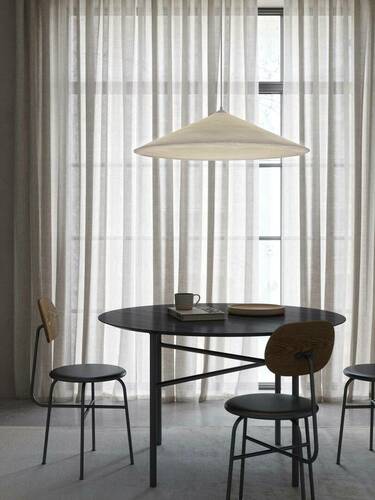
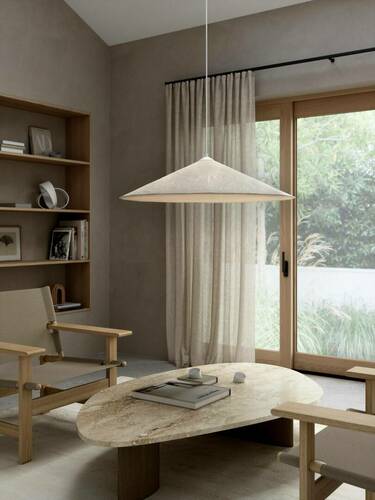
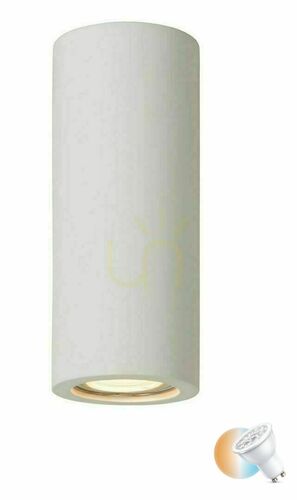
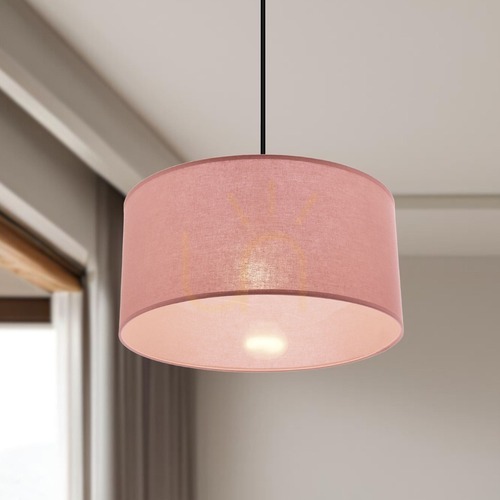
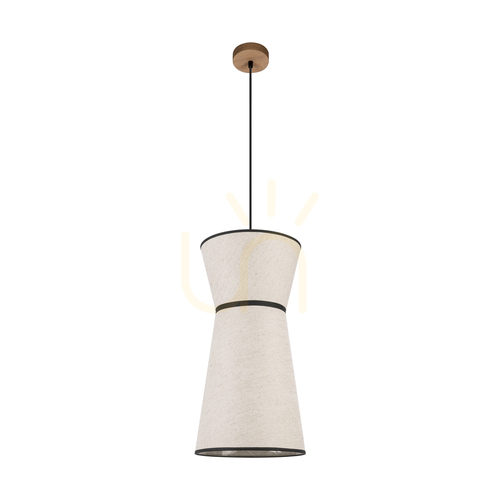
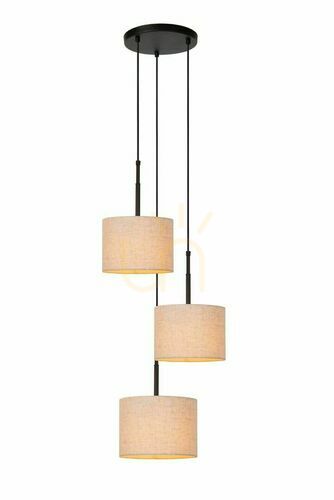
Japandi ceiling lights come from two traditions that turned out to want the same things. Japanese interiors light a room through paper and rice-straw screens, low and evenly, with the source never visible. Nordic design lights it against long dark winters with warm, low, functional fittings in pale wood and matt metal. Put together, the result is a ceiling with one object on it rather than five: a linen or paper drum, a plaster dome, a slim black stem, a shade in unbleached fabric — nothing polished, nothing reflective, and a good deal of empty ceiling left alone.
Which form the ceiling can take
This is the broad ceiling category filtered to one style, so the mounting form is the first decision and the finish comes second.
Choosing the form
| Ceiling |
Over a table |
Over open floor |
Avoid |
| Under 2.4 m |
A shallow linen or paper drum, bottom edge 70 cm above the top |
A flush plaster or fabric dome |
Anything with a visible drop over walking space |
| 2.4 to 2.7 m |
A single wide drum, or a slim three-lamp bar |
Semi-flush on a short stem |
Deep enclosed shades finishing below 2.05 m |
| 2.7 to 3.2 m |
A large paper globe, or three small shades in a line |
A single tall pendant hung deliberately low over a defined zone |
A cluster, which turns the calm the style depends on into clutter |
| Over 3.2 m |
A long-drop pendant on a slim black cable |
One object, hung low, with everything around it left empty |
Filling the height with a second fitting |
The governing rule of the style is subtraction. If you are choosing between two good fittings for one room, the answer is usually to buy one of them and add a floor lamp instead.
The materials are what make this range different
82 products carry the Japandi style on ceiling lights. The material profile is unlike anything else on the site, and it is the clearest evidence that the style is a genuine category rather than a label. Attributes here are sparsely filled, so read each number as a floor.
-
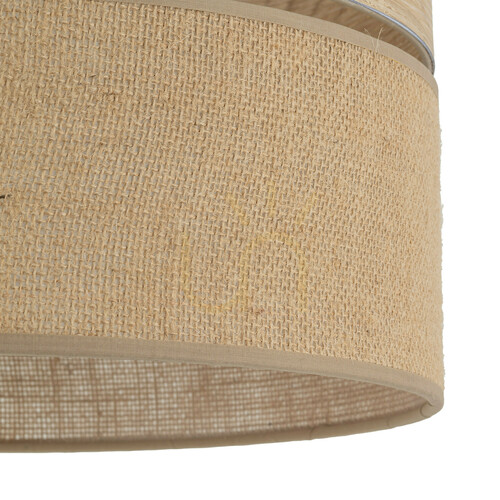
Fabric almost matches metal. 33 products are recorded as metal and 32 as fabric — a near-even split that no other style produces. Fabric shades diffuse through the whole surface rather than only at the openings, which is exactly the soft, sourceless light the Japanese half of the tradition is after.
-
Then the quiet materials. Wood on ten, glass on eight, ceramic on six, plaster on six, paper on six, concrete on five. Plaster and concrete are unusual on a ceiling fitting anywhere else; here they are a deliberate choice, because a matt mineral surface reads as part of the ceiling rather than as an object stuck to it.
-
Colours stay within the palette. 22 black, 19 white, 13 natural wood, ten beige, eight grey, and single figures in pink, brown and rust. There is no chrome and no gloss anywhere in the leading colours, which is the whole point.
-
Mostly single-lamp, with a real three-lamp group. 52 take one lamp and 19 take three. That second number is the linear bar or the row of three small shades over a table — the one arrangement in this style that is allowed to repeat.
-
Dry rooms. 75 are IP20 and every product whose voltage is recorded runs on 230 V.
Hanging heights
- Over a dining table: bottom of the shade 70 to 80 cm above the tabletop. A fabric or paper shade can hang slightly lower than a metal one, because it does not glare from the side.
- Over a kitchen island: 75 to 85 cm above the worktop, since people stand here and the sightline across the island matters.
- Over open floor: 2.05 m of clear headroom, minimum.
- A row of three needs a table at least 160 cm long, spaced evenly with the outer two set in about 30 cm from the ends. Below that, one shade.
- Shade diameter roughly a third of the table width for a single fitting. A large paper globe is the exception — it is read as a volume rather than as a shade, and it can go bigger.
Light source, and why it matters more here
71 of these fittings take an E27 cap, five take GU10 and four use an integrated LED module. 73 arrive without a bulb, so on nearly everything here the light source is your decision — and with fabric, paper and plaster shades it is a decision that changes the object rather than just the room.
- 2700 K, or 2400 K where the shade is unbleached linen or paper. A cool source through natural fabric turns it grey and removes the warmth that the material was chosen for.
- Use a frosted or opal lamp, never a clear filament one. A paper or thin fabric shade shows the shape of the lamp inside it as a dark silhouette, and a bare filament reads as a fault.
- Keep output modest. Fabric and paper transmit light across the whole surface, so the same lumen figure feels considerably brighter here than inside a metal shade. 600 to 800 lumens is plenty for a single pendant over a table.
- 62 products are recorded as taking a replaceable LED lamp, so the colour temperature stays a reversible decision on most of the range.
- Check the internal depth before buying a large decorative globe lamp. A shallow paper shade will show the top of a 125 mm lamp through the fabric.
Who supplies it
Lucide accounts for 68 of the 82 products, with Fabbian and Candellux on three each, Nowodvorski, Aldex and BAZAR BIZAR on two, and single entries from Nordlux and Thoro. One supplier that dominant means the range is coherent — the shapes and finishes genuinely belong together — but it also means the outliers are worth looking for: the handful of pieces in ceramic, concrete and natural fibre come from the smaller names and are what stop a room reading as a catalogue page.
Questions people ask
What actually separates Japandi from Scandinavian?
Restraint and material honesty. Scandinavian design will use colour, pattern and several fittings in one room; the Japanese half of Japandi removes all three. In practice the test is quantity: if the room has one ceiling object, one floor lamp and a lot of empty surface, it is Japandi. Scandinavian chandeliers covers the Nordic side on its own terms.
And from minimalist?
Minimalism is about geometry and the removal of ornament; Japandi is about texture and the removal of noise. A minimalist fitting can be a polished white cylinder. A Japandi one is unbleached, matt and slightly irregular — the imperfection is deliberate. Minimalist ceiling lights is the page for the harder-edged version.
Can a paper shade go over a kitchen table?
Over the table, yes; over the hob, no. Paper and unlined linen absorb cooking grease and cannot be cleaned once they have. Keep the soft materials over the eating end of the room and use plaster, ceramic or metal where there is steam.
Do I need more than one fitting?
One on the ceiling, and then light at low level rather than a second overhead object. A floor lamp and a table lamp will do more for the room than another pendant, and they keep the ceiling quiet, which is the effect the style is built on.
What lights the rest of the room?
Japandi pendant lights goes into drops, diameters and shade materials over a table in detail, and japandi wall lights covers the bedside and the corridor, where the style's preference for a single low light source works particularly well.