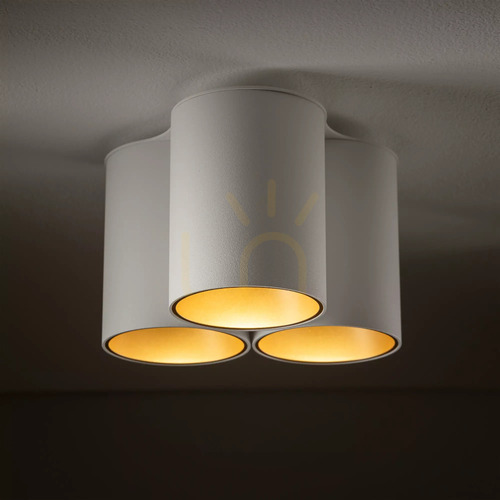
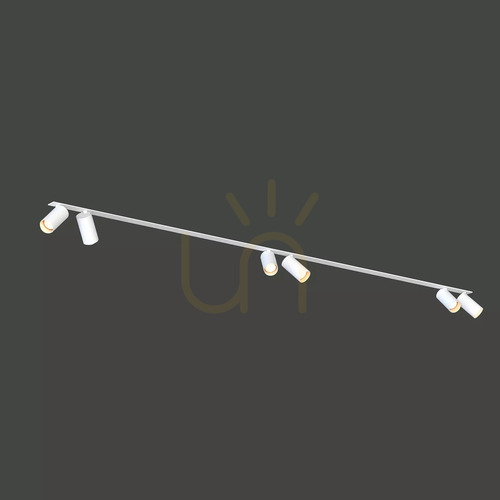
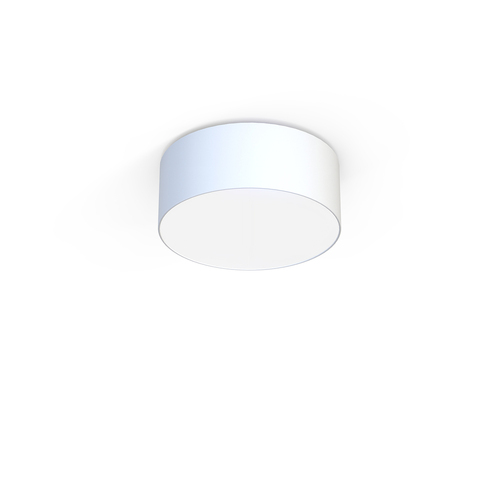
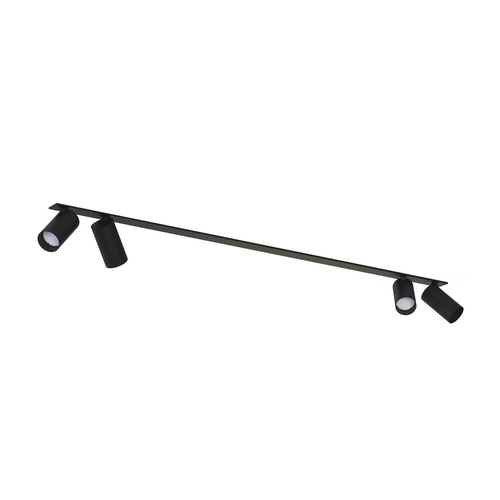
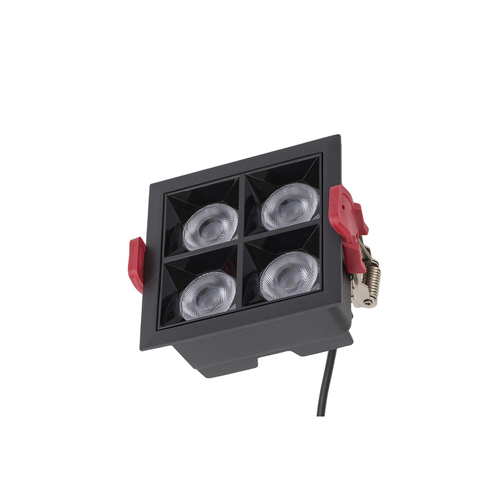
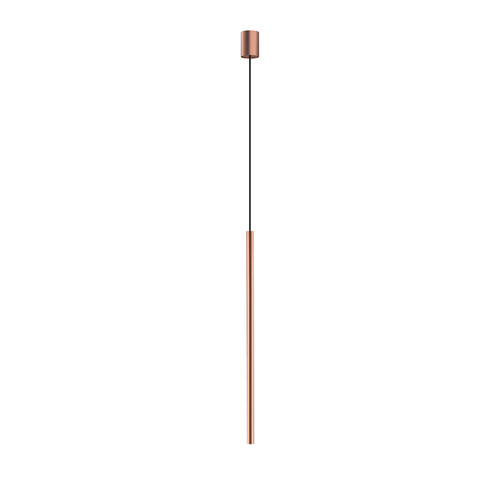
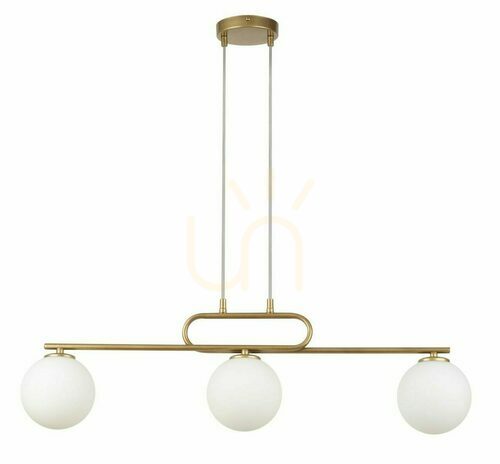
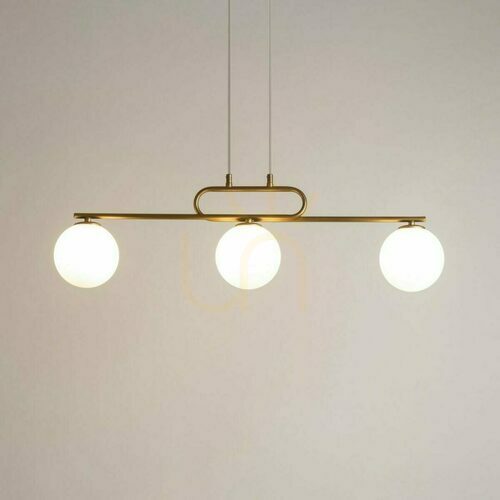
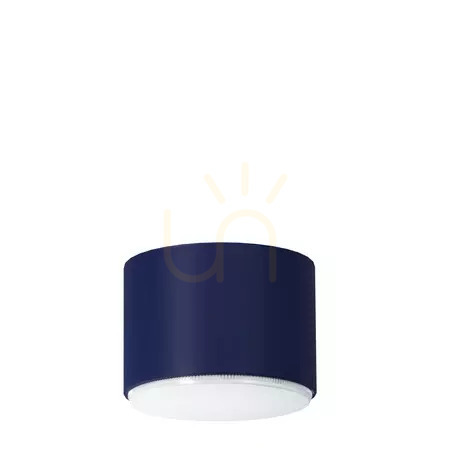
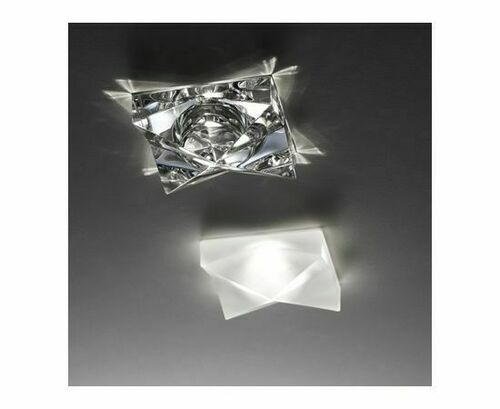
Minimalist ceiling lights are built on a single rule: one geometric volume, and nothing else. A disc, a sphere, a bar, a cylinder or a ring, executed in one material, with the fixings hidden, the driver concealed, no visible screws, no arms and no reference to any historical period. Everything a minimalist fitting has to say, it says with its outline. That makes it the easiest style to live with and the hardest to choose, because when the decoration is removed the only things left to compare are proportion, light distribution and build quality.
The five geometries, and what each one does with light
Minimalist forms and their light distribution
| Geometry |
Silhouette |
Where the light goes |
Reads best |
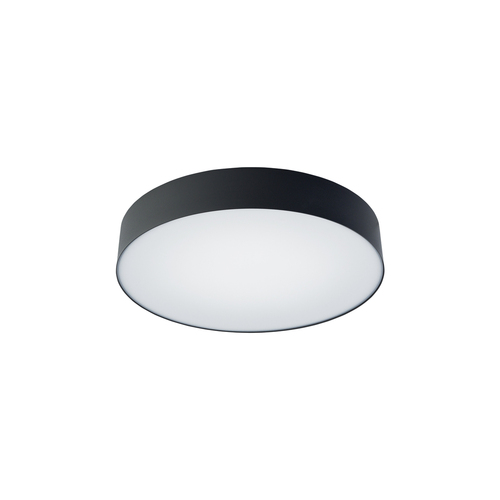
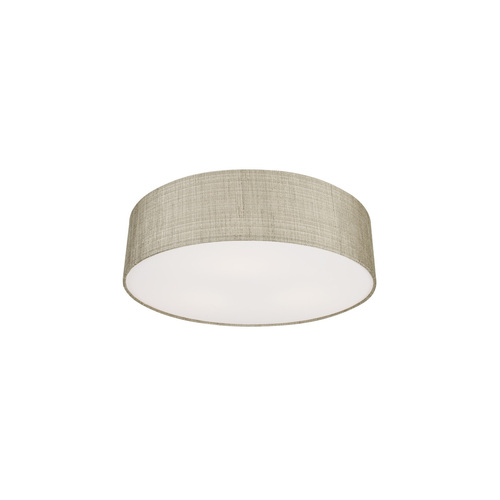
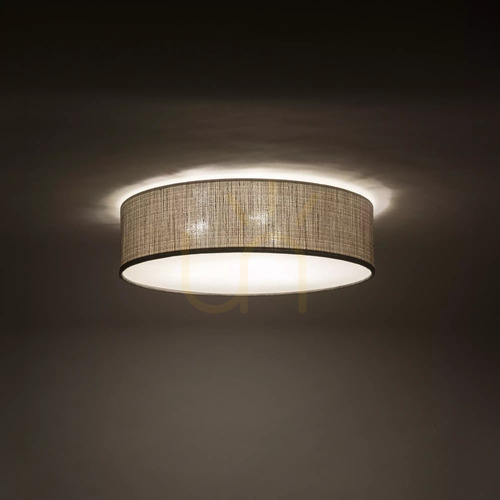
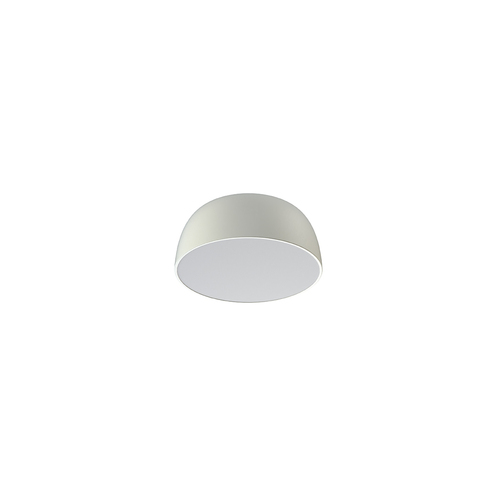
| Flat disc |
A circle 20 to 60 cm across and 3 to 8 cm deep, held tight to the ceiling |
Broad and downward, with a wide soft edge |
Low ceilings, corridors, bedrooms — anywhere nothing may hang |
| Sphere |
An opal or glass globe on a short stem or cable |
In every direction, including upward onto the ceiling |
Halls, stairwells and rooms that need to feel lit rather than aimed |
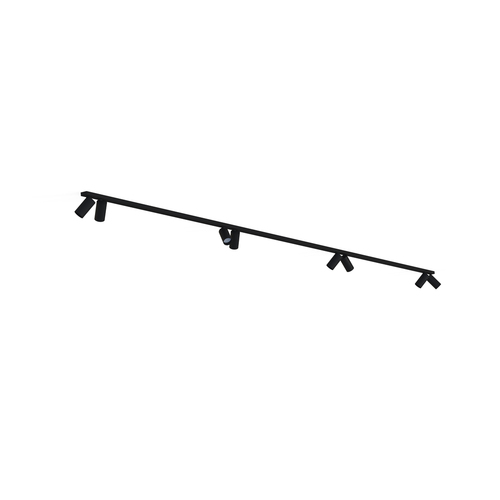
| Linear bar |
A slim extrusion 60 to 180 cm long, suspended or surface mounted |
Down as a strip, sometimes up as well |
Long tables, kitchen islands, desks and worktops |
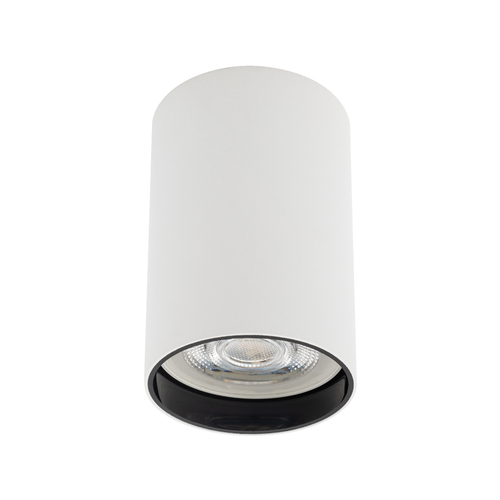
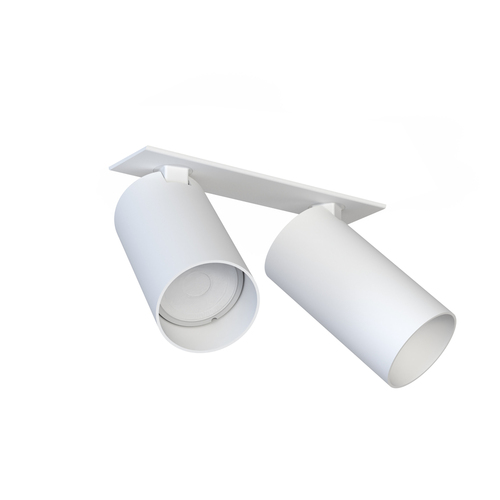
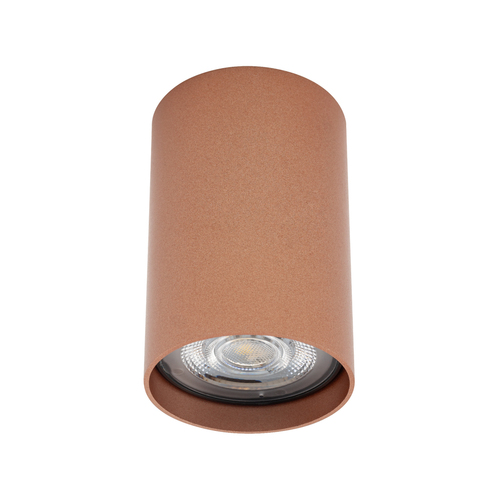
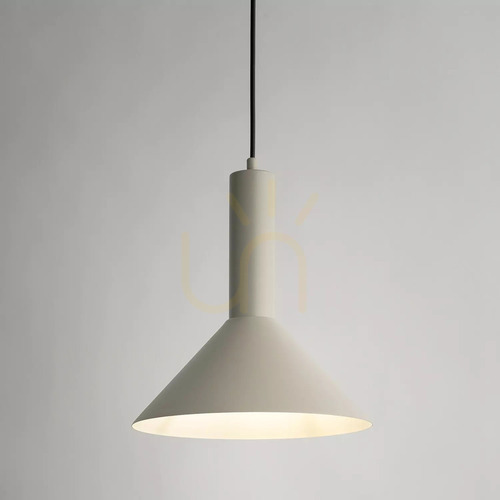
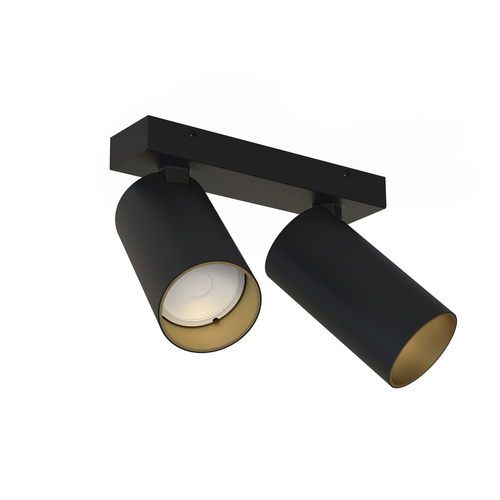
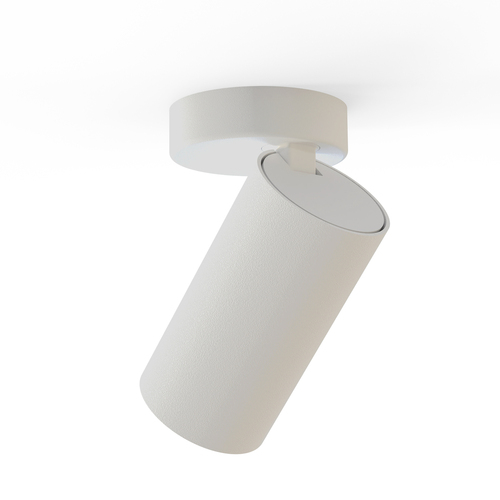
| Cylinder |
A barrel, open at one end, suspended or ceiling mounted |
A defined cone with a clean edge and almost no spill |
Task positions and anywhere you want light without seeing the source |
| Ring |
A circle or halo, 40 to 120 cm across, usually edge-lit |
Down and often inward, with the ceiling above left dark or washed |
Round tables and open rooms where one object is meant to hold the centre |
Ceiling height picks the geometry for you
Measure floor to ceiling first, then choose. At 230 to 245 cm, only the flat disc and a shallow ring are genuinely comfortable in a walking route — take 210 cm as the lowest point any fitting may reach where people move, and there is not much left after the ceiling void and the canopy. Over a table at that height a pendant is still fine, because nobody walks there: 75 to 85 cm above the tabletop is the target, measured from the lowest point of the fitting.
At 250 to 280 cm the whole vocabulary opens up, and a suspended sphere or bar starts to look correct rather than crowded. Above 300 cm a flat disc pressed to the ceiling loses its effect — it is too far away to read as an object and too high to light the room efficiently — and a suspended form on a long drop becomes the better answer. The general rule is that as the ceiling rises, the fitting should come down to meet you; a room lit from 3.5 m is a room where every lamp is working twice as hard for the same result.
What this filter holds
2127 models sit behind this page, which makes it one of the largest style filters on the site. Every figure below is a floor rather than a share, because catalogue attributes are filled in unevenly — each number means "at least this many models carry it".
-
Form split. 615 models are recorded as suspended fittings, 278 as flush ceiling fittings and 60 as recessed — so the suspended end is the largest, but the flush end is substantial.
-
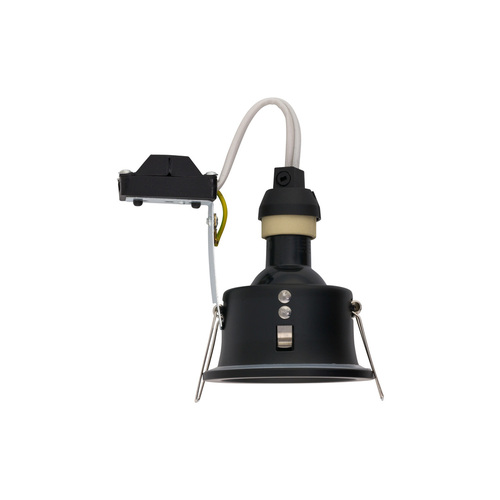
Sockets. 654 models take E27, 544 have an integrated LED module, 354 take GU10, 262 take G9 and 228 take GX53. That last one is worth knowing about: GX53 is a flat 20 mm-deep lamp made specifically for shallow fittings, and it is the reason a disc can be 4 cm deep instead of 10.
-
Single-volume designs dominate. 1063 models carry one light point, with 285 at three and 169 at two.
-
Materials. 1220 models are recorded in steel, 452 in glass, 410 in unspecified metal, 362 in aluminium and 459 in moulded plastic used for diffusers.
-
Colour. 698 models are black and 609 white — the two finishes that dominate the style — with 285 in gold, 159 grey and 152 beige.
-
Protection. 1874 models are IP20, 121 IP40, 40 IP44 and 18 IP54, so damp-room use is a minority and needs checking model by model.
-
Colour temperature where recorded. 396 models are warm white, 67 very warm, 88 neutral and 18 switchable, which confirms that this is a warm-light style despite the cool geometry.
Sigma and Nowodvorski supply the largest parts of the range, followed by Fabbian, TK-Lighting, s.luce, Thoro, Quintiesse and Zuma Line.
Integrated LED or replaceable lamp
This is the one decision on a minimalist fitting that you cannot revisit later. An integrated module lets the designer make the fitting thinner and hide everything, which is often the reason the shape exists at all — a 4 cm disc cannot house a lampholder. The cost is that when the module or its driver fails, the fitting is finished unless the driver happens to be a separate replaceable part. 544 models on this filter are integrated and 1523 arrive without a lamp, so both routes are well represented.
A practical rule: choose integrated where the form genuinely depends on it — slim discs, thin bars, edge-lit rings — and choose a replaceable lamp everywhere the fitting is thick enough to take one. If you buy integrated, check whether the driver sits in the canopy or inside the body, because a canopy driver can be swapped by an electrician and a potted internal one cannot.
Common questions
Why do two identical-looking discs give very different light?
The diffuser. An opal acrylic diffuser spreads light evenly and hides the LEDs; a clear or lightly frosted one is brighter but shows a pattern of bright dots when you look up at it. On a low ceiling, where the fitting is close to eye level, that difference matters more than the lumen figure.
How much light does the room need?
Roughly 100 lumens per square metre for general living-room light, 300 over a kitchen worktop, and 500 at a desk. A 20 m2 living room therefore wants about 2000 lm from the ceiling if the ceiling is doing all the work — which in a minimalist scheme it usually is, since there are no decorative layers to fall back on.
Black or white?
White disappears into a white ceiling and is the quieter choice. Black stays visible as an object and holds a room together where there are other black details — window frames, a stair balustrade, cabinet handles. Neither is more minimalist than the other; the mistake is a third colour.
Can these go in a bathroom?
Only the rated ones. 40 models carry IP44 and 18 carry IP54 on this filter, against 1874 at IP20, so check the specific model against the zone rather than assuming a sealed-looking disc is sealed.
What if I want the cylinder form specifically?
Then the beam angle and cut-off arithmetic is the real decision, and it is set out on tube ceiling lights. If you want the same restraint with natural materials rather than steel and glass, japandi ceiling lights covers linen, paper and timber, and design ceiling lights is the broader page for sculptural single-volume fittings.