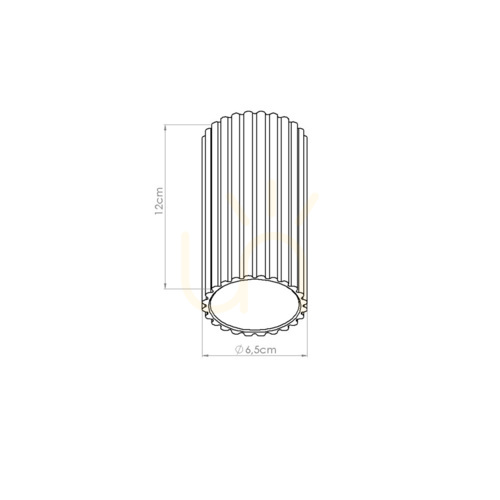
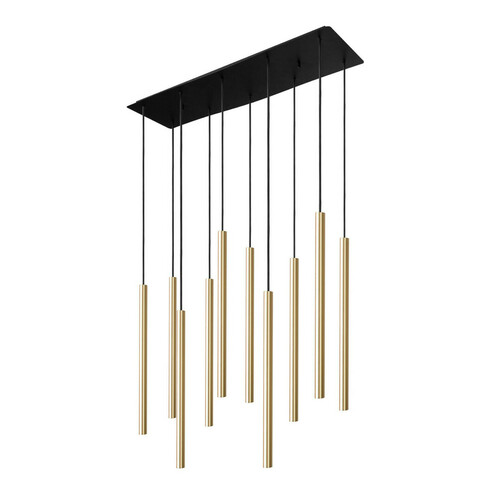
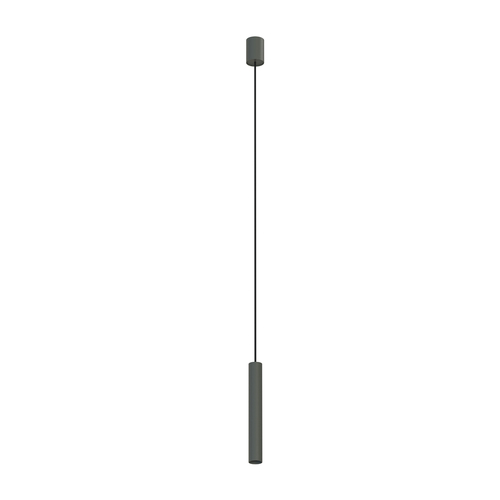
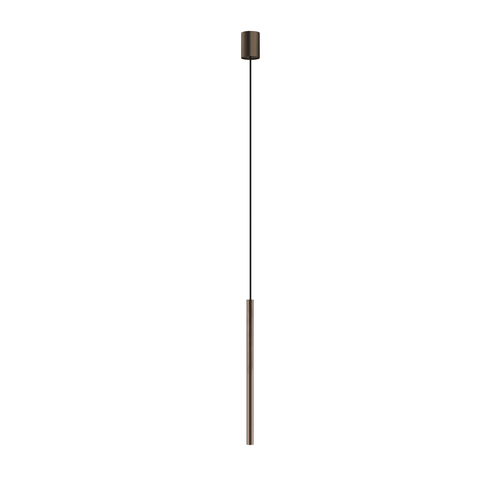
Tube ceiling lights are not a design movement, and it is worth saying so at the start. A tube is a shape — a cylinder, open at one or both ends, holding a lamp inside a metal barrel — and the reason people search for it is that the shape solves a specific lighting problem. A cylinder controls where its light goes far better than a bowl or a globe does. The decisions that follow are dimensional, not stylistic: how wide the barrel is, how long it is, and how much of the lamp the barrel hides.
The four ways a tube reaches the ceiling
Tube fitting types compared
TypeHow it mountsWhat it gives youBest used for
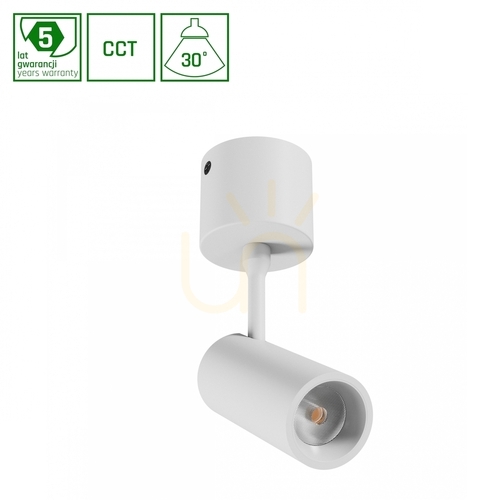
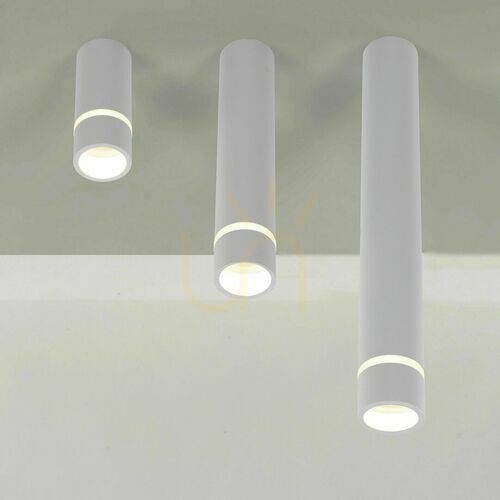
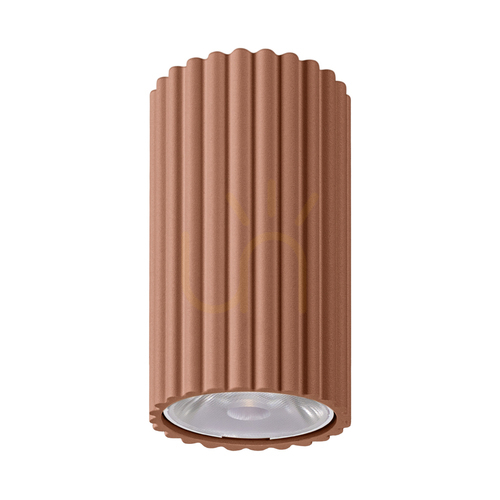
Surface cylinderA round base plate screwed to the ceiling, barrel pointing downA defined circle of light with a clean edge and almost no spillCorridors, worktops, shower rooms with the right rating, and anywhere a recessed hole is impossible
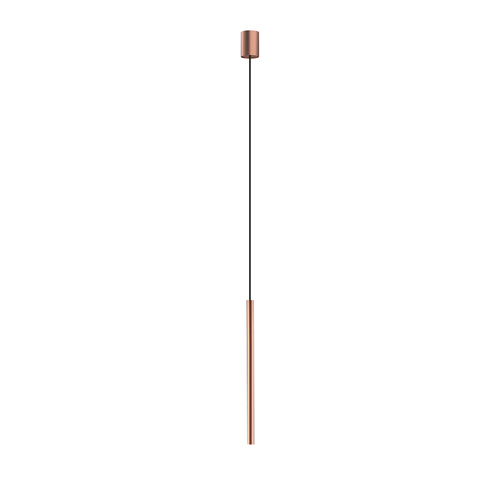
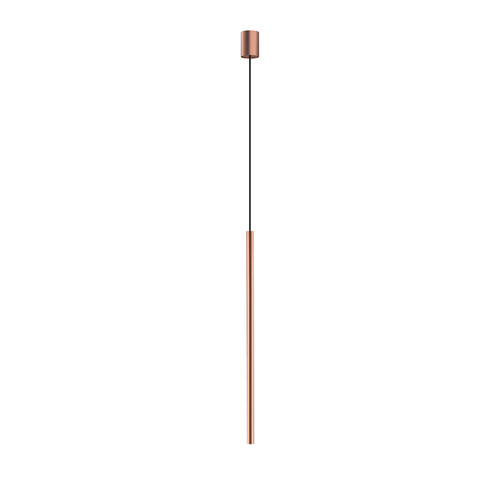
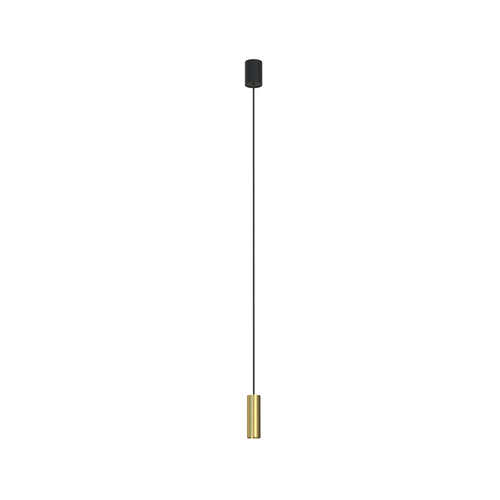
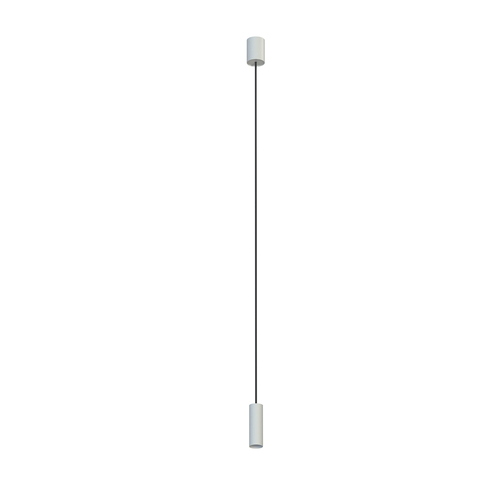
Suspended tubeCable or rod from a canopy, barrel hanging freeThe same controlled beam, brought closer to the surface it lightsIslands, dining tables, reception desks — anywhere the drop can be used
Recessed cylinderSunk into a plasterboard ceiling, only the rim visibleLight with no visible fitting at allNew ceilings and dropped bulkheads where there is 10 cm or more of void
Up-and-down tubeSurface or wall mounted, open at both endsA cone of light on the ceiling and a second one on the floorHalls and stairwells, where the ceiling wash stops the fitting looking harsh
Of the 72 models behind this page, 15 are recorded specifically as suspended fittings and 4 as flush ceiling fittings; the rest are surface cylinders and multi-head bars. 50 carry a single light point, with 7 at three heads, and small groups at seven and ten heads for the long bar designs.
Ceiling height decides more here than style ever will
A cylinder throws a cone. The higher the ceiling, the wider that cone has spread by the time it reaches the floor, and the dimmer it is at the centre. That relationship is the whole design problem with tube fittings, and it is why the same model can be perfect in one room and useless in another.
Under a 240 cm ceiling, a surface cylinder is at 230 cm and a 36 degree beam lands as a pool about 1.5 m across on the floor — bright, clean and easy to place. At 300 cm the same fitting spreads that pool to nearly 2 m and loses roughly half its centre brightness, so you either move to a narrower beam or accept the fitting as a wash rather than a spotlight. Above 350 cm, a surface cylinder is generally the wrong choice and a suspended tube on a long cable is the right one, because bringing the source down 80 cm buys back the intensity a taller room took away.
Beam angles and what they land on
Beam angle against mounting height
BeamPool at 2.3 m above the floorPool at 1.0 m above a worktopUse it for
15 degreesAbout 0.6 mAbout 0.26 mLighting a single object — a picture, a plant, a sculpture
24 degreesAbout 1.0 mAbout 0.42 mA chopping station, a bedside, a desk corner
36 degreesAbout 1.5 mAbout 0.65 mGeneral work light in a run of cylinders
60 degreesAbout 2.6 mAbout 1.15 mBroad ambient light where you want overlap between fittings
Spacing follows directly: for even light on a corridor floor, place cylinders roughly one pool-width apart, which for a 36 degree fitting at 2.3 m means about 1.5 m between centres. Wider spacing gives a row of discs with dark gaps between them, which some people want and most do not.
Cut-off, and the reason a deep tube costs more to live without
The other thing a barrel does is hide the lamp. A shallow cylinder leaves the light source visible from across the room, so you see a bright point every time you look up; a deep one, or one with a recessed lamp position, cuts the source off above about 30 degrees from vertical and you see only the light it lands on. That single difference explains why two cylinders with identical lumen figures can feel completely different in a room. If the fitting will be in your eyeline — a hallway, an open-plan ceiling you sit under — depth is worth paying for.
What this filter holds
72 models sit behind this page. The counts below are floors, not shares: catalogue attributes are filled in unevenly, so each figure means "at least this many models".
-
Metal barrels. 56 models are recorded in steel, 18 in brass and 12 in aluminium, with a few in glass and acrylic for diffuser elements.
-
Directional sockets. 28 models take GU10 and 25 take a G9 capsule; only 4 take E27. GU10 matters because the beam angle lives in the lamp, so you set the beam by choosing the lamp.
-
Dry rooms, mostly. 70 models are IP20 and 2 carry IP65, so weather-rated and shower-zone use is the exception here.
-
Finish. 19 models are recorded black, 16 brass, 15 white, with smaller groups in copper, grey and gold.
-
No lamp in the box. 62 models ship without one, and 5 are recorded with switchable colour temperature.
Nowodvorski accounts for most of the range, with Milagro, SpectrumLED, Kaja, YASKR, Luces Exclusivas, Elkim Lighting and Zambelis each contributing a small number of designs.
Common questions
How do I change the beam angle after installation?
On a GU10 fitting, by changing the lamp — the same fitting takes a 24, 36 or 60 degree GU10 and behaves like three different lights. On an integrated LED fitting you cannot, which is the strongest argument for a replaceable-lamp model in a room whose use may change.
Do tube fittings get hot?
The barrel does, because it is the heat sink. A metal cylinder running an LED lamp is warm to the touch and that is normal. What matters is that the fitting is not buried in insulation, which is a real hazard with recessed cylinders and irrelevant with surface ones.
Can I use these over a bathroom basin?
Only with the right rating for the zone. 2 of the 72 models carry IP65; the rest are IP20 and belong in dry rooms. Check the specific model rather than assuming that a sealed-looking barrel is sealed.
What about over a dining table?
Then a suspended tube is usually better than a ceiling-mounted one, because you can bring the source to 75 to 85 cm above the tabletop and get a tight, bright pool without over-lighting the rest of the room. That geometry is covered on tube pendant lights.
Do several tubes on one bar count as a chandelier?
They are sold that way, and the arrangement question — linear bar, staggered cluster or ring — is a different decision from the single-fitting one. Tube chandeliers deals with it. If the plain cylinder form appeals but you want the whole ceiling in one language, minimalist ceiling lights is the broader page.