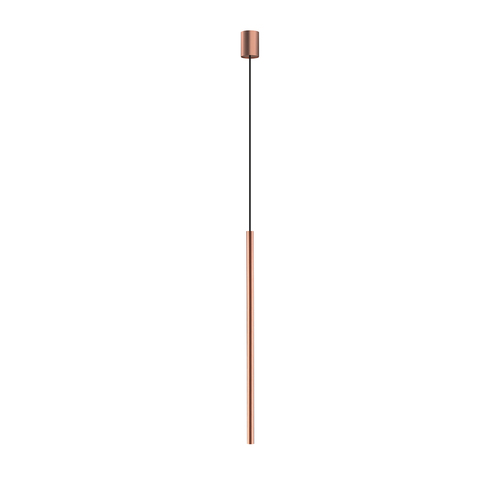
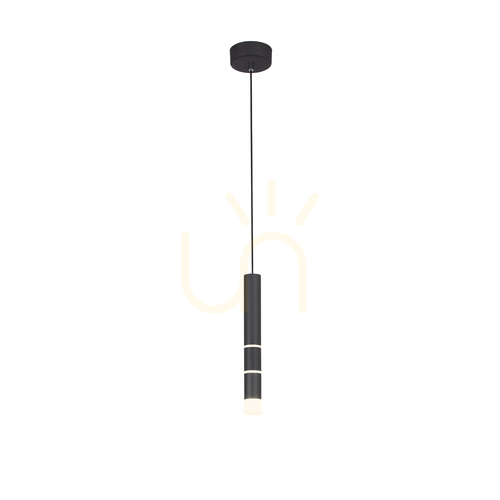
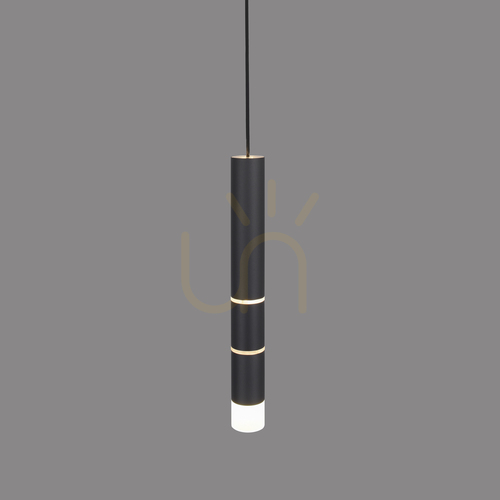
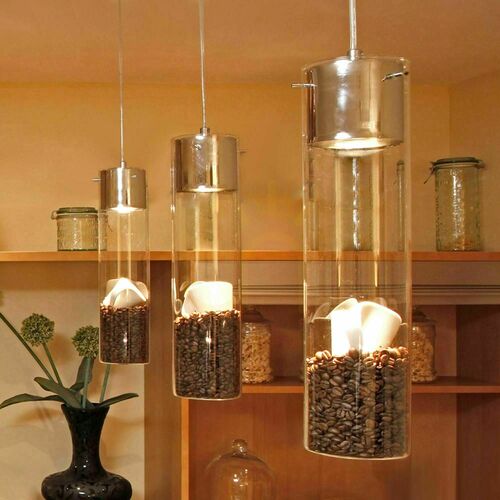
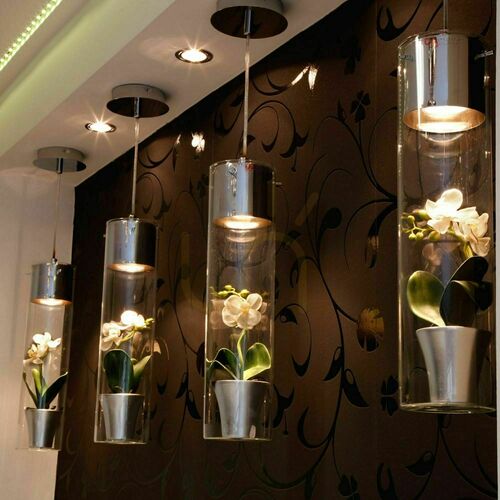
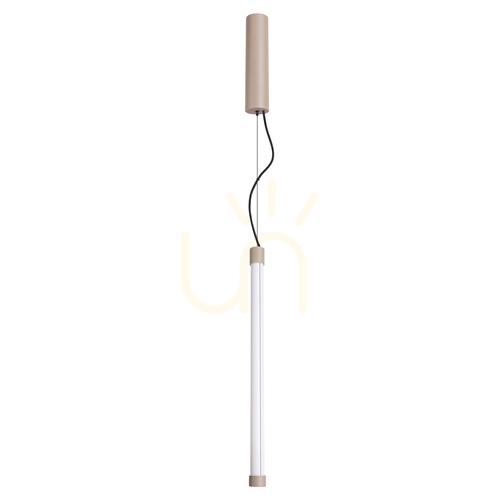
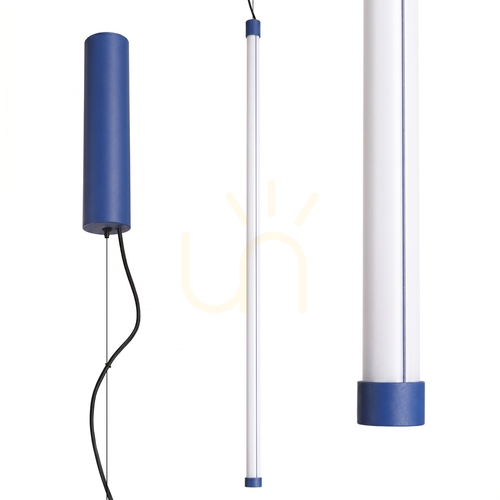
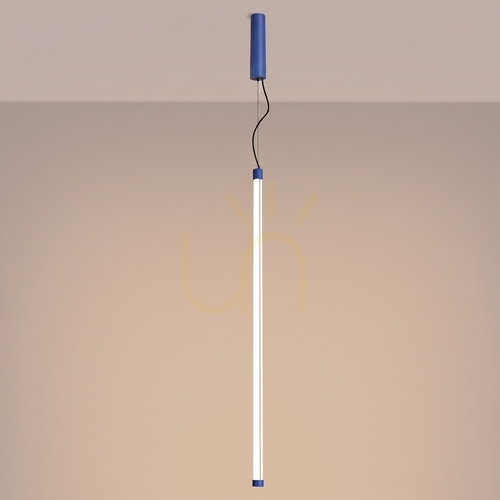
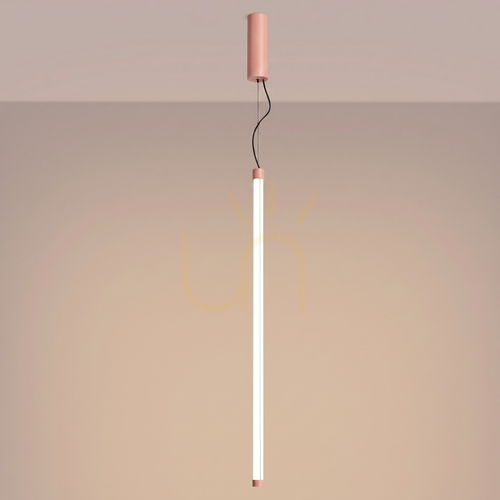
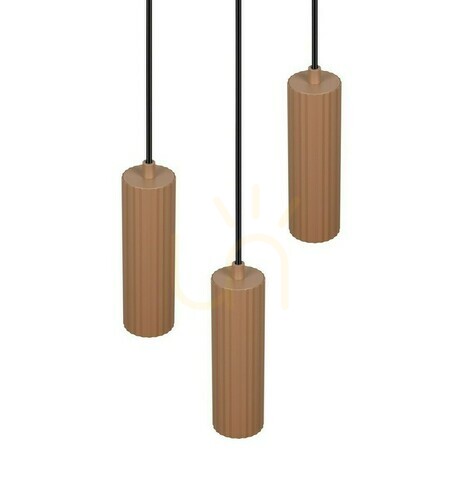
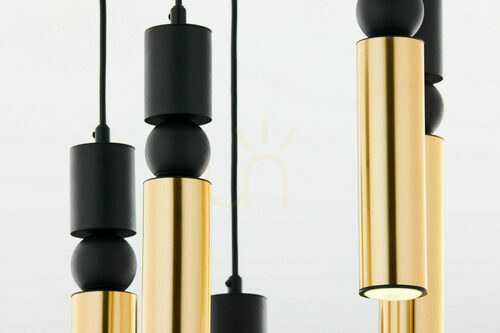
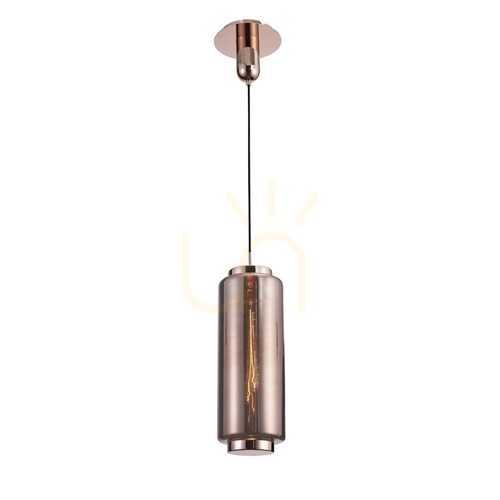
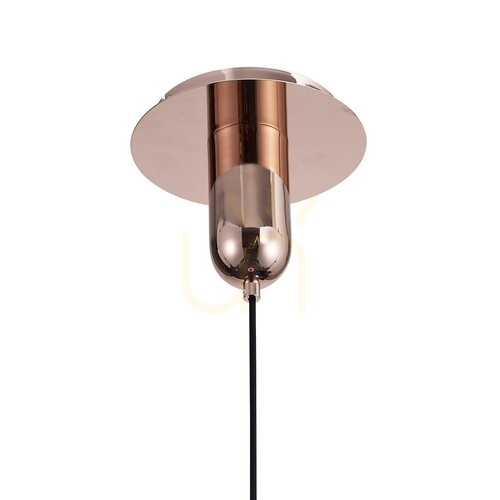
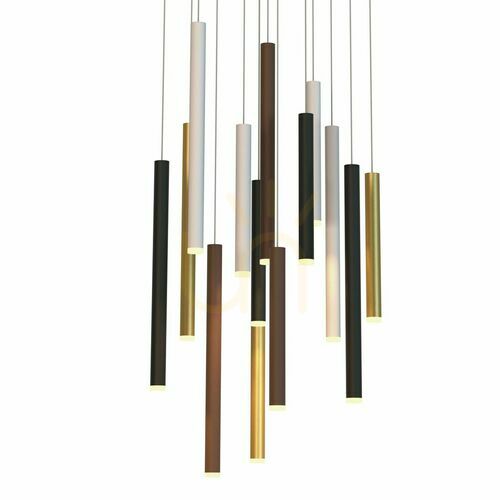
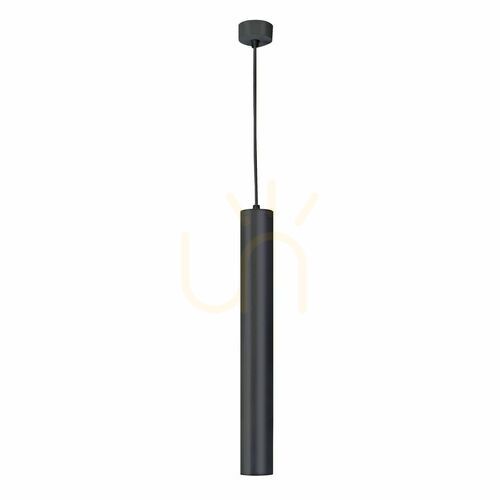
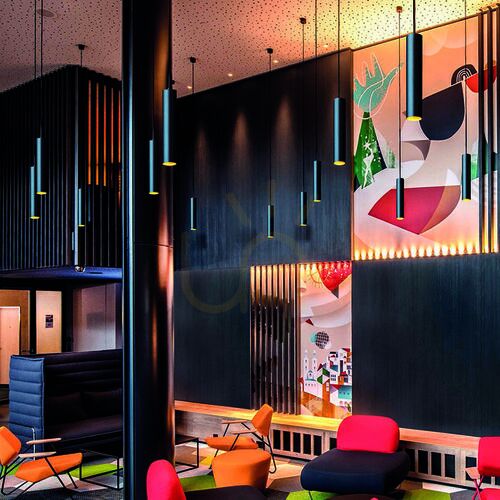
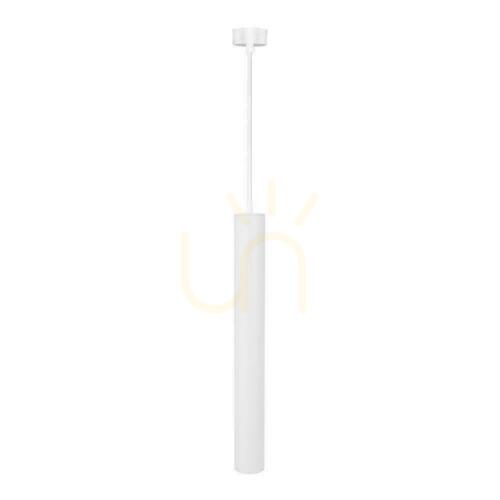
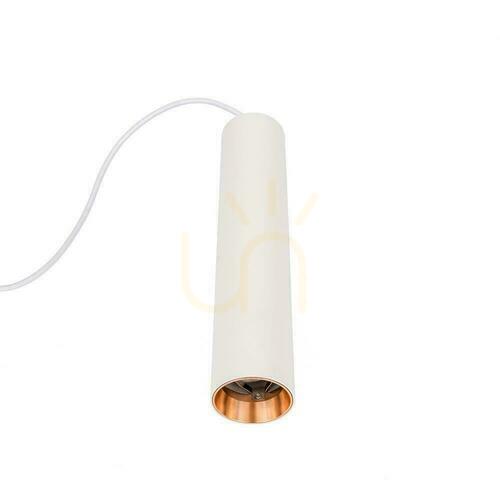
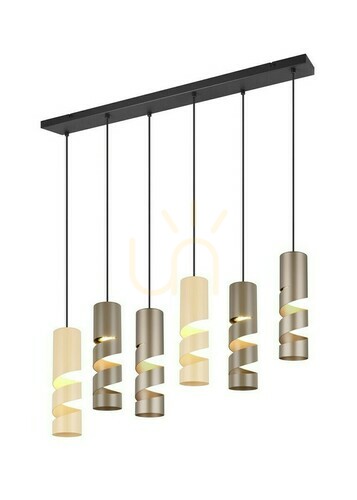
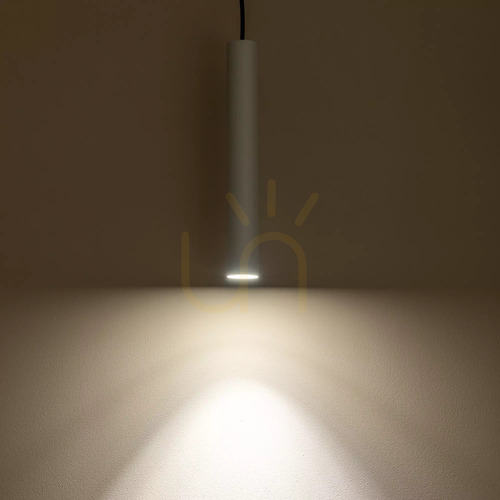
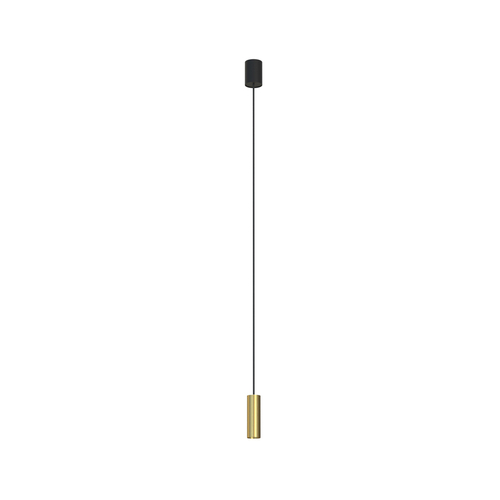
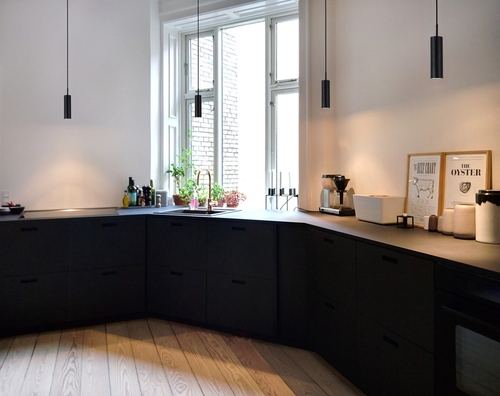
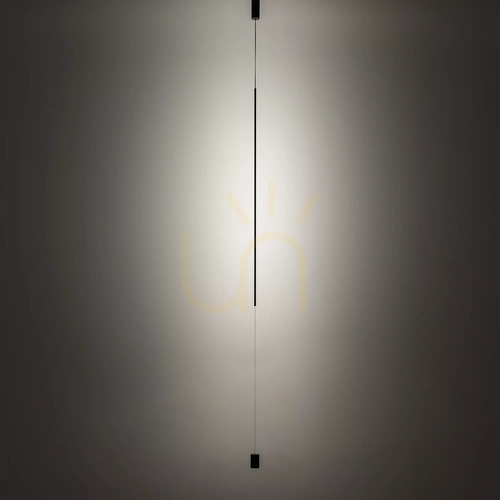
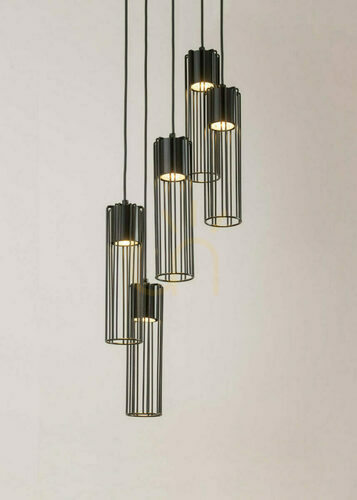
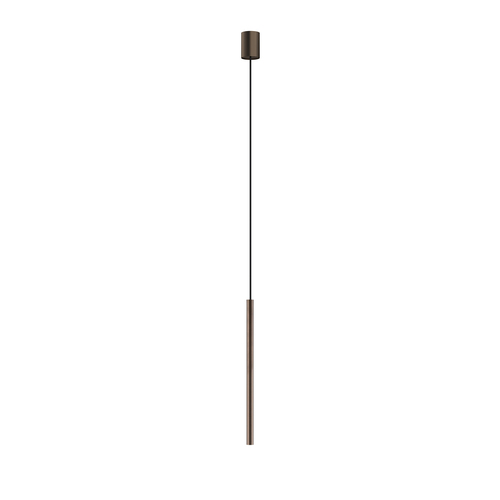
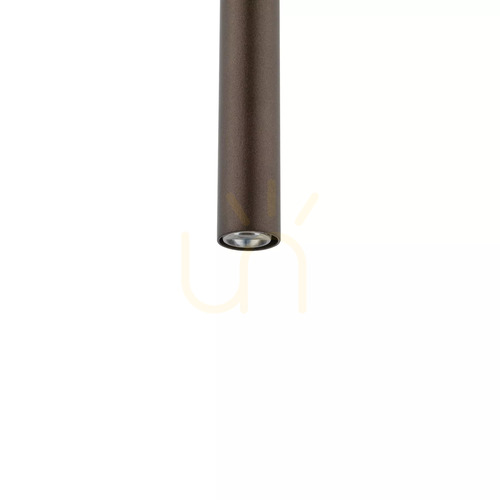
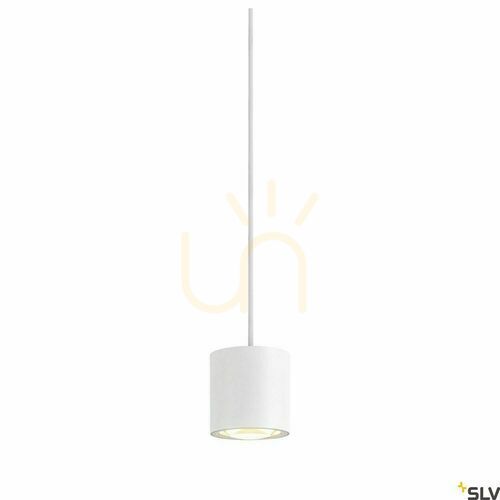
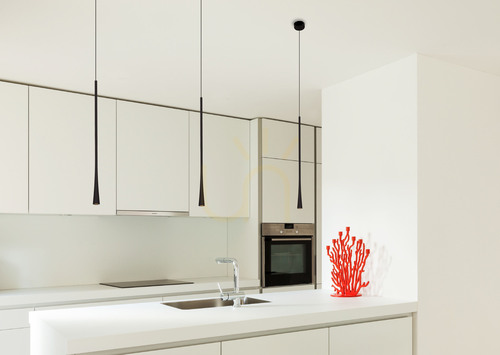
A tube pendant light is a cylinder hung on a cable or rod: a metal barrel, a lamp set inside it, and light that leaves only through the open end. It is the plainest possible suspended fitting and it is bought for a practical reason rather than a stylistic one — a cylinder puts light where you aim it and nowhere else, which is exactly what a kitchen island, a dining table or a reception desk needs and exactly what a globe or a fabric drum cannot do.
Three numbers decide the whole purchase
Forget the finish for a moment. A tube pendant is defined by its barrel diameter, its barrel length and its drop, and those three numbers determine whether it works in your room.
-
Diameter sets the visual weight and, with a directional lamp, very little else. A 6 cm barrel reads as a line; a 12 cm barrel reads as an object. Over a table, several narrow tubes look considered and one wide one looks emphatic.
-
Length sets the cut-off — how far off vertical you can stand before the lamp itself comes into view. A short barrel is glary from across the room; a long one is not.
-
Drop sets the size of the lit pool and how much of the room the fitting dominates. It is also the only one of the three you can still change after buying, and only within the cable length supplied.
Hanging heights and spacing
Drop and spacing for suspended cylinders
| Surface below |
Lowest point of the fitting |
Spacing between pendants |
How far in from the ends |
| Dining table |
75 to 85 cm above the tabletop |
60 to 80 cm for narrow tubes |
At least 30 cm from the table edge |
| Kitchen island |
70 to 80 cm above the worktop |
70 to 90 cm |
Line the outer pendants up with the seats, not the island ends |
| Breakfast bar |
70 to 75 cm above the bar |
One per stool position |
Centre each pendant on a stool, not on the bar length |
| Bedside, in place of a table lamp |
50 to 60 cm above the mattress |
Not applicable |
Offset 20 to 30 cm from the wall so the tube clears the pillow |
| Stairwell or void |
At least 210 cm above any tread |
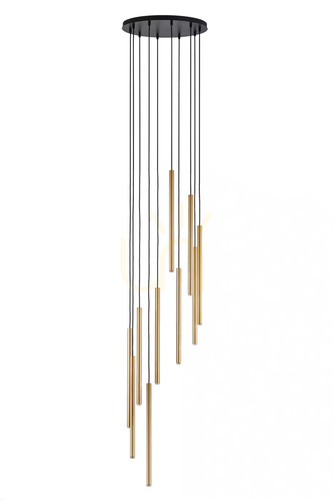
Stagger the drops rather than levelling them |
Keep the shortest drop clear of the landing balustrade |
The single mistake that spoils more installations than any other is hanging a row of tubes level with each other over a long table and centring them on the table rather than on the seats. Seats are where people are; light the seats.
What the barrel does to the light
A cylinder is a shield, not a diffuser. Whatever the lamp inside emits is either sent straight down or absorbed by the inside wall of the barrel, which means two things. First, the finish inside the tube matters — a white or polished interior returns some of the absorbed light, a matt black one eats it, and a black-interior fitting will measure dimmer than an identical white-interior one with the same lamp. Second, none of the light goes upward, so a room lit only by tube pendants has a dark ceiling and reads as moody. Over a dining table that is precisely the effect people want; as the only light in a living room it is not.
The fix is not a bigger lamp. It is a second layer — wall lights, a floor lamp, or a few surface cylinders elsewhere in the ceiling — with the pendants on their own switch so the table can be lit alone.
What this filter actually holds
61 models sit behind this page. Treat every figure below as a floor rather than a share: catalogue attributes are filled in unevenly, so each number means "at least this many models carry it".
-
Steel and brass barrels. 56 models are recorded in steel and 18 in brass, with small numbers in aluminium, glass and acrylic.
-
Capsule and reflector lamps. 25 models take a G9 capsule and 18 take GU10; only 4 take E27. A G9 barrel gives a soft, wide spread because the lamp radiates in all directions inside the tube; a GU10 barrel gives a defined beam because the reflector is in the lamp.
-
Single tubes lead, clusters follow. 42 models have one light point, 7 have three, and there are small groups at seven and ten heads for bar and cluster designs.
-
Dry rooms. All 61 models are recorded IP20, so none of them belongs in a shower zone or outdoors.
-
Bring your own lamp. 57 models ship without one, which is useful — it means you choose the beam angle and the colour temperature.
Nowodvorski supplies almost the whole of this range, with Milagro, Kaja and V-TAC contributing single designs.
Choosing the lamp is choosing the light
Because most of these fittings take a replaceable lamp, the same pendant can behave in several different ways. A 24 degree GU10 over an island lands a pool about 40 cm across on the worktop at a 1 m drop — tight, bright, and slightly theatrical. A 60 degree lamp in the same fitting covers over a metre and reads as general light. Colour temperature does the rest: 2700 K over a dining table, 3000 K over a kitchen worktop where you also need to judge food, and nothing cooler than that in a domestic room. A CRI of 90 or above is worth insisting on anywhere food or faces are involved.
Common questions
Can I shorten the cable?
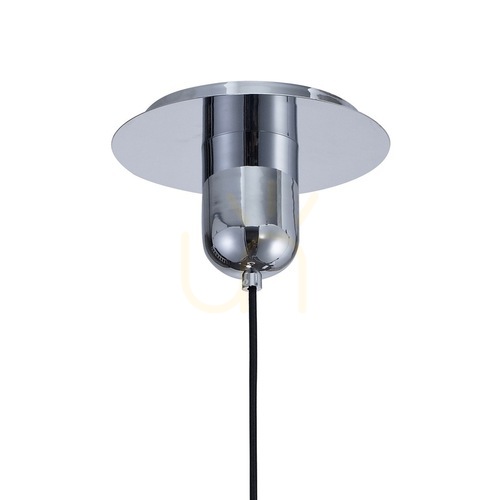
On nearly every model, yes — the canopy contains a cable grip or the fitting comes with an adjustable suspension. Set the drop with the fitting held in place before final wiring, because a pendant that is 10 cm too low is noticeable and a pendant that is 10 cm too high is not.
Why does my tube pendant look dimmer than the lumen figure suggested?
Because the figure is usually for the lamp, not the fitting. A deep barrel with a matt interior can absorb a substantial part of the lamp output, which is the price of the clean beam edge and the absence of glare. Compare fittings of similar depth, not lumen labels.
Is a cluster of three better than one large tube?
Over a table longer than 160 cm, usually yes, because a single pendant leaves the ends dark. Under that length one fitting is cleaner. The arrangement question — linear, staggered or ring — is set out on tube chandeliers.
What if I need the same look mounted flat to the ceiling?
Surface cylinders do the same job without the drop, and the beam-angle arithmetic that decides spacing is on tube ceiling lights.
Does a tube pendant suit anything other than a modern room?
A brass tube on a plain cable sits comfortably in a period room, because the form is quiet enough not to argue with anything. In a room where you want no visible fitting language at all, the wider comparison on minimalist ceiling lights is the better starting point.