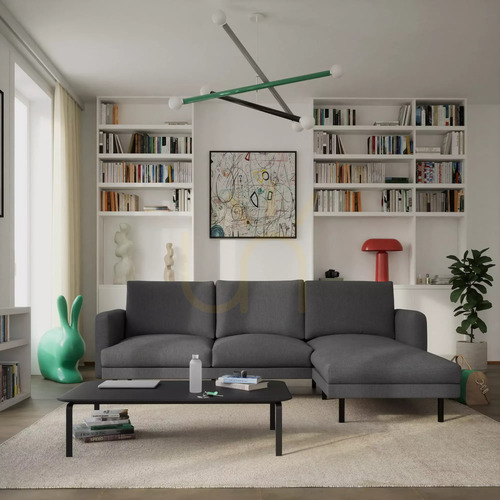
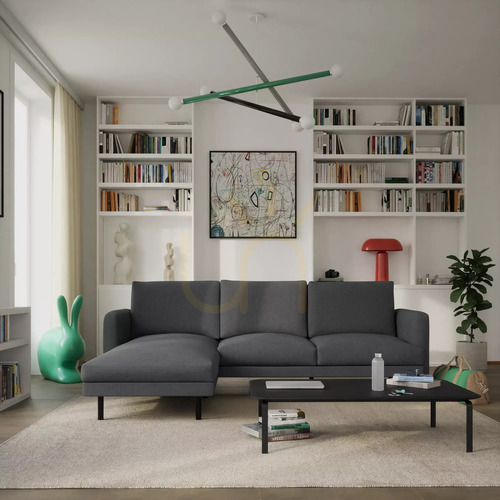
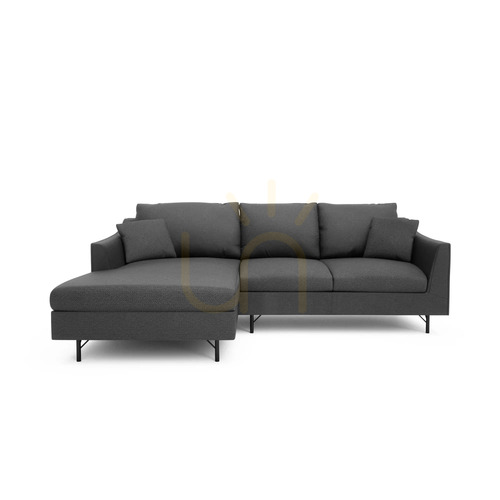
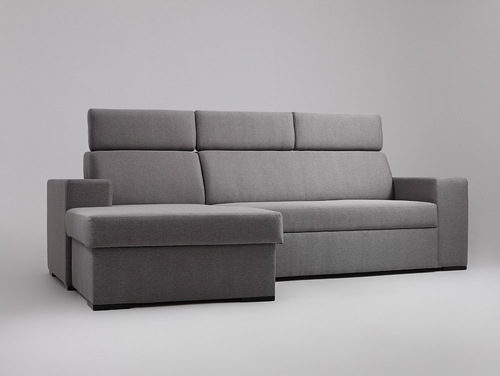
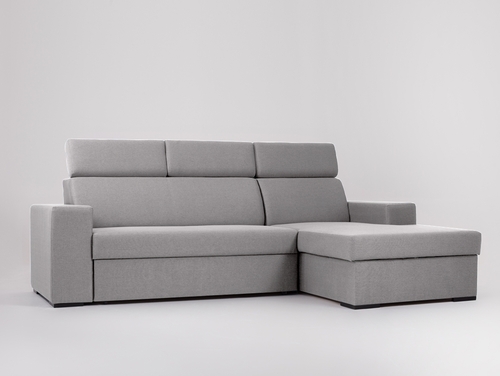
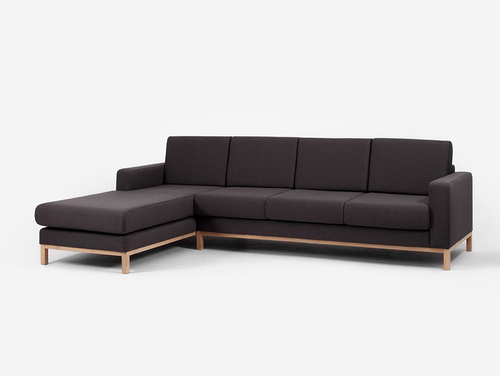
Grey is the default for corner sofas for a practical reason: it is the one neutral that works with warm oak and cool concrete alike, and it does not date the way beige and charcoal do. The choice worth thinking about is the shade and the fabric, not the colour itself.
Warm grey or cool grey
Cool, blue-leaning greys sit well with white walls, black metal and grey flooring — a sharper, more contemporary room. Warm greys with a hint of taupe work better beside oak, rattan and creamy paint. Putting a cool grey sofa in a warm-toned room is the mistake that makes an expensive sofa look wrong without anyone being able to say why.
FabricWearsBest for
Flat weaveShows marks, easy to wipeLow-traffic rooms
Boucle / texturedHides marks, catches clawsHouseholds without cats
VelvetShades and marks with pressureFormal sitting rooms
ChenilleHard-wearing, forgivingFamily rooms
Which way does the chaise face?
Decide this before ordering, not after. Sit on the sofa facing the room: a left-hand corner has the long section on your left. Many models are reversible; many are not, and a non-reversible sofa in the wrong orientation blocks a doorway. Measure the wall it will sit against, and measure the doorway it has to come through.
Frequently asked questions
Does a grey corner sofa show marks?
Mid greys hide marks best. Very light greys show everything, and very dark ones show dust and pet hair.
What colour goes with a grey corner sofa?
Mustard, rust and olive for warmth; navy and black for contrast. Wood tones do most of the work in a grey room.
How much space does a corner sofa need?
Allow at least 80 cm of walkway in front of it. A corner sofa in a room that is too small removes the circulation route rather than adding seats.
See also Corner Sofas and Sofas.