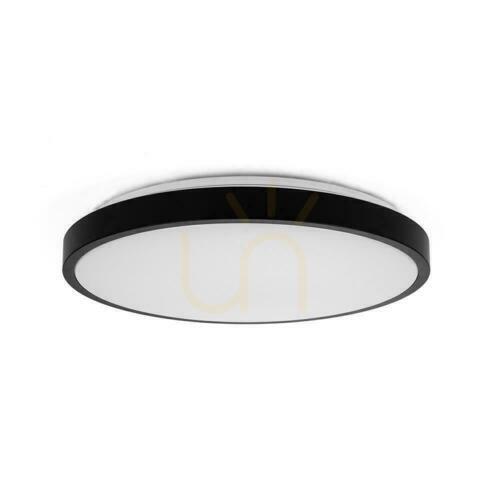
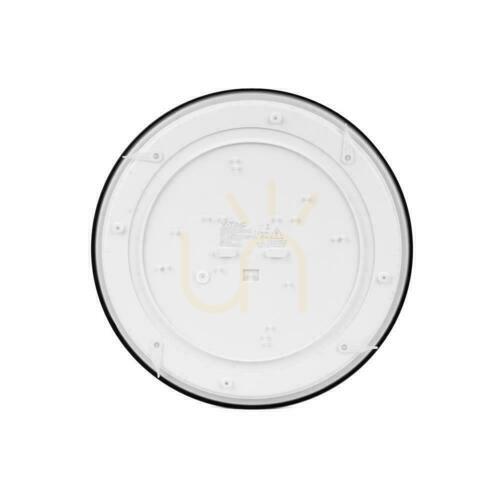
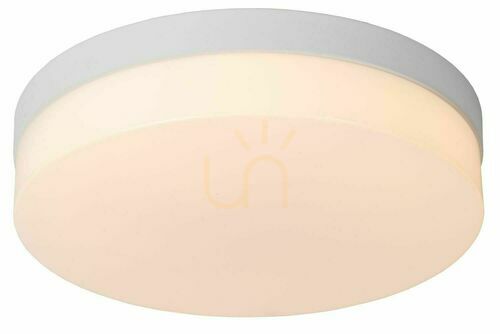
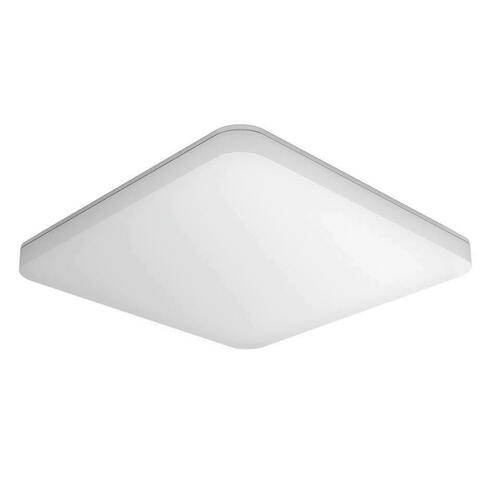
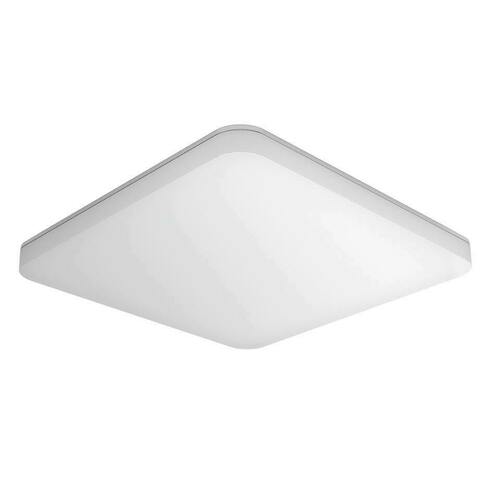
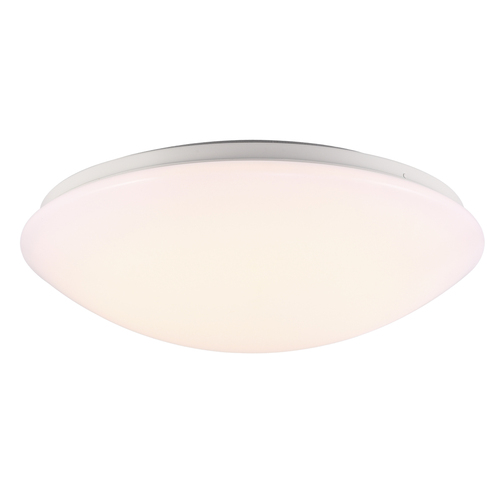
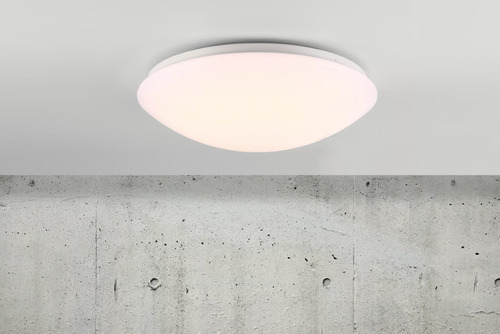
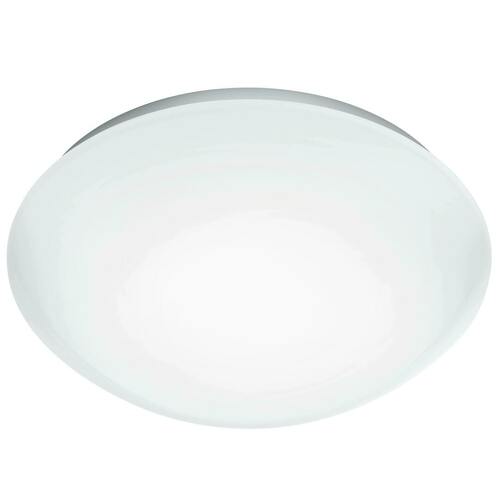
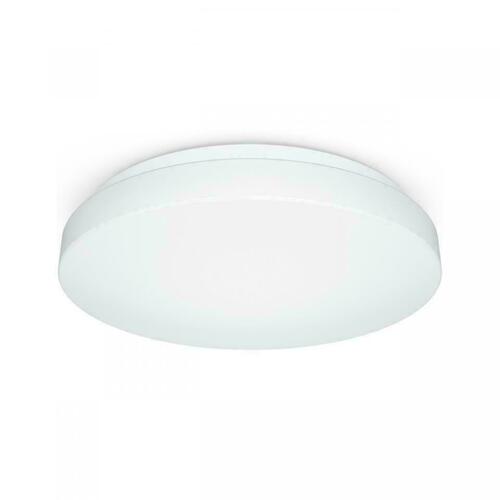
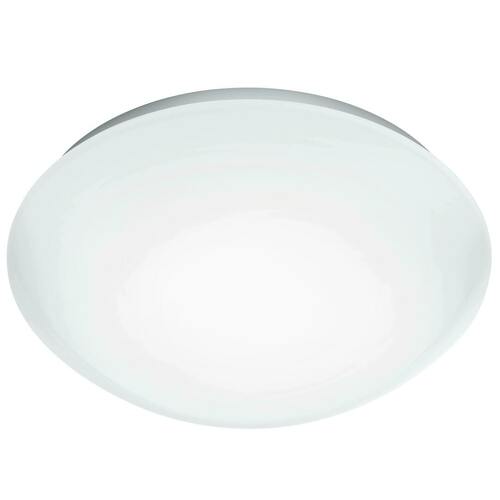
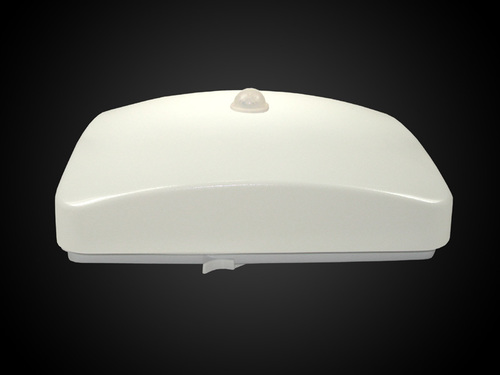
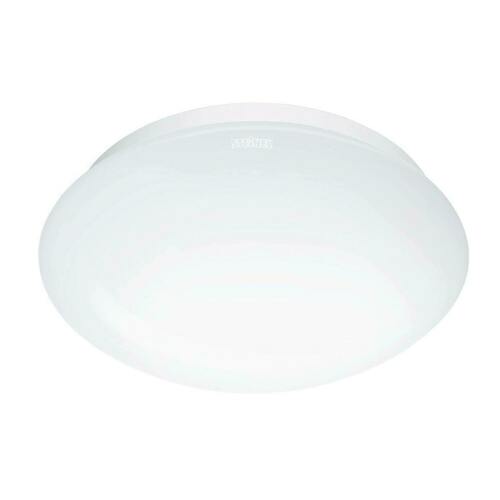
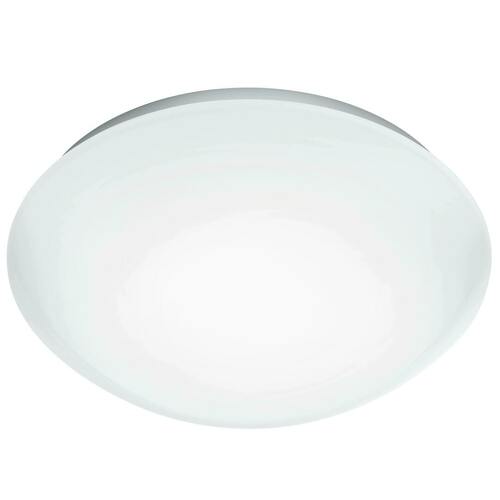
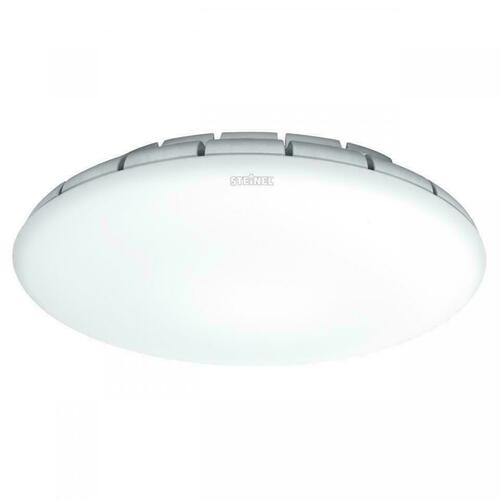
A motion sensor ceiling light is a flush or semi-flush fitting with a detector built into its centre or behind its diffuser: it switches on when someone walks in and switches itself off once the room has been still for a set time. Fitted to the ceiling, the sensor looks straight down over the whole space, which makes it a neat answer for hallways, landings, utility rooms, cellars and garages, where lights are either fumbled for or left on all evening.
Are motion sensor ceiling lights a good idea?
In rooms you pass through, yes. Nobody has to find a switch with a laundry basket in their arms, children stop leaving the landing light on, and the light only burns while someone is actually there. They are less suited to rooms where people sit still for long stretches. A lounge or a home office lit by a sensor tends to go dark mid-sentence, and waving at the ceiling gets old quickly.
Compared with a separate wall-mounted detector wired to an ordinary light, a fitting with its own sensor is one product, one fixing point and one set of connections. The trade-off is that it controls only itself. For a long corridor with several lights that should come on together, look for fittings that can be linked (often called master and slave) or use one standalone sensor instead.
PIR or microwave: how the sensor sees you
A PIR (passive infrared) sensor reacts to changes in heat as a person crosses its field. It needs a clear line of sight and is most responsive to movement across the room, a little less so when you walk straight towards it. A microwave sensor, also sold as HF or radar, sends out a low-power signal and reads the reflection, so it picks up smaller movements from any direction and can sit hidden inside the shade. It also passes through glass and thin stud walls, which is why it occasionally switches on for someone moving in the next room until the range is turned down.
| Where it goes |
Sensor that suits |
Typical time delay |
Colour temperature |
Protection |
| Hallway or landing |
microwave or PIR |
1–2 min |
3000–4000 K |
IP20 |
| Bathroom or en suite |
PIR, long delay |
5–10 min |
3000–4000 K |
IP44 or higher |
| Utility room or cellar |
microwave |
3–5 min |
4000 K |
IP44–IP54 |
| Garage or workshop |
microwave |
5–10 min |
4000 K or cooler |
IP54–IP65 |
| Porch or covered entrance |
PIR or microwave |
1–3 min |
3000 K |
IP44–IP65 |
Most fittings are mounted at 2–3 m, with some rated up to about 4 m. At a normal British ceiling height a PIR sensor typically covers a circle of roughly 4–8 m across, a microwave one often up to 8–10 m. Higher mounting widens the circle but makes the detector less sensitive to small movements.
Settings worth getting right
-
Time delay – usually adjustable from a few seconds to around 15 minutes. Short for passageways, long for anywhere people stand and work.
-
Lux level – stops the light coming on when there is already enough daylight in the room.
-
Sensitivity or range – start low and turn it up until a normal walk-through is caught every time.
-
Standby dimming – some microwave fittings drop to a low glow instead of going fully off, handy on stairs and in shared corridors.
Wiring and bathroom rules
A mains sensor fitting connects like any ceiling light: live, neutral and earth into the terminal block, following the manufacturer's diagram. The existing wall switch stays in the circuit but must be left on, because the sensor needs constant power. Work on fixed wiring should follow BS 7671 and is best left to a qualified electrician, who will also know which jobs need notifying under the building regulations. In a bathroom, any fitting in zones 1 or 2 near the bath or shower needs at least IPX4, so most people simply choose IP44 or above.
Disadvantages and how to live with them
The usual complaints are false triggers and lights going off too soon. False triggers come from sensitivity set too high, pets, warm air rising from a radiator under a PIR sensor, or a microwave sensor seeing through a partition wall. Early switch-off means the delay is too short or the sensor cannot see where you are sitting. The electronics also draw a small amount of power around the clock. Dust and cobwebs on the lens dull a PIR sensor, so give it a wipe with a dry cloth now and then.
Frequently asked questions
Can I add a motion sensor to my existing ceiling light?
You can fit a separate ceiling or wall detector that switches your current light, or swap the fitting for one with a built-in sensor. The second is usually the tidier job, since it uses the same ceiling rose position and cable.
How do I connect a motion sensor ceiling light to an existing switch?
Wire it as a normal light and leave the switch on. On many fittings, flicking the switch off and on again quickly puts the light into permanent-on mode until it is switched off at the wall.
Are there wireless motion sensor ceiling lights?
Yes, battery or rechargeable versions that screw or stick to the ceiling with no cabling. They are dimmer than mains fittings and suit cupboards, lofts and sheds rather than a main hallway.
Is a motion sensor ceiling light suitable for a bathroom?
Yes, if it has the right IP rating for its zone. Choose a long time delay, because a PIR sensor may not register someone lying still in the bath.
Can I use one outdoors?
Under a porch or carport, yes, provided it is rated IP44 at the very least and ideally IP54–IP65 where rain can reach it.
How long do LED sensor ceiling lights last?
Manufacturers usually quote 15,000–50,000 hours for the LED module. Frequent switching does not wear LEDs the way it wore compact fluorescents.
If you want the light to respond to dusk as well as movement, see ceiling lights with motion and dusk sensor. For shapes, sizes and fixing methods of ceiling-hugging fittings in general, read more about flush ceiling lights.