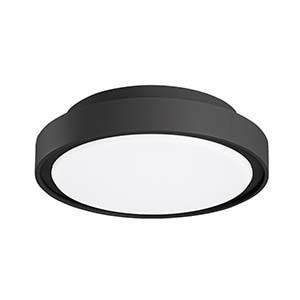
A ceiling light with a motion and dusk sensor only comes on when two things are true at once: someone has walked into its view, and the light level has dropped low enough that a lamp is actually useful. The motion half does the switching; the dusk half – a small photocell – stops it firing on a bright afternoon. For a landing with a big window or a hall behind a glazed front door, that second condition is what keeps the light off for most of a British summer day.
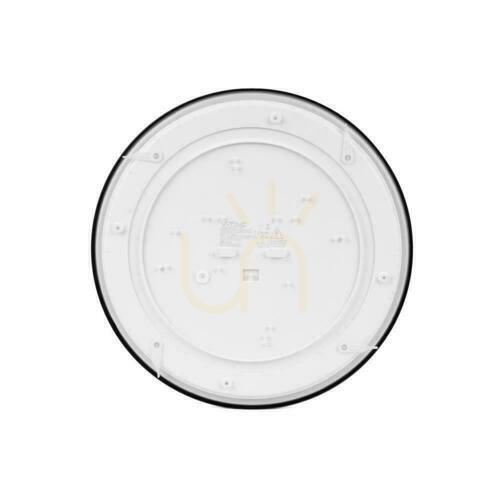
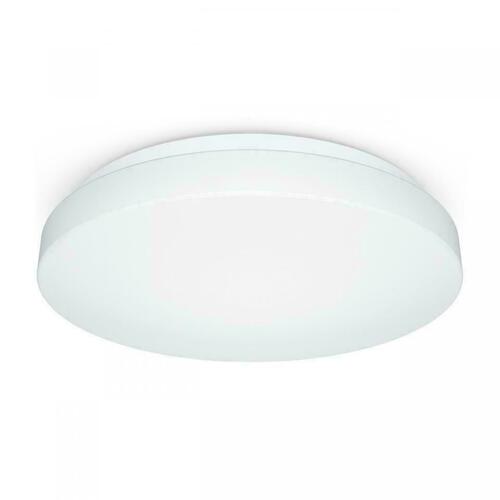
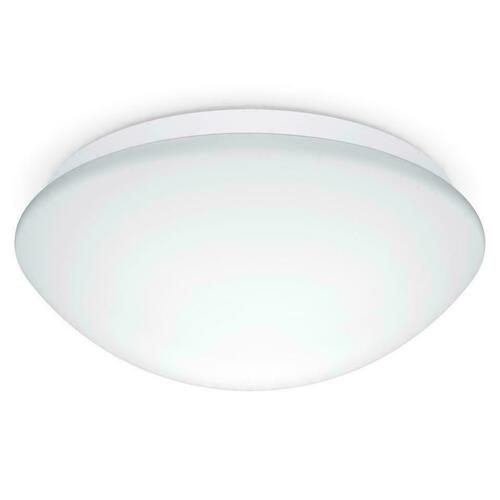
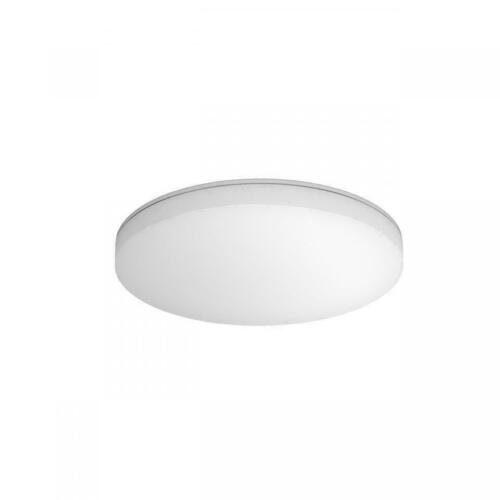
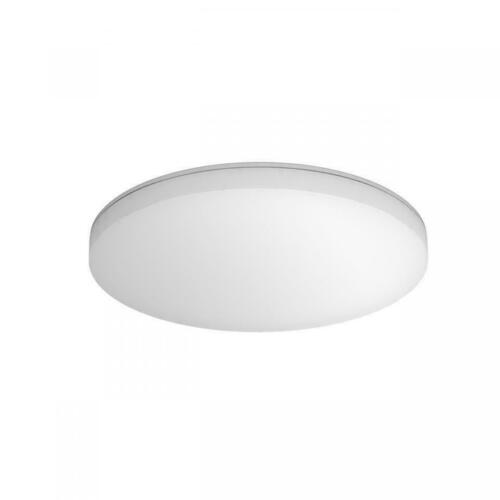
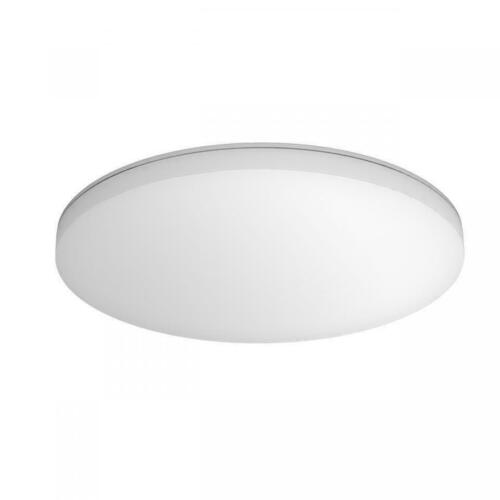
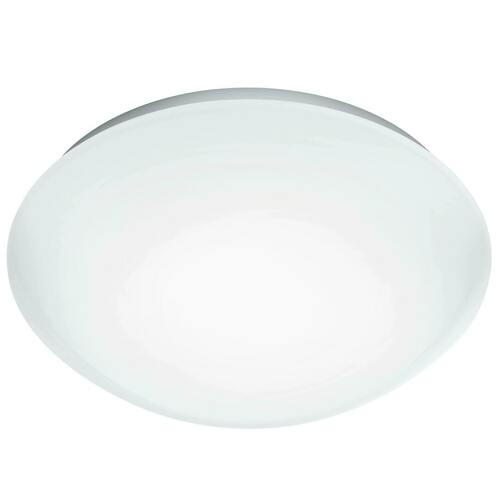
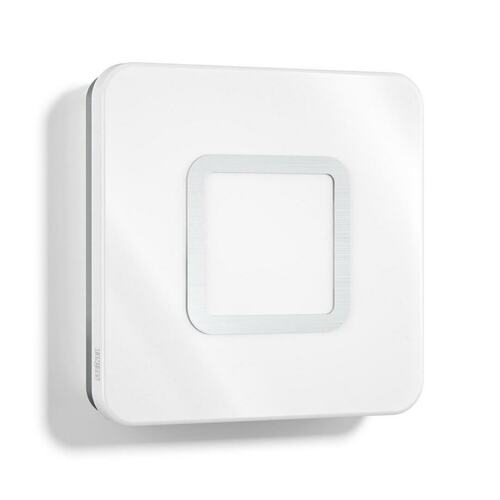
On a flush ceiling fitting both sensors usually sit in one small module in the centre of the diffuser, so from below it looks like any other ceiling light.
Motion only, dusk only, or both?
It is easy to mix these up, because shops and manuals use ‘sensor light’ for all three. The difference shows in what happens at midday and at 3 am.
| Control |
Switches on when |
In daylight |
Best suited to |
| Motion sensor only |
movement is detected |
still comes on |
windowless rooms: cellar, cupboard, inner hall |
| Dusk-till-dawn (photocell only) |
light falls below the threshold |
stays off |
porches and paths meant to stay lit all night |
| Motion and dusk sensor |
movement and darkness together |
stays off |
landings, halls, stairwells and garages with natural light |
Typical adjustment ranges on combined units: a lux threshold from a few lux up to roughly 2000 lx (the top end effectively means ‘work in daylight too’), a time delay from about 5–10 seconds to several minutes – some go up to 30 minutes – and a 360° detection zone when mounted at 2.2–3 m. On a standard 2.4 m UK ceiling that suits most halls and landings without adjustment.
How the dusk sensor decides
Most combined fittings check the light level while the lamp is off. Once it is on, the light stays on for the set time and each new movement restarts the countdown, so the lamp does not switch itself off just because it has brightened the room. Some models add a ‘teach’ setting that stores the current light level as the threshold, which saves fiddling with a dial at dusk.
A useful variant for long corridors and communal stairwells dims to around 10–25% when the time runs out rather than going dark, then switches off fully after a longer quiet spell. Fittings for blocks of flats sometimes also carry an emergency battery that keeps them lit for a few hours if the mains fails.
For the sensor technology itself – PIR versus microwave, range and how each sees through materials – see ceiling lights with a motion sensor.
Where it pays off in a British home
The dusk sensor only matters where daylight reaches. Good candidates are an upstairs landing under a skylight, a hall with a glazed door, a utility room with a window, a garage with a roof light and the shared stairwell in a converted house or block of flats. In a windowless loo or under-stairs cupboard there is nothing for the photocell to measure: turn the lux dial to the sun symbol and the fitting behaves like a plain motion-sensor light.
Placement rules are mostly about the photocell. Keep it out of direct view of a window, a mirror or another lamp – a wall light next to it, or a street light shining through a fanlight, can convince it that it is still daytime. Mount the fitting over the line people walk, not in a corner, and away from radiators, boiler flues and extractor vents that can trip the motion sensor.
Fitting and wiring
Because the sensor lives in the fitting, it is fed from the ceiling, where a standard loop-in rose already has a neutral. That avoids the compatibility headaches of two-wire sensor switches with LED loads. Fixed wiring in the UK follows BS 7671, and swapping a fitting on a lighting circuit is a job for a competent electrician – essential in a bathroom, where zones 1 and 2 need at least IPX4, so an IP44 rating is the usual choice.
Common niggles and care
-
Comes on in the afternoon – the lux dial is near the sun end, or the fitting sits in a dark corner that never gets bright.
-
Won't switch off – time delay at maximum, sensitivity too high, a heat source in view, or a microwave sensor seeing through a stud wall.
-
Flickers at dusk – its own light is bouncing back onto the photocell from a pale wall or glossy surface.
-
False triggers in the garage – cobwebs and insects on the lens. Wipe it with a dry, soft cloth now and then.
Frequently asked questions
Do motion sensor bulbs work?
They do, in an open lamp holder where the sensor can see the room. Inside an enclosed flush fitting the diffuser blocks the sensor, so a fitting with the sensor built in is the more reliable choice. Most sensor bulbs also offer few settings, if any, to adjust.
How do I connect a motion sensor light to an existing switch?
The wall switch normally stays in the circuit and is left on, acting as a master switch. On many models a quick off–on flick puts the light into permanent-on mode, but only use a switching arrangement the manual describes, and leave the wiring to an electrician.
Can I fit one in a bathroom?
Yes, provided its IP rating suits the zone it sits in and an electrician fits it. A PIR sensor can switch off on someone sitting still, so a longer time delay helps.
Are there wireless or battery motion sensor ceiling lights?
Battery and rechargeable versions exist and suit cupboards and sheds without power, but their output is modest. A mains fitting gives far more light and never needs charging.
Why does it come on during the day?
Usually the lux threshold is set too high. Turn the dial towards the moon symbol at dusk until the light only reacts once it is genuinely gloomy.
Can I fit one outside?
Under a porch roof an IP44 or IP54 fitting copes well. For exposed spots see outdoor ceiling lights with motion and dusk sensor.
To compare shapes, sizes and light sources without a sensor, start with flush ceiling lights.