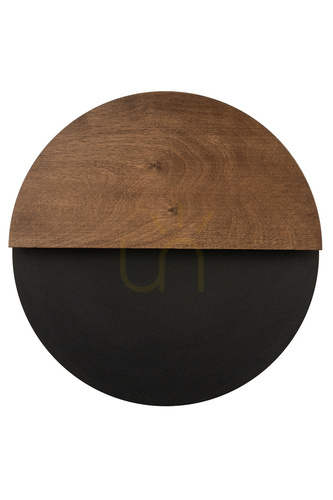
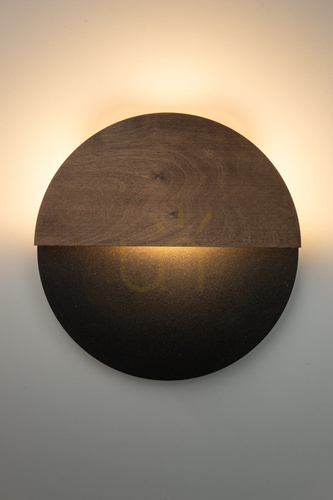
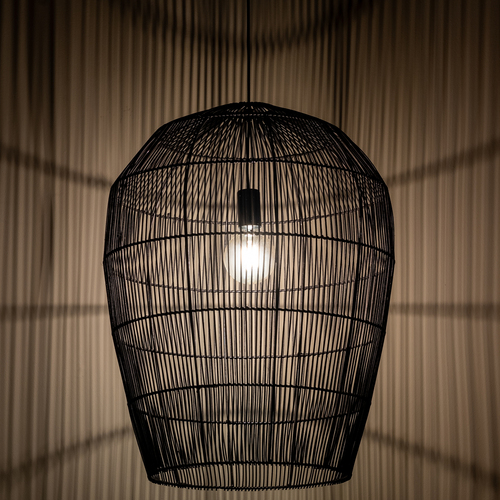
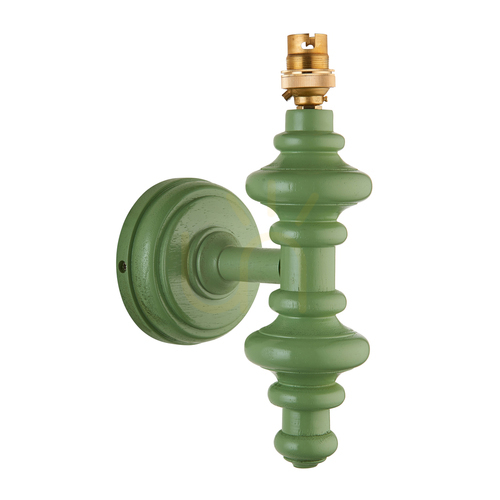
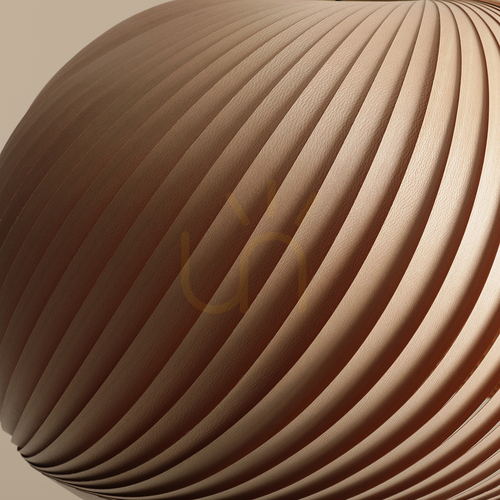
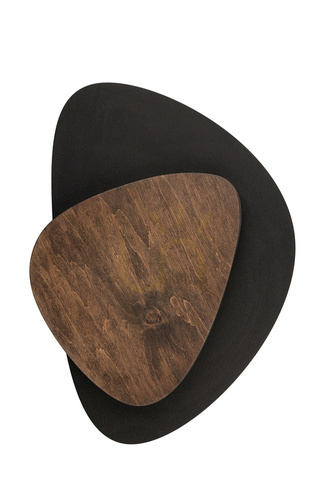
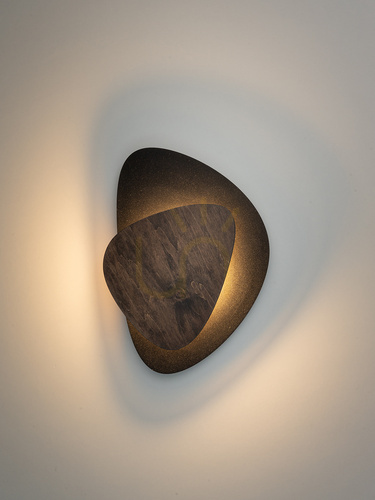
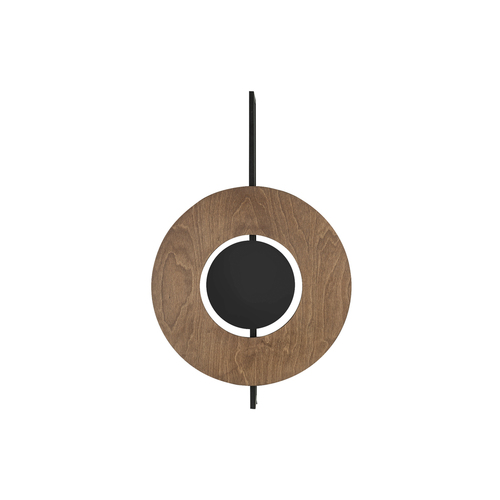
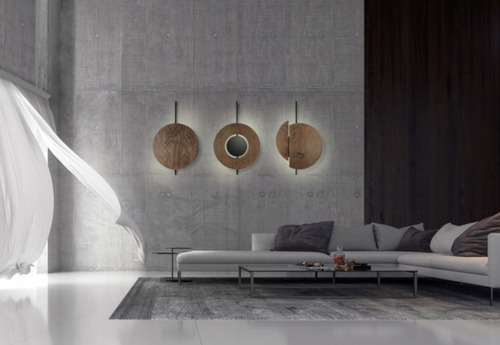
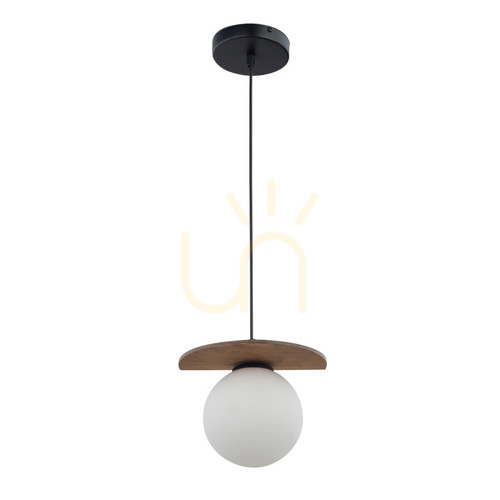
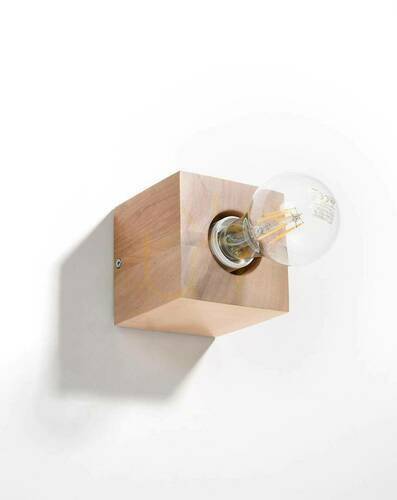
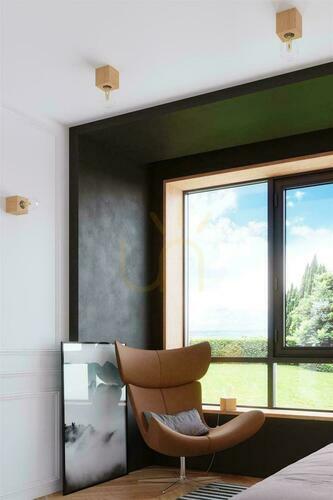
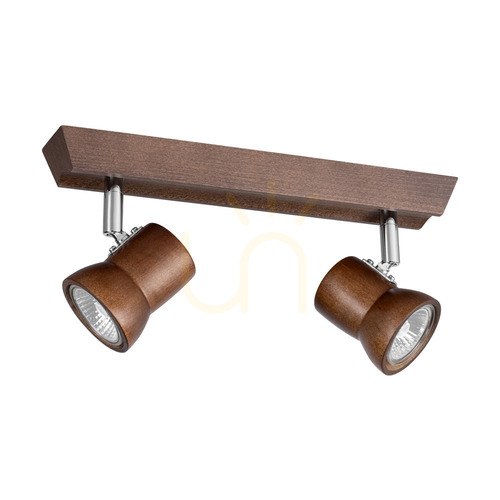
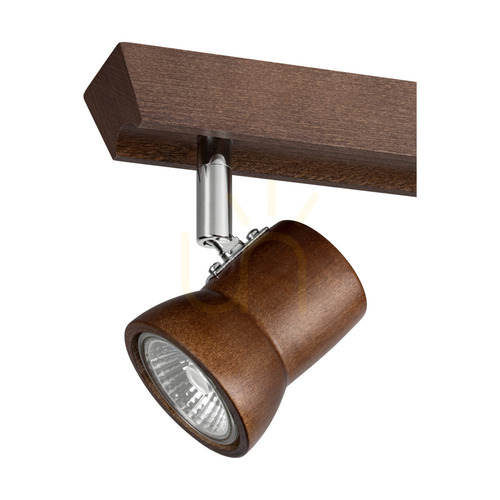
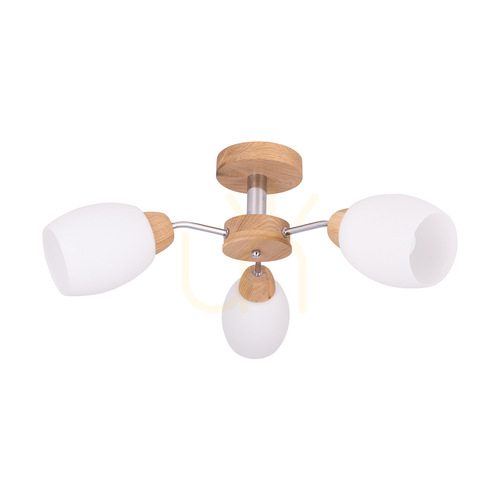
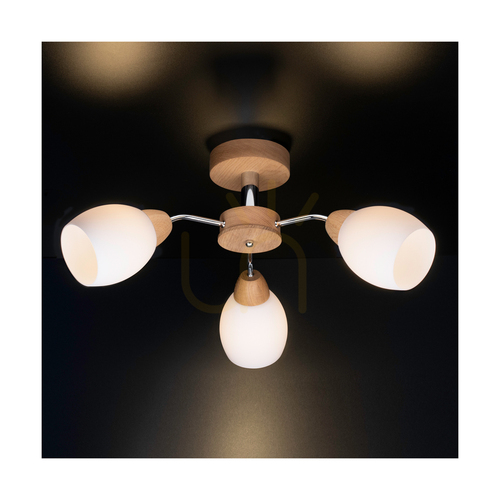
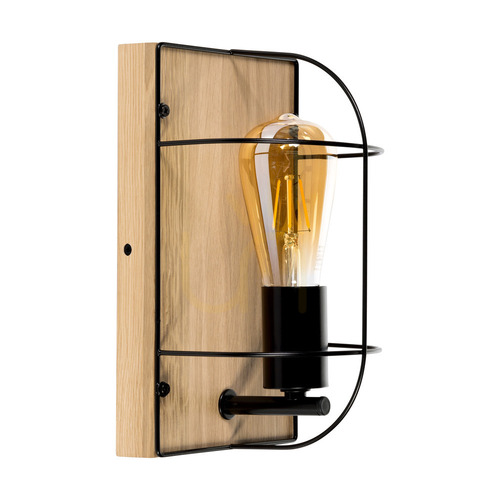
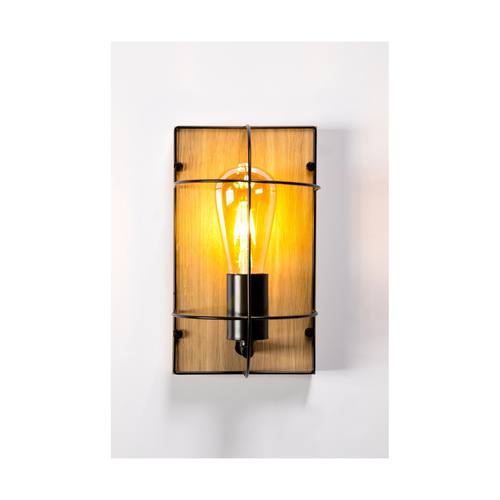
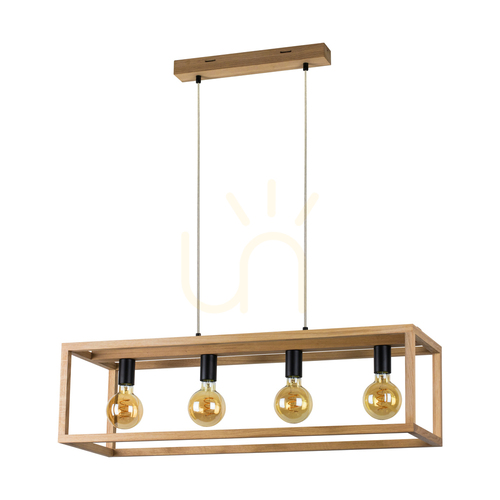
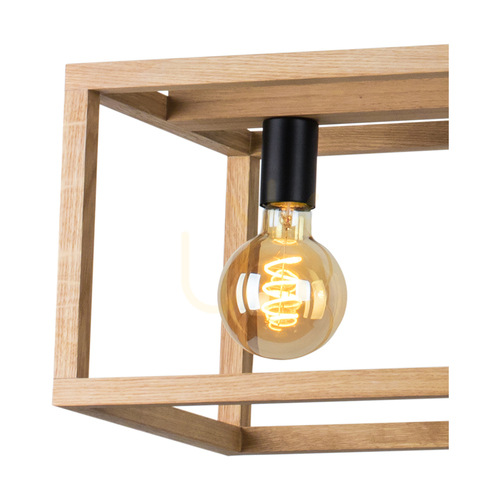
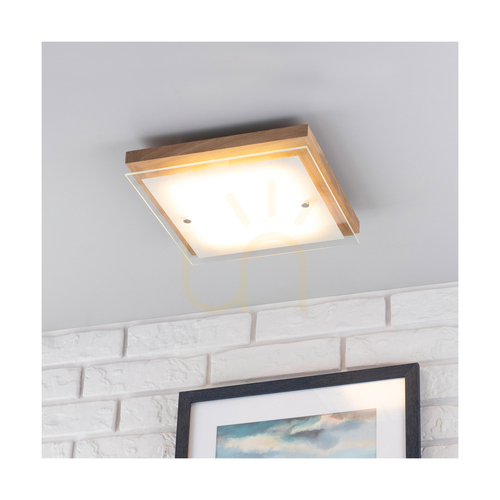
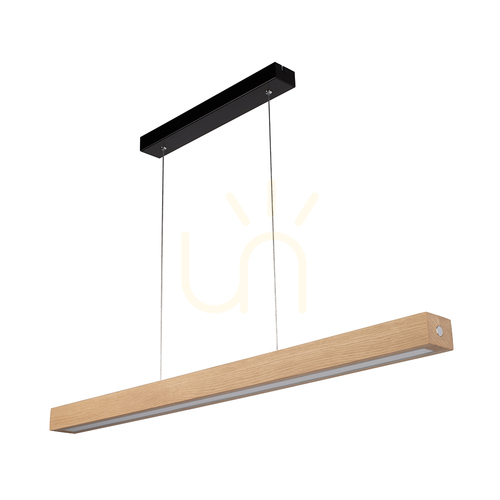
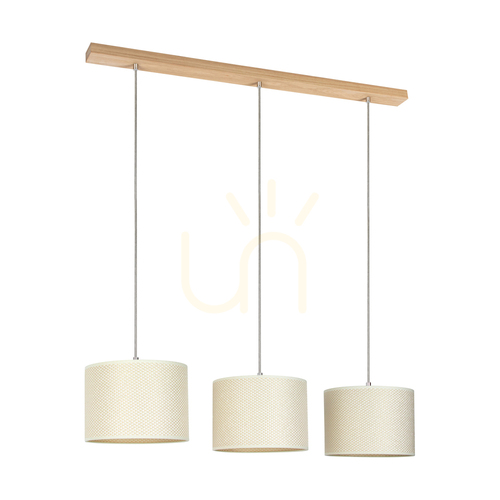
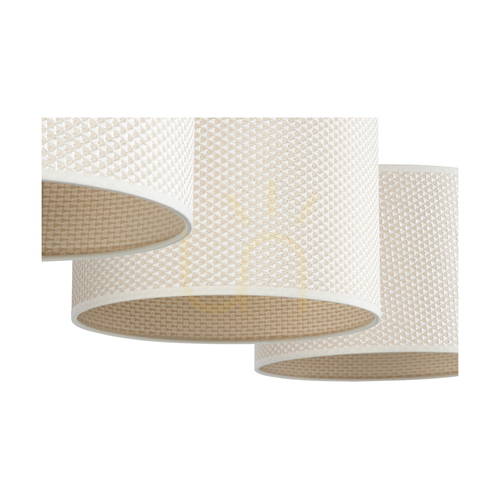
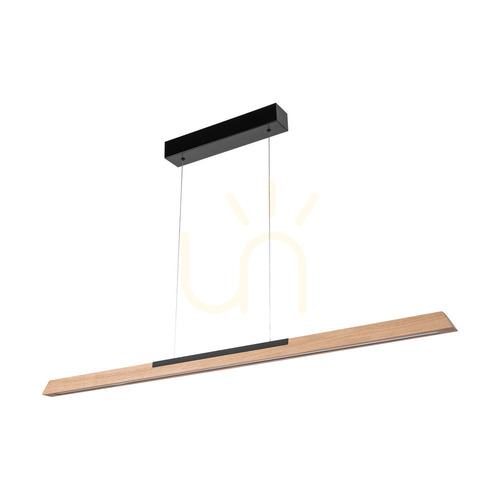
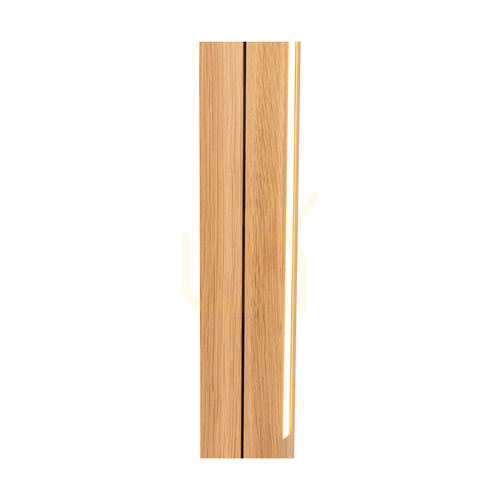
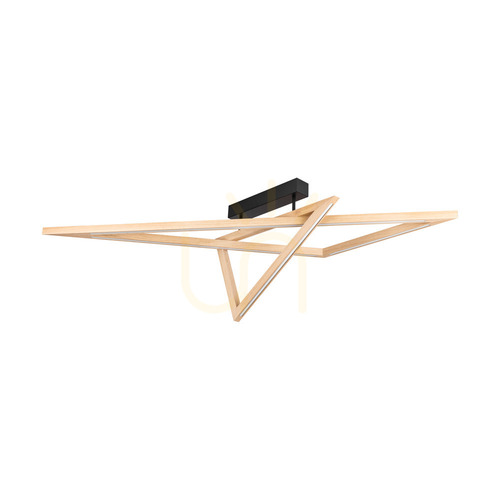
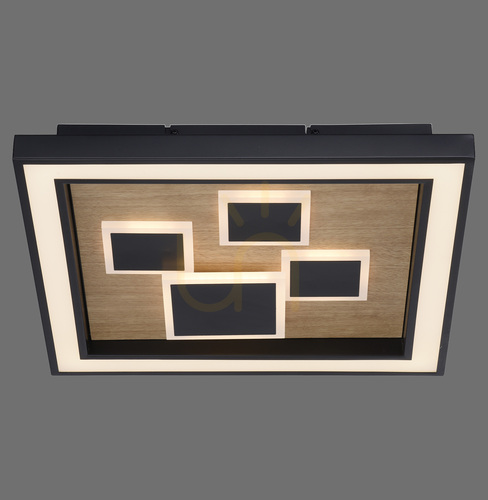
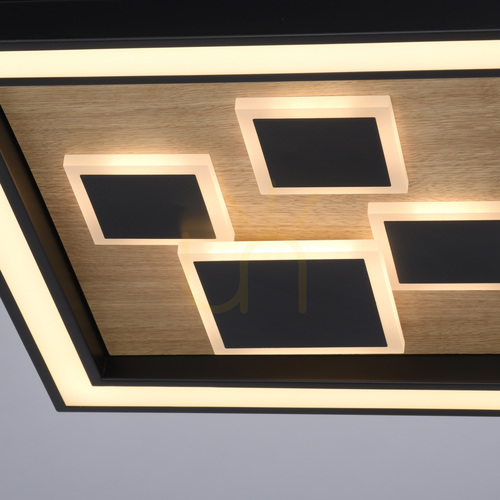
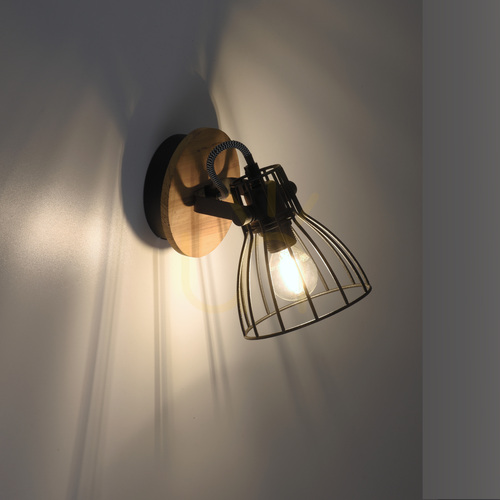
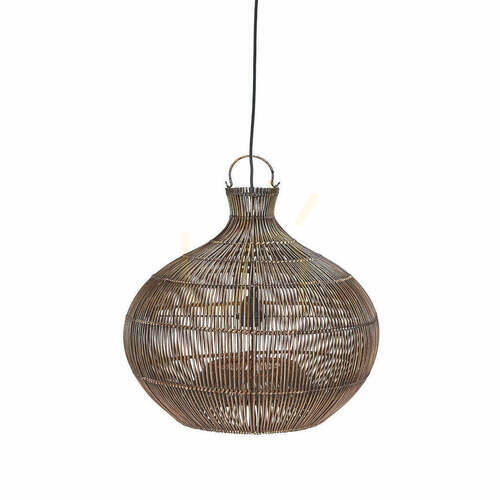
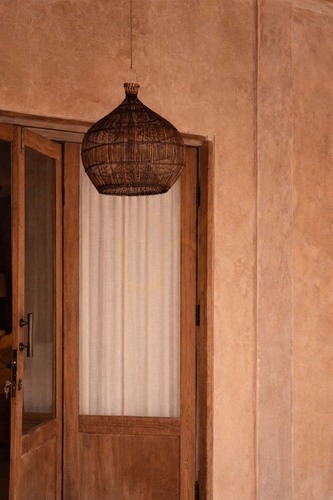
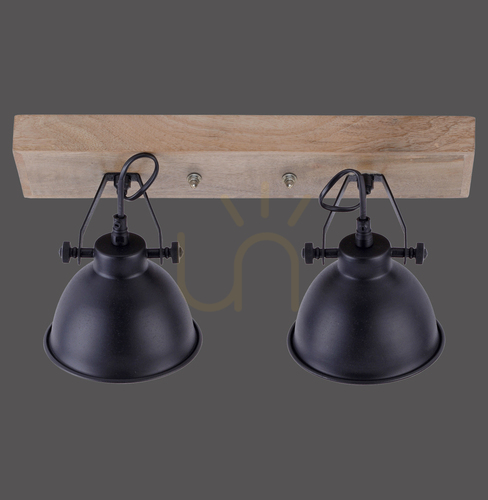
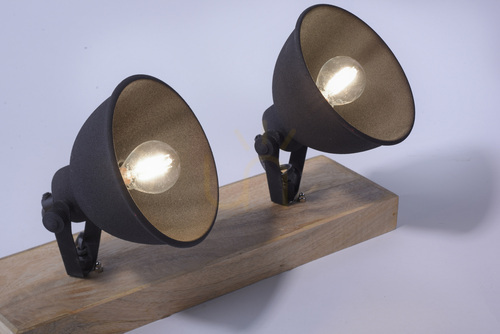
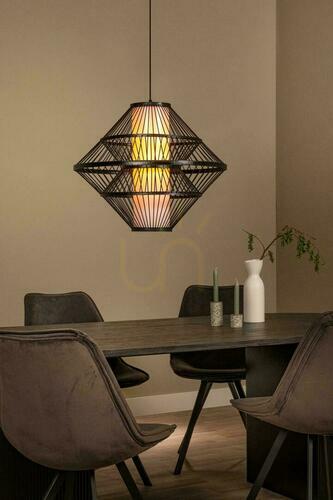
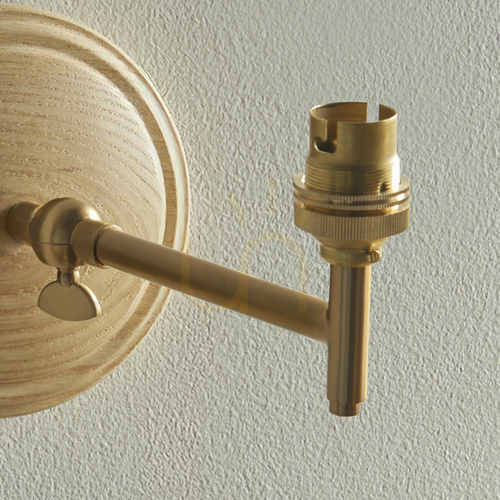
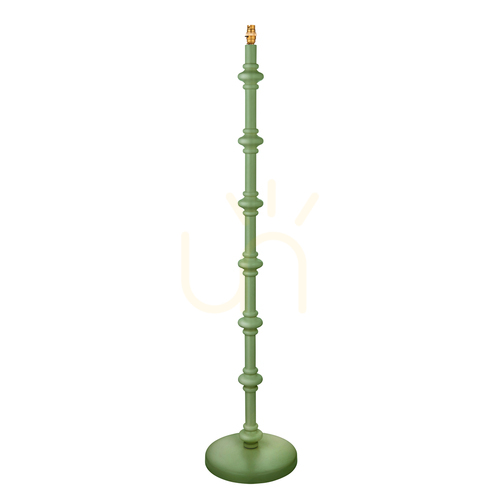
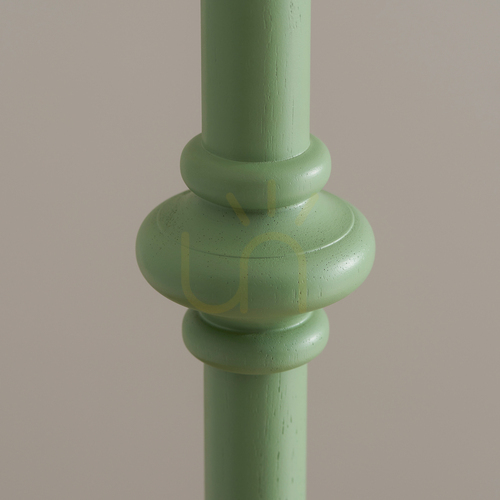
A wooden lamp brings texture and warmth that metal and glass can't: the grain stays visible whether the light is on or off, and timber gently tints the light around it. Choosing wood narrows things down less than you'd think, though. It might be a chunky oak table lamp base, a tripod floor lamp, a slatted pendant or a thin veneer shade that glows amber, and each one lights a room in its own way.
Solid timber, plywood, veneer or wood effect?
"Wooden" covers four quite different things, and it pays to know which one you're looking at:
-
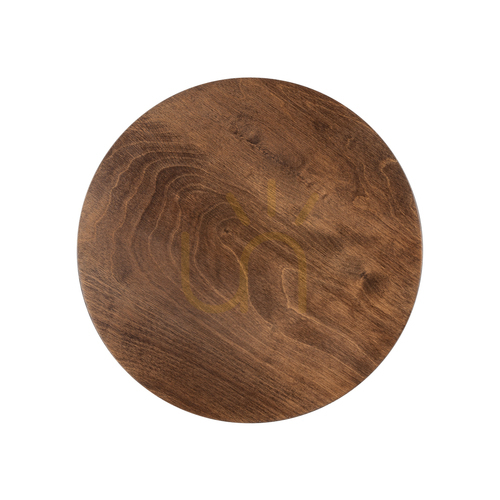
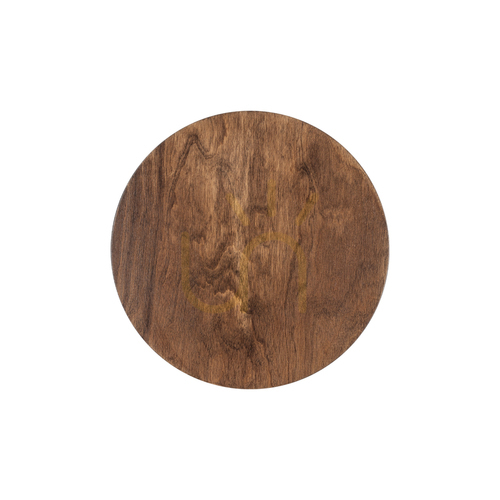
Solid timber – oak, ash, beech, walnut, pine, acacia or mango. Weighty, with deep grain, and it mellows with age. Usual for lamp bases, beam pendants and floor lamp legs.
-
Plywood, mostly birch – thin layers glued at right angles, so it stays flat and stable. It is laser-cut into openwork shades or built up from strips into globes and cones.
-
Veneer – a wafer-thin sheet of real wood on a flexible backing. It can be curved into soft shapes, and very thin veneer lets warm light through. Scratches can't be sanded out, so handle it gently.
-
Wood effect – a printed foil or finish on metal or plastic. Fine from a distance, but it won't age or feel like the real thing.
What type of lamp is best for a living room?
Usually more than one. A single ceiling light leaves a living room flat; layering a pendant or flush fitting with a floor lamp by the sofa and a table lamp on a side table gives you pools of light you can mix in the evening. Wood is especially good at this layered approach, because a solid timber body is opaque: a wooden floor lamp with a fabric shade throws light down onto your book, while a slatted or laser-cut pendant scatters a pattern of light and shadow across the ceiling.
| Lamp type |
Typical size |
What to check |
| Wooden table lamp |
40–65 cm tall overall |
Shade bottom roughly at eye level when seated; weight of the base |
| Wooden floor lamp |
140–165 cm tall |
Tripod or heavy foot for stability; foot or inline switch |
| Pendant over a dining table |
Shade 60–75 cm above the tabletop |
Beam about two-thirds of the table length |
| Flush or semi-flush ceiling light |
For ceilings around 2.3–2.4 m |
No dangling shade in walkways |
| Bulb cap |
E27, E14, B22 or GU10 |
Check the cap before buying bulbs; some fittings use integrated LED |
| Colour temperature |
2700–3000 K |
Warm white flatters timber; 4000 K makes it look grey |
Choosing the right wood and bulb
Pale woods such as birch, ash and light oak reflect a good share of the light and suit smaller or north-facing rooms. Walnut and dark-stained timber look rich but absorb more, so pair them with a brighter bulb or an extra lamp. A chunky table lamp base in natural wood usually looks best under a plain linen or cotton shade; a busy patterned shade fights with the grain.
For the bulb, LED is the sensible choice. It runs cool, so the timber around the lampholder doesn't dry out or darken over the years. Look for CRI 90 or above if you want the true colour of the grain, and always stay within the maximum wattage printed on the fitting. If the lamp is dimmable, check that the LED bulb is too.
Where wood works, and where it doesn't
Living rooms, bedrooms, studies, dining rooms and hallways are all at home with wooden lighting. Wooden lamps are generally rated IP20, meaning dry rooms only. Keep them out of bathrooms unless the fitting is specifically rated for the zone (IP44 is the usual minimum near a bath or shower), and avoid hanging timber directly over a hob, where grease and steam soak into the grain. Heavy beam pendants need a secure fixing into the ceiling joist rather than a plasterboard plug alone, and any work on fixed wiring should be done by a qualified electrician in line with BS 7671.
Caring for a wooden lamp
Switch off, let it cool, then dust with a dry or barely damp microfibre cloth. Skip polish sprays and solvent cleaners, which leave a film on oiled wood and can cloud a lacquered one. Oiled timber can be refreshed with a suitable wood oil every so often. Keep the lamp away from radiators and log burners, as very dry heat can open fine cracks in solid wood. Strong sun changes the colour too: oak deepens towards honey, pine yellows and walnut can lighten.
Frequently asked questions
Do people still use lamps in the living room?
Very much so. Floor and table lamps give the low, warm light that makes a room feel lived-in, and a wooden one adds a natural material that softens sofas, screens and shelving.
What is the best wooden floor lamp for reading?
One with an adjustable head or a shade that directs light downwards, placed slightly behind and to the side of your chair. A tripod base keeps it steady on rugs.
Can I put a new shade on a wooden lamp base?
Yes, as long as the shade fitting matches the lampholder and the shade is wide enough to keep the fabric well clear of the bulb. As a rough guide, the shade should be about two-thirds the height of the base.
Are chunky wooden table lamps too heavy for a bedside table?
Not usually. The weight is what keeps them stable, but a big base on a small table leaves little room for anything else, so measure first.
Vintage or modern wooden lamp for a living room?
Turned bases and walnut tones lean vintage; pale birch, clean cylinders and black metal details read modern. Match the wood tone to your floor or furniture rather than chasing a style label.
Are wooden lamps a fire risk?
Not with an LED bulb and the correct wattage. The risk comes from fitting a powerful halogen or incandescent bulb into a tight wooden shade.
For other materials and styles across the home, browse indoor lights. If you'd like the same warm timber by the bed, there's more on wooden bedside lamps.