The best balcony fairy lights are outdoor-rated strings short enough for a few metres of railing, light enough to hang without drilling, and powered in a way that suits where your balcony sits. On a balcony, the power source and the fixing method matter more than the bulb shape: a solar string that glows for hours on a south-facing balcony may barely flicker on a north-facing one.
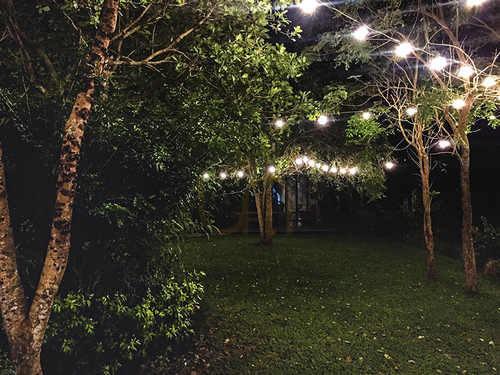
In a garden you can run a cable across the lawn and tie a festoon between two trees. A flat balcony is tighter: one wall, a railing, often no outdoor socket, wind on the upper floors and neighbours a metre away. That is why balcony strings tend to be shorter, lighter sets with a plug-in transformer, rechargeable battery, battery box or small solar panel, fixed to the railing, the soffit above or a pole.
Fairy lights or festoon lights?
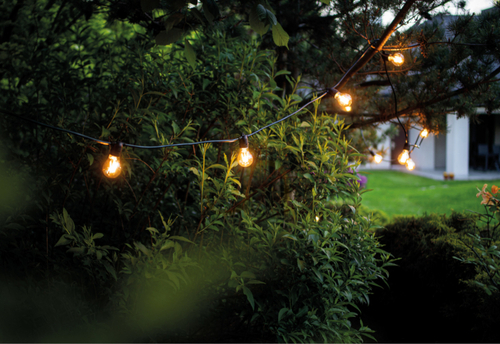
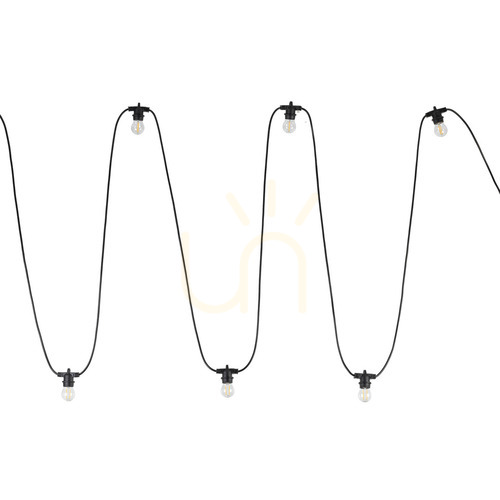
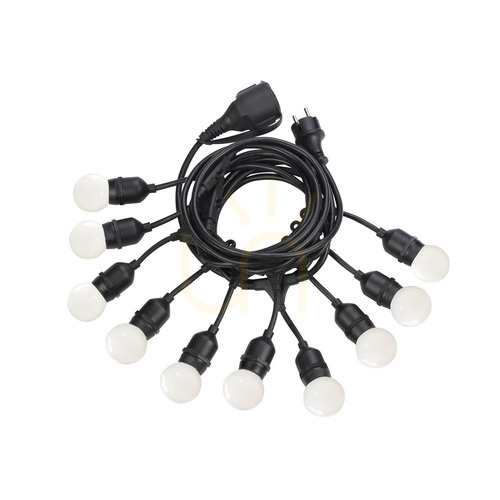
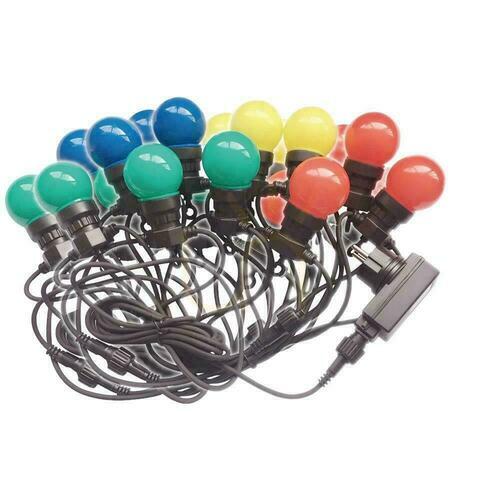
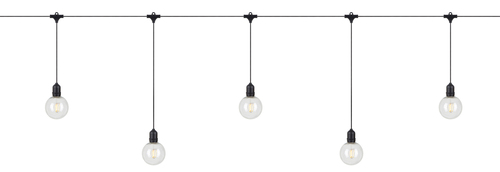
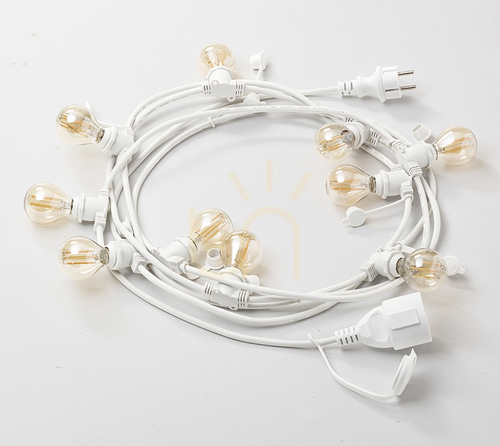
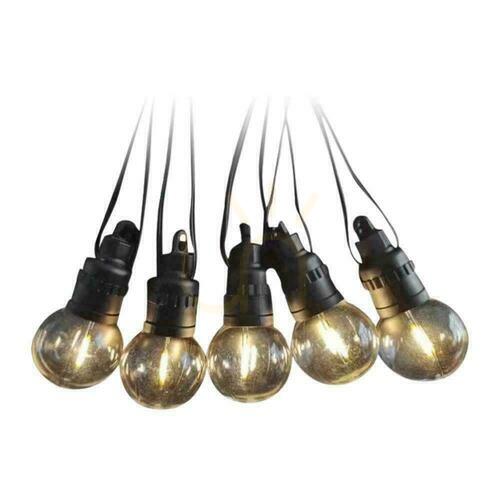
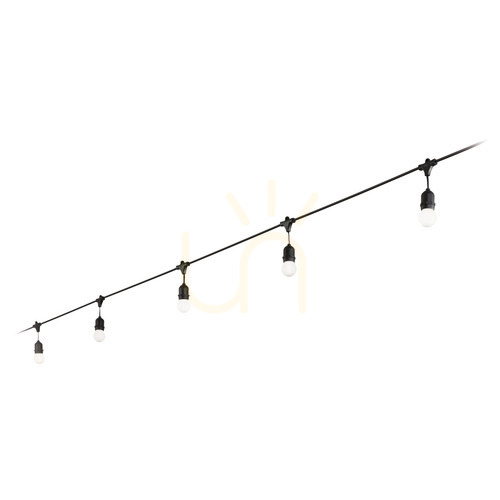
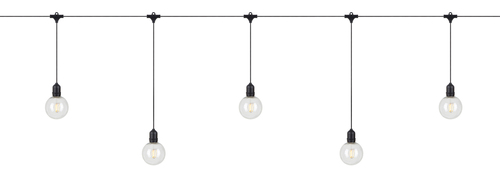
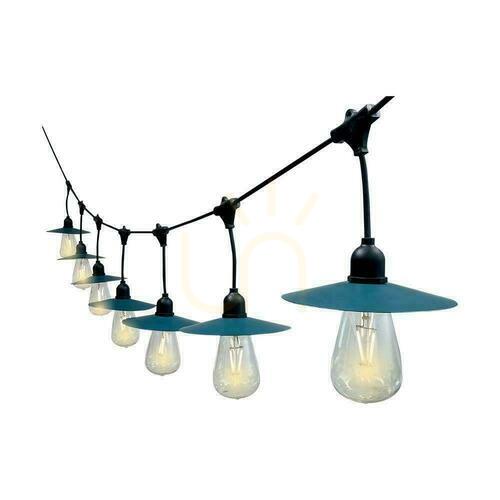
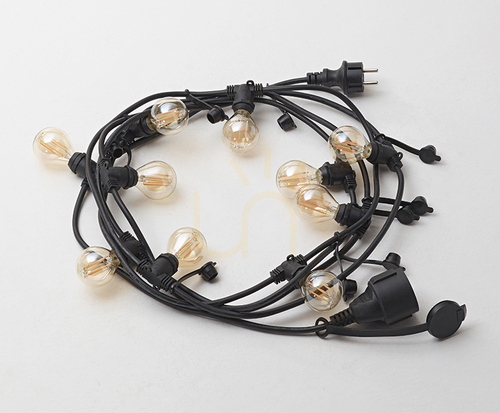
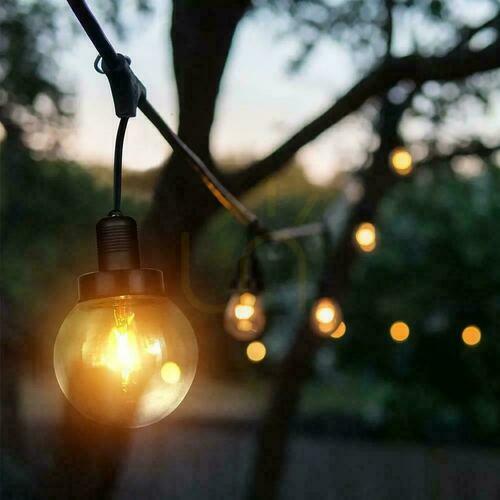
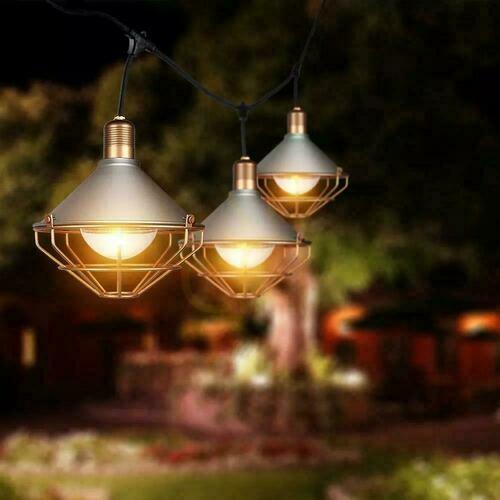
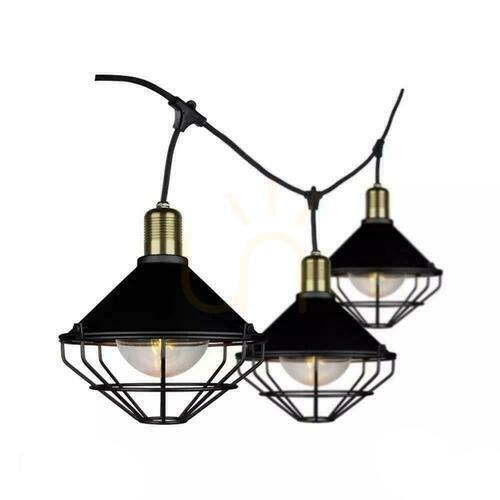
Both work outdoors, but they give a different feel. Fairy lights are tiny LEDs on fine wire or a thin cable: wrapped around a railing, woven through planters or hung as a curtain against the glass, they sparkle rather than light. Festoon lights carry larger bulbs, often globe or teardrop shaped, spaced along a heavier cable; draped under a balcony ceiling they give a café-terrace glow you can actually sit and read by. Curtain lights, with vertical drops hanging from one line, suit glass balustrades and privacy screens.
Choosing the power source
| Power |
Best for |
Watch out for |
| Mains plug with outdoor low-voltage transformer (often 24 V) |
balconies with a socket nearby, long evenings |
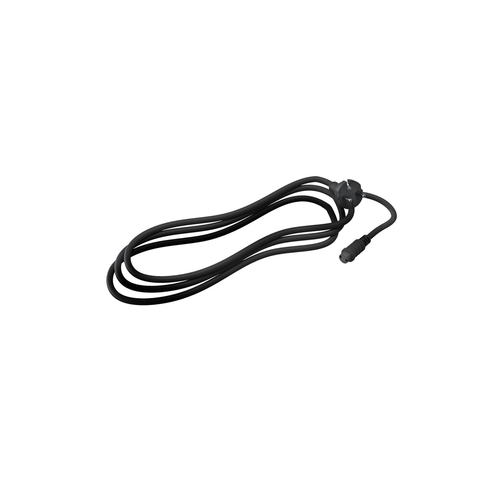
keep the transformer under cover; check the lead from string to plug is long enough |
| Mains 230 V string |
bright festoons, outdoor socket on the balcony |
IP44 or better; never shut the cable in the door |
| Solar |
south or west-facing balconies with no socket |
little charge in shade, deep recesses or winter |
| Battery (AA/AAA) |
quick set-up, renters, short evenings |
a 6-hour timer saves cells; cannot be linked to another set |
| USB rechargeable |
occasional use, moving between balcony and indoors |
run time depends on brightness setting |
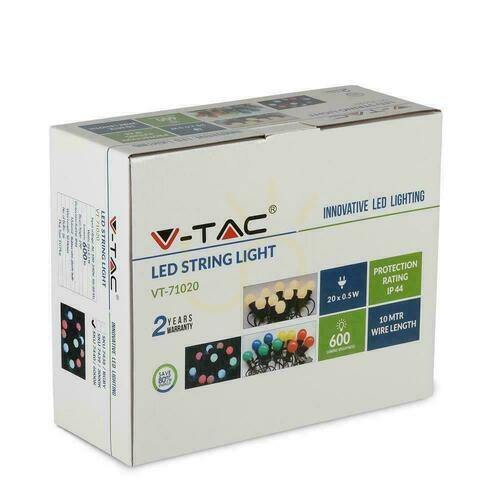
For the string itself, IP44 (splash-proof from any direction) is the sensible minimum outdoors; IP65 adds protection against jets of water and dust, worth having on an exposed corner balcony. Warm white around 2200–2700 K looks cosy and is kinder to the flats opposite than cool white or flashing modes.
How long should the string be?
Measure the route, not the balcony. A straight run along a railing needs the railing length plus roughly a metre for a gentle drape. Zig-zagging festoons under the ceiling can double that. Then add the unlit lead to the socket: on many sets it is 1.5–5 m, and it is often what decides whether the lights reach the plug at all. Too much length can be wound around the handrail; cutting a lighting cable is never an option.
How to string fairy lights outside without drilling
-
Cable ties and clips along the railing – black on dark metal, clear on glass.
-
S-hooks over the handrail, so the string comes down in seconds.
-
Magnetic hooks on steel railings and suction hooks on glass panels.
-
Outdoor adhesive hooks on smooth render or soffits; check them before winter.
-
A tension pole wedged between floor and ceiling where there is nothing else to fix to.
Secure the string every 50–80 cm, closer on high floors so the wind cannot slap it against the glass. Keep the cable free of tension and pad it over sharp edges. Plugs and transformers belong off the floor, where rain collects, and under cover. If you rent or own a leasehold flat, the outside walls usually belong to the freeholder or management company, so screws into the facade need their consent; clips on your own railing rarely do. A new outdoor socket is a job for a qualified electrician, and UK wiring regulations (BS 7671) call for 30 mA RCD protection on it.
Care through the seasons
Most strings fail at the cable, not the LED, so lift them by the cable rather than the bulbs and avoid coiling them tightly in frost, when the insulation stiffens. A glazed balcony is not a dry room either: condensation and big temperature swings mean an outdoor-rated set is still the right choice. For festoons with replaceable bulbs (E27 or E12, for example), use replacements of the same voltage and wattage. Dry the string before storing it loosely coiled in a box. Solar sets usually need a new rechargeable cell after a few seasons, once evening run time drops off.
Balcony fairy lights: common questions
Do solar fairy lights work on a balcony?
Yes, if the panel gets several hours of direct sun. South and west-facing balconies are ideal; on a north-facing one, or under the balcony above, a battery or rechargeable set will be more reliable.
Are outdoor fairy lights waterproof?
Outdoor sets are weather-resistant to the level of their IP rating. IP44 copes with rain from any angle; IP65 also handles jets of water. Anything marked IP20 is for indoors only.
Can I put curtain fairy lights on a balcony?
Curtain lights work well on glass balustrades and screens. Fix the top line securely at several points so the drops do not tangle in the wind.
Can I leave fairy lights on my balcony all year?
An outdoor-rated string will handle frost and rain. Check fixings after storms and keep connections dry; taking the lights in during the darkest, wettest weeks extends their life.
Do LED fairy lights use much electricity?
Very little. Typical LED strings draw from a couple of watts to a few dozen, so a 10 W set left on for five hours an evening uses around 0.35 kWh a week.
For the wider picture on bulb styles, cable lengths and power options, see outdoor string lights. If your balcony has no socket at all, battery-operated string lights are the next thing to read about.