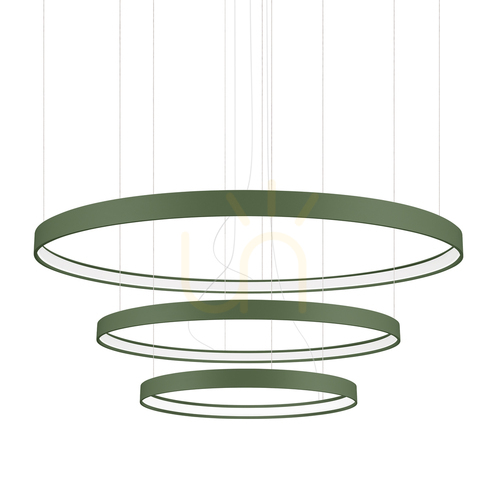
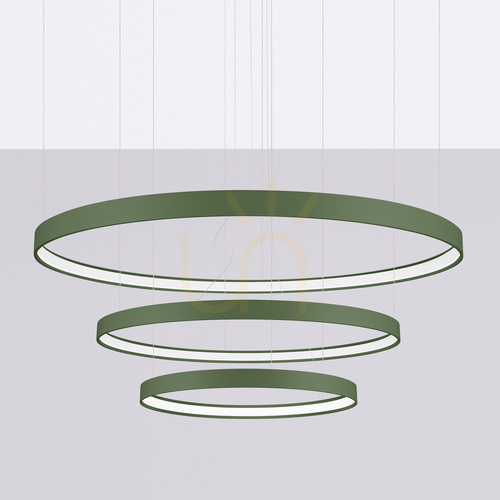
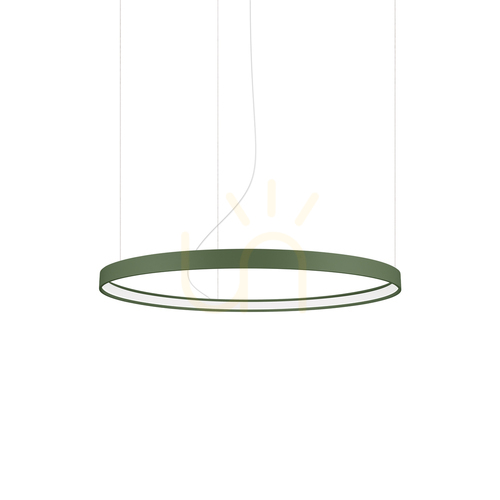
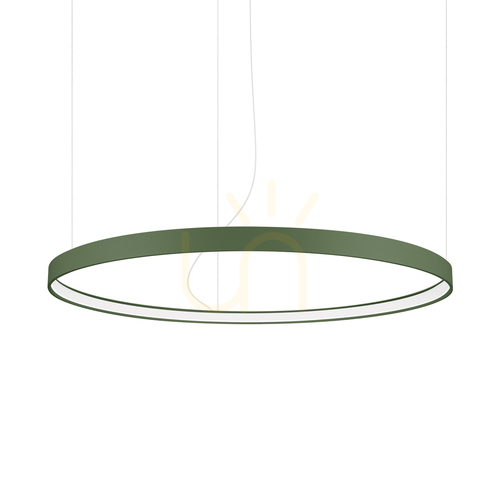
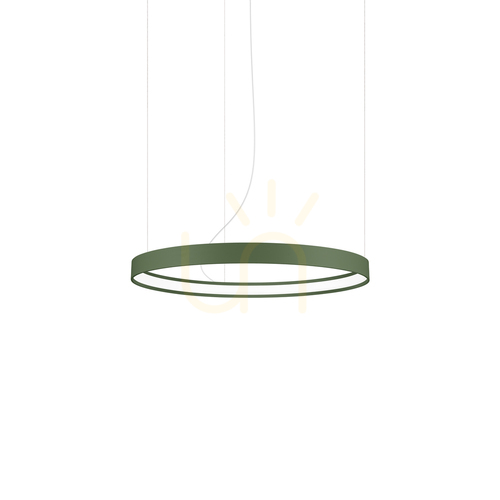
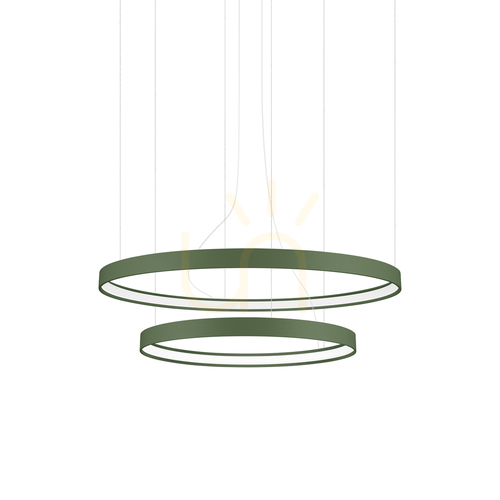
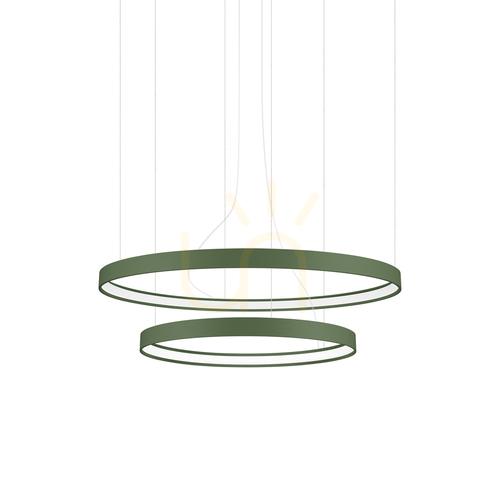
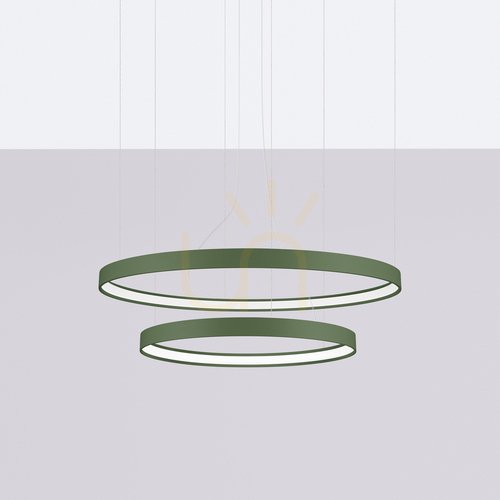
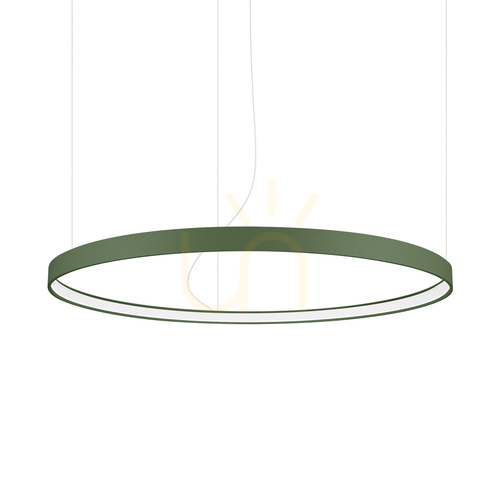
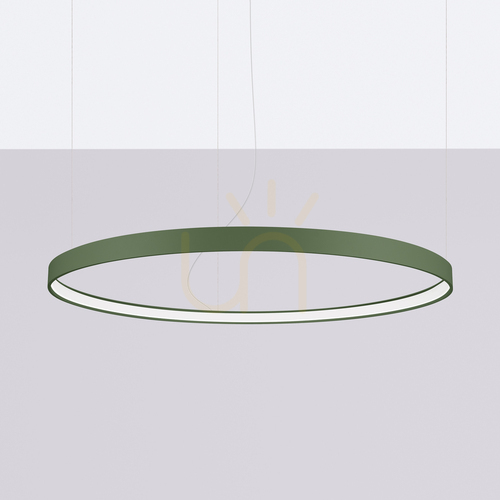
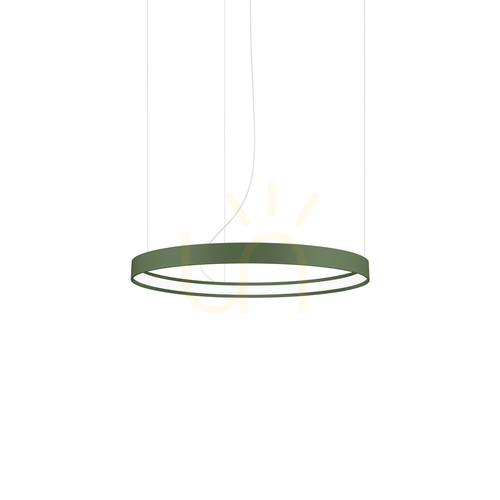
A green ceiling light in chandelier form gives a room a focal point that white or brass can't: sage in a calm bedroom, olive over a farmhouse table, deep bottle green with gold in a Victorian dining room. Before choosing one, decide whether the green should only colour the fitting or also colour the light, because that is what separates painted metal, tinted glass and fabric shades.
Sage, dark green, emerald or verdigris?
Sage and eucalyptus are the soft, greyed greens that behave almost like a neutral. They sit happily with pale oak, linen and off-white walls, and they rarely date. Olive and moss lean warm and suit kitchens, exposed brick and terracotta. Dark green – forest, bottle, racing green – needs contrast: brass, gold, walnut, velvet. Emerald is the jewel tone of Art Deco schemes and classic glass chandeliers. Verdigris, the blue-green patina of aged copper and brass, is its own look: antique-style multi-arm fittings whose green comes from an aged-metal finish rather than a flat paint colour.
Green works best against a calm wall. Put it in front of a busy wallpaper and the two will fight. If the walls are already green, go tone on tone but clearly lighter or darker than the background, and repeat the colour once or twice in cushions or curtains so the fitting doesn't look like a stray.
Painted metal, green glass or fabric
A painted or enamelled shade is green on the outside and usually white or metallic inside, so the light stays clean and white. Industrial bell shades, retro domes and modern LED rings mostly work this way. Green glass is different: light passes through it, picks up the tint and loses some brightness on the way – with dark glass, often around a third. That makes a lovely evening glow, but over a worktop or reading chair you will want brighter bulbs or a second light. Velvet and linen drums sit in between: thin fabric tints slightly, lined fabric hardly at all.
Sizing it for British ceilings
| Room |
Typical ceiling |
What works |
Rule of thumb |
| New-build living room |
around 2.4 m |
flush or semi-flush chandelier |
keep at least 2.0–2.1 m clear headroom where people walk |
| Interwar semi-detached house |
around 2.5–2.6 m |
short drop, 3–5 arms |
diameter in cm ≈ (room length + width in m) × 8 |
| Victorian or Edwardian terrace |
2.7–3 m and more |
multi-arm chandelier on chain or rod |
about 7.5 cm of fitting height for every 30 cm of ceiling height |
| Dining table |
any |
chandelier or glass pendant |
bottom 75–90 cm above the tabletop, no wider than two thirds of the table |
| Kitchen island |
any |
two or three smaller green pendants |
roughly 70–80 cm apart, with about 15 cm spare at each end |
If you think in imperial, the old trick still works: add the room's length and width in feet and you get the chandelier diameter in inches. A 13 × 16 ft room points to a fitting of about 29 in, or 75 cm.
Bulbs, fitting and safety
Green chandeliers take E27 or E14 candle bulbs, sometimes B22 bayonet, G9 in compact designs or built-in LED. Check the maximum wattage on the label. Warm white at 2700–3000 K keeps green rich; at 4000 K and above, green glass turns cold and slightly blue. Over a dining table, a colour rendering index of 90 or more keeps food and faces looking natural.
Glass and crystal chandeliers can be heavy, so the ceiling fixing has to match: a proper hook into a joist rather than into plasterboard alone. Wiring work in the UK has to comply with BS 7671, and if you are not confident, a registered electrician should connect it.
Living with it: pitfalls and care
- Colour on screen is not colour at home. Bottle-green glass looks almost black by warm evening light and vivid at noon by a window.
- Teal and petrol shades look bluer in daylight and greener under warm bulbs.
- Gloss paint shows dust and fingerprints faster than matt.
- Wipe painted metal with a dry or barely damp cloth; solvents and cream cleaners polish matt paint into shiny patches.
- Wash glass in lukewarm water with a drop of washing-up liquid and dry with microfibre. Switch off and let bulbs cool first; wear cotton gloves when handling crystal drops.
- Run a lint roller or upholstery brush over velvet shades.
FAQs
Is a sage green or dark green ceiling light easier to live with?
Sage is the safer choice for small or low rooms because it barely draws attention to the ceiling. Dark green makes a bolder statement and looks best where there is enough height and some brass or gold to pick it up.
Does a green glass ceiling light change the colour of the light?
Yes, if the glass is tinted all the way through and the light passes through it. Shades that are white or opal inside give white light, with the green visible only from outside.
Do green pendant lights work over a kitchen island?
Very well, especially olive or bottle green with brass. Choose smooth glass or metal that wipes clean, and pair tinted glass with recessed downlights or choose shades lined in white, so the island still gets enough light for prep work.
Can a vintage green ceiling light suit a modern room?
Yes, as long as it is the only bold, period piece. A retro glass or enamel fitting looks deliberate against plain walls and simple furniture.
What does a modern green ceiling light look like?
Usually a slim LED ring or cluster in powder-coated sage or olive, a minimal globe pendant or a sculptural shade with only a few arms.
Can I fit a green chandelier with a low ceiling?
Choose a flush or semi-flush version, or hang it over the table where nobody walks underneath.
For more on chandelier types, sizes and styles, see chandeliers. If the green is going above a worktop, the guide to chandeliers over a kitchen island is the natural next read.