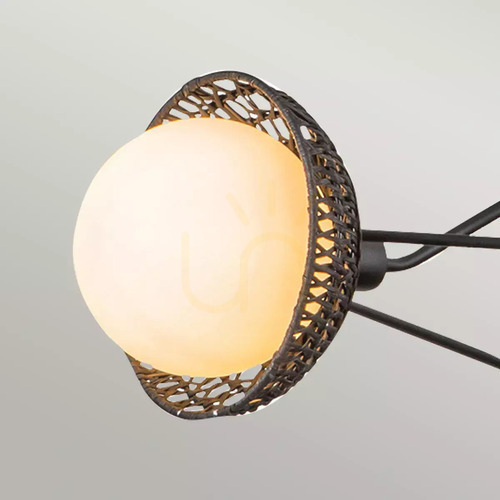
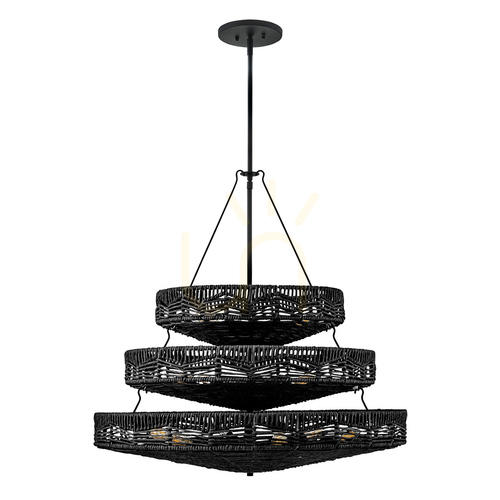
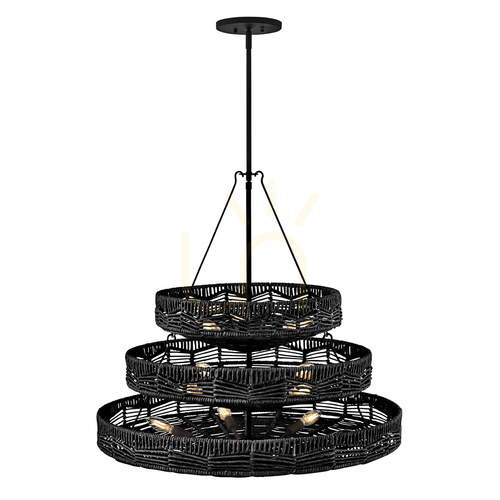
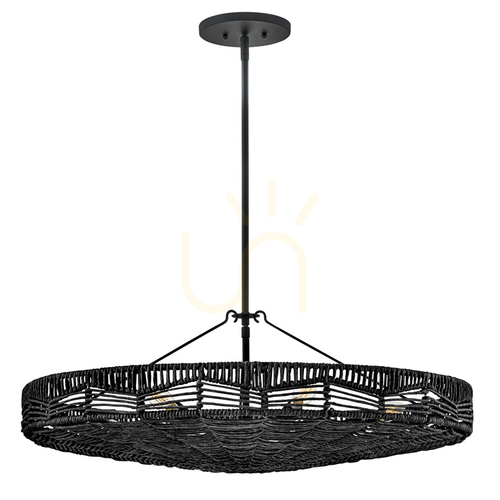
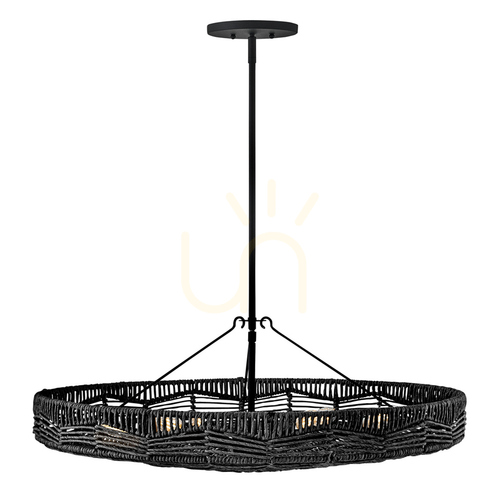
A rattan ceiling light softens a room in a way glass and metal can't: the woven shade filters the bulb into a warm glow and, after dark, scatters a lattice of shadows across the ceiling. As a chandelier rather than a small accent pendant, it has to light the whole room, so the weave, the size and the bulb matter more than they would on a table lamp.
Rattan chandelier, pendant or easy-fit shade?
In UK shops you will meet three things sold under the same name. An easy-fit shade is non-electric: it slips over the lampholder of the ceiling pendant you already have, so check its weight and that your existing flex and ceiling rose can carry it. A rattan pendant is a complete fitting with its own flex and ceiling plate. A rattan chandelier is usually larger, often with several shades on a bar or arms, or one generous woven basket around a metal frame that carries more than one lampholder.
The material is easy to confuse too. Rattan is a climbing palm with solid, flexible canes that can be steamed into smooth curves. Wicker is strictly the weaving technique, often done in willow, which is thinner and more rustic. Bamboo is hollow and stiffer, seagrass and jute are softer and matt, and synthetic rattan is plastic made to look the part – sensible on a covered terrace, less so in a sitting room.
Sizing and fitting guide
| Question |
Typical answer for UK homes |
| Ceiling around 2.4 m (most modern houses and flats) |
a flat, wide shade or a flush version; keep at least about 2.1 m clear underneath where people walk |
| Period property, 2.8 m and above |
room for a deep basket shape or a multi-shade fitting on a longer drop |
| Diameter for the room |
add the room's length and width in metres and multiply by about 8 for a diameter in cm |
| Over a dining table |
roughly half to two thirds of the table's width, bottom edge 65–80 cm above the top |
| Lampholder |
B22 bayonet is common on UK pendants, E27 screw on many imported fittings; check before buying bulbs |
| Bulb |
LED, warm white 2700–3000 K, never above the maximum wattage on the lampholder label |
How the weave changes the light
A tight weave works like a diffuser: soft light, no glare, but less of it, so a large lounge will want a floor lamp or wall lights as well. An open weave lets most of the light through and throws bold patterns on walls and ceiling, which looks striking in the evening but can feel busy when you are reading. The bulb changes the effect as well. A clear filament bulb gives sharp, graphic shadows; a frosted or opal one blurs them into something calmer. Cool white 4000 K makes natural rattan look grey, which is why warm tones suit it better.
Where it works, and where it doesn't
Living rooms, bedrooms, dining areas, nurseries and wide hallways all suit a woven chandelier, and it sits naturally next to oak, linen, jute rugs and houseplants. Kitchens are possible over a table, but not right above the hob: steam and grease settle into the weave. Bathrooms are out – natural fibre absorbs moisture, and a fitting there also has to meet the IP rating required for its bathroom zone. Strong sun through a south-facing window will bleach rattan over time, and a spot directly above a radiator dries the canes out until they turn brittle.
Wiring a new fitting into the lighting circuit falls under BS 7671, so if you are not confident, have a qualified electrician do it.
Spotting a well-made weave
Give the shade a gentle squeeze: an evenly tensioned weave doesn't sag or creak. Cane ends should be tucked inside rather than sticking out, where they catch dust and snap. Check that the drop can be shortened to suit your ceiling and, on multi-light fittings, that the lampholders keep each bulb clear of the weave.
Frequently asked questions
Are rattan light fixtures still in style?
Natural materials have moved on from the beach-house look rather than disappeared. Rattan now turns up in Japandi, Scandi and modern country schemes, often in darker stains or combined with black metal or fabric.
Are rattan lights safe?
Yes, with LED bulbs. They run far cooler than old incandescent or halogen lamps. Stay within the stated wattage and make sure the bulb never touches the weave.
Do rattan light fixtures get dusty?
They do, though dust shows less on rattan than on a smooth shade. Every few weeks go over it with a soft brush or the brush attachment of your vacuum. Now and then wipe it with a barely damp cloth and let it dry fully before switching on.
Can I fit a rattan chandelier to a low ceiling?
Choose a flush or semi-flush design, or a wide, shallow shade on a short drop. A deep globe hung at 2.4 m will be at head height for many people.
Is a rattan ceiling light good for a bedroom?
It is one of the best places for it. A denser weave with a dimmable warm bulb gives soft, low light that doesn't glare when you are lying down.
What if the colour varies across the shade?
Slight differences in tone and cane thickness come from hand weaving and natural growth. Rattan also deepens to a richer honey colour as it ages.
Choosing well
Start with the ceiling height and the weave, then the style: a rattan chandelier that is the right size and gives the right kind of light will look good in almost any scheme. Chandelier shapes and sizes in other materials: chandeliers. If your ceiling is low, it is worth reading about flush ceiling lights as well.