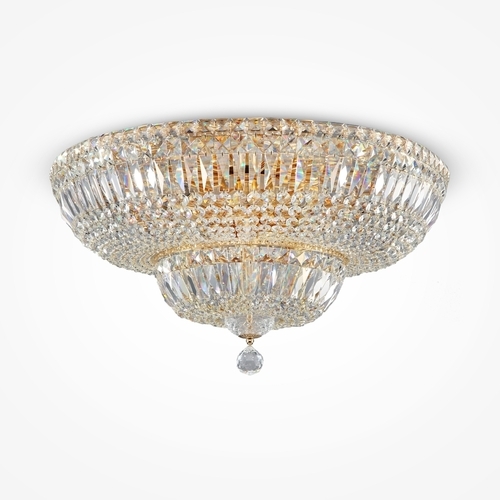
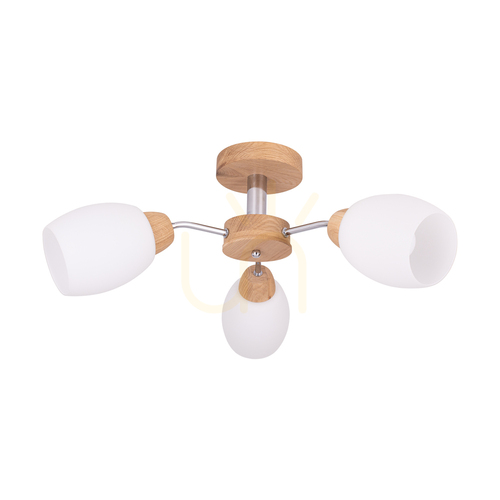
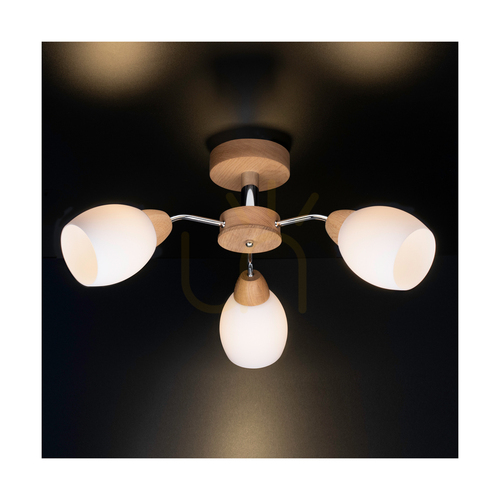
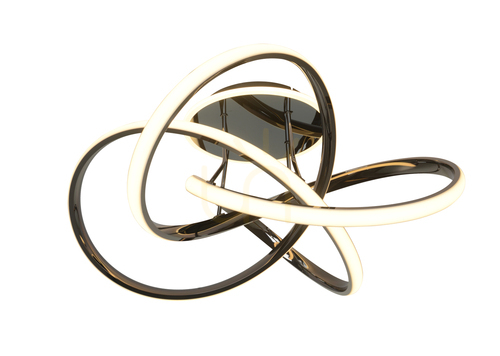
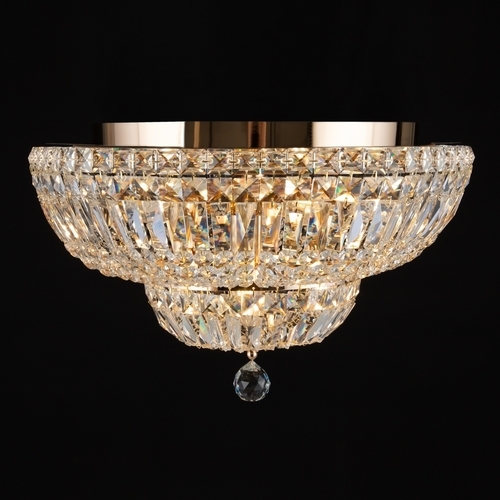
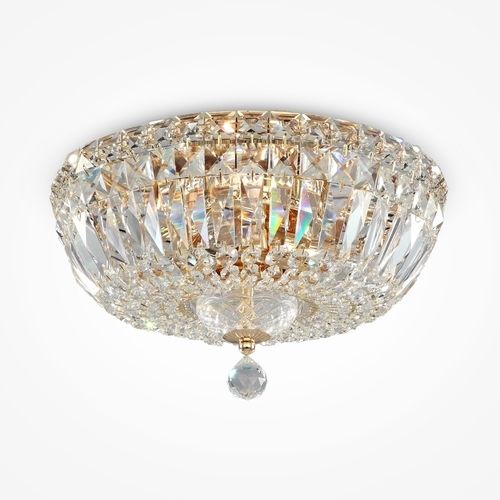
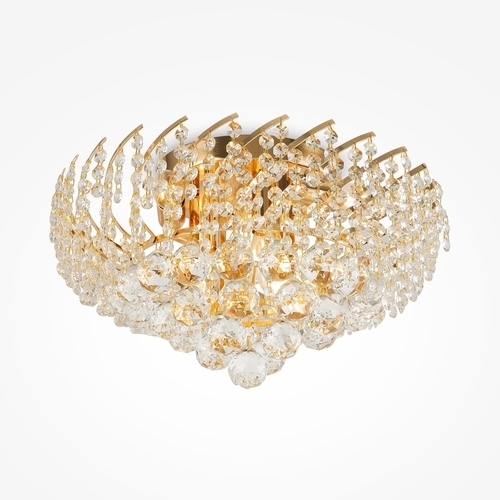
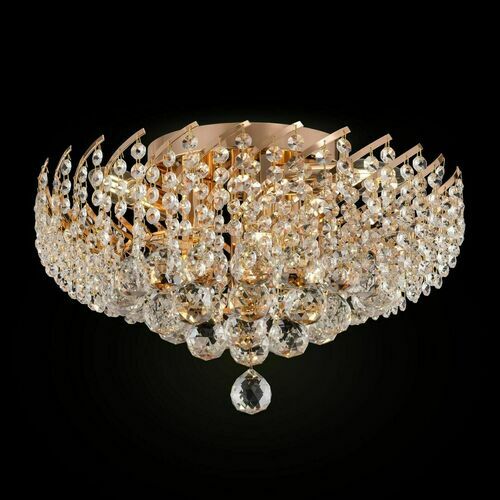
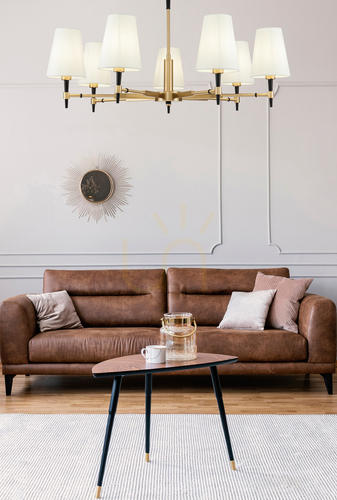
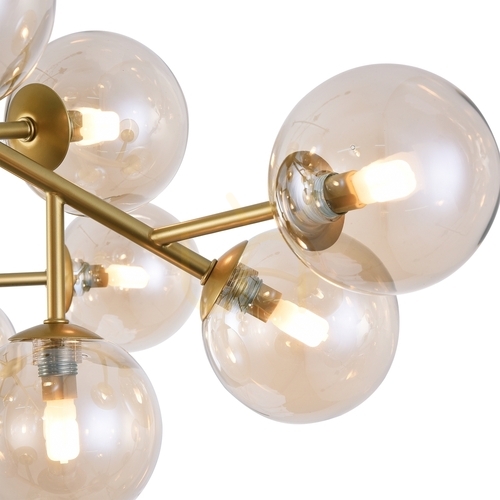
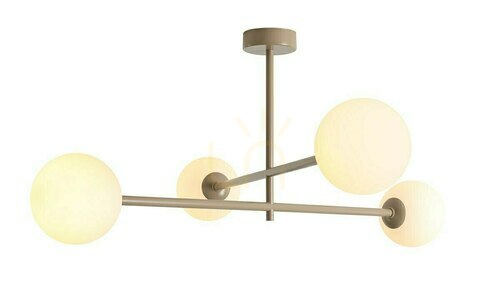
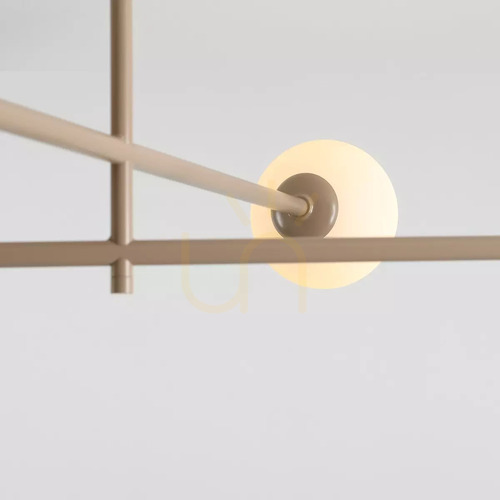
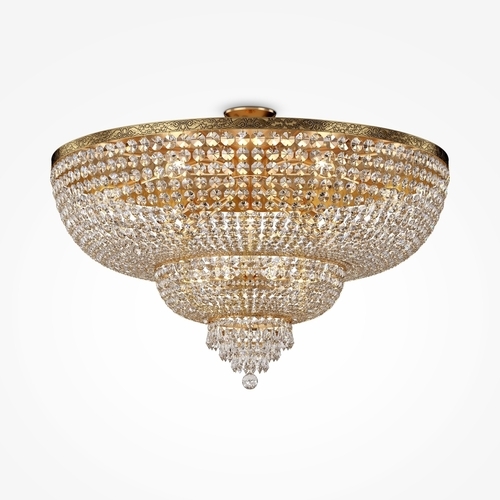
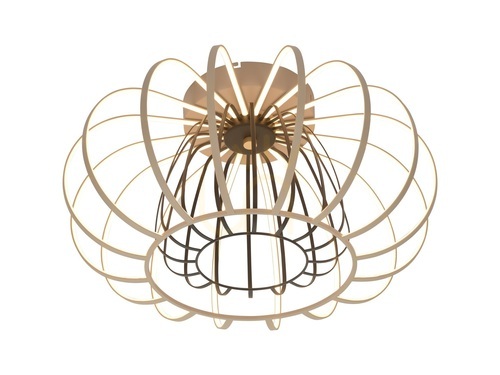
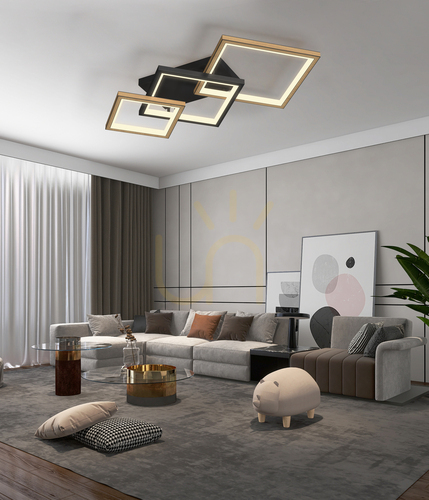
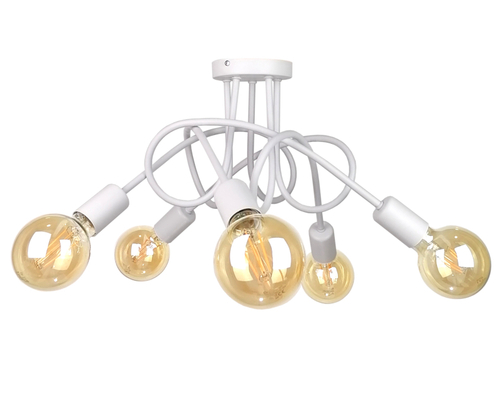
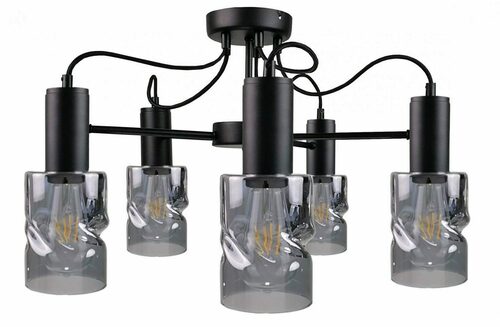
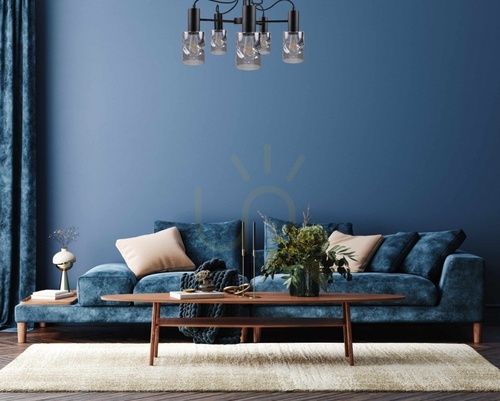
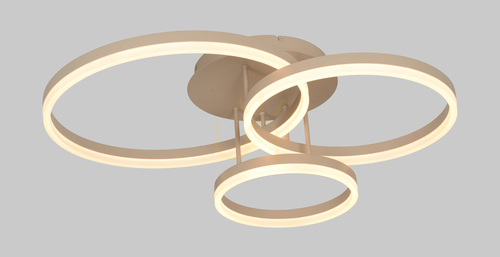
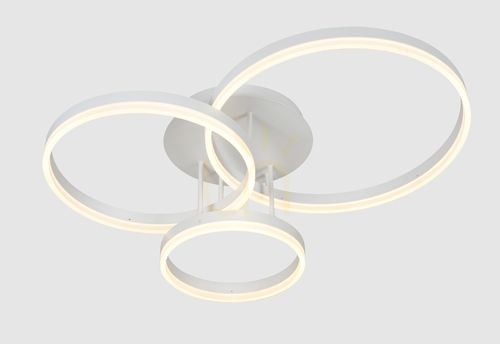
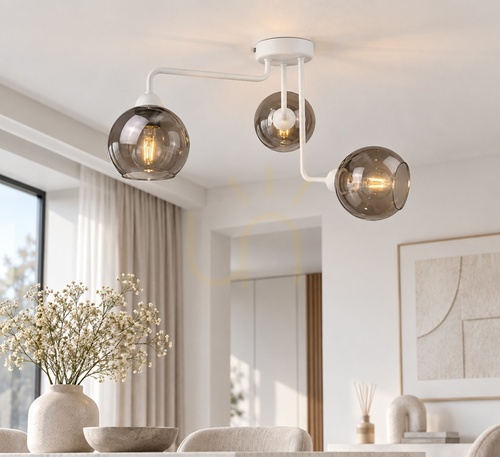
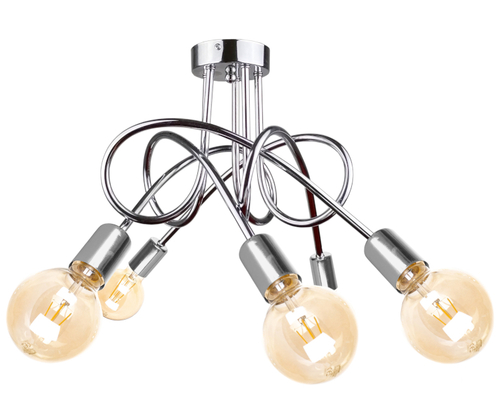
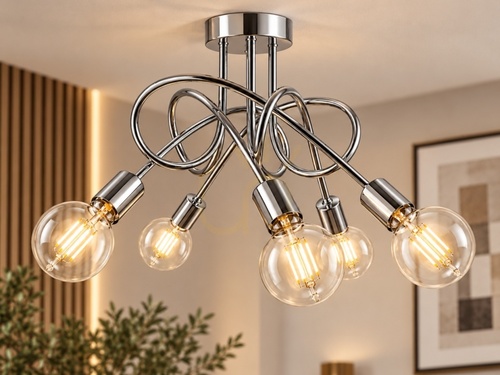
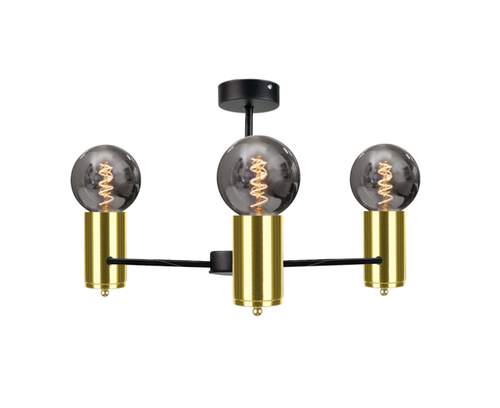
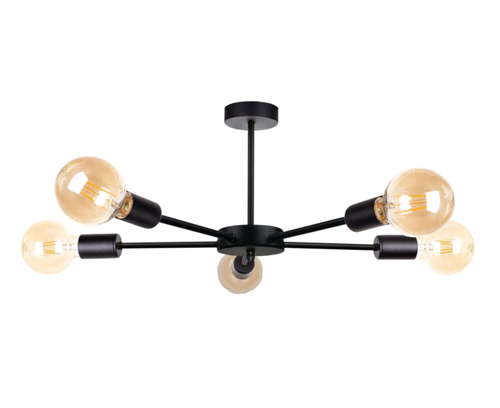
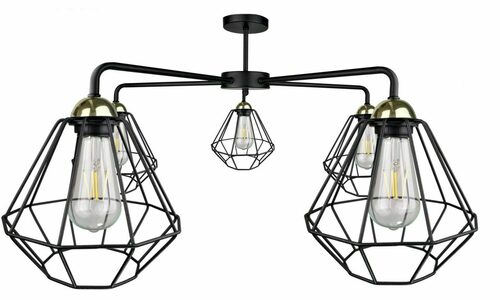
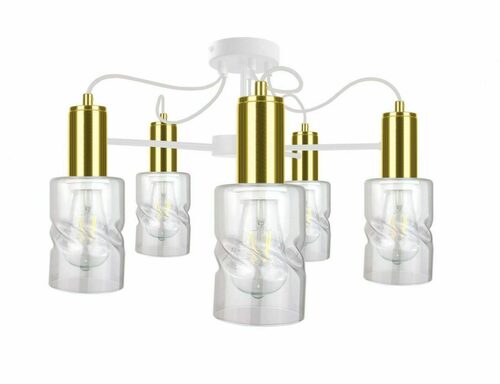
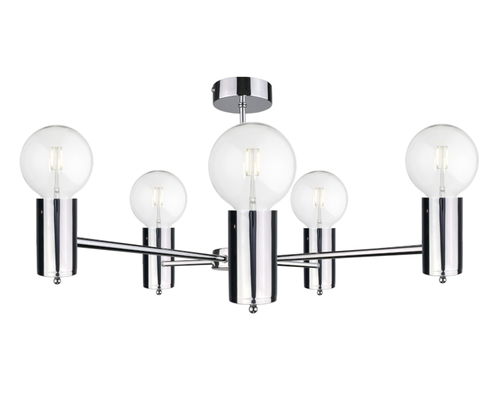
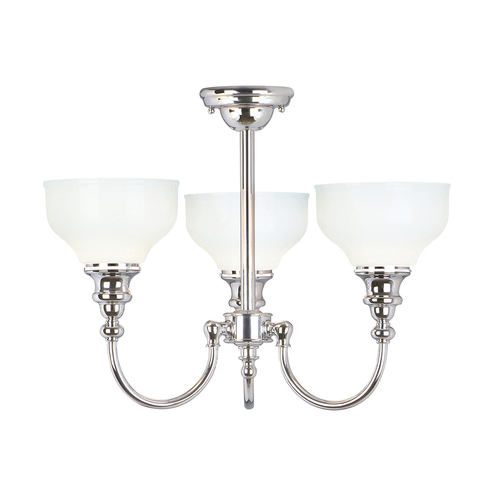
A low ceiling chandelier is usually a flush or semi-flush fitting: the canopy sits tight to the ceiling and the arms, crystal drops or glass shades are gathered just beneath it, so you get the sparkle of a chandelier without the long drop. That matters in a new-build with 2.4 m ceilings, a cottage with beams, or a loft room, where a traditional hanging chandelier would end up at head height.
It differs from an ordinary flush ceiling light in one way: volume. A flat opal dish simply spreads light evenly. A flush chandelier has depth, faceted crystal or several small shades, and throws light patterns across the ceiling and walls.
Flush or semi-flush?
A flush fitting sits directly against the ceiling and takes the least height, often 15–35 cm in total. A semi-flush hangs on a short rod or chain, typically 10–30 cm below the ceiling, so some light bounces back up and the room feels brighter overall. As a rule of thumb, rooms of around 2.4 m (8 ft) suit flush designs, rooms of 2.5–2.7 m can take a compact semi-flush, and from about 2.8 m a full hanging chandelier usually looks better proportioned. Victorian and Edwardian houses with high ceilings rarely need either, except in a hallway or under a dropped ceiling.
Sizing it for your room
| Room |
Typical ceiling |
Fitting height |
Diameter |
Light needed |
| Hallway or landing |
2.3–2.4 m |
up to about 25 cm |
30–40 cm |
roughly 500–1,000 lm |
| Bedroom 12–15 m² |
2.4 m |
about 25–35 cm |
45–55 cm |
roughly 1,000–1,800 lm, dimmable |
| Living room 18–25 m² |
2.4–2.6 m |
about 30–45 cm |
55–75 cm |
roughly 2,000–3,500 lm |
| Bathroom |
2.3–2.4 m |
up to about 25 cm |
30–45 cm |
IP44 or higher, BS 7671 zones apply |
For the diameter, add the room's length and width in feet and read the total as inches: a 13 × 16 ft room takes roughly a 29 in (about 74 cm) chandelier. In metric, multiply the sum in metres by 8 to get centimetres. Wherever people walk underneath, aim to keep at least 2.0–2.1 m of clear headroom.
Shape counts as much as size. Designs that spread outwards keep a low ceiling feeling open; long drops and pointed baskets drag it down. A wide, shallow crystal bowl usually beats a narrow, deep cone under a 2.4 m ceiling.
Bulbs, warmth and dimming
Most flush chandeliers take E14 (small Edison screw) candle bulbs or G9 capsules; larger shaded designs may use E27, and some have integrated LED. Clear bulbs make crystal glitter, while frosted ones soften the light but dull the sparkle. For living rooms and bedrooms, warm white around 2700–3000 K is the usual choice.
Because the fitting sits right against the ceiling, heat has nowhere to go, so treat the maximum wattage per lampholder as a hard limit. LED G9 capsules are often longer than the halogen ones they replace, so measure the glass before you buy. If you want to dim, check the bulbs and the dimmer are compatible – mismatched pairs flicker or hum.
Crystal, glass or acrylic?
In a low room a flush chandelier is seen from close below, so the quality of the drops shows. Lead crystal is heavier, cool to the touch and splits light into strong rainbow colours; precision-cut crystal glass comes close and weighs less. Acrylic is the lightest and the easiest on a plasterboard ceiling, but it scratches and turns dull over time.
Fitting and safety
Crystal flush chandeliers can weigh several kilograms, and larger pieces well over ten. Many standard ceiling roses aren't designed to carry that, so heavier fittings should be fixed to a joist or a timber noggin, or with plasterboard fixings rated for the load. Multi-arm designs are sometimes wired as two circuits so a two-gang switch can light half of the bulbs. Any new or altered wiring on 230 V should be done by a registered electrician, and bathroom work follows the zone rules in BS 7671.
To clean, switch off at the wall and let the bulbs cool. Wipe each drop wearing cotton gloves dampened with lukewarm water and a drop of washing-up liquid, then polish dry with a lint-free cloth. Take a photo before removing any drops, wipe metal parts dry only, and never spray towards the lampholders.
Frequently asked questions
Can you put a chandelier on a low ceiling?
Yes. A flush or compact semi-flush chandelier gives the sense of occasion without stealing headroom, provided you keep around 2 m clear where people walk.
What type of chandelier is best for a low ceiling?
A wide, shallow design that sits close to the ceiling: a crystal bowl, a ring of drops or short arms with candle bulbs held tight to the canopy. Avoid long tiers that hang straight down.
What kind of small chandelier is suitable for a low ceiling?
In a hallway, landing or box room, a 30–40 cm flush fitting is usually enough. In a long hall, two small ones spaced 1.5–2 m apart light it more evenly than one large piece.
What type of lighting is best for a room with a low ceiling?
Layers. Let the chandelier provide the general light and the sparkle, then add wall lights, a floor lamp or an uplighter that washes the ceiling, which makes the room feel taller.
What lighting works for a low ceiling bedroom?
A small flush chandelier on a dimmer with warm bulbs, plus bedside lamps. A pendant over the bed is a head-bumping risk in most British bedrooms; a flush fitting avoids it.
If your ceiling allows a longer drop or you'd like another style, browse chandeliers. If running costs matter most, read on about LED chandeliers.