Chrome pendant lamps - a guide
Chrome in lighting is the language of discipline and clarity. Instead of imposing color, it reflects the surroundings and organizes the composition, so the chrome pendant lamp is one of the most reliable choices for contemporary apartments and premises. Neutral gloss acts as a frame for materials: wood, stone, glass or fabrics. In bright, minimalist interiors it adds life, in classic interiors it brings freshness, and in industrial interiors it softens the harshness of concrete and brick. This guide, written in a long, compact form, collects the essentials: how to choose form and scale, how to control the color and quality of light, how to use chrome in different rooms, and what installation and care details determine the effect for years to come. The goal is simple: choose once, choose well, and then enjoy comfort and elegance without overcomplication.
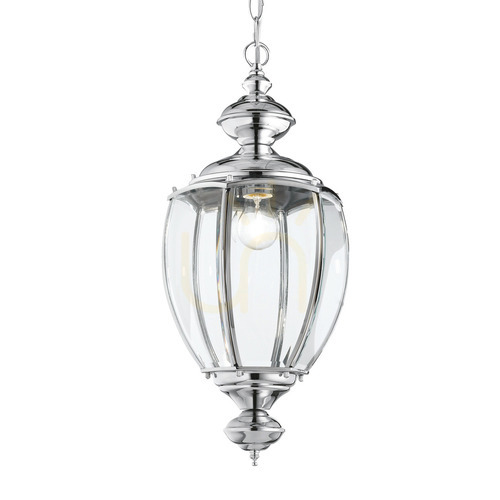
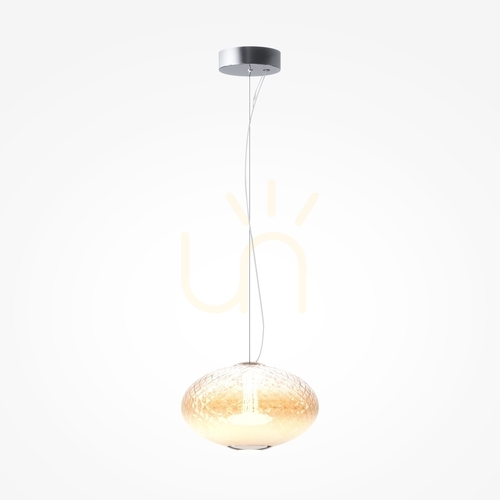
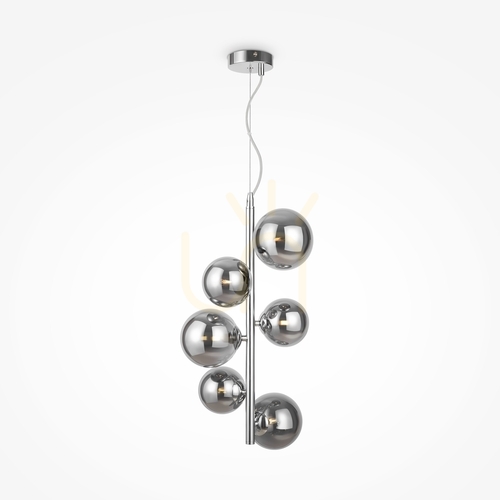
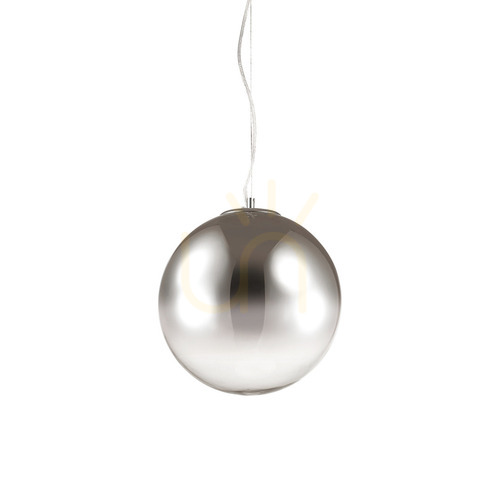
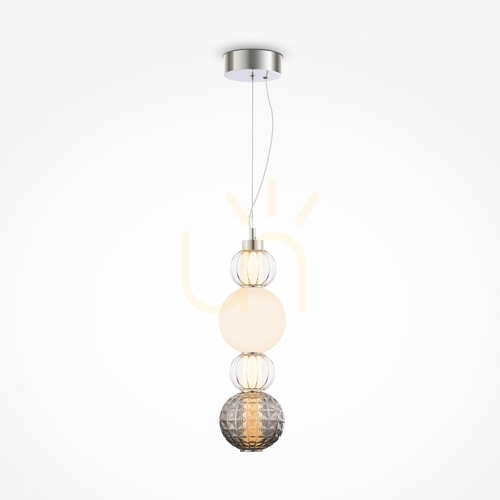
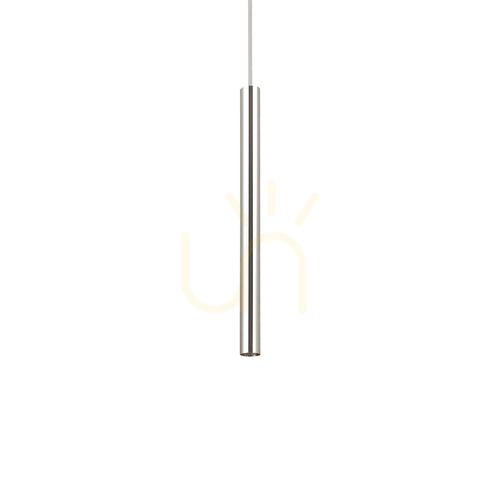
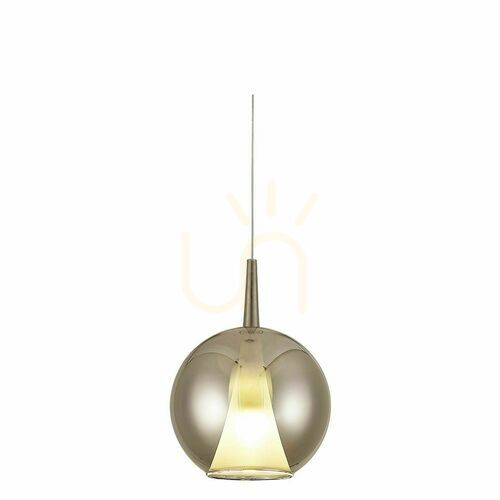
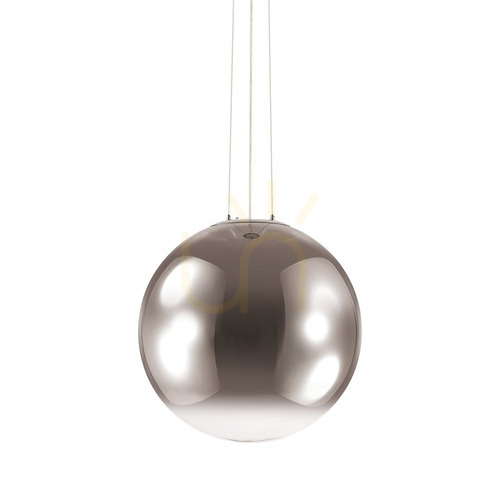
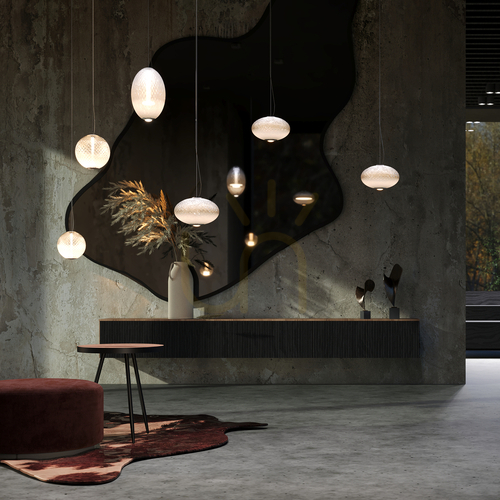
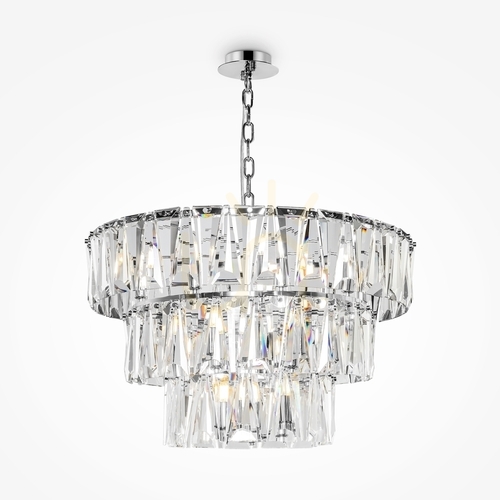
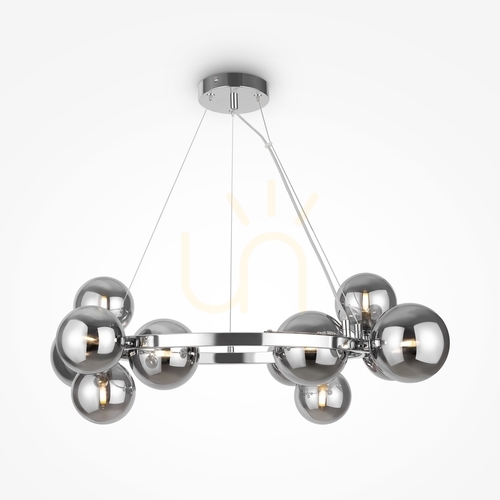
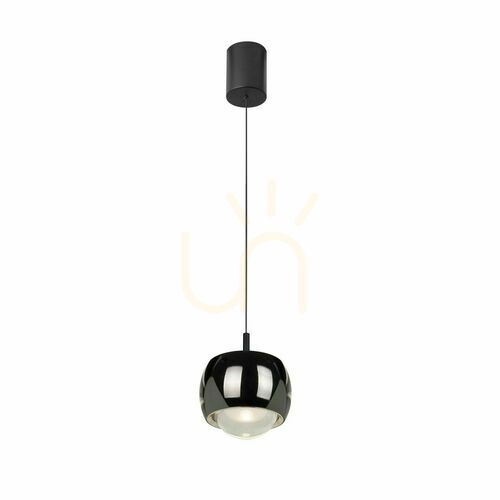
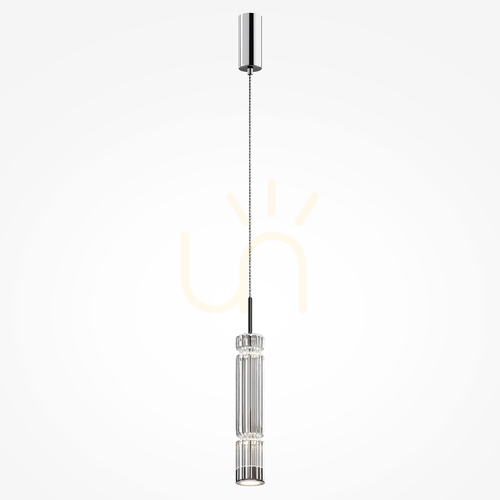
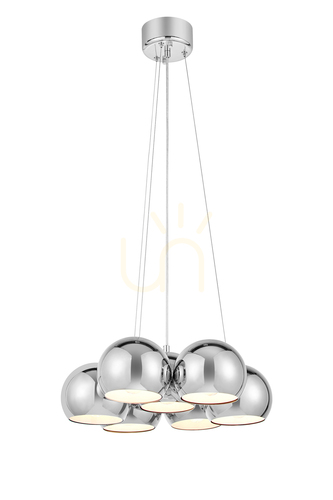
Light in the home should not compete with form - it should organize it. That's what chrome is a master at: it reflects the context and doesn't arbitrarily change it, so that one fixture can "get along" with an oak dining room, a concrete island or a velour sofa. That's why three related variants are so often chosen in practice: a chrome sphere pendant lamp as a focal point over a table or in the living room, a chrome pendant lamp, glass with a milky shade, when soft diffusion and less glare are needed, and a linear chrome pendant lamp over a kitchen island that evenly spreads light across the entire length of the countertop. All three are neutral in style, and differ in the nature of the light - enough to handle most home scenes.
There is no room for haphazard decoration. Instead, there are a few simple, proven rules: scale relative to furniture, proper hanging height, color consciousness (2700-3000 K for relaxation, 3000-4000 K for work), aim for high CRI and control glare. When these elements come together, chrome does what it does best - adds order and elegance effortlessly.
Chrome: character and color in the interior
Chrome is neutral by nature, and therefore susceptible to context. With white it creates the impression of hygienic precision, with black - a graphic, strong contour, with light wood - a balance between warmth and coolness. When the chrome ball pendant lamp appears in the axis of the room, the composition organizes itself: the table has its center, the conversation has a natural focus, and the rest of the elements stop fighting for attention. You will especially appreciate this kind of "silent order" in the evening, when the dimming of the source turns the expressive reflections into a soft pulsation of points of light scattered over the furniture and tableware.
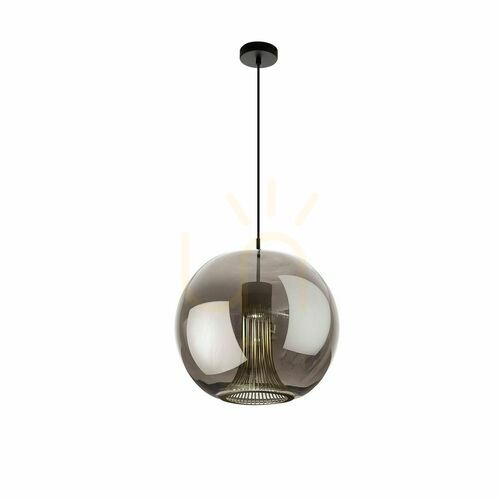
It is worth remembering that the shine of chrome is not aggressive, if it is accompanied by judiciously selected glass. Milk glass chrome pendant lamp reduces contrasts and allows you to hang the shade a little lower without glare. Transparent or smoked glass, on the other hand, gives more flux and draws sharper reflections on stone and lacquer - great in minimalist interiors where materials play first fiddle. In both cases, chrome acts as a frame: it doesn't shift the color accents, but organizes them.
This neutrality has another advantage: longevity. Trendy colors of fixtures can get old after a season, while the chrome pendant lamp stays current along with the replacement of textiles, curtains or details on the shelves. The narrative of the interior changes, but there is no need to change the lamp. This saves not only money, but also energy and time.
Form and light: how to choose the shape, scale and parameters
Form comes from function. Over a round table, a single sphere works best - the ratio of the diameter of the shade to the tabletop is usually within 30-50%.. Over a rectangular table, a duo or trio of smaller fixtures equally spaced is better than one very large shade. Suspension height in the dining room is usually 70-90 cm from the tabletop to the lower edge of the shade: the interlocutors can see each other without obstruction, and the light hits the surface where it is needed. In halls and passageways, keep at least 210 cm clearance; on staircases, include runners and landings to avoid collisions.
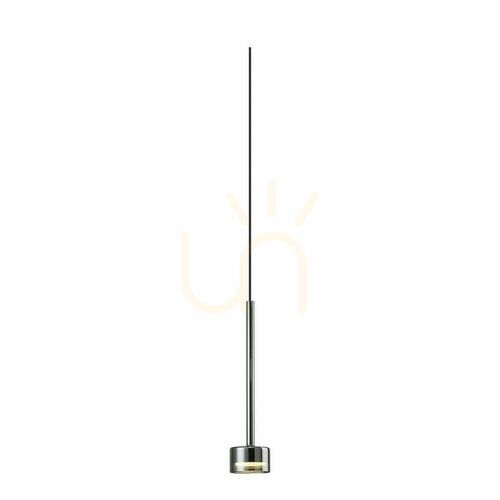
Above the kitchen island, rhythm works - three small spheres or slender cylinders hung at equal intervals evenly illuminate the countertop. If the installation provides for only one power point, a linear chrome pendant lamp will solve the problem without the art of the rosette. In the living room, simplicity often wins: one well-chosen lampshade over the coffee table closes the composition of the rest area and does not require a dense grid of light. This is where the chrome sphere pendant lamp shows all the meaning - it clips the carpet, sofa and table without overwhelming the interior.
The color and quality of the light build the mood. 2700-3000 K promotes relaxation, 3000-4000 K helps with work and cooking. It's worth aiming for a CRI of 90+ - natural color reproduction makes food look appetizing, fabrics retain their true hues, and chrome remains clean and noble, without extraneous glows. Dimming is not a luxury, but a standard of convenience: the same chrome ball pendant lamp can shine neutrally and brightly in the morning, and softly and warmly in the evening, turning the dining room into an intimate conversation scene.
Glare control is important especially with transparent glass. Sources with a milky dome, micro-textured lenses or additional diffusers greatly shorten the path to visual comfort. If there is a glazed tableware or glass top on the table, sometimes it is enough to move the axis of the lamp a few centimeters or slightly change the height to make the sharp reflections disappear. It is for such nuances that the "culture of light" is responsible, and chrome - thanks to reflections - quickly shows whether the layout is clean.
Match the flux to the function and color of the materials. Lighter, shiny countertops require fewer lumens than dark and matte countertops, which absorb light. In many dining rooms, a range of 1200-2500 lm over a single countertop works well; for very long tables, a pair or trio of spots is better than one extremely powerful source.
Applications: from kitchens to halls, from apartments to venues
Kitchen loves precision. Above the island, three identically spaced fixtures provide an even level of light along the entire length of the countertop; chrome emphasizes the purity of the composition and harmonizes naturally with the fixtures. It is worth adding peripheral under-cabinet lighting - the central lamp can then operate at a lower wattage, and the whole thing remains legible. The milk glass chrome pendant lamp softens shadows on hands and dishes, improving comfort.
Dining room needs tranquility and ritual. A single chrome sphere pendant lamp over a round table gives a scene around which it's easy to gather; over a rectangular tabletop, a duo or trio of smaller shades works just as well to bring order to the conversation and display of the table setting. The warm light color and dimmability turn an everyday meal into an event - not because it's loud and bright, but because it's precise, calm and pleasing to the eyes.
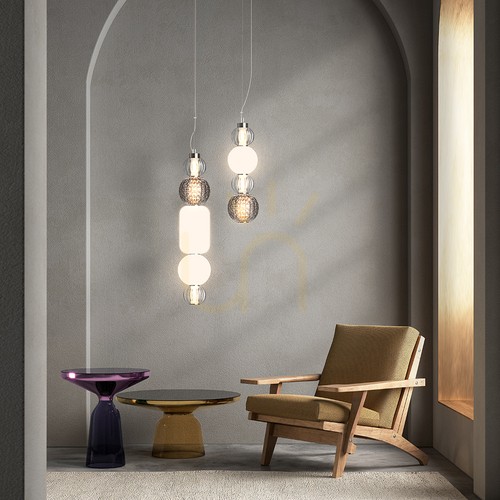
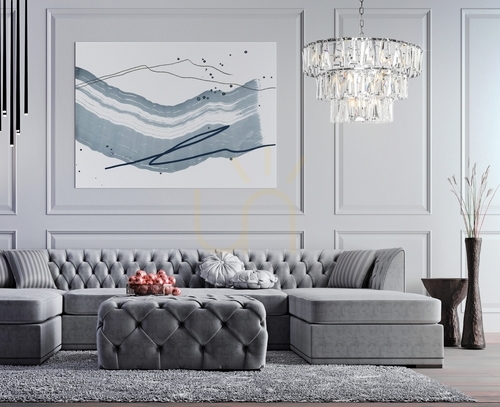
In the living room, light is supposed to encapsulate the composition, not dominate the. One lampshade hung over a coffee table can tie together a rug, sofa and bookcase into a single unit. If the ceiling is high, a cascade of three balls of different diameters will add lightness and movement, while still remaining elegant. Chrome acts as a frame here - it allows you to change pillows, curtains or graphics, and the fixture always "fits".
The bedroom needs softness and glare control. Two overhangs on the sides of the bed free up the bedside table tops and build the symmetry associated with hotel comfort. The 2700-3000 K color calms the rhythm of the day, and dimming allows you to switch from reading mode to mute mode in one motion. A chrome glass pendant lamp with a milky shade will work best here, as it diffuses light evenly and does not create harsh shadows on the wall behind the headboard.
The bathroom can also benefit from chrome, provided the selection of the appropriate tightness class of luminaires and maintaining safe distances from wet areas. Chrome inherently likes humid environments, and corresponds well with fixtures and chrome accessories; a chrome lamp hanging over a chest of drawers or by a mirror will introduce a consistent, "hotel-like" order, while milky glass will reduce reflections on tiles and mirror panes.
The hallway and staircase are places where height is an asset. Cascades of spheres suspended at various lengths lead the eye upward and build a sequence of impressions from the threshold. This is often the first "sentence" of the house: neutral in color, yet memorable in form. The chrome ball pendant lamp in three-five sizes allows you to scale your installation without losing elegance.
Cabinets and work rooms benefit from fixtures that do not introduce extraneous color dominants. Chrome tidies up the desk and surrounds the monitor, while the diffusion shade reduces reflections in the screen. It's a good idea to plan for a neutral color of 3000-3500 K, a high CRI and dimming - it's then easy to switch from task mode to the quiet finale of the day.
In commercial spaces, repeatability and service matter. Chrome fixtures are a natural choice here: they build the identity of the place, do not impose a palette, and stand up well to changes in exposure. In cafes and boutiques, a chrome ball pendant lamp over tables or counters organizes the rhythm, and a set in a row guides the customer through the interior. The neutrality of the metal ensures that the light does not compete with the brand's colors, but rather highlights them.
Installation, safety and care
Safety starts with the substrate: check the load-bearing capacity of the ceiling and match the studs to the material. Heavier glass fixtures or multi-point cascades require secure anchoring in the ceiling - don't rest them on flimsy abutments. Before you start, unplug the power, level the slats and even out the tension of the cables; small tilts can destroy the impression of order, and the chrome - through reflections - will show this right away. After installation, test the dimming and see how the tint works after dark; evening conditions often reveal reflections that are not visible during the day.
Care of chrome is simple if done regularly. Dry microfiber removes dust and fingerprints, clean glass with a mild cleaner and polish dry to avoid streaks. Vacuum textile lampshades with a soft brush; dry metal parts immediately after wiping them down. Check bolts, cables and suspension level once a quarter, and hoses and connections once a year. It's a small effort that keeps a chrome pendant lamp looking like new for years without losing its key asset: a clean, even shine.
In the perspective of long use, serviceability matters. Choose fixtures with a replaceable source and a proven coating - high-quality chrome does not tarnish quickly and stands up well to cleaning. Energy-efficient LED sources with high efficiency and CRI 90+ reduce energy consumption, and dimmable capability allows one luminaire to handle different scenes without additional lamps. It's a sustainable choice - less shopping, less waste, more convenience.
Trends and summary
The market is developing in two directions. On the one hand, a reduction in form - simple tubes, rings and slats in chrome, which is in keeping with japandi and Scandinavia. On the other hand, decorativeness understood as sculptural cascades of spheres, smoked glass and nuanced proportions. They have one thing in common: color neutrality and high light culture. In modern classic, milky spheres in chrome juxtaposed with veneer and stucco work well; in soft loft, chrome tidies up concrete and graphite; in coastal "coastal" - it reflects blues and beiges without imposing its own hue. This flexibility makes the chrome pendant lamp a safe, long-lasting foundation for an arrangement.
If you're looking for one sure-fire solution for your modern home, chrome meets all the conditions: it's neutral, elegant and easy to maintain. The chrome sphere pendant lamp brings order to the dining room and living room, the chrome glass pendant lamp offers soft diffusion in the bedroom, and the linear chrome pendant lamp over the island provides even illumination for work. Add to that three simple rules - the right scale, 70-90 cm above the countertop, and CRI 90+ - and you have a light that calms the composition and enhances everyday life, without unnecessary fireworks.
Practical development: precise guidance without repetition
Material and color palettes. Chrome as a base allows to arrange calm, timeless sets: natural oak + chrome + white is a Scandinavian classic; walnut + chrome + granite create a modern classic atmosphere; architectural concrete + chrome + graphite build soft loft. It is worth remembering the balance of color temperatures: warmer wood with chrome and neutral light gives a homey character, cooler stones with chrome and light slightly warmer avoid laboratory sterility.
Indicators and measures that make decisions easier. Over a round table, keep the diameter of the fixture within 30-50% of the diameter of the tabletop, and the bottom edge at a distance of 70-90 cm from the surface. Over the island, place the three points usually every 60-90 cm, counting from axis to axis, with a 20-30 cm margin from the edge of the countertop. In traffic areas, keep 210 cm clearance - this simple rule eliminates most collisions.
Shanks and dimming compatibility. The chrome glass pendant lamp is sometimes offered with E27, G9 or GU10 handles; before you buy the sources, check whether the fixture allows dimming and which dimmers it works with. Not every LED "dims" smoothly - look for "dimmable" markings and manufacturer compatibility lists. For transparent lampshades, prefer sources with a milky dome, in milky - classic "bubble" with a wide angle of light.
Layering of lighting without chaos. The central chrome pendant lamp is the backbone of the composition, but the comfort increases when you add a background light (e.g.. slat near the wall) and low accents (table lamp). This allows you to dim the main fixture earlier and the scene will still be clear. Chrome as a base will maintain consistency even with several sources, because it does not bring additional color.
Glare and reflections - diagnosis and correction. If you see sharp reflections in the plates or screen, first correct the height by 3-5 cm; if this does not help, replace the source with a milky one or one with a diffuser. With transparent glass, avoid bare filaments at eye level. When the countertop is very shiny, moving the axis of the lamp a few centimeters often solves the problem aesthetically and without functional loss.
Acoustics vs. lampshades. Although the lamp is not a sound-absorbing panel, the large fabric shades and soft surroundings (curtains, carpet) improve the comfort of the conversation. Chrome, thanks to its reflections, does not introduce additional visual "noise", which indirectly helps with concentration and speech reception - especially in dining rooms open to the living room.
Photography and video conferencing. The chrome sphere pendant lamp with milk glass gives an even, soft glow that looks better on camera than a hard, directional light. If you're talking online at a table, set the dimming so that your face is illuminated from above and slightly in front, not just from the side. Chrome reflections should be controlled by height so that they do not create "hot spots" in the frame.
Bathroom without compromise. In zones 2 and 3 (out of direct reach of water), you can use a chrome pendant lamp, as long as it meets the appropriate IP. Chrome visually ties in with fixtures and accessories; milky glass softens reflections on tiles. If the mirror dominates, consider a pair of smaller overhangs on the sides - they will illuminate the face more evenly than a single fixture over the center.
Corridors and staircases - rhythm and guidance. Instead of a single point in a long corridor, use a sequence of smaller fixtures every 2-2.5 meters; chrome will emphasize rhythm and visually shorten the perspective. On the staircase, a cascade of three to five spheres of varying cord lengths creates a sculptural vertical without feeling heavy.
Budget and priorities. If you must choose, invest in the quality of the lampshade and chrome coating and in good light sources (CRI 90+, stable dimming). The mechanics of the sling should have a reserve of adjustment and secure attachment. Decoration can always be added later, while poor light quality and unstable gloss is a problem that fashionable accessories will not cover.
The most common mistakes in the kitchen. Too sparse rhythm of points over island leaves dark spots between lampshades; too strong directional sources create harsh shadows on hands. Solution: three equally spaced points, wide angle sources, 3000-3500 K and dimming when finished. Chrome will maintain clarity, while milk glass will improve comfort.
FAQ - the most common questions
How to choose the diameter of the lampshade for the table? For a round table, assume 30-50% of the diameter of the tabletop; for a rectangular table, it is better to choose two-three smaller lamps equally spaced than one large lampshade.
At what height to hang the lamp above the table? Normally 70-90 cm from the tabletop to the lower edge of the lampshade. In corridors and passageways, maintain a minimum clearance of 210 cm.
Does the chrome pendant lamp fit in small apartments? Yes. The gloss of chrome optically organizes the space and reflects the light, without adding a mass of color, so it does not overwhelm small rooms.
Warm or neutral light color? For relaxation 2700-3000 K, for work and cooking 3000-4000 K.. It is best if the luminaire supports dimming - you can adjust the mood more easily.
What CRI should you choose? Aim for a CRI of 90+ so that the colors of fabrics, wood and food are faithfully rendered, and the chrome retains a pure luster without an extraneous glow.
Does chrome fit only in modern interiors? No. Chrome is neutral - in modern classic it adds freshness, in soft loft it organizes concrete and graphite, in classic it emphasizes the nobility of materials.
Sphere or tube - which to choose? A sphere is most versatile over a round table and in the living room; tubes or slats work better over a long kitchen island.
How to avoid glare and reflections? With transparent shades, use sources with a milky dome or additional diffusers; correct the height by 3-5 cm and move the axis relative to the shiny surfaces.
Is a chrome pendant lamp suitable for kitchens and bathrooms? Yes, provided that you choose the right waterproofing class (IP) in the bathroom and evenly distribute the points over the island in the kitchen.
What shafts and bulbs will work best? Mostly E27, GU10 or G9. Check dimmable ("dimmable") compatibility and the manufacturer's list of compatible dimmers.
How to clean chrome and glass? Wipe chrome with a dry microfiber, wash glass with a mild detergent and polish dry to avoid streaks; vacuum textile lampshades with a soft brush.
How many lamps over the kitchen island? Mostly three smaller fixtures equally spaced (every 60-90 cm from axis to axis), with a margin of 20-30 cm from the edge of the countertop.