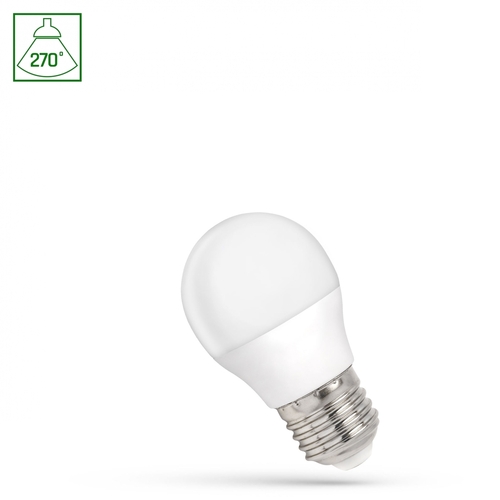
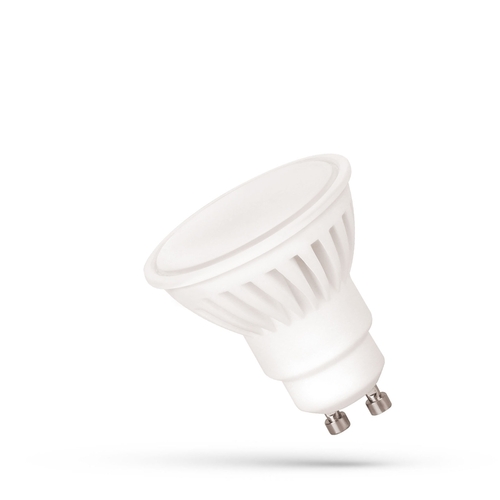
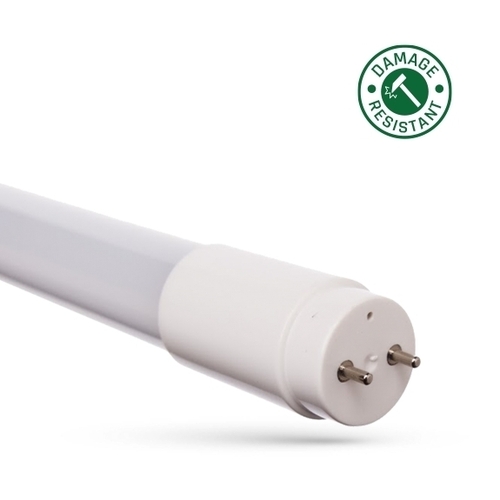
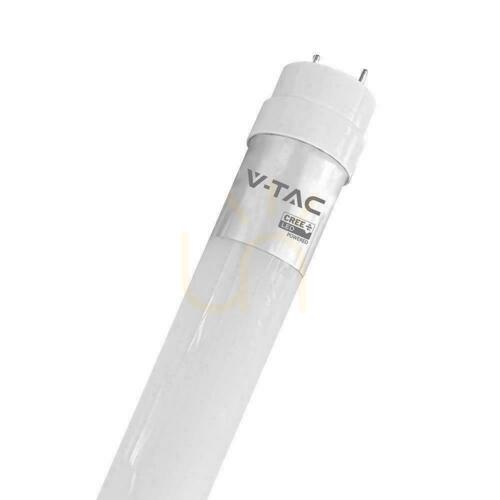
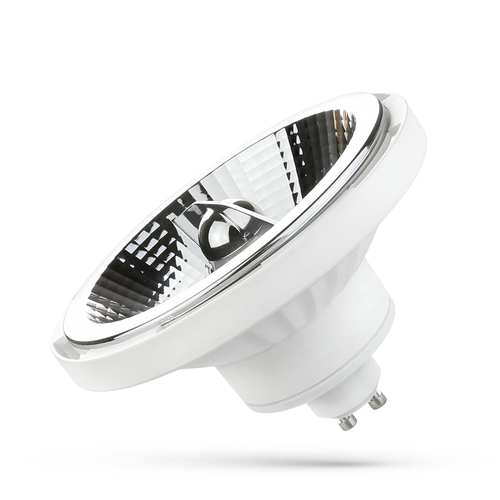
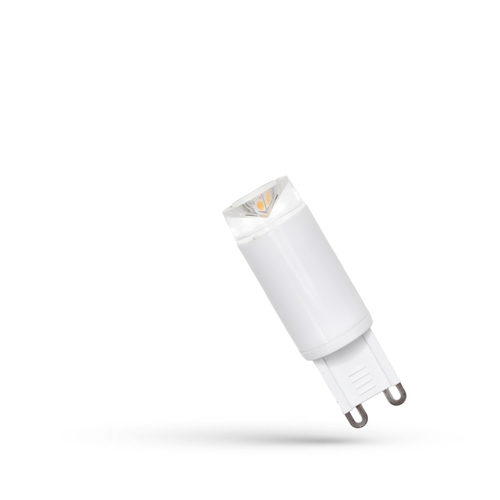
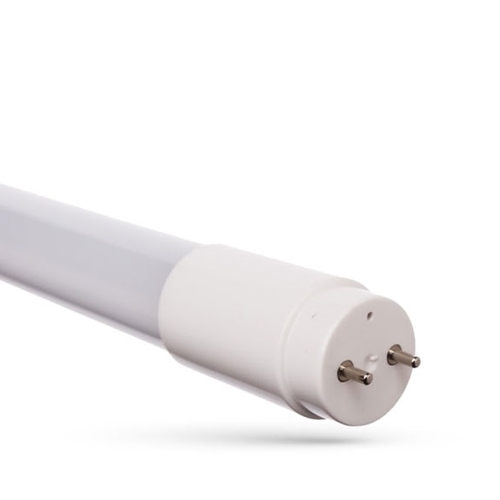
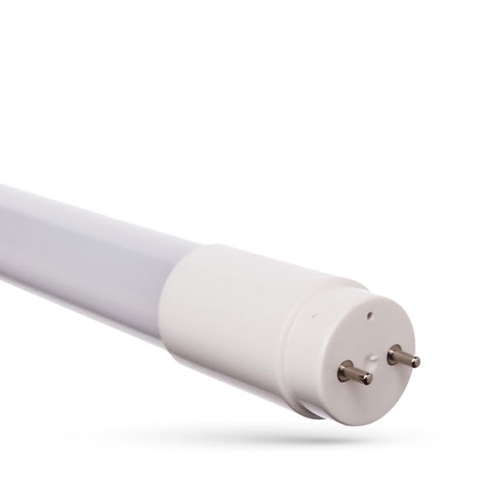
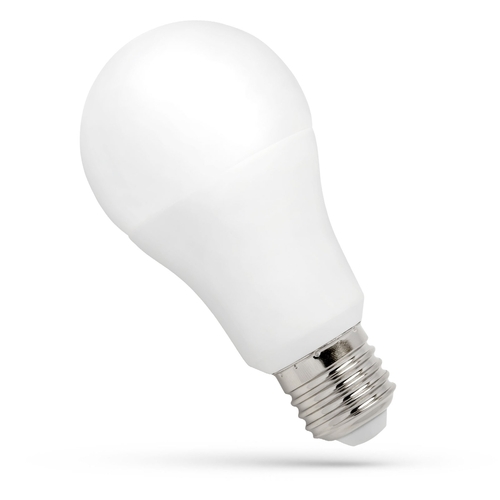
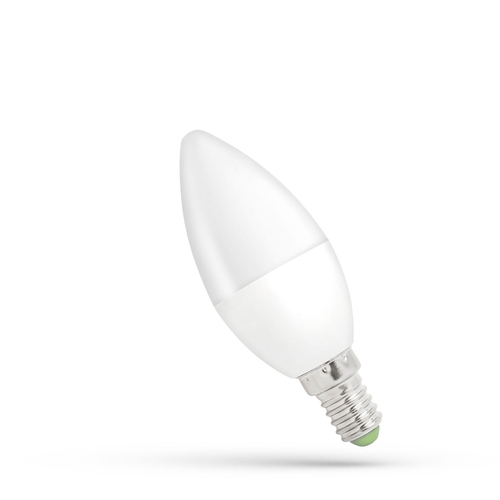
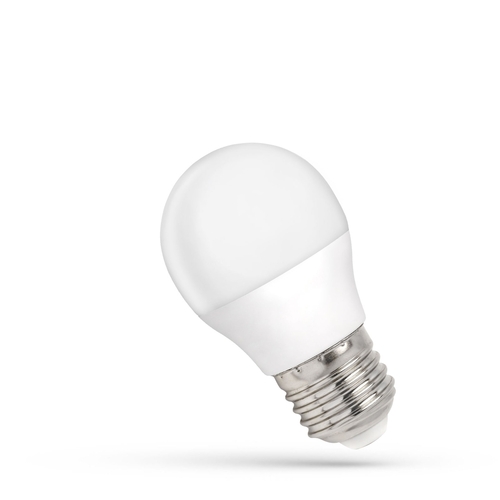
Cool light bulbs are the ones that read blue-white rather than butter-yellow — anything from around 4 000 K upwards, with the crisp 6 000–6 500 K "daylight" end of the range at the far side. Filtering the catalogue to a cool light colour is the quickest way to skip past the warm-white majority and see only the lamps that will keep a worktop, a garage or a bathroom mirror looking sharp.
What the kelvin number is actually telling you
Correlated colour temperature describes the tint of the white, not how bright the bulb is. Confusingly, higher kelvin means a cooler-looking light: 2 700 K is the colour of an old filament lamp, 4 000 K sits neutral, and 6 500 K leans towards overcast daylight. Brightness is a separate number entirely — lumens. A 6 500 K bulb is not brighter than a 2 700 K one of the same lumen output; it simply looks brighter, because blue-weighted light reads as more alert to the eye.
Rooms where cool wins
-
Kitchens and utility rooms. Cool white makes raw ingredients look like themselves. Warm light flatters skin and flatters raw chicken rather less usefully.
-
Home offices and workshops. Fine detail, small print and colour matching all get easier as you move towards 4 000–5 000 K.
-
Bathrooms. Shaving and make-up mirrors want a neutral-to-cool light with high colour rendering, otherwise foundation chosen at the mirror looks wrong outdoors.
-
Garages, sheds, security lights. Nobody needs atmosphere over a workbench.
Bedrooms and living rooms are the obvious exceptions. Cool light late in the evening feels like a corridor rather than a room, so most people keep the sitting-room lamps warm and let one cool task light do the reading.
Colour rendering matters more than the kelvin figure
Two 4 000 K bulbs can render the same red wall very differently. That is the CRI, and 80 is the usual floor for a domestic LED while 90 and above is worth paying for anywhere you judge colour — a kitchen, a dressing area, a studio. A low-CRI cool bulb is the classic cause of "the light is bright but everything looks grey".
Practical points before you order
Match the colour temperature across every lamp on the same circuit. One cool bulb in a row of three warm ones is far more obvious than any single bulb is on its own, and it is the most common reason a room suddenly looks unbalanced after a bulb change.
Check dimmability separately. Cool LEDs hold their colour as they dim, which is either the point or the disappointment depending on what you expected: a dimmed halogen goes warm and candlelit, a dimmed cool LED just goes dim. If you want the warm-on-dim behaviour, look for lamps that state it explicitly.
Outdoors, cool white shows detail on a camera better than warm light, but it also spills further and neighbours notice. Aim the fitting down, and treat 4 000 K as the sensible ceiling for a domestic garden.
Frequently asked
Is cool white the same as daylight?
Not quite. "Cool white" usually covers roughly 4 000–5 000 K, "daylight" is used loosely for 6 000 K and above. Both fall on the cool side of neutral, and manufacturers are not consistent with the labels — the kelvin figure on the box is the number to trust.
Does a cool bulb use less energy?
No. Colour temperature and efficiency are unrelated. Compare the lumens-per-watt figure if efficiency is what you are after.
Can I get cool light in a filament-style bulb?
Rarely, and it tends to look odd. Decorative filament shapes are built to imitate a warm incandescent glow; cool versions exist but the visible LED strips read as clinical rather than nostalgic.
If you would rather start from the fitting instead, the full range of light bulbs is one click away.