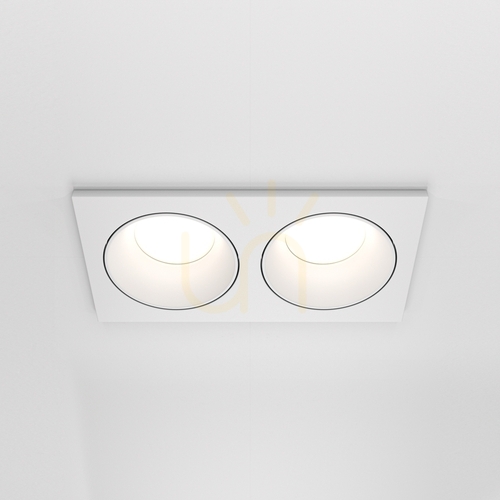
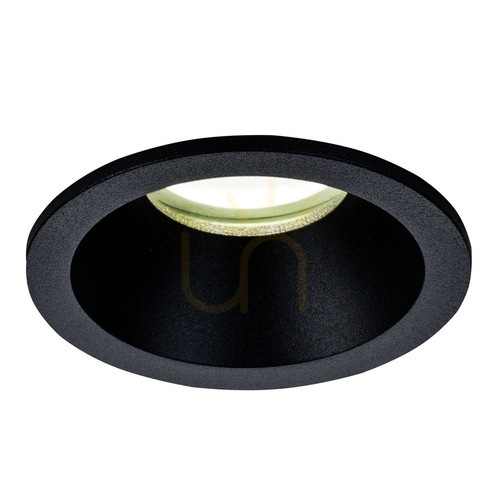
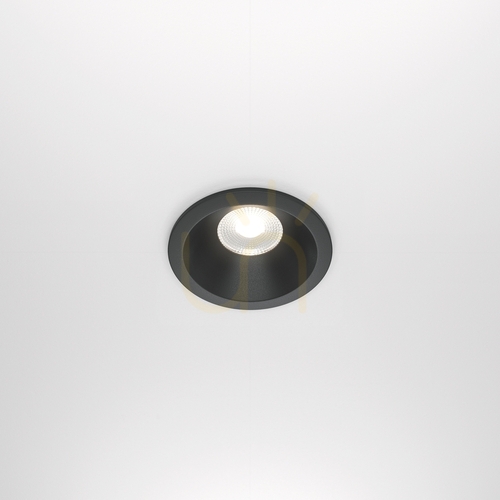
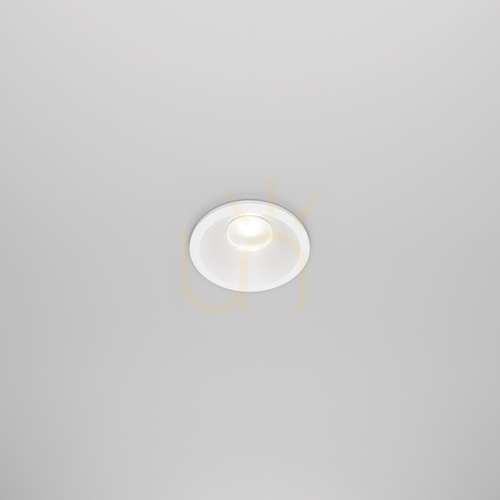
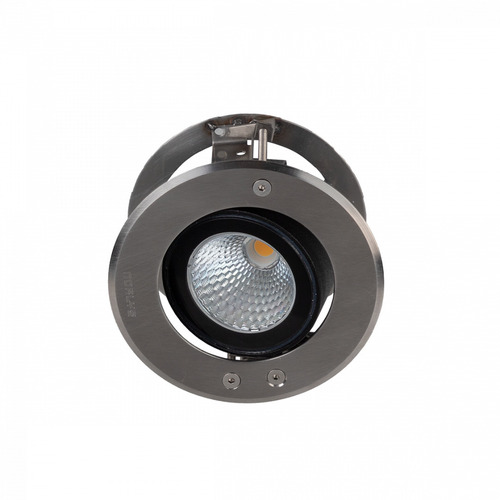
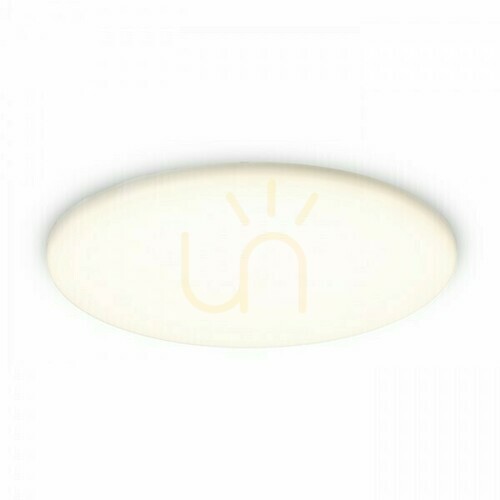
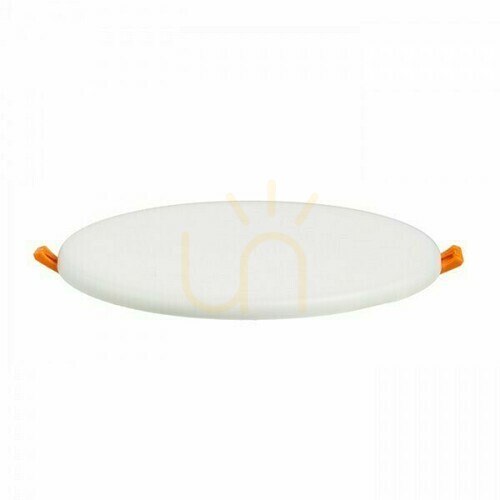
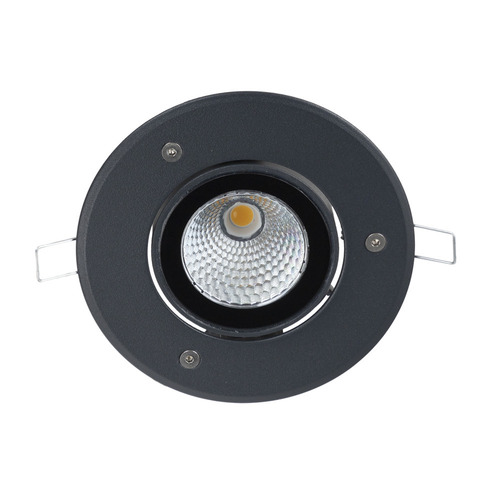
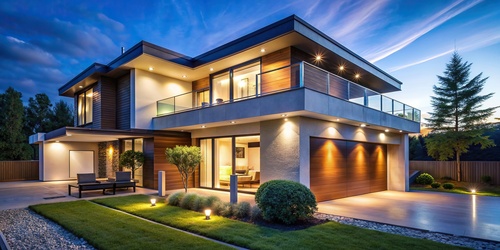
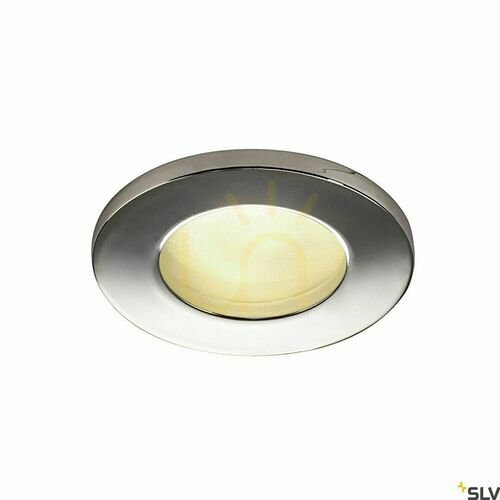
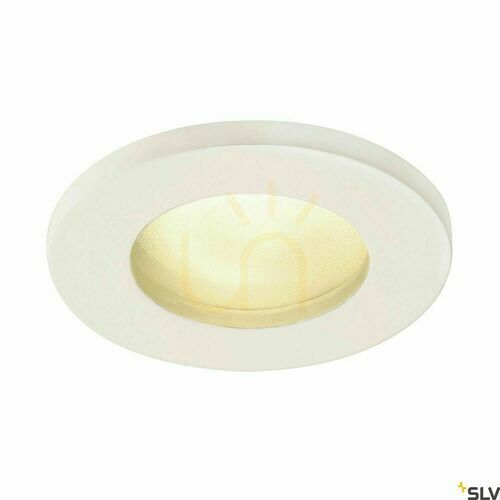
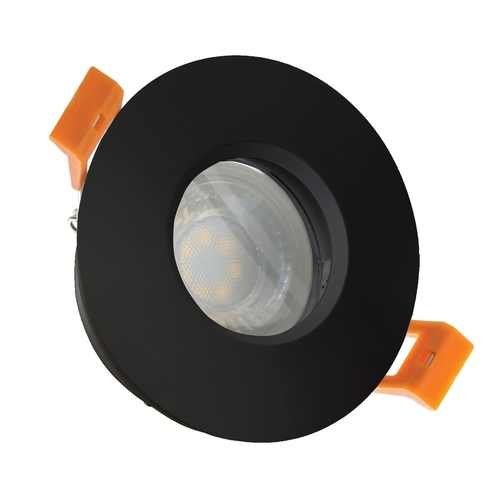
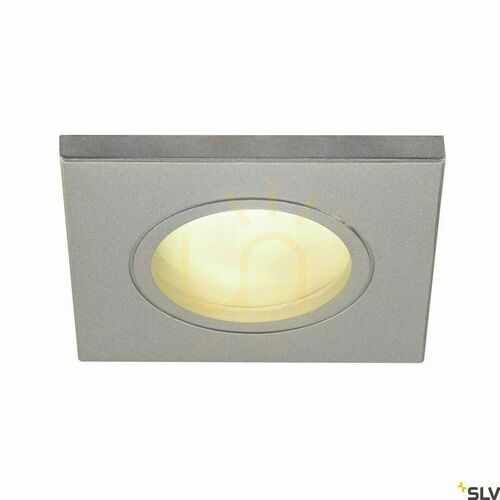
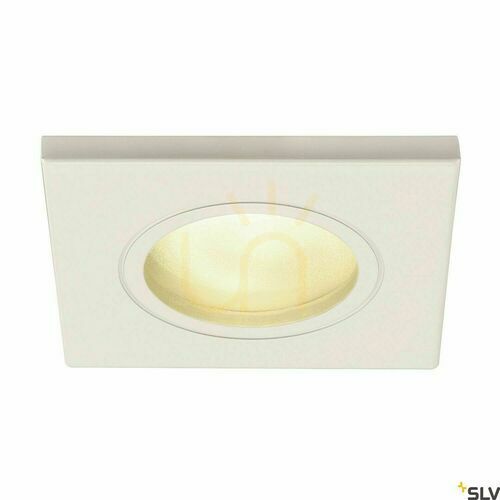
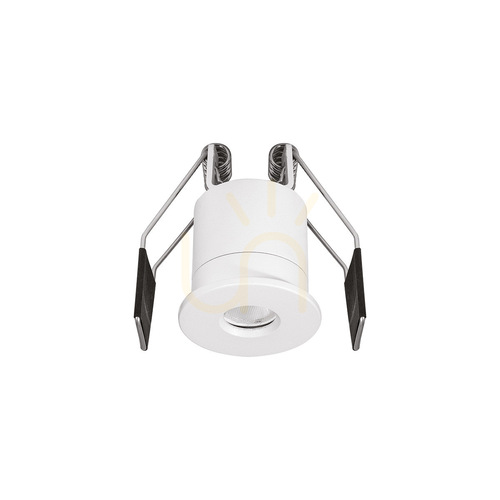
Soffit lights are small downlights recessed into the boards under your eaves, throwing light straight down the front of the house and onto the path, porch, patio or drive below. They differ from deck or ground lights in one important way: they sit overhead in a shallow, often damp void, so cut-out size, recess depth, IP rating and beam angle matter more than the look of the bezel.
Can you put lights in an outdoor soffit?
Yes, provided the fitting is rated for outdoor use and suits the board it goes into. In the UK most soffits are uPVC, with timber on older and some new-build homes and aluminium on contemporary designs. Many have vented strips or a gap at the back that keeps the roof space breathing, so the fitting should never block them.
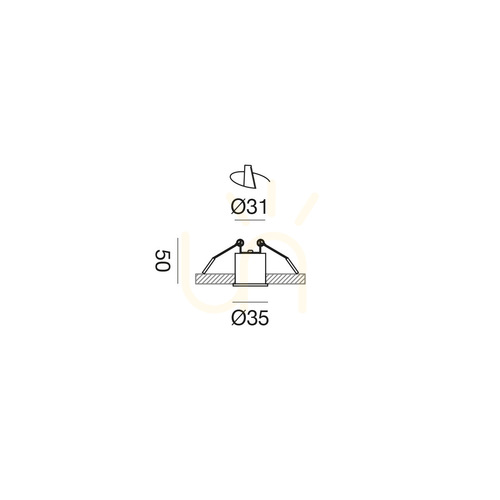
The void above a soffit board is usually tight. Slim integrated LED downlights typically need around 20–40 mm of depth, while a GU10 with its lampholder generally needs 65–90 mm. Allow another 10–20 mm for the cable and connector, and check for rafters or noggins before you mark the holes.
What to look for
| Spec |
Typical for a UK soffit |
| IP rating |
IP44 under a deep, sheltered overhang; IP65 on an exposed elevation, a narrow overhang or a coastal site |
| Cut-out |
68–75 mm is the most common; mini spots 42–55 mm; larger downlights 85–115 mm |
| Recess depth |
around 20–40 mm for slim LED, 65–90 mm for GU10 |
| Spacing |
usually 1.2–2 m, closer for a low wall or narrow beam |
| Beam angle |
30–38° for crisp scallops of light on the wall, around 60° for an even wash, 100–120° for general light |
| Colour temperature |
2700–3000 K for brick, render and timber; 4000 K for a cooler, contemporary look |
| Output |
roughly 200–400 lm per light at bungalow height, more on a two-storey eave; much under 150 lm looks dim at ground level |
| Finish |
white for white uPVC, black or anthracite for grey and black fascias, stainless steel near the sea |
Placing them for the right effect
Where the light lands depends mostly on how far the fitting sits from the wall. Set 10–20 cm out, the beam grazes the brickwork and draws out its texture (and any patchy pointing). Move it towards the fascia and more light falls on the ground. A soffit light placement plan is simple: keep a straight line parallel to the wall, start about half a spacing in from each corner so the corners don't go dark, and centre lights between windows rather than above them, so nobody sleeps under a spotlight.
A word on neighbours: lights aimed down with a fairly narrow beam and a warm colour keep the glow on your own walls. Warm white also tends to attract fewer insects than cool white, which you'll appreciate on summer evenings at the back door.
Mains or low voltage, and who wires them
Mains-voltage soffit downlights connect straight to the lighting circuit with no separate driver, which keeps long runs simple. Low-voltage 12 V or 24 V kits use a driver that must sit somewhere dry and reachable, never loose in the soffit void, and long runs can lose voltage so the last light looks dimmer than the first. Either way, the fittings are wired in parallel.
Fixed outdoor wiring should be done by a qualified electrician to BS 7671, with RCD protection on the circuit. Running a new circuit for the lights counts as notifiable work under Part P in England, which a registered electrician can self-certify.
Common mistakes and upkeep
-
Cables as an afterthought. If the fascia and soffit boards are being replaced, have the cables and fitting positions in place before the new boards go up.
-
Indoor fittings outside. An IP20 downlight in an eave rarely survives more than a winter or two.
-
Too much light. A dense row of bright lights makes a house look like a forecourt. Fewer, warmer lights look better.
-
No air around timber. In a timber soffit, choose fittings suitable for mounting on flammable surfaces and keep insulation off them.
Once a year, clear cobwebs and dust from the lenses and check the seals and spring clips. A GU10 just needs a new lamp when it fails; an integrated LED fitting is replaced whole, so it pays to buy a decent one first time.
Soffit lights FAQ
What is the difference between a downlight and a soffit light?
A soffit light is a downlight built for the outside: sealed to at least IP44, shallow enough for the soffit void and finished to resist weather. An indoor downlight may look identical but isn't made to cope with damp air.
What are the different types of soffit?
Mostly uPVC boards, solid or vented, timber boards and aluminium panels. uPVC is easy to cut with a hole saw, timber needs a suitable fitting and a little clearance, and vented sections should be left uncut.
What is the best LED light for outdoor use in a soffit?
One with the right IP rating for its elevation, a recess depth that fits your void and a beam angle matched to the effect you want. Waterproof IP65 versions make sense where rain is driven under the eaves.
How many downlights can I have on one circuit?
With LED, wattage is rarely the limit on a typical 6 A lighting circuit. Driver inrush current and cable length matter more, so let the electrician size the circuit and protective device.
Can soffit lights work with a PIR or dusk sensor?
Yes. A separate PIR or photocell on the wall usually switches the whole group. Dusk-to-dawn with a timer, plus a manual override switch, covers most homes.
Are soffit lights dimmable?
Many are, but only with dimmable lamps or drivers and an LED-compatible dimmer. The wrong dimmer causes flicker and shortens the life of the light.
Planning light for decking, steps or a path as well? The same rules on sealing and recess depth apply to outdoor recessed lighting set into the ground and walls.