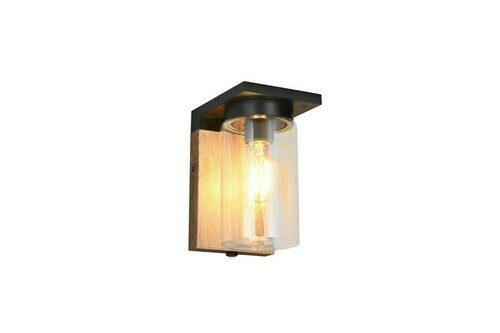
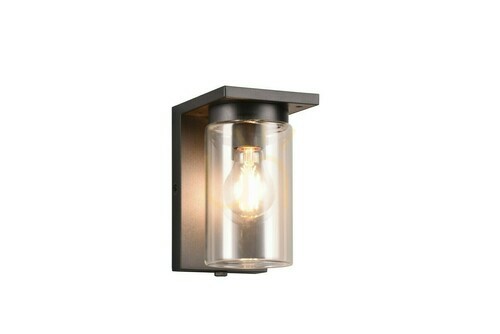
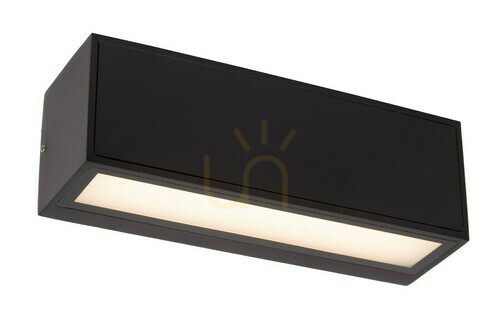
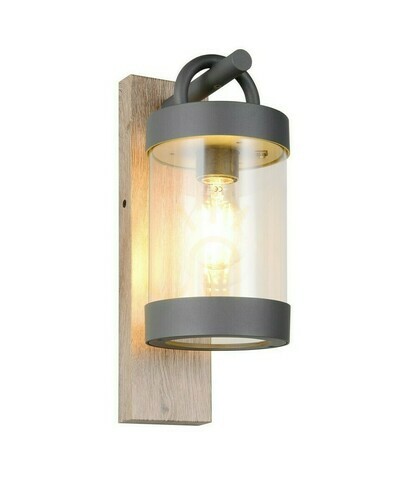
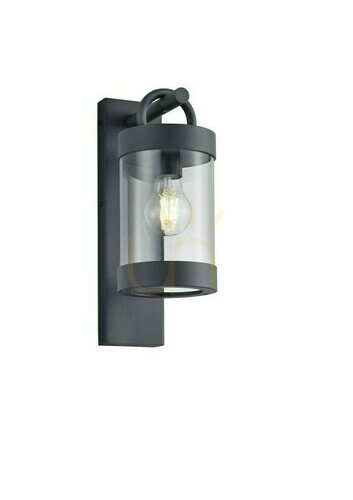
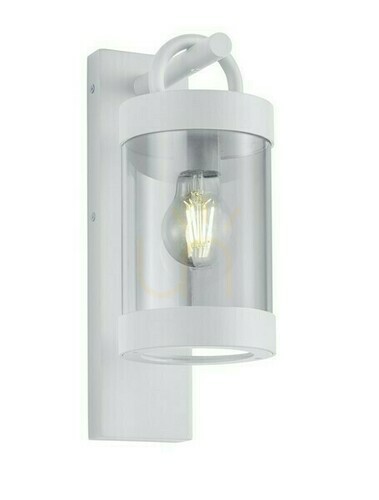
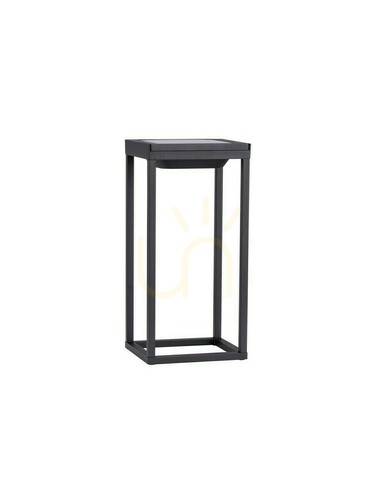
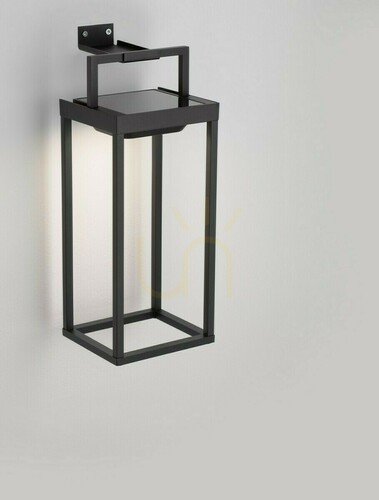
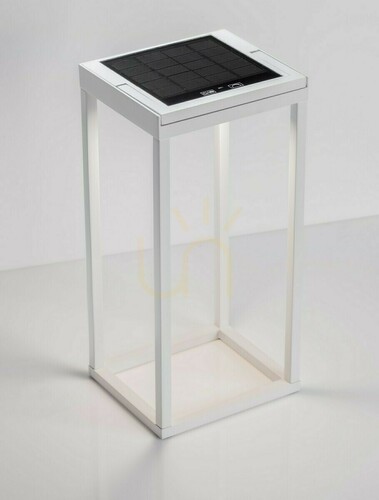
A dusk to dawn wall light has a small photocell that switches it on as daylight fades and off again when morning comes. Fixed beside a front door, it lights the step, the lock and the house number every evening without anyone touching a switch, and it never needs resetting when the clocks go back.
That matters in a country where the December sun sets before 4 pm in London and earlier still in the north of Scotland, while in June the same light might not come on until after 9.30 pm. The photocell simply follows the sky, so on a grey, overcast afternoon it switches on earlier than on a clear one.
Are dusk to dawn wall lights worth it?
For a light you want on every evening, usually yes. A front door lantern, a porch light or a pair of up and down lights either side of a garage are the classic cases: you never come home to a dark doorstep, and a lit house looks occupied while you are away. A PIR light does a different job. It stays off until someone walks past, then switches on for a minute or two. Many households use both: a soft dusk to dawn glow at the front and PIR floodlights round the side and back.
On a wall light the photocell is usually a tiny window on the underside or side of the body, kept away from the lamp itself. Other set-ups you may come across:
- a photocell on a separate lead, so the light can sit under a deep porch while the sensor sees open sky;
- a traditional lantern with an E27 or B22 lampholder fitted with a dusk to dawn bulb;
- a separate photocell switch on the wall controlling several fittings on one circuit.
How much electricity does it use?
Less than most people expect. Across a year, the hours between dusk and dawn in the UK add up to roughly 4,000. With an LED fitting, the numbers look like this:
| LED wattage |
All night, per year |
Dusk to midnight, per year |
Typical use on a wall |
| 4–6 W |
approx. 16–24 kWh |
approx. 8–12 kWh |
porch light, side passage |
| 8–10 W |
approx. 32–40 kWh |
approx. 16–20 kWh |
front door, up and down light |
| 12–15 W |
approx. 48–60 kWh |
approx. 24–30 kWh |
garage door, driveway |
| 60 W filament bulb (for comparison) |
approx. 240 kWh |
approx. 120 kWh |
old-style lantern |
An all-night light does not need to be bright. Around 300–600 lumens is plenty by a front door, and warm white at 2700–3000 K flatters brick and render and draws fewer moths than cool white. Choose a fitting that throws light downwards if it faces a neighbour or the street.
Waterproofing and the British weather
IP44 is the usual minimum for an outdoor wall light and is fine under a canopy or porch roof. On an exposed, rain-lashed wall, or anywhere near the coast, IP54–IP65 with an aluminium, stainless steel or glass body lasts noticeably longer. Box lanterns sometimes mist up inside on damp autumn nights, because LEDs run cool and humid air condenses on the glass. It normally clears on its own, provided the drain holes at the bottom are not blocked.
Fitting it so the photocell behaves
Mount a door light at roughly 1.7–2 m so it lights the lock without glaring in visitors' eyes. Then check what the sensor can see:
- deep shade under a porch or carport makes it think dusk has arrived early;
- a street lamp, a lit window or next door's security light can switch it off in the middle of the night;
- its own light bouncing back off white render can make it cycle on and off.
The light needs a permanent live feed, so any wall switch in front of it has to stay on. Outdoor wiring must meet BS 7671, and in England and Wales some jobs, such as running a new circuit, are notifiable under Part P of the Building Regulations. A registered electrician can self-certify that work, so leave the connection to one.
Frequently asked questions
Does a dusk to dawn light stay on all night?
A basic one does, from the moment it gets dark until first light. Many fittings also offer a timed mode that switches off after a few hours, or a dimmed setting for the small hours.
Do dusk to dawn lights use a lot of electricity?
No. An 8 W LED wall light burning all night uses around 32 kWh a year, a fraction of what an old filament lantern used.
What makes a good dusk to dawn wall light?
An adjustable lux threshold, a short switching delay so car headlights do not fool it, an IP rating suited to the wall, warm white light and a sensor window positioned away from the lamp. A sturdy metal or glass body is worth having on an exposed wall.
Are dusk to dawn wall lights waterproof?
They are weather-resistant to the level of their IP rating. IP44 handles splashing rain; IP65 is sealed against dust and jets of water, which suits a wall facing the prevailing wind.
Why is my dusk to dawn light on during the day?
The photocell is usually dirty or covered by cobwebs, frost or a climbing plant, so it reads darkness. Wipe the sensor window and trim back anything shading it.
Can I use a dusk to dawn bulb in a light that already has a sensor?
Avoid it. Two sensors controlling one lamp fight each other and cause flickering. The same goes for smart bulbs in a fitting with a built-in photocell.
Happy with your existing lantern? A dusk to dawn bulb can give it the same automatic switching. For styles, finishes and mounting options across the wider family, see outdoor wall lights.