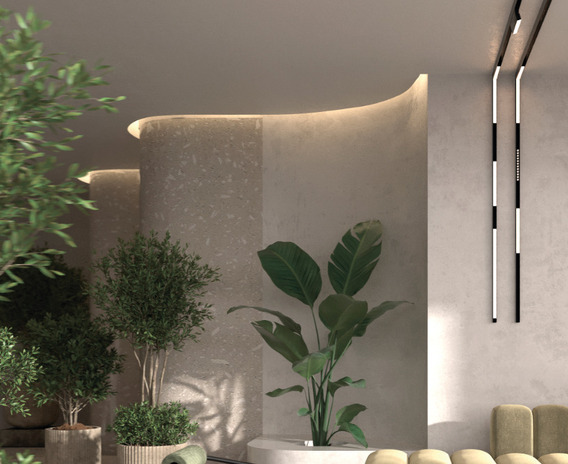
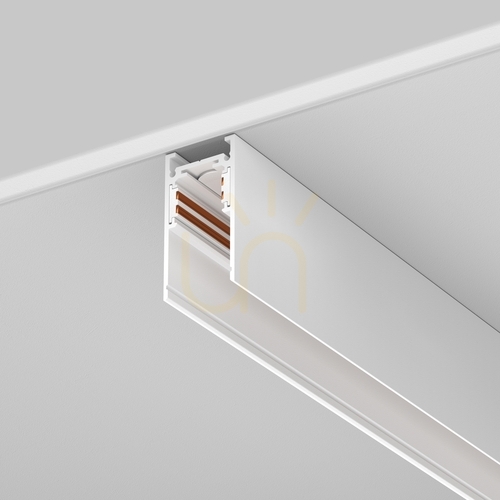
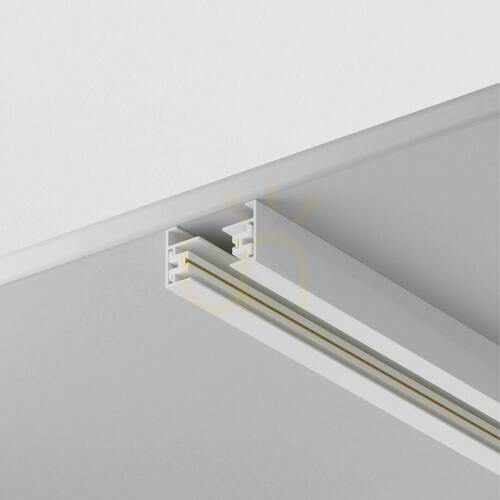
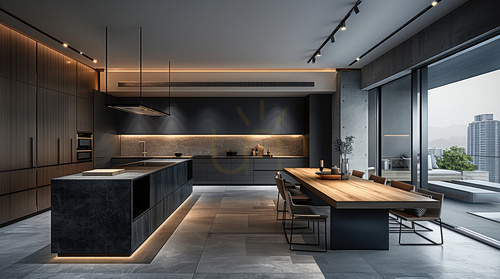
A living room is the hardest room in the house to light with one fitting, because it is really four rooms wearing the same carpet: somewhere to read, somewhere to watch, somewhere to talk, and a wall you would like people to look at. Track lighting suits it because the track is a decision you make once and the light on it is a decision you can keep changing.
Why a track and not a set of downlights
Recessed downlights are fixed the day the ceiling goes up. A track carries a live conductor along its whole length, so every head on it can slide, rotate and tilt afterwards. Move the sofa, hang a different picture, turn the reading corner into a desk — the light follows without a plasterer.
It is also the honest answer for a ceiling you cannot cut into. Surface-mounted track needs a single feed and a few fixings, which makes it a realistic retrofit in a flat, a rented place with permission, or a room with a concrete slab overhead.
Where the run should go
The instinct is to centre the track in the room. Resist it. A run centred on the ceiling lights the coffee table and leaves every vertical surface dark, which is what makes a room feel like a waiting area.
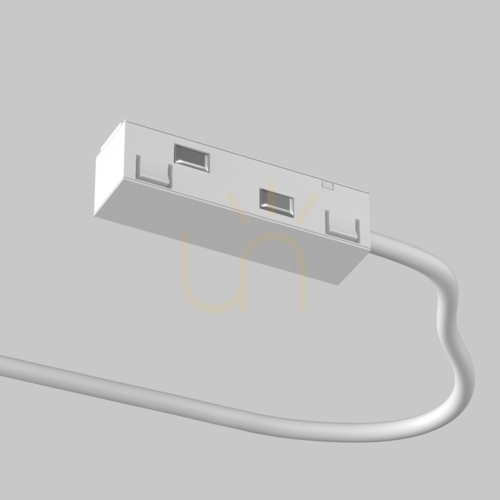
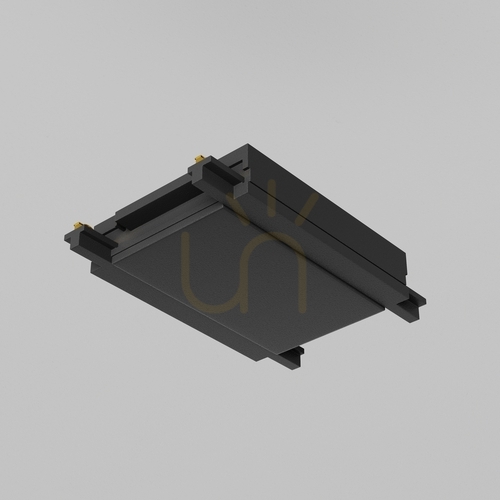
Set the track parallel to the wall you want lit, roughly 60–90 cm out from it. That distance lets a head tilt onto artwork or shelving at a sensible angle without the beam skidding down the wall in a visible scallop. A second short run, or a branch off the first, can pick up the reading chair on the other side of the room. Straight connectors, L-pieces and end caps let a run turn a corner or step around a ceiling rose rather than stopping at it.
Aiming, and the 30-degree habit
Tilt an accent head about 30° off vertical. Steeper than that and the beam grazes the wall, exaggerating every bump in the plaster; shallower and it reflects off glazed pictures straight into the eyes of whoever is sitting down. Thirty degrees also keeps the head itself out of your line of sight from the sofa.
Think in beam widths rather than wattage. A narrow beam picks out one picture or one plant. A wide beam fills the general middle of the room. A living room usually wants a few of each on the same run, and it wants none of them pointing at the seat where somebody's head goes.
Circuits: one, three, or low-voltage
A single-circuit track switches every head together. It is cheap, simple, and enough when all the heads do the same job. A three-phase track carries separate conductors, so heads can be assigned to different groups and dimmed or switched apart — the accent lights up over the art while the general wash stays low, or the other way round for a film.
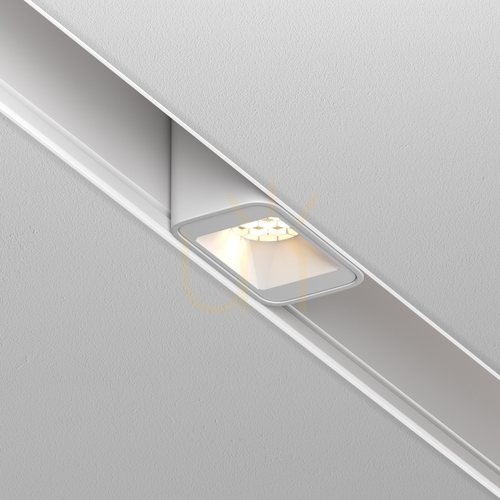
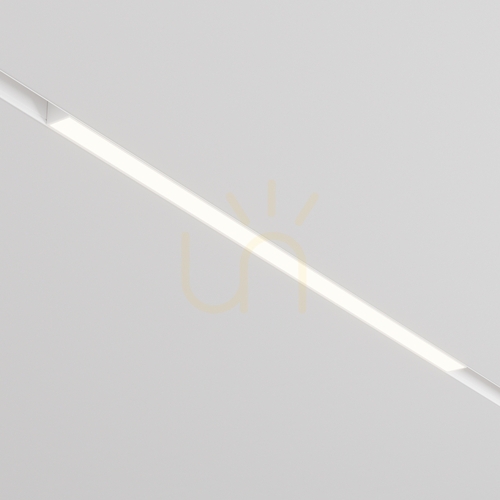
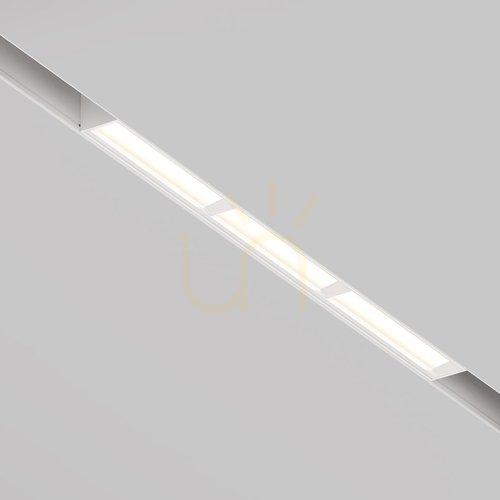
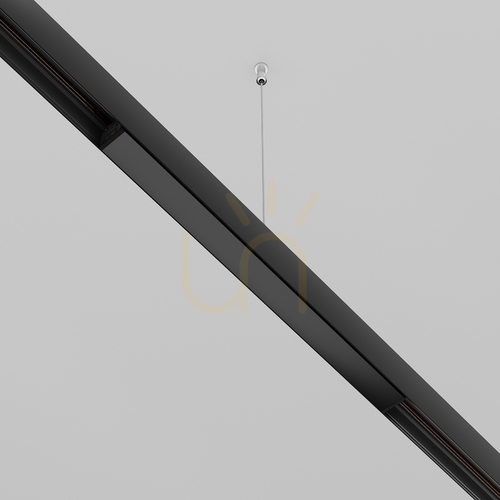
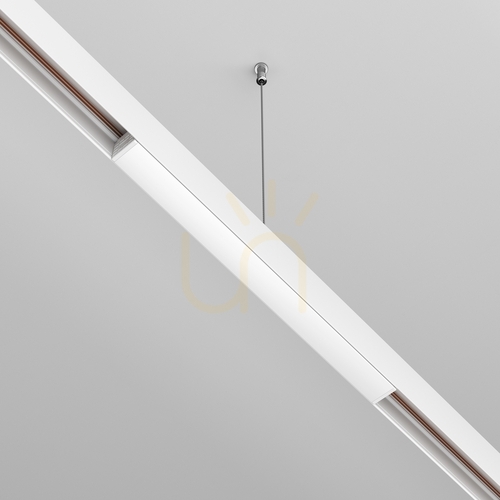
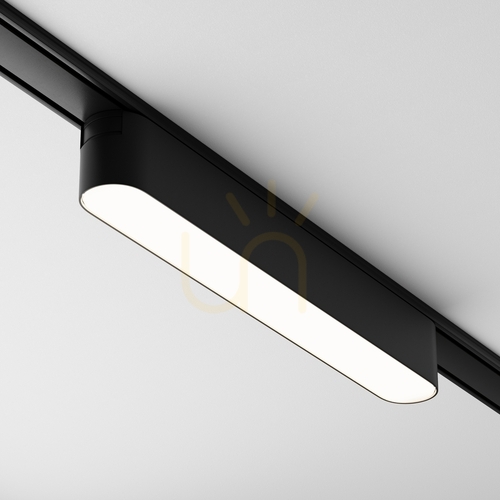
Low-voltage magnetic systems run at 48 V from a driver rather than at mains voltage, and they take a wider family of heads including slim linear elements and pendants. If you are leaning that way, the magnetic track lights page goes into the hardware properly. Whichever you choose, size the driver or the circuit for the total load with headroom left, and decide the grouping before anything is fixed — regrouping later means rewiring the feed, not just sliding heads.
Keeping the light consistent
Mixing colour temperatures along one run is the mistake that makes a good scheme look cheap. Pick one and stay with it. Warm white around 3000 K is the living-room default; it reads relaxed in the evening and matches the table lamps most people already own. Neutral white nearer 4000 K is crisper and better if the room doubles as a workspace, but it will make the same sofa look colder.
Heads come both ways: with a replaceable GU10 lamp, or with the LED built in. A GU10 head lets you change colour temperature or brightness later by changing the lamp, which is useful when you are not sure yet. An integrated head is slimmer, usually more efficient, and fixes the decision.
Layer it, do not rely on it
Track lighting is directional by nature, so a scheme built purely from spots gives you bright patches and dark gaps. Keep a floor lamp or two, and consider a pendant clipped onto the track over a side table so the run does more than one kind of work. The track handles the walls and the focal points; softer, lower light handles the parts of the evening when nobody is looking at the art.