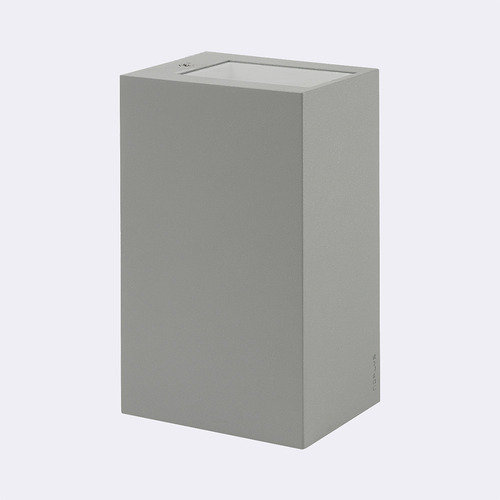
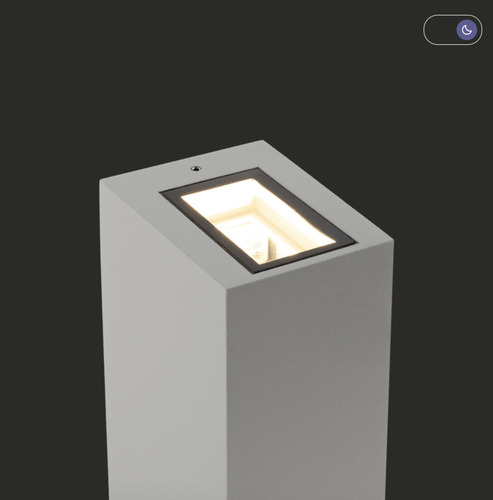
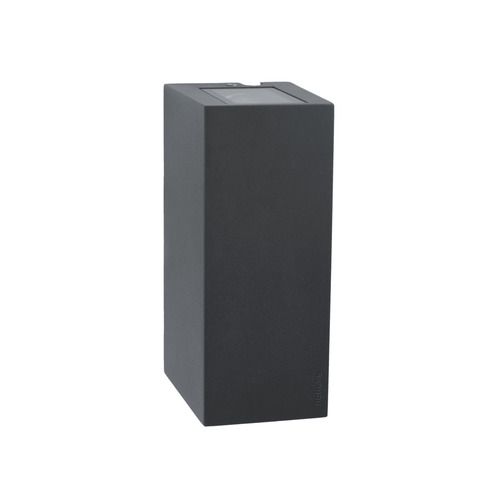
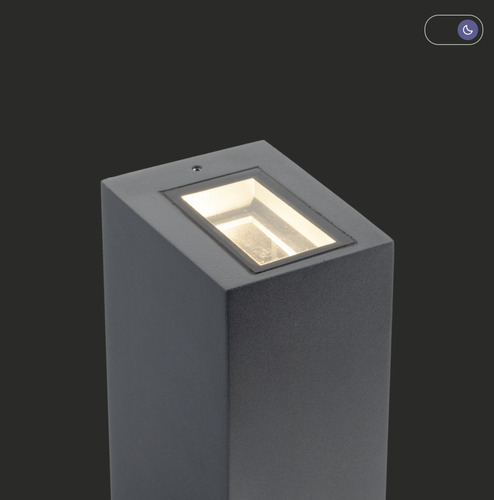
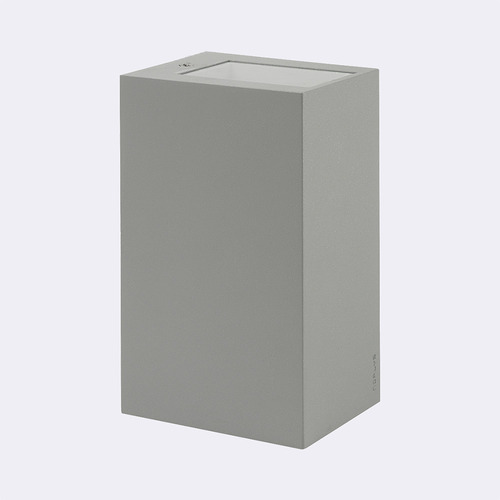
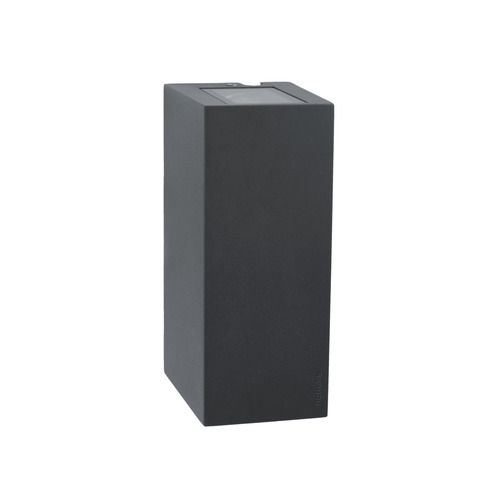
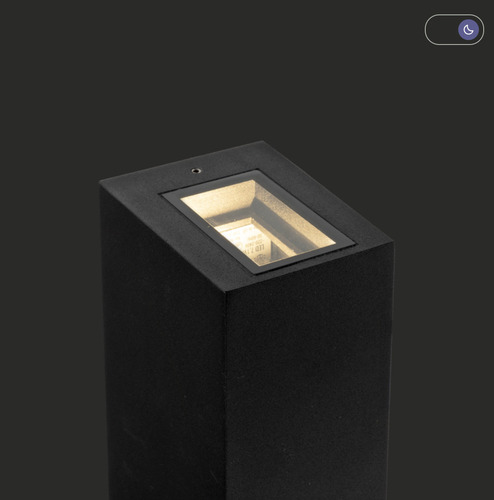
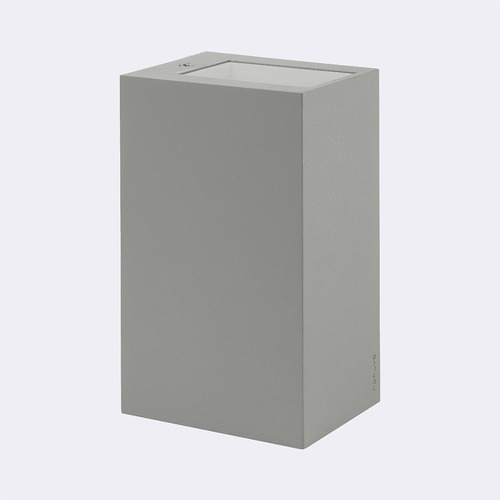
NORLYS Lillehammer DC2292WH is a white outdoor wall light with a single downward light distribution. Its rectangular body is powder-coated aluminium in RAL 9003, with clear safety glass rather than an opal diffuser. This is the 24 V DC version, so the power supply needs to be considered before the wall connection is prepared.
Light beneath the fitting
The integrated 3.6 W LED module produces warm white light at 2700 K. A 60° downward beam can define a section of wall beside an entrance, on a terrace or on a balcony. The complete fitting delivers 109 lm. The separately stated 512 lm describes the light source itself, not the light leaving the finished luminaire after its optical system.
This distinction matters when deciding how many fittings to use. Treat the DC2292WH as a local element within a façade lighting scheme, and plan its spacing to suit that scheme. The upward light output ratio, ULOR, is 0%. This variant does not produce simultaneous upward and downward beams.
A separate supply is required
The fitting requires an external voltage-regulated DC 24 V power supply. It must not be connected directly to a 230 V mains circuit. Its LED module supports dimming, while the external control arrangement is specified for the individual project. That statement does not mean a brightness controller is built into the fitting.
The LED light source forms part of the luminaire. If it needs replacement, the manufacturer specifies professional servicing rather than a routine screw-in bulb change. Allow for that service requirement when selecting the installation position.
Compact geometry and mounting details
The body measures 18.5 cm high, 11 cm wide and 8 cm deep. Flat surfaces and the absence of decorative arms give it a restrained form suited to Scandinavian, modern and minimalist façades. IP65 and IK08 describe the fitting's protection, but correct sealing also depends on following the installation instructions.
Mounting uses two 5 mm holes with 45 × 130 mm spacing. The specified round cable diameter is 7–10.5 mm, and installation must be carried out by an appropriately qualified person. Check these requirements against the planned cable and wall connection before preparing the mounting point.