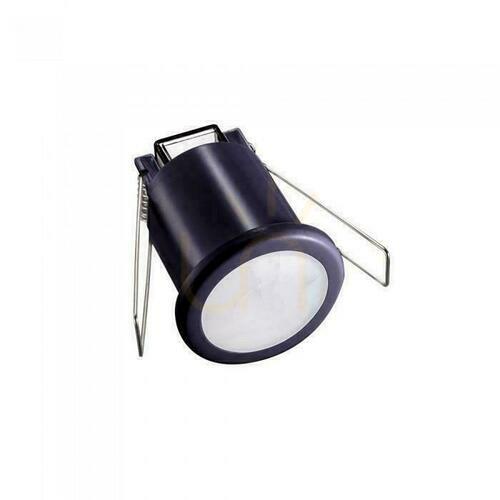
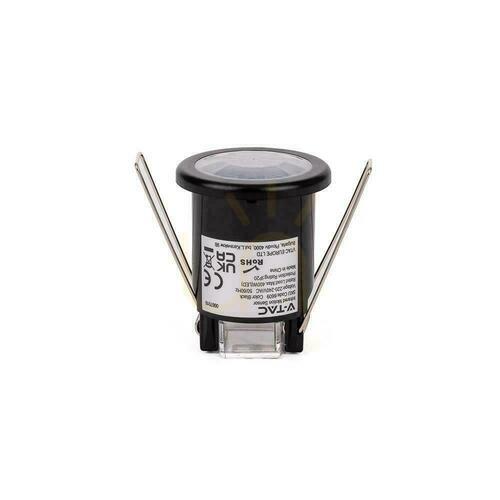
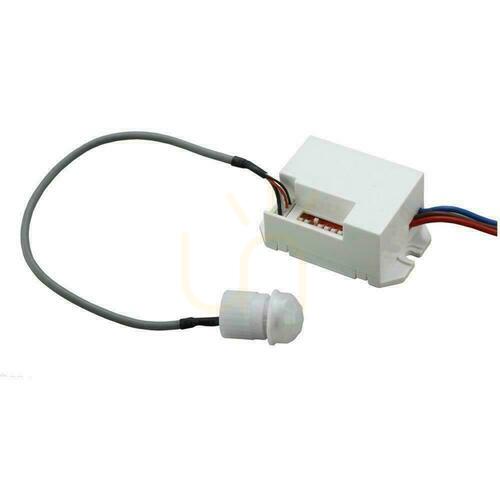
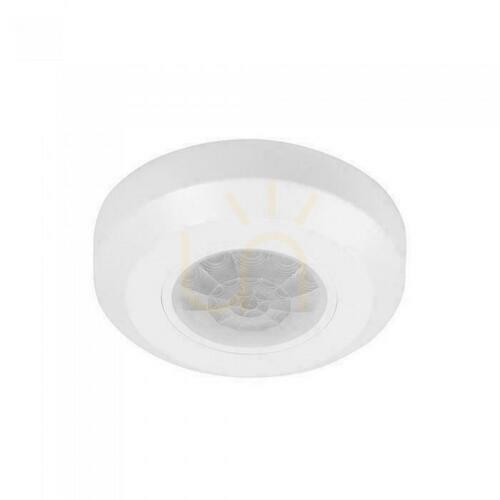
The V-TAC VT-81042, order number 24112, is a recessed PIR presence sensor for automatic lighting control. A round white polycarbonate housing surrounds the central sensing lens, with spring clips at the sides to hold the unit in its mounting opening. This is a control device, not a luminaire with its own light source.
Lighting load is not sensor consumption
The sensor supports LED lighting loads up to 1000 W or traditional lighting loads up to 2000 W. The 1000 W figure describes the connected lighting load, rather than the sensor's own electricity use, which is below 0.5 W. Its supply requirement is 220–240 V AC at 50/60 Hz.
Typical uses include controlling lights in offices, meeting rooms and corridors. When selecting the connected lighting, use the limit for the relevant lighting technology instead of treating the two load ratings as interchangeable.
Set the coverage, daylight threshold and delay
Detection covers 360°, with an adjustable detection area measuring 2–6 m in diameter. This is the diameter of the area, not a six-metre reach in every direction. The SENS control adjusts presence-detection sensitivity, while LUX sets the ambient-light threshold between below 3 and 2000 lx.
The switch-off delay can be set from approximately 10 seconds to 15 minutes, subject to the tolerances in the manual. A further detection during the countdown restarts the timing period. These adjustments tailor switching to room use; they should not be confused with manual dimming controls for the connected lamps.
Check the ceiling opening before installation
The front ring is 76 mm in diameter and the unit is approximately 71.4 mm high. Recessed installation requires a 63–66 mm opening, so compare these dimensions with the intended ceiling location before ordering. The specified mounting height is 2.2–4 m. Installation must be carried out by a qualified electrician with the power disconnected.
The protection rating is IP54. Follow the manual's siting advice to avoid heat sources, air outlets and moving curtains. The manufacturer's warranty conditions specify 10–12 hours of daily operation; round-the-clock operation invalidates that warranty.