
Autumn and Winter Home Lighting – How to Brighten the Short Days
When the sun starts setting before five in late October, and by December it is dark around half past three, your home takes over the role the sky played all summer – it becomes the main source of light in your life. The good news: you don’t need a renovation to get through the season of short days in good spirits. A few well-planned points of light – floor lamps in dead corners, table lamps on windowsills and sideboards, warm decorative bulbs – and the same room that felt grey and cramped in November starts looking like a magazine cover after dusk. In this post we show how to brighten your home in autumn and winter: layer by layer, room by room.

Table of contents
- Why we need more light in autumn and winter
- The layering rule: many small sources instead of one chandelier
- Floor lamps – the backbone of short-day lighting
- Table lamps – warm points on windowsills and sideboards
- Warm light for winter: colour, decorative bulbs, dimmers
- Light for dark mornings
- Room by room: where to add light
- Mirrors, textiles and candles – light’s best allies
- Summary
Why we need more light in autumn and winter
At the height of summer, our part of Europe gets over sixteen hours of daylight; in December – around eight. The body registers that difference very concretely: less daylight encourages an earlier release of melatonin, the sleep hormone – hence the afternoon drowsiness, the dip in energy and the low mood so many of us complain about in winter. That is why a November evening under a single fluorescent tube can feel bleak, while the same evening beside three warm lamps feels soothing.
The interior-design answer to short days has two parts. First, more light where we are active – in the morning and during the day, so the body gets a clear “stay awake” signal. Second, warmer, lower-hung light in the evening, which lets us wind down gently. Neither calls for builders – just extra lamps that plug into a socket, and this guide is built around exactly those.
The layering rule: many small sources instead of one chandelier
The most common mistake in autumn lighting is trying to brighten a room with one powerful ceiling light. Overhead light floods the interior with flat, even brightness – technically bright, yet anything but cosy. Instead, designers have repeated the rule of three layers of light for decades:
- the ambient layer – a chandelier or ceiling light, switched on when you genuinely need to see everything: cleaning, hunting for lost keys, playing with the kids on the rug,
- the task layer – light aimed at a specific job: a lamp by the reading chair, a desk lamp, worktop lighting in the kitchen,
- the mood layer – low, warm points of light that work all evening: a floor lamp in the corner, a small lamp on the sideboard, a soft glow behind the TV.
In winter the balance shifts firmly towards the last two layers. A practical rule: every room where you spend your evenings should have at least three independent points of light placed at different heights – that gives the interior depth and makes the shadows soft. The more small, warm sources you have, the less you will reach for the “big” switch by the door.
Floor lamps – the backbone of short-day lighting
If you can buy only one lamp for the autumn–winter season, make it a floor lamp, also called a standing lamp – there is no simpler way to add plenty of light and atmosphere to a room without chasing cables into walls. A large fabric shade at 140–160 cm bathes a whole corner in a warm glow, and if you pick a model that sends part of its light towards the ceiling, you also gain soft reflected light that visually lifts and enlarges the room – priceless when it gets dark in the early afternoon.
Where does a floor lamp work hardest in autumn?
- In the dead corner of the living room – the spot behind the sofa or between the window and the bookcase, out of reach of the ceiling light, turns into a black hole after dusk; a lamp with a fabric shade fills it with warmth and makes the room feel bigger.
- By the reading chair – long evenings are the natural reading season; a lamp with an adjustable arm placed behind the armrest gives focused light on the page without glare.
- Behind the sofa, in the arc version – an arc lamp “hangs” its shade over the seat like a pendant, only without the electrician; in the evening, with a dimmed bulb, it turns the lounging zone into the cosiest spot in the house.
- Next to a large plant – a beam directed upwards through the leaves throws a theatrical, moving shadow onto the ceiling, which in winter stands in for the view outside.
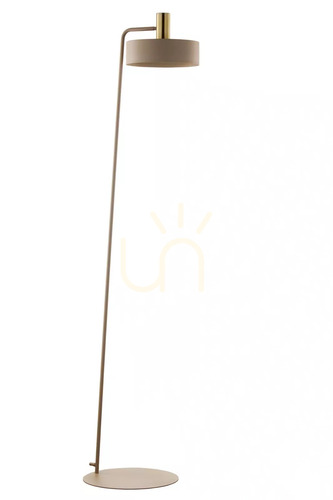
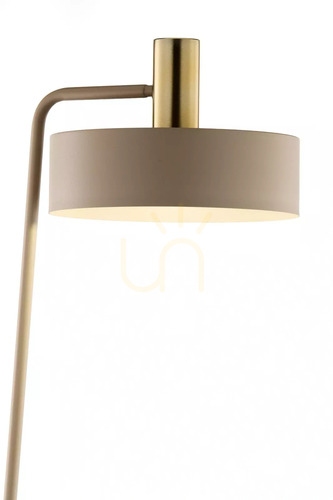


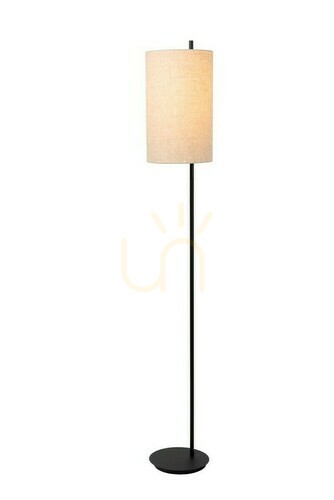


For reading and working in an armchair, choose models with an adjustable head or a jointed arm – the light should fall from behind your shoulder, slightly to the side. You will find the full range of designs and sizes in the Floor Lamps category.

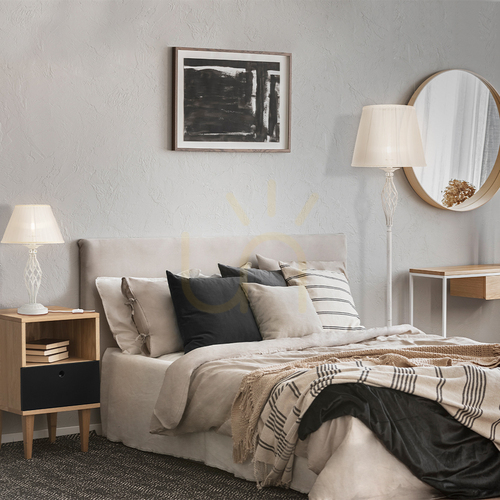


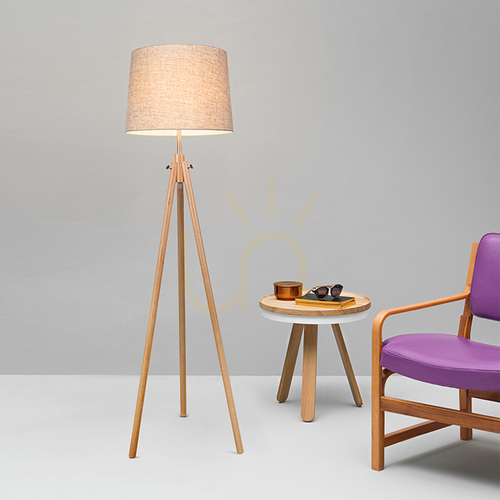


Table lamps – warm points on windowsills and sideboards
The second autumn weapon is table lamps. Small, mobile and cheap to run, they do something no ceiling light can: they put light exactly at the eye level of a seated person, which is where life happens in the evening. One rule: the shade should conceal the bulb itself – then the lamp glows atmospherically instead of shining straight into your eyes.
Three places where a table lamp changes the most in autumn:
- The windowsill. After dusk a window turns into a dark, cold rectangle. A lamp on the sill – standing securely and away from the curtains – reverses that effect: the glass starts reflecting warm light back into the room, and from outside the house looks like a storybook illustration. In street-facing windows it is also a “someone’s home” signal.
- The chest of drawers and the hallway console. Stepping in from a dark stairwell into a hallway lit by a small lamp is a completely different welcome than flicking on a fluorescent ceiling light. A lamp on the living-room sideboard, in turn, completes the composition of frames and vases – the decoration works even when switched off.
- The bedside table. In winter we go to bed long after dark – a warm bedside lamp with a fabric shade helps you unwind before sleep far better than overhead light, and when you rise before dawn it wakes you more gently than a chandelier.


The most autumnal of all are lamps with amber glass shades and fabric shades in warm colours – switching one on raises the temperature of the interior by a few degrees, at least as far as the senses are concerned. The whole collection is waiting in the Table lamps category.
Warm light for winter: colour, decorative bulbs, dimmers
Even the most beautiful lamp will not save the evening if you screw a cold bulb into it. For the autumn–winter season, three numbers apply:
- 2700–3000 K – warm white, close to the traditional incandescent bulb; this is what builds the evening mood. Leave neutral 4000 K to the task zones: the kitchen worktop and the bathroom mirror.
- CRI ≥ 90 – the colour rendering index; with a high CRI, wood, linen, wool and skin tones look natural and warm, and the autumn palette of the interior doesn’t fade after dark.
- 200–400 lm per mood point – the evening layer doesn’t need to be strong; several weaker sources feel far nicer than one glaring lamp. The exception is a reading lamp: there you want 400–700 lm aimed at the page.
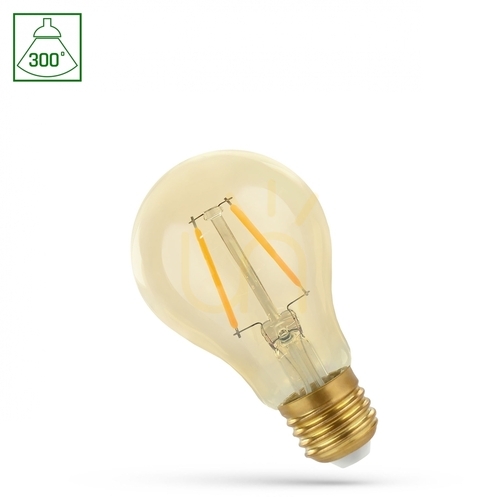
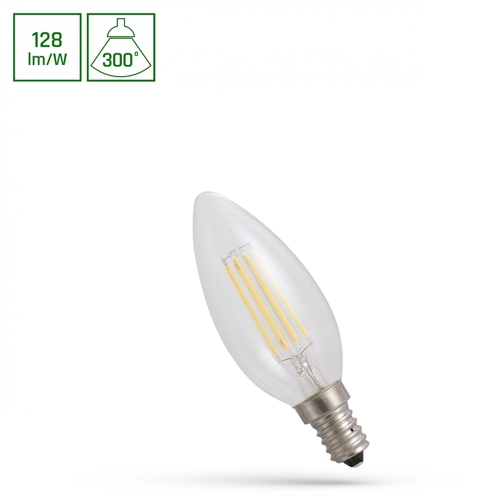
A chapter of its own: retro-style decorative bulbs – models with a visible golden LED filament in ST64 or T30 glass. In a lamp with an open shade, such a bulb works like jewellery: it gives an amber light reminiscent of candlelight and looks beautiful even switched off. Many models glow at a very warm 1800–2700 K and draw just a few watts, so they can burn all evening for pennies.




The final piece of the puzzle: a dimmer. The same lamp can shine at full power over dinner at 6 p.m. and barely smoulder above the sofa at 10 p.m. When buying LED bulbs, check for the “dimmable” marking and pair them with an LED-rated dimmer – with older models, diodes tend to flicker. The alternative is smart bulbs, whose brightness and colour you change from your phone (those, in turn, should not be wired to a classic wall dimmer). You will find every variant – from retro filaments to CCT LEDs with switchable colour – in the Light Sources category.
Light for dark mornings
Everyone remembers the warm evening; hardly anyone thinks of the dark morning – and that is what hurts most in autumn. When the alarm rings before sunrise, the body needs help waking up – and here, exceptionally, cooler light is your ally:
- in the kitchen and bathroom, set the morning colour to neutral or cool (4000–5000 K) – the “the day has begun” signal reaches the brain precisely through cooler, brighter light,
- CCT bulbs with switchable colour temperature let one lamp handle both modes: a cool morning and a warm evening,
- a plug-in timer or a smart bulb with a schedule can switch on the bedroom lamp 15–30 minutes before the alarm, and a smart bulb can brighten the room gradually like an artificial dawn – getting up in a gently lit room is incomparably easier than dragging yourself out of darkness,
- if you work from home, put your desk as close to the window as possible (ideally side-on to it, to avoid reflections on the screen) and back yourself up with bright task light until noon – the afternoon slump is easier to push back when the morning was genuinely bright.
Room by room: where to add light
How do you actually distribute the new points of light around the home? A quick walk-through:
- Living room – the season’s base camp: a floor lamp in the corner, a small lamp on the sideboard, a soft glow behind the TV to reduce the contrast between the bright screen and the dark wall. The chandelier stays for the big clean-up.
- Dining room and table – light hung low over the tabletop gathers the household like a campfire; an extra lamp on the dresser means dinner doesn’t take place in the “well” of a dark room.
- Bedroom – two bedside lamps instead of the overhead light, warm colour, ideally with a dimmer; the last hour before sleep at 2700 K is the simplest wind-down ritual there is.
- Hallway – a lamp on the console or a sensor-operated wall light; it is the first light you see on coming home, so let it greet you with warmth rather than a fluorescent flash.
- Kitchen – bright and cooler in the morning (worktop, island), in the evening just the under-cabinet LEDs or a small lamp on the windowsill – after dinner the kitchen deserves a rest too.
- Bathroom – cooler light at the mirror for the morning start; if you have a dimmer or a second, weaker fitting, an evening bath in warm half-light is a home spa for free. Just remember that fittings near the bath or shower must have an adequate ingress-protection rating (IP44 minimum).
Mirrors, textiles and candles – light’s best allies
You can never have too much light in winter, but you can also multiply it without adding a single watt:
- Mirrors – a large mirror opposite the window doubles the scarce daylight, and placed behind a table lamp it duplicates its evening glow. In a dark hallway it works like an extra window.
- Light textiles and walls – white and beige reflect light, graphite and bottle green swallow it; if your interior is dark in colour, it simply needs more points of light. In winter it pays to swap heavy curtains for ones that can be drawn fully aside – every hour of daylight is worth its weight in gold.
- Candles – no technology has yet perfectly reproduced the flicker of a flame; candles on the table are the world’s oldest mood layer. Just remember the safety rules: away from curtains and lampshades, on a non-flammable base, never unattended and always out before you go to sleep.
- String lights and decorative lamps – a strand of tiny LED lights (in an indoor-rated version) in a vase, on a shelf or around a mirror adds magic to the interior long before the holidays – and in December it will smoothly take over as your Christmas lighting.
Summary
Winter lighting for short days really comes down to a single rule: instead of one strong light from the ceiling – several warm points at different heights. A floor lamp in the corner and by the armchair, table lamps on the windowsill, the sideboard and the bedside table, warm light for winter inside them – 2700–3000 K bulbs, ideally dimmable – and brighter, neutral light in the kitchen and bathroom for the morning. Add a mirror to double every glow and a candle on the table. A home equipped like this doesn’t just survive autumn and winter – it looks forward to them. Start with the Floor Lamps and Table lamps categories, and pick the warm bulbs in the Light Sources section.
Patryk Polus


Maybe you will be interested in products from these categories?
Floor Lamps, Table Lamps, Light Bulbs
Tags & Blog Categories