
Floor Lamps for the Living Room – How to Choose One and Where to Put It
A floor lamp is the fastest living-room makeover money can buy: no chasing cables into walls, no electrician, no landlord’s permission – all it needs is a socket. One well-chosen standing lamp can warm up an evening, light a reading armchair, and play the part of a sculpture in a dead corner of the room. In this guide we go through everything step by step: the difference between a standing lamp and a floor lamp, how to choose a reading lamp and an arc lamp for over the sofa, which style and colour to pick (black, beige, wooden, glamour), what height and light output make sense, and where in the living room to put it.

Table of contents
- Standing lamp or floor lamp – are they the same thing?
- Three jobs of a floor lamp in the living room
- A floor lamp for reading
- An arc lamp over the sofa or armchair
- Style and colour: black, beige, wooden or glamour?
- Lamp height and light output
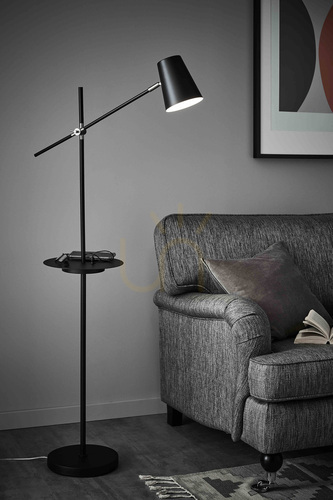
- Lamps with a shelf, a table or a USB charger
- Where to put a floor lamp in the living room?
- Summary
Standing lamp or floor lamp – are they the same thing?
In practice, yes – a standing lamp and a floor lamp are two names for the same family of lamps that stand on the floor and plug into a socket. Manufacturers use both terms interchangeably, so when hunting for a specific model it pays to browse both Floor Lamps and Standing Lamps – the ranges overlap, and the colour and style filters work in both categories.
The real differences appear at the level of construction, and these are what actually decide the choice:
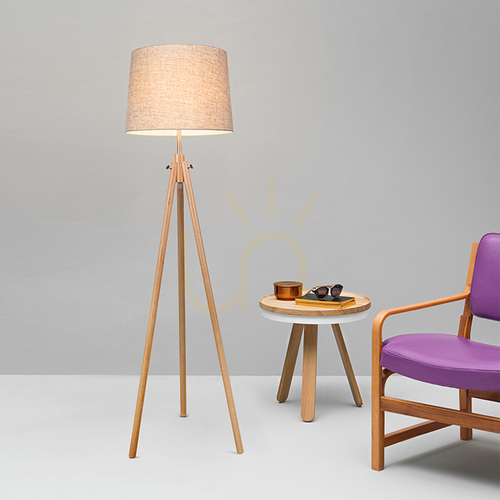
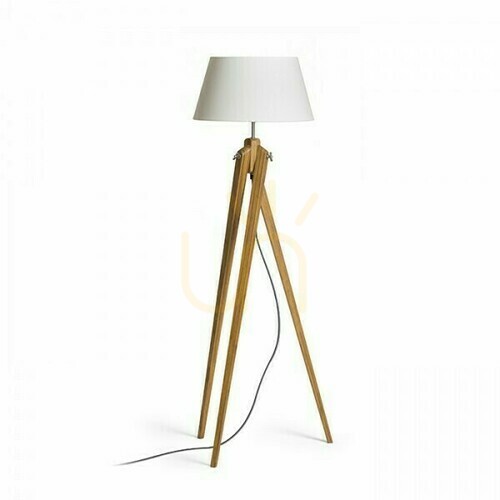
- a classic lamp with a fabric shade – a pole plus a textile shade; it gives soft, diffused mood lighting,
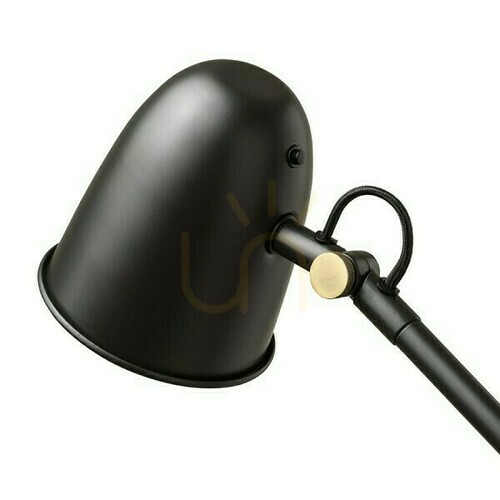
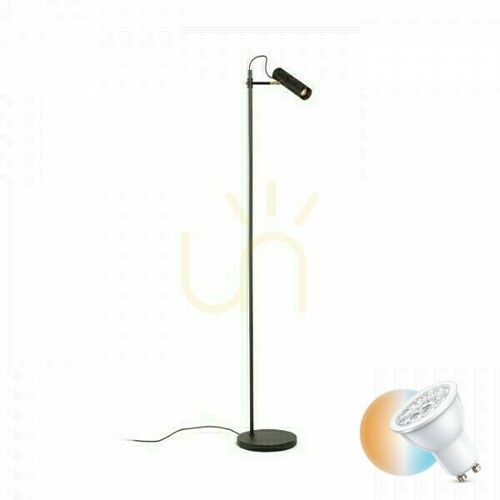
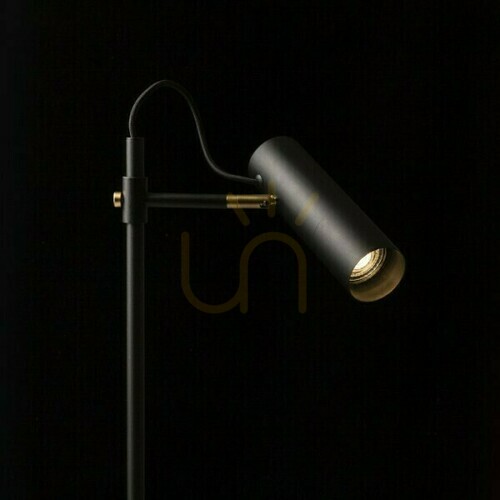
- a reading lamp – an adjustable arm or a small spotlight that directs light downwards, onto the book,
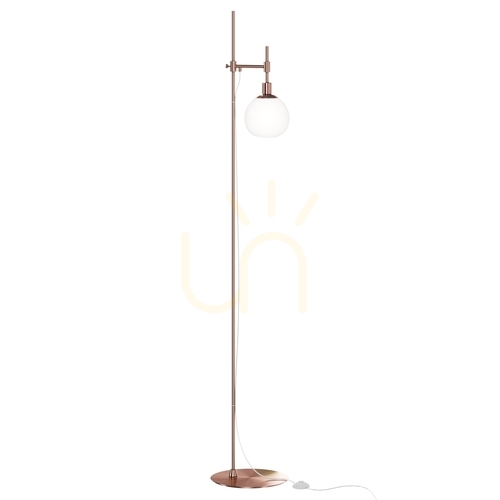
- an arc lamp – a curved arm with a long reach that “hangs” the shade over a sofa or armchair without drilling into the ceiling,
- a light column (uplighter) – aims its beam at the ceiling and builds bright, reflected general light.
Three jobs of a floor lamp in the living room
Good living-room lighting is always several layers of light: general light from the ceiling, task light by the places where you work and rest, and mood light that takes over in the evening. The floor lamp is the only fixture that can handle every one of these layers:
- Mood light – a lamp with a textile shade placed in a corner fills that corner with a warm glow and visually enlarges the room. It is the reason you never need to switch on the “big light” in the evening.
- Task light – a model with an adjustable arm lights up a reading armchair, needlework or a laptop keyboard.
- Decoration – a sculptural base, a rattan shade or crystal droplets keep working even with the bulb switched off, like a piece of furniture.
The best lamps combine two roles at once – and that is exactly the lens through which to read the next sections.
A floor lamp for reading
A reading floor lamp has one job: to deliver focused light onto the page without blinding the reader. Check four things:
- Adjustability: a jointed arm or a swivelling head is essential – the light should fall from behind your shoulder, from the side, slightly from above. Placing the lamp opposite the armchair guarantees glare.
- Shade height: the lower edge of the shade should sit just below the eye line of a seated person, i.e. around 100–130 cm above the floor. Any higher and the light shines in your eyes; any lower and it lights your knees instead of the book.
- Output and colour temperature: for comfortable reading a bulb giving 400–700 lm at 2700–3000 K is enough. Cooler white improves contrast but wakes you up – in the living room it is better to stay warm.
- A switch within reach: a foot switch on the cable is often handier than one at the lamp holder, and a dimmer in a reading lamp is a luxury that quickly becomes a habit.





An arc lamp over the sofa or armchair
The arc lamp is the floor-standing answer to the question “how do I hang light over the sofa when there is no ceiling point there?”. The heavy base stands behind or beside the sofa, and a curved arm with a reach of 80–120 cm carries the shade right over the seat – the effect is that of a pendant lamp, just without the electrician. It is the favourite trick of renters and of everyone afraid to drill into a freshly finished ceiling.
Rules for choosing one:
- Measure the reach from the centre of the base to the centre of the shade and compare it with the depth of the sofa – the shade should land over its front third, not over the backrest.
- Lower edge of the shade: at least 120–130 cm above the floor by a sofa (nobody bumps their head, and the light covers the whole seat). Over a coffee table you can go lower.
- The base needs real weight – an arc lamp works like a crane, and models with a light foot topple over the moment a leg catches them. Marble or cast iron in the base is not a whim, it is statics.
- A dimmable light source turns an arc lamp into the evening lighting for the whole seating area.



Style and colour: black, beige, wooden or glamour?
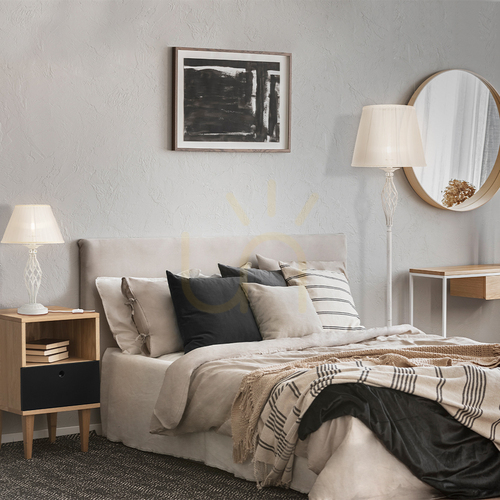
A floor lamp stands at eye level, so its colour and material are more visible than those of any other lamp. The four most popular directions:
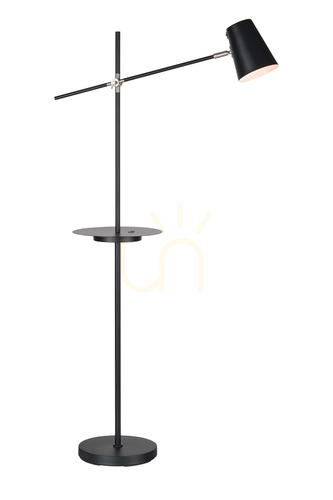
- A black standing lamp – a graphic, confident choice for modern and loft interiors. Black metal draws itself against a light wall like a pen stroke, brings order to the composition and loves the company of gold details.
- Beige and cream – the safest option for living rooms in japandi, boho and classic styles. A light shade lets more light through, so the lamp glows warmer and softer than one with a dark shade.
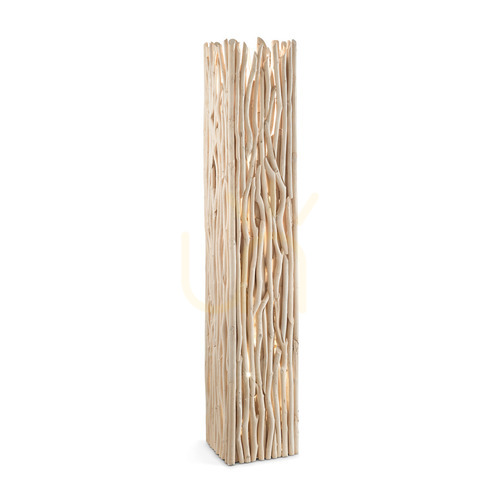
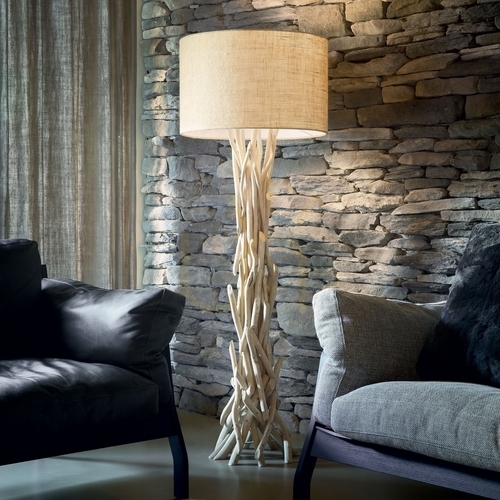
- Wooden and rattan – natural materials warm up an interior, and an openwork rattan shade throws a lace-like pattern of shadows onto the wall. It pairs beautifully with plants and linen.
- A glamour floor lamp – gold finishes, crystal droplets, velvet shades. One such lamp replaces an ornament, a painting and a candlestick at once; all it needs is a calm background so it does not compete with the rest of the décor.
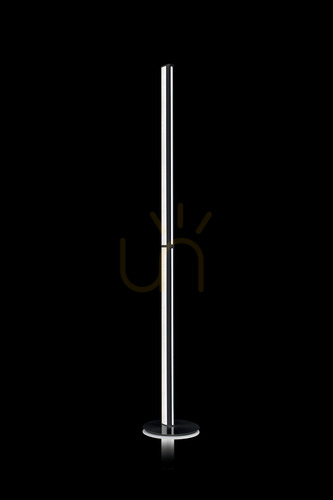
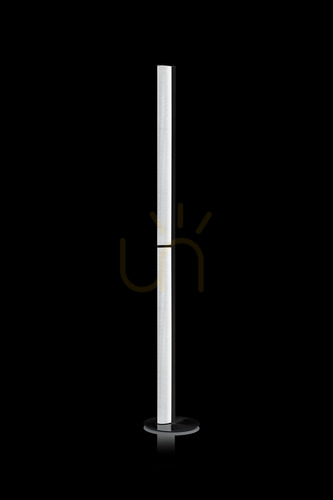
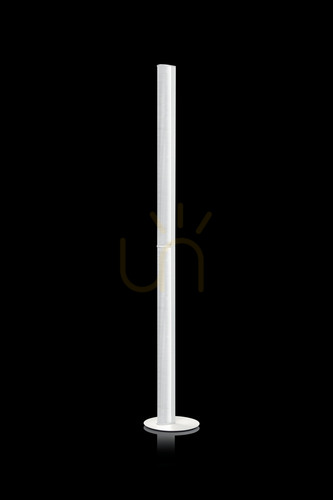
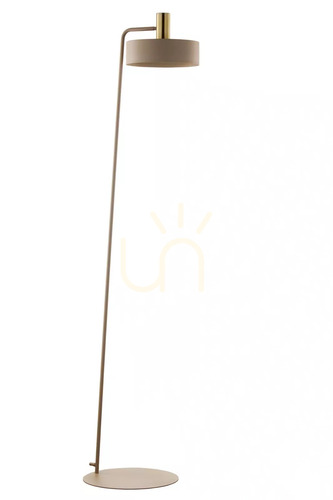
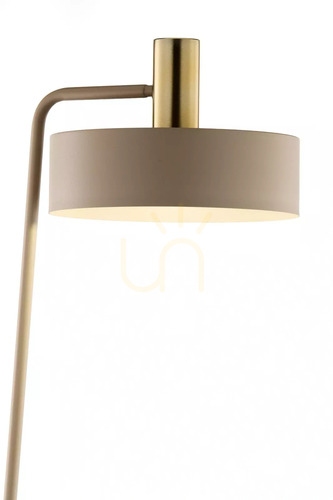


The rule that saves you from disappointment: the lamp should repeat at least one material or colour already present in the living room – the coffee-table legs, the mirror frame, the cabinet handles. Then even a bold model looks as if it had been in the room forever.



Lamp height and light output
Two parameters worth checking on the product page before you buy:
- Total height. Standard floor lamps are 145–165 cm tall – the universal range in which the shade sits above the sofa backrest and below the eye line of a standing adult. Models of 170–185 cm build reflected general light (uplighters especially), while low lamps up to about 120 cm work as an accent next to a sideboard or as a duo with a coffee table.
- Light output. A living room of 20 m² needs a total of about 4000–6000 lm from all its light sources. A floor lamp with a single E27 bulb (800–1100 lm) is a mood layer; an uplighter with a strong LED (2000–3000 lm) can genuinely replace a chandelier in a small room. If the lamp is to be the main light of the evening, choose a model with 2–3 bulbs or with a shade aimed at the ceiling.
It is also worth looking at the CRI (colour rendering index) – at CRI ≥ 90 wood, fabrics and skin tones look natural – and at the “dimmable” marking if you plan to use a dimmer. With integrated-LED lamps, check whether the module can be replaced; with bulb-based lamps the problem does not exist.
Lamps with a shelf, a table or a USB charger
In smaller living rooms, hybrid lamps that combine light with a piece of furniture work brilliantly:
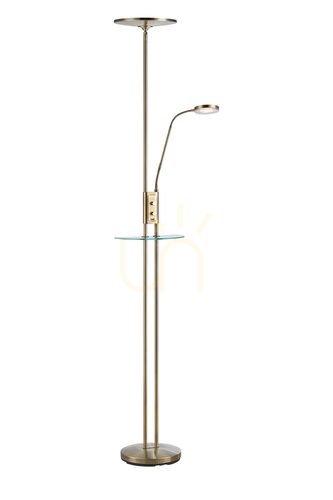
- a lamp with a shelf or a table – a top at armrest height replaces the coffee table next to an armchair: the mug, the book and the phone all have their place,
- a lamp with a USB socket – phone charging exactly where the phone lies anyway, by the sofa; no more cable dragged across half the room,
- a lamp with a movable spotlight next to the shade – mood light and a reading beam in one fixture.



Where to put a floor lamp in the living room?
A few proven spots, starting with the most common:
- The dead corner of the room – the corner behind the sofa or between the window and the bookcase, out of reach of the ceiling light. A lamp with a fabric shade lights it up and visually enlarges the living room.
- By the reading armchair – the lamp stands behind the arm of the chair, slightly to the side, on the opposite side to the hand holding the book.
- Behind the sofa or by the armrest – an arc lamp over the sofa, or a classic lamp at the sofa’s side, lights the conversation zone; place it on the side where nobody walks through to the kitchen or hallway.
- By the television, behind or beside the screen – soft light behind the TV reduces the contrast between the bright screen and the dark wall and genuinely relieves your eyes during evening viewing.
- Paired with a plant or a sculpture – an uplighter placed behind a large plant throws a theatrical shadow of leaves onto the ceiling.
Three things best avoided: walking routes (cable + foot traffic = accident), a spot right next to a radiator (a textile shade does not appreciate it), and standing the lamp directly opposite the window, where it adds nothing during the day anyway. Run the cable along the wall or under the sofa, and if the socket is far away – plan a power strip with a switch or a smart plug, so you never have to bend down to the plug.
Summary
A floor lamp for the living room is a purchase that forgives more than a chandelier – you can always move it. Choose the job first (mood, reading, light over the sofa), then the construction (fabric shade, adjustable arm, arc, uplighter), and only then the style and colour matched to the interior. Keep an eye on three numbers: 100–130 cm for the lower edge of the shade when reading, 145–165 cm for the height of a universal lamp, and 2700–3000 K for the colour of evening light. The rest is done for you by the range: in the Floor Lamps and Standing Lamps categories you will find hundreds of models – from black minimalist ones, through rattan and beige, to crystal glamour.
Victoria


Maybe you will be interested in products from these categories?
Floor Lamps, Standing Lamps
Tags & Blog Categories