
Hallway and corridor lamps – lighting small and narrow spaces
The hallway is the only room everyone passes through – household members, guests and couriers alike – and at the same time the one whose lighting gets thought about last. We all know the result: a dark tube with a single bulb in the middle, where the mirror lies and the keys go missing. Yet narrow, low spaces have their proven tricks: the right flush ceiling light or a rhythm of points instead of a single lamp, wall lights bouncing light off the walls, a motion sensor that greets you in the dark and a mirror multiplying every lumen. In this guide we walk through hallway and corridor lighting decision by decision – from the fitting’s form, through low ceilings, to automation.

Table of contents
- Why the hallway is a hard case
- Flush light, wall light or track in a narrow corridor?
- Low ceilings and small floor plans
- A motion sensor in the hallway
- The mirror and the light
- How much light and what colour
- Frequently asked questions
- Summary
Why the hallway is a hard case
Corridor lighting is designed around three constraints that exist nowhere else in the home:
- No daylight. Most hallways have no window – the lamp isn’t “topping up” sunlight, it’s doing the whole job, morning to night.
- Narrow and low. A typical corridor is 90–120 cm wide, often with a lowered ceiling (boxed services, wardrobes). Every pendant intrudes into the walking clearance, and one lamp in the middle leaves both ends in gloom.
- Stacked functions. A few square metres host a mirror (needs light on the face), a wardrobe (needs light into its depth), the coat hooks and the keys (need light “right now”, before you’ve taken your shoes off).
The basics of choosing hallway fittings we covered in our post on hallway lighting – here we focus on the hardest parts: narrow corridors, low ceilings and automation. The full range of matching fittings lives in the Hallway lamps category.
Flush light, wall light or track in a narrow corridor?
Three schools of corridor lighting – and clear criteria for choosing:
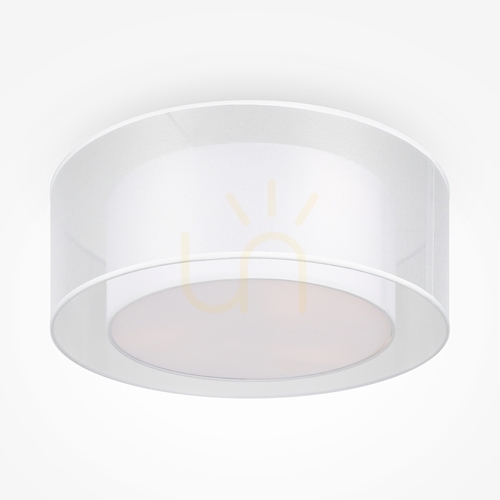
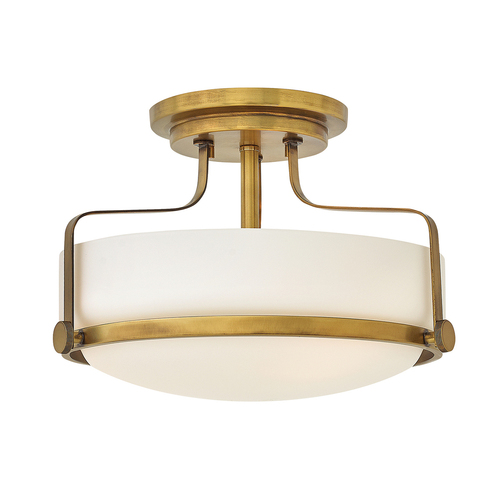
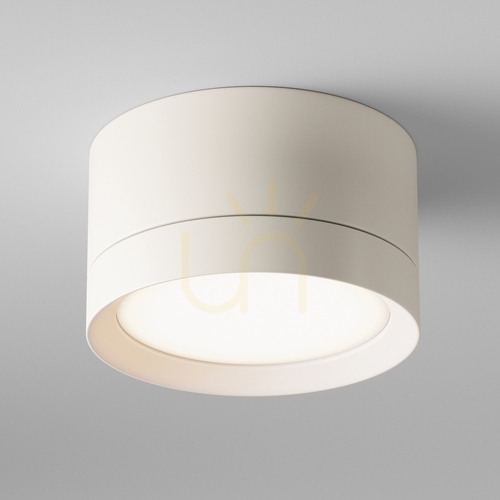
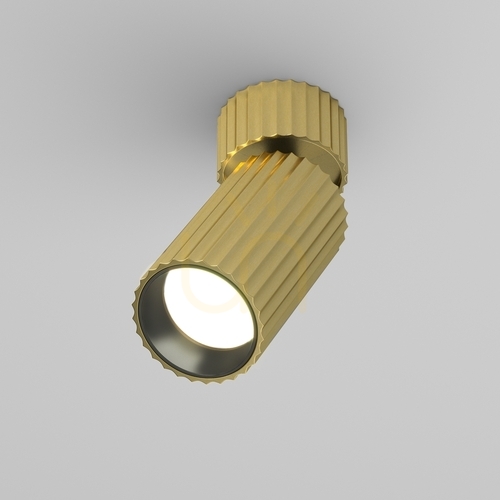
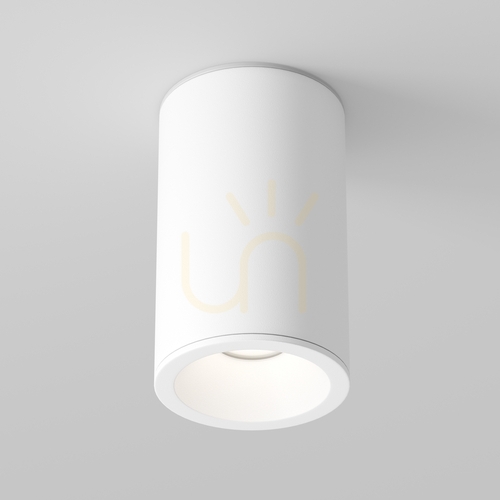
- A flush ceiling light (or several) – the default for low spaces: it hugs the ceiling, spreads light widely and doesn’t catch wardrobe doors. The key is the count: in a corridor longer than ~3 m one central point will always leave the ends dark – mount a rhythm of smaller flush lights every ~1.5–2.5 m (depending on the fittings’ beam angle and output), with the first and last points 0.5–0.8 m from the ends, and the space visually lengthens and evens out.
- Wall lights – for corridors with width to spare (from ~110 cm) and free walls – and only in flat, low-profile versions protruding a few centimetres; a deep fitting catches shoulders and backpacks even in a moderately narrow passage. Light bounced off the wall and ceiling builds a cosiness a flush light can’t; mount circulation wall lights at 160–180 cm, mirror ones lower (more in a moment).
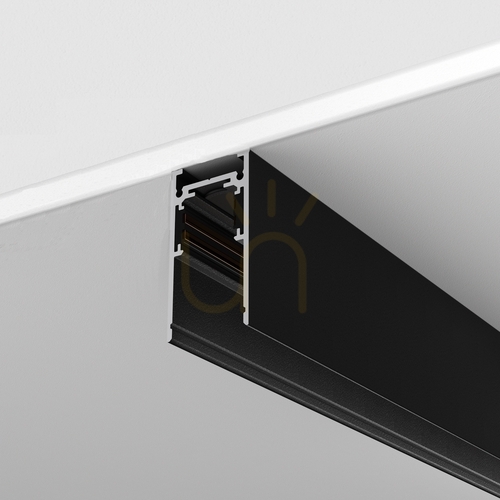
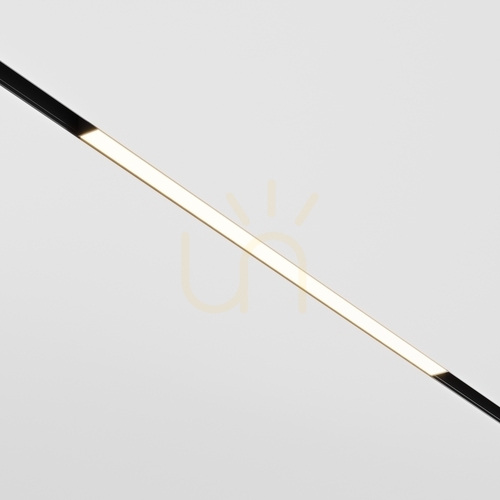
- A track or magnetic track system – the best tool for long corridors and halls: several spots on one power line, aimed wherever needed – at the wardrobe doors, pictures, the coat niche. Aim the spots at walls and furniture, never along the corridor’s axis – a spotlight shining into the eyes of someone walking towards it is this setup’s most common mistake. Rearranged the wall? You slide the spots, no electrician.
The practical hybrid for a typical flat: flush lights as the base plus one accent – a wall light by the mirror or two track spots aimed at the photo gallery. The wardrobe deserves its own light: a spot aimed at its front, an LED strip inside the carcass or a fitting with a door-opening sensor – no ceiling light will ever reach the inside of a deep closet. And a quick pre-purchase checklist: the swing paths of the front door and wardrobe fronts, the ceiling height at its lowest point, where the power feed exits.


Low ceilings and small floor plans
A few rules that visually raise the ceiling and widen a narrow interior:
- Choose “slim” fittings – flush lights 3–6 cm high instead of 12+ cm drums; real space remains overhead and the eye doesn’t snag on the lamp’s body.
- Bounced light lifts the ceiling. Wall lights shining upwards, or flush lights giving part of their output to the ceiling, make the white plane overhead “recede”. The condition: a light ceiling and preferably light walls – dark ones swallow up to half the flux.
- Rhythm over power. Several weaker points spread evenly instead of one strong one: no burnt-out middle and black ends is the cheapest way to a “wider” corridor.
- Light along, not across. Elongated fittings and linear light (e.g. along the built-ins) lead the eye inward and stretch the perspective; crosswise slashes of light visually shorten it.
- Avoid pendants. A little chandelier over the walkway in a low hallway guarantees meetings with tall guests’ heads; if you dream of a decorative drop – hang it in the hall section by the door, outside the main walking line.
A motion sensor in the hallway
The hallway is the best place in the home for automation – you always come in with your hands full:
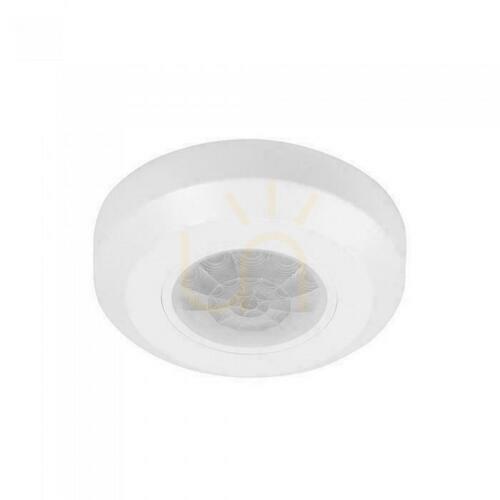
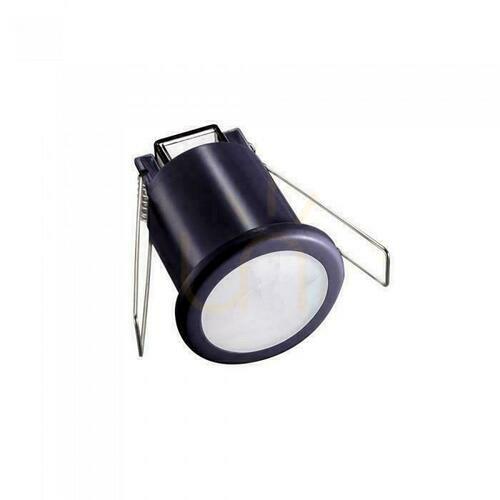
- PIR or microwave? A PIR reacts to a moving heat source and has to “see” the person – it detects motion best across its field, so position it to catch entries from the doors, not necessarily dead centre on the ceiling. A microwave sensor detects motion even through thin partitions and doors – more sensitive, but it can fire from movement in the next room; in a block of flats next to a busy staircase a PIR is often the safer bet. In a long corridor with two entries, two sensors at the ends beat one of doubtful range.
- A flush light with a built-in sensor is the “swap and forget” option: the lamp comes on as you enter and goes out after the set time.
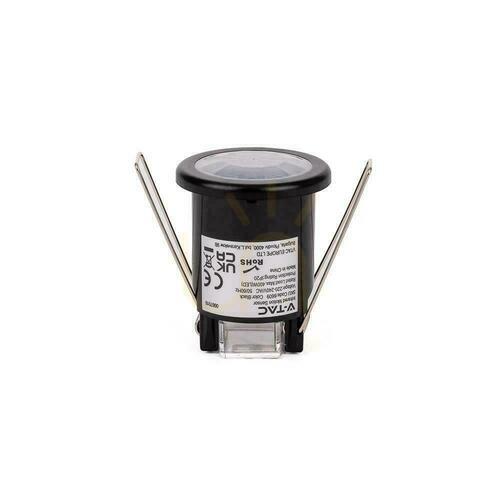
- A ceiling sensor added to your existing lamp – if you like your current fitting, a small 360° sensor wired ahead of it does the same job for a fraction of the price. It’s also the way to a hallway wall light with a sensor: a classic wall light plus a sensor on the ceiling or wall beside it – the effect is identical to an integrated fitting, and your choice of wall lights stays unlimited. Just check the sensor is LED-rated and your lamp’s wattage sits between its minimum and maximum load (a badly matched one can make diodes flicker or glow), and leave the 230 V wiring to an electrician.
- Settings matter: a run time of 1–3 minutes (not 30 seconds – you’ll have time to take your shoes off), a dusk threshold set so daylight from an adjacent room doesn’t make the lamp fire needlessly, sensitivity lowered if a cat patrols the house.
- Night mode – some sensor fittings have a second, dimmed level for the night: the 3 a.m. walk to the kitchen without the interrogation effect. The alternative is a low wall light or a floor-level LED light with its own sensor.




The mirror and the light
The hallway mirror plays two roles – and both need light:
- For the pre-exit check the light must fall on the face, not on the mirror: ideally two wall lights at the sides with the source’s centre at face height (~150–170 cm), or one above the mirror shining down with diffused light. A ceiling light behind your back leaves shadows under the eyes – exactly the effect behind “it looked fine at home”. The rules are the same as for a bathroom mirror – we described them in our post on mirror lighting.
- As a space multiplier a large mirror beside a light source visually doubles the number of visible points and widens the tube – it’s an optical effect, not extra lumens, but in a narrow interior it makes an enormous difference. Position it so it doesn’t reflect a bare light source straight into the eyes of those entering.
At the mirror it’s also worth insisting on CRI ≥ 90 – in light that renders colours poorly, make-up and clothing colours diverge from what you’ll see at the office; in the pure circulation zone CRI 80+ is plenty.
How much light and what colour
- Flux: count on roughly 150–250 lm/m² of source flux in a bright interior (which lands at a target of ~100–200 lx on the floor): a 4 m² hallway → 600–1,000 lm, an 8 m² corridor → 1,200–2,000 lm, spread over several points instead of one. Dark walls and built-ins raise the requirement by up to half.
- Colour: 2700–3000 K – the hallway should greet you warmly and agree with the rest of the home you pass through. Cooler white in a corridor produces the stairwell effect. The one exception: a deep wardrobe or walk-in closet, where neutral 4000 K makes distinguishing clothing colours easier.
- One colour for the whole entrance zone – a flush light, wall lights and a sensor lamp in three different whites look like three random purchases, not a design.
- Stairs within reach? If the corridor flows into stairs, treat both as one system – we wrote about safely lit steps in our post on stair lighting.



Frequently asked questions
What lamp for a narrow corridor? A low flush light (or their rhythm every 1.5–2.5 m for lengths over 3 m), or a track with spots aimed at the walls. Leave wall lights to corridors from ~110 cm wide, and then only flat, low-profile models – deeper ones get in the way and steal precious centimetres.
How many lamps in a long corridor? As a guide, one point for every 1.5–2.5 m of length, depending on the fittings’ beam angle: a 4.5 m corridor = two or three flush lights or track spots, with the end points close to the ends. An even rhythm matters more than total power – the middle isn’t meant to shine for both ends.
Is a motion sensor in the hallway worth it? It’s the most tangible piece of automation in the home: you walk in with shopping and have light, and the lamp doesn’t burn for hours after you leave. The cost is a sensor flush light or a small ceiling sensor added to your current lamp – it pays for itself in convenience from day one.
What flush light for a low hallway? A “slim” model 3–6 cm high, 25–35 cm in diameter for a small floor plan, with a milky diffuser and no visible diodes. With a ceiling under 2.5 m avoid anything hanging.
How do I make a wall light with a motion sensor? Simplest: any wall light plus a separate motion sensor (a 360° ceiling one or a wall one) wired into its circuit – full freedom in choosing the fitting and a replaceable sensor. Fittings with a built-in sensor are the alternative when you don’t want a second element on the wall.
Summary
Good hallway and corridor lighting is not a question of power but of placement and automation: a rhythm of low flush lights or spots instead of a single point, wall lights where the walls have room, light on the face at the mirror and a motion sensor that greets you in the dark – all in one warm colour of 2700–3000 K, with the flux counted at 150–250 lm/m². The narrow tube won’t get wider on paper, but it will look it – and the keys, the shoes and the mirror will finally get the light they deserve.
Marek Więcław


Maybe you will be interested in products from these categories?
Hallway Lights
Tags & Blog Categories