
Living room lamps – a complete lighting plan in three layers
The living room is the hardest room in the house to light, because it’s the only one that does everything at once: this is where you read and watch films, host guests and doze on the sofa. One ceiling lamp – however beautiful – won’t handle all those roles; at full power it makes a “waiting room”, dimmed down it leaves dark corners. The solution designers use is layers of light: general, task and mood, each on its own switch. In this guide we build a complete plan out of them – from the ceiling lights, through the floor lamp by the sofa, to the light behind the TV – with concrete numbers, lamp by lamp.

Table of contents
- Three layers of light – the plan that always works
- The general layer: ceiling lights – chandelier, flush light or track?
- The task layer: reading, work, hobbies
- The mood layer: wall lights, a floor lamp, light behind the TV
- How many lamps in a living room? Concrete numbers
- Colour temperature and the TV zone
- Light scenes: one living room, four moods
- Modern living room lighting: tracks and minimalism
- Frequently asked questions
- Summary
Three layers of light – the plan that always works
A professional living-room lighting plan rests on three independent layers:
- The general layer – an even base that lets you clean up, find the remote and cross the room safely. Usually ceiling lights: a chandelier, a flush ceiling light or a track system.
- The task layer – stronger, directed light where the eyes work: the reading armchair, the desk in the corner, the hobby table.
- The mood layer – lower, warmer points that build the evening atmosphere: wall lights, a floor lamp in the corner, backlighting behind the TV or on the bookcase.
The whole magic lies in the fact that each layer has its own switch (and ideally a dimmer too). Film night is the mood layer solo; reading – the task layer plus a bit of mood; cleaning – everything at once. A living room lit by one lamp knows only two states: too bright or too dark. And one overriding rule: light should land on surfaces, not in the eyes – bare diodes and spots aimed at the sofa will ruin the best of plans.
The plan in five steps: 1) sketch the room and mark the zones (sofa, TV, table, reading nook, walkways); 2) choose the general layer for your ceiling and floor area; 3) add task light wherever eyes work; 4) place mood points in dark corners and along walls; 5) split everything into separately controlled circuits or scenes. You’ll find all the lamp types described below gathered in the Living room lighting category.
The general layer: ceiling lights – chandelier, flush light or track?
The base of the plan – and the biggest single purchase decision:
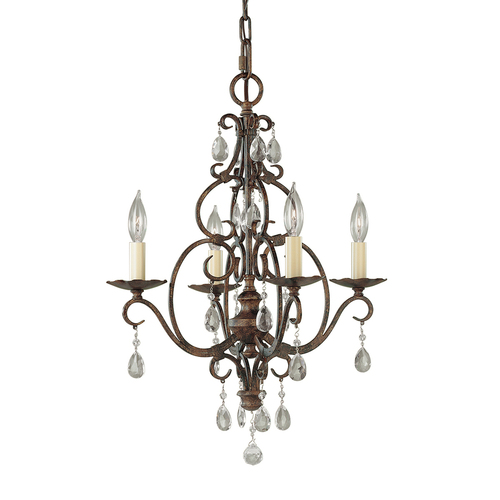
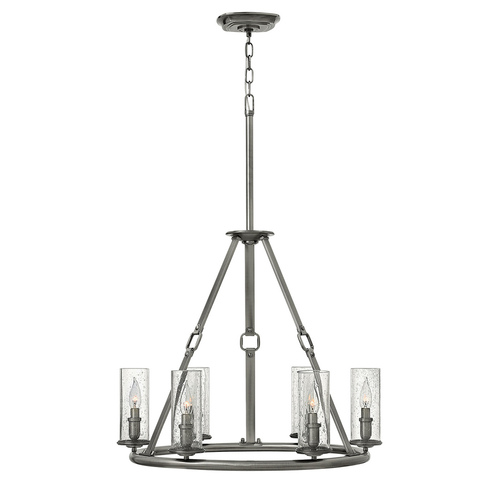
- A chandelier – the king of living rooms with ceilings from ~2.6 m up. It sets the character of the whole interior (crystal, brass, a classic with shades or sculptural modernity) and gives plenty of diffused light from many sources – the full selection is in the Chandeliers category. How to choose the size, style and hanging height we covered in detail in our post on the living room chandelier – here just the practical rule: over walkways the bottom edge at least 210–220 cm above the floor; over a coffee table it can drop to ~70–90 cm above the tabletop.
- A flush ceiling light – the choice for low living rooms and minimalist interiors: it doesn’t visually eat the ceiling, and a modern 40–60 cm LED flush light with a flux of 2500–4000 lm can serve as the base for 15–20 m².
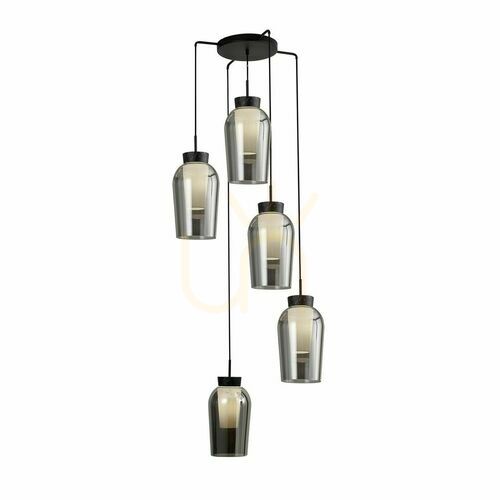
- A track or magnetic track system – the most flexible base: several spots on a shared line that you aim wherever needed – some at the picture wall, some at the sofa zone. The natural choice during a renovation and in living rooms open to the kitchen.
In large, open living rooms the general layer is often doubled: a chandelier over the lounge area plus a flush light or track over the dining nook or walkway.



The task layer: reading, work, hobbies
The second layer is light “for doing things” – and the most commonly skipped part of the plan:
- The reading armchair or sofa: a floor lamp with an adjustable arm or a shade aimed at the pages. Aim for about 300–500 lx on the text – in practice that’s a lamp with a 400–800 lm source, depending on the shade and distance; bring the light from the side and slightly from behind the shoulder so your head doesn’t cast a shadow. For reading and hobbies it’s worth paying extra for CRI 90+ sources.
- A desk or work nook in the living room: a 3000–4000 K desk lamp (ideally with adjustable colour) separate from the rest of the room – after work you switch it off and the room returns to home mode.
- The hobby table, puzzles, needlework: a second floor lamp works here, or a stronger table lamp on the sideboard next to it.
The task layer doesn’t have to be big – one well-placed floor lamp can serve both reading by the armchair and brightening a corner the general layer doesn’t reach.
The mood layer: wall lights, a floor lamp, light behind the TV
The third layer is what makes a living room a living room:
- Wall lights – two points on the wall (e.g. flanking the bookcase or sofa) shining up or down softly “stretch” the room and take the everyday burden of lighting off the ceiling.
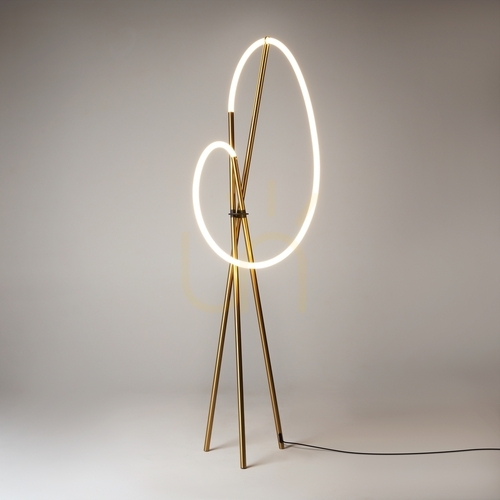
- A floor lamp in the corner – a classic for a reason: it lifts a dark corner, and with a fabric shade gives the most pleasant side light for conversation. Paired with a table lamp on the sideboard it forms the evening base instead of the overhead light; browse the models in the Floor Lamps category.
- Backlighting – an LED strip behind the TV or on the bookcase, a small lamp on the windowsill: low-power points that cost pennies and make the biggest impression in the evening.
A good proportion: the mood layer should be usable without the general layer – it’s the one doing the work for most of the evening.


How many lamps in a living room? Concrete numbers
“How many lamps in a living room” is a question about floor area and functions, but the safe minimum looks like this:
- A living room up to 15 m²: 1 ceiling light (flush light/chandelier) + 1 floor or table lamp + 1 mood point (wall light, backlighting). 3 points in total.
- 15–25 m²: 1 chandelier + 1–2 task lamps (a floor lamp by the armchair, a table lamp on the sideboard) + 2–3 mood points (wall lights, LED behind the TV). 4–6 points in total.
- 25 m²+ or open to the kitchen: 2 general-layer sources (chandelier + flush light/track) + 2 task + 3–4 mood. 7+ points in total.
The light budget – two different measures not to be confused: on the floor and furniture you want about 100–150 lx of general light (and 300–500 lx locally where you read), while when buying lamps you count the source flux: roughly 150–250 lm/m² in total across all layers in a bright interior – more with dark walls and furniture, which can swallow a third of the light. An example for a 20 m² living room: a flush light or track at 2500–3500 lm + a floor lamp at 600–1000 lm + two wall lights at 400–600 lm each + backlighting behind the TV – the general layer should be able to deliver about two-thirds of the total by itself.
Colour temperature and the TV zone
- One colour for the whole living room: 2700–3000 K. Mixing warm and cool white in one room looks like a defect; the exception is a separate work lamp switched on only for work.
- Watching TV in total darkness tires the eyes – the contrast between the bright screen and the black surroundings is too great. The solution is so-called bias light: a gentle glow behind the TV (an LED strip on the back of the screen or a low lamp behind the media unit), not directly visible and set to low brightness – it’s there to lift the background, not compete with the screen. Picture purists choose a neutral colour here; in a home living room it’s more convenient to stay warm and consistent with the rest.
- Avoid reflections: no lamp should shine straight at the screen or stand opposite it. Mount wall lights to the side of the TV zone; place the floor lamp behind the line of sight.
- A dimmer in the TV zone is the cheapest “cinema mode”: the mood layer down to 20–30% plus the glow behind the screen is entirely enough.
Light scenes: one living room, four moods
The layers start making sense when they’re comfortable to control. The minimum is separate switches per layer; more convenient – dimmers; most convenient – smart bulbs or lamps gathered into scenes:
- “Day/cleaning”: all layers at 100%.
- “Guests”: the general layer dimmed to ~60%, the mood layer on – bright but soft.
- “Film”: only the glow behind the TV and one mood point at 20–30%.
- “Evening/reading”: the task lamp by the armchair plus the mood base, ceiling off.
You can set the scenes up in an app (smart bulbs in your existing lamps are the cheapest way in) or classically: with a well-thought-out split of circuits during a renovation – the ceiling separately, the wall lights separately, switched sockets for the floor lamps and the LED power supply by the TV, with switches both at the entrance and within reach of the sofa. Two technical traps: the dimmer must be LED-compatible (dimmable sources plus an LED dimmer, ideally a proven pairing – otherwise flickering and humming), and leave any work on 230 V circuits to an electrician. What matters is that changing the mood is a single gesture – otherwise everyone will just keep flipping the overhead light anyway.
Modern living room lighting: tracks and minimalism
Modern living room lighting increasingly gives up the central point in favour of a distributed architecture of light:
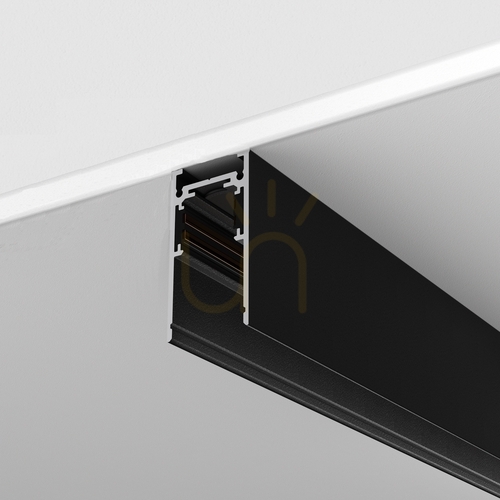
- Magnetic track systems – a low profile and swappable modules (spots, linear fittings, pendants): once mounted, you reconfigure the track yourself by sliding and swapping modules – the electrician is only needed for installation and power. In living rooms with a suspended ceiling they can be recessed into the board for a “light without lamps” effect.
- Directional spots instead of a chandelier over the sofa zone: several 3000 K points aimed at the walls give soft, reflected general light – more intimate than one strong central point.
- Minimalist flush and surface fittings combined with a strong mood layer: the ceiling almost disappears, and in the evening the room is lit by wall lights and floor lamps.
This direction demands discipline, though: the fewer visible lamps, the more important the task and mood layers become – without them “minimalism” ends as one bright flush light and dark corners.



Frequently asked questions
How many lamps should a living room have? The minimum is three points in three layers: a ceiling light, a task lamp (floor or table) and a mood point. In a 20 m² living room comfort starts at 4–6 points, and the total source flux of all layers should reach 3000–5000 lm (more with dark walls).
Is a single flush ceiling light enough for a living room? For cleaning yes, for living no – a single central point gives flat light and dark corners, and in the evening it’s either too much or too little. Treat the flush light as the general layer and add a floor lamp plus a mood point.
What light for watching TV? A gentle glow behind the screen (bias light) plus one dimmed mood point to the side. Total darkness tires the eyes, and lamps shining at the screen or standing opposite it reflect in the panel.
Where to put a floor lamp in the living room? Best in a dark corner behind the armchair or by the sofa, out of the line of sight to the TV. For reading – so the light lands on the text from the side and slightly from behind the shoulder; for mood – a shade at the height of a seated person is enough.
A chandelier or a flush light for a low living room? With a ceiling below ~2.6 m the safer choice is a flush light or a semi-flush chandelier with a short drop. Leave the classic chain chandelier to rooms where its bottom edge can stay at least 210 cm above the floor.
Summary
A complete living-room lighting plan isn’t one spectacular lamp but three cooperating layers: general (a chandelier, flush light or track), task (a floor lamp by the armchair, a lamp on the sideboard) and mood (wall lights, backlighting, light behind the TV) – each on its own switch, ideally with a dimmer. Keep to one colour of 2700–3000 K, aim for roughly 150–250 lm/m² of source flux in total, and set up the scenes so that changing the mood takes a single gesture. Then the same living room will know how to be a bright space for cleaning, a softly lit place for conversation and a home cinema – with no compromise between those roles.
Michał Smykowski


Maybe you will be interested in products from these categories?
Living Room Lights, Chandeliers, Floor Lamps
Tags & Blog Categories