
Table lamps – how to choose a decorative lamp for a dresser, console or desk
A table lamp is one of the most versatile pieces in an interior – at once a decoration and a practical source of warm light where the ceiling fixture doesn’t reach. Placed on a dresser, a hallway console, a desk or a table beside the sofa, it can completely change the character of a room. Here’s how to choose a table lamp to suit the furniture and the interior: from proportions and the shade, through glamour style and colour, to rechargeable models.

Contents
- Where to put a table lamp?
- Decorative or task lamp?
- Proportions – match the lamp to the furniture
- Base and shade
- Style: from glamour to rustic and colour
- Rechargeable and portable table lamps
- Light colour and control
- Summary
Where to put a table lamp?
A table lamp works in almost any room:
- Dresser and console – in the living room and hallway; placed singly or in pairs for symmetry, it orders the furniture and adds elegance.
- Table beside the sofa – warm light for reading and relaxing, complementing the general lighting.
- Nightstand – a bedroom classic; a handy switch within reach and soft light before sleep.
- Desk – a decorative lamp that, with the right shade, will also handle lighting the worktop.
- Shelf or windowsill – an accent that builds atmospheric light on several planes.
A rule that never fails: two identical lamps on a wide dresser or console look more considered than a single one set off to the side.
Decorative or task lamp?
Before choosing a specific model, think about what the lamp is for:
- Decorative – it builds mood and adorns the furniture. It gives soft, diffuse light, often through a dense or coloured shade. It doesn’t have to shine brightly – the atmosphere is what counts.
- Task – it genuinely lights up an area for reading, working or applying make-up. It needs a brighter source and a shade that directs light downward, onto the worktop or a book.
Many lamps combine both roles – especially paired with a dimmer, which lets you move from bright light to an evening glow.
Proportions – match the lamp to the furniture
The most common mistake is a lamp out of scale with the furniture. A few simple tips:
- Height – the lamp should be proportionate to the furniture and its purpose. On a nightstand it’s good when the bottom edge of the shade is roughly at the eye level of someone sitting in bed – then the light falls on the book, not into your eyes.
- Shade width – it shouldn’t be wider than the furniture or “overwhelm” the surface; with a pair of lamps, leave a little breathing room between them.
- Form – a massive, ceramic base suits a wider shade; a slim, metal one – a narrower and taller shade.
When in doubt, it’s better for the lamp to be a touch larger than too small – a tiny lamp gets “lost” on a big dresser.
Base and shade
A table lamp is really a duo: the base and the shade – and you can often choose them separately.
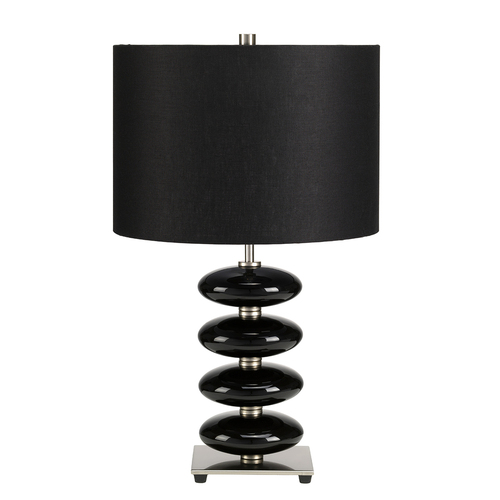
- Base – it sets the character. Ceramic and glass bring elegance, metal (chrome, brass, black) – modernity or glamour, wood and concrete – a natural style. Many models in our range are available as just the base, so you can pick the shade to taste.
- Shade – a fabric one gives warm, diffuse light; glass or metal directs it more precisely. Match the shape to the base: cylindrical for slim ones, conical and dome-shaped for classic bases.
You’ll find the full range in the Table Lamps category.


Style: from glamour to rustic and colour
A table lamp is the easiest way to bring a specific style into an interior:
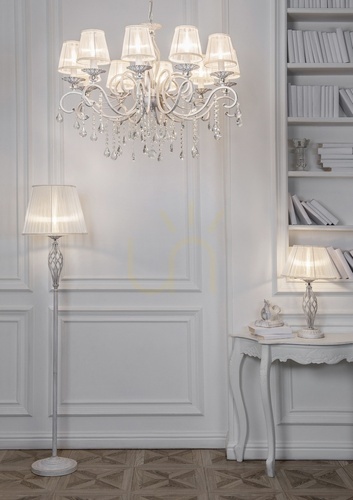
- Glamour – crystal, gold, chrome and gleaming glass; a striking lamp on a dresser or console turns it into a focal point. You’ll find models from this shelf in the Glamour Lamps category.
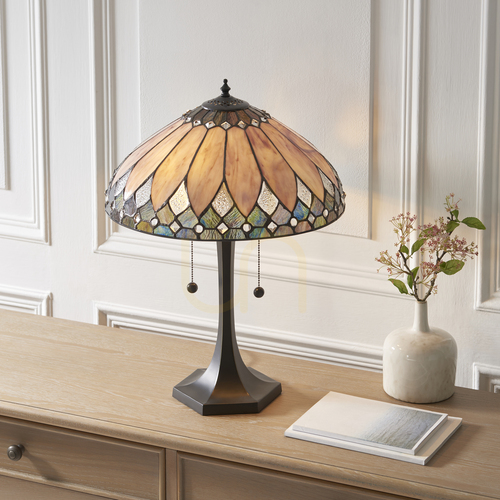
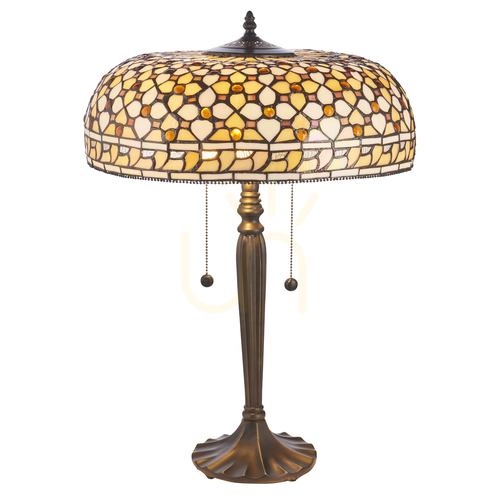
- Rustic and classic – ceramic, patinated metal, fabric shades in muted colours.
- Modern and minimalist – simple forms, matt finish, a single colour.
- Colour as an accent – a turquoise, blue or pink table lamp enlivens a neutral interior and is often the simplest way to add “colour without renovating”.






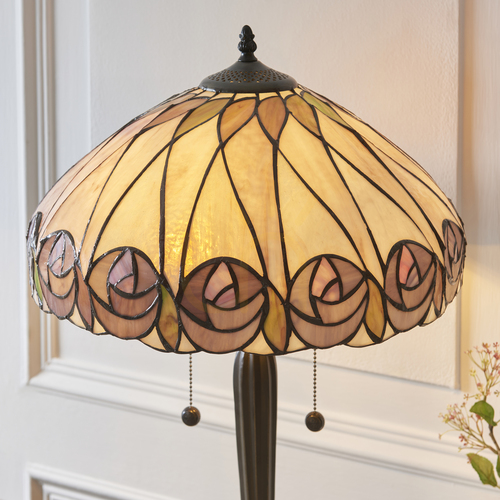
Rechargeable and portable table lamps
Rechargeable (cordless) table lamps are increasingly popular. They need no socket, so you can place them anywhere – on a console with no nearby outlet, on a windowsill, and in the evening carry them out to the terrace or balcony.
Look out for:
- the runtime on a single charge and how it charges (most often USB-C),
- dimming and often several light colours,
- the ingress protection rating, if the lamp is to spend time outdoors.
It’s a practical, restaurant-style solution that gives you full freedom of placement.
Light colour and control
For the living room and bedroom, warm white 2700–3000 K is best – it creates a cosy mood. On a desk, where the lamp plays a task role, neutral 4000 K works well.
Control adds convenience: an in-line or touch switch (handy on a nightstand), a dimmer, and smart bulbs or lamps that let you set brightness and colour from an app. For a decorative lamp, also choose a bulb with a high CRI, so the colours of the shade and the interior look natural.
Summary
A good table lamp comes down to three decisions: where and what for it should shine, what proportions suit the furniture, and which style of base and shade fits the interior. For mood, choose warm, dimmed light; for work, brighter and directed; and if there’s no socket, reach for a rechargeable model. You’ll find the full range in the Table Lamps and Glamour Lamps categories.
Bartosz Dziedzic


Maybe you will be interested in products from these categories?
Table Lamps, Glamour Lights
Tags & Blog Categories