
Wall Lights – The Complete Guide: Where to Put Them, How High, and Which to Choose
The wall light is the most versatile lamp in the house: it lights your bed for reading, replaces bedside table lamps, guides you down the stairs, illuminates the bathroom mirror and welcomes guests at the front door. There is just one condition – it has to hang in the right place and at the right height. In this guide we have gathered specific measurements for every room: how high to mount a wall light by the bed, in the living room, bathroom and on the façade, how to choose the light direction, and when to go for a wall light with a switch or a USB port.

Table of contents
- Three jobs of a wall light: mood, accent, task
- How high to mount a wall light? A cheat sheet
- Wall light by the bed – height and comfort
- Wall lights in the living room
- Bathroom wall lights
- Staircase and hallway
- Outdoor wall lights – what must they withstand?
- Light up, down or up-and-down?
- With a switch, with USB or plug-in?
- Which wall light style to choose?
- Summary
Three jobs of a wall light: mood, accent, task
Before you pick a specific model, decide what the wall light is supposed to do – both the mounting height and the light direction depend on it:
- Mood lighting – a wall light shining upwards or through an opal shade bounces light off the wall and ceiling, giving a soft glow without glare. It is the simplest way to “turn down” a room in the evening without a dimmer.
- Accent lighting – aimed at a painting, exposed brick or an alcove, it highlights the best features of the interior. The same wall with a pair of sconces looks a class better than under a single ceiling lamp.
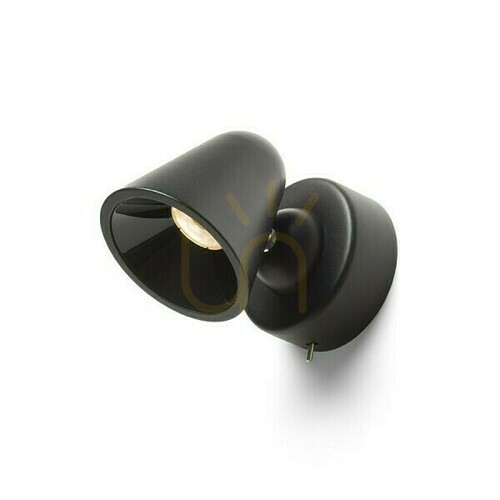
- Task lighting – a wall light with an adjustable arm or a small spot replaces the bedside lamp and lights up a reading chair without taking up an inch of the nightstand or the floor.
The biggest advantage of wall lights shows in small interiors: they take up no counter or floor space at all, and light washed along the walls makes the room feel visibly larger. You will find the full range in the Wall Lights category.
How high to mount a wall light? A cheat sheet
The universal rule is: the light source above eye level or shielded by a shade – so that nobody looks straight into the bulb. In practice, the following heights work well (measured to the middle of the fixture):
- living areas, corridors: 160–180 cm above the floor,
- by the bed: 100–120 cm – at the head height of a person sitting up in bed,
- above a sofa or armchair: 130–150 cm – just above a seated person’s head,
- at the bathroom mirror: 150–160 cm, on both sides of the glass,
- on the staircase: 160–180 cm above the landing,
- at the front door outside: 170–180 cm above ground level.
Two practical notes. First, electrical outlets are planned before painting – if your renovation is still ahead of you, position the wall boxes now, even if the wall lights have to wait. Second, before you drill any holes, stick a sheet of paper in the planned spot with painter’s tape and live with it for a day – you will immediately see whether the lamp would end up too high (the most common mistake) and whether it clashes with the furniture.
Wall light by the bed – height and comfort
The bedroom is where wall lights are used most often – and where mounting height matters most. The optimum is 100–120 cm above the floor, roughly the head height of a person sitting up in bed, just above the headboard. Mounted higher, it lights the pillow instead of the book and glares at the person lying next to you.
What to look for when choosing?
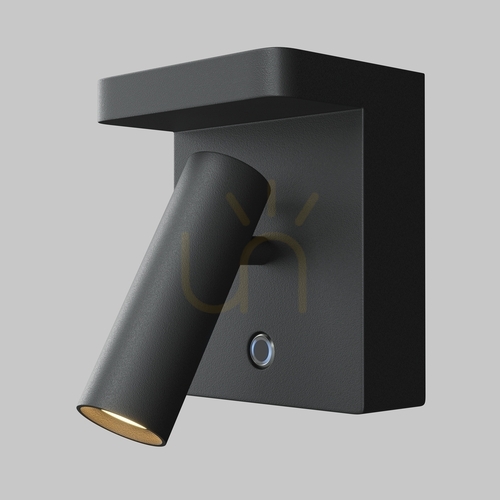
- An adjustable arm or a small spot – you aim the beam at the book, not at half the bed. For readers this matters more than raw power.
- A switch on the fixture – you turn the light off without getting up. A separate switch on each side of the bed is a standard worth not skimping on.
- A wall light with a USB port – a phone charger built into the lamp frees up the socket and tidies the cables on the nightstand.
- Moderate output: 300–500 lm aimed at the book is plenty; a shielded source will not wake the other person.






Wall lights in the living room
In the living room wall lights rarely play first fiddle – and that is exactly why they work so well. A chandelier or ceiling lamp provides the general light, while sconces build depth: they brighten dark corners, highlight artwork and create the low evening light for a film. We covered choosing the chandelier itself in a separate guide – here, let us deal with the walls.
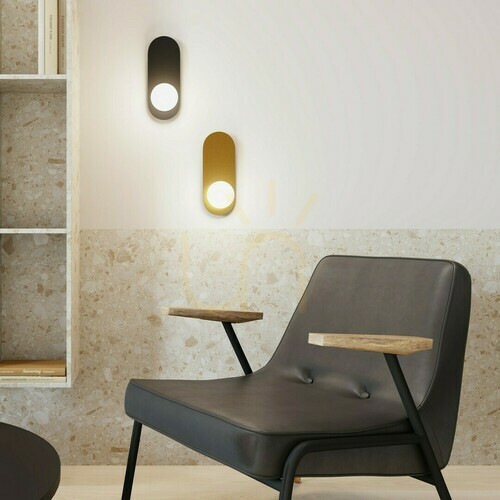
- Above the sofa, mount the wall light at 130–150 cm, so the light falls over your shoulder onto the book and the shade does not cut the sitters off from the rest of the room.
- A pair of sconces flanking a cabinet, fireplace or TV brings in symmetry that organises the whole wall. Space them at least 150 cm apart.
- By the television, a gentle light bounced off the wall behind the screen reduces contrast and eye strain during evening viewing – a wall light of 200–300 lm is enough.
- On a long wall (say, behind a dining area open to the living room) a rhythm of wall lights every 2–3 m replaces a row of ceiling fixtures and builds an intimate mood.




Bathroom wall lights
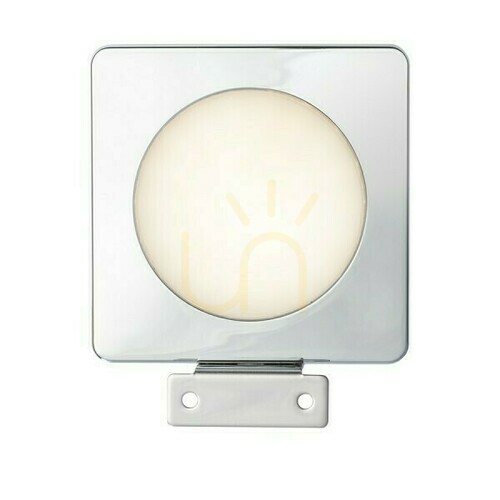
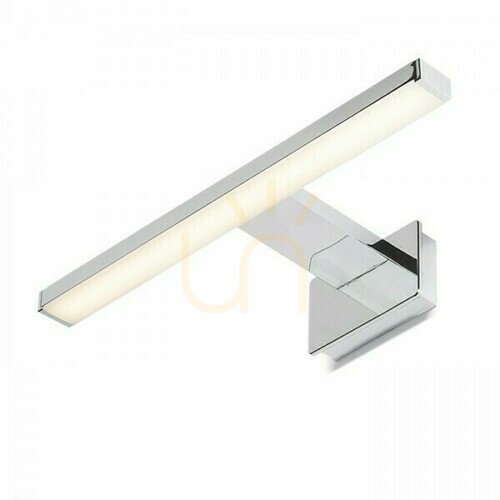
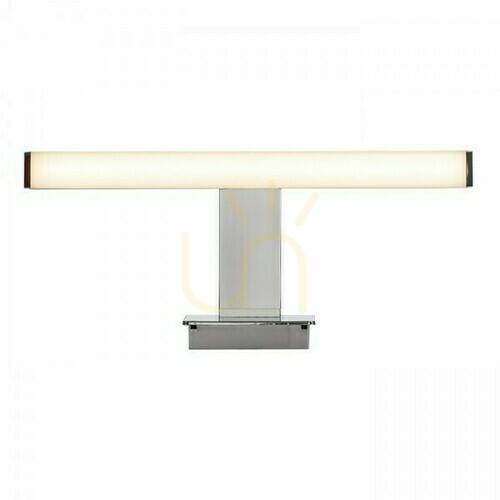
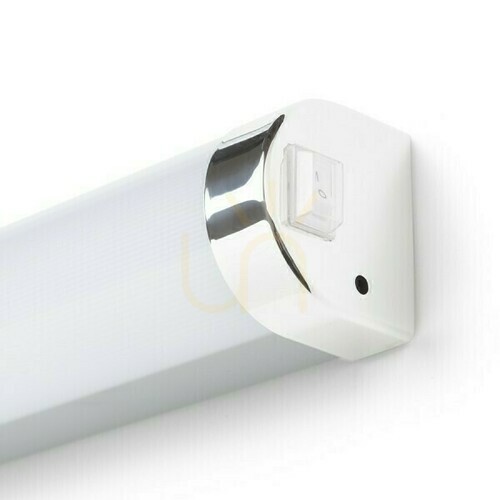
The bathroom sets two extra conditions for wall lights: moisture resistance and honest light at the mirror.
- Ingress protection: in the zone around the washbasin and within 60 cm of the bath or shower, choose fixtures rated at least IP44. Directly above the bath and inside the shower enclosure IP65 applies – though wall lights are rarely mounted there anyway.
- At the mirror, the light should fall on your face, not on the glass. The best solution is a pair of wall lights on both sides of the mirror at 150–160 cm – the face is lit evenly, without the under-eye shadows created by a single lamp above the mirror.
- Colour temperature and rendering: at the mirror choose neutral white 3000–4000 K and CRI 90+ – you will see true colours when shaving or doing make-up. Leave the warm 2700 K for the bathtub zone.
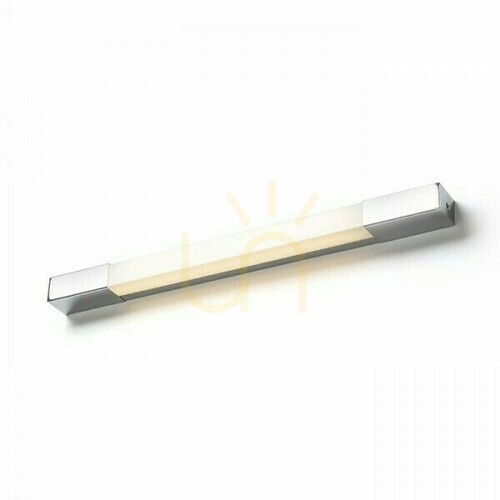
- Above the mirror, elongated LED fixtures that light the glass and the countertop at once work well – a good compromise when there is no room at the sides.
We have gathered the moisture-resistant models in the Bathroom lighting category.




Staircase and hallway
On the staircase, wall lights are a safety feature: they should reveal the edges of the steps without blinding anyone walking up or down. The proven scheme is up-and-down fixtures mounted 160–180 cm above the landing, every 1.5–2 m along the flight – light bounced off the wall and ceiling fills the whole staircase with a soft glow. More variants, including step-recessed fixtures, are described in our staircase lighting guide.
In the hallway the same heights apply as in living areas: 160–180 cm, in a rhythm of roughly every 2 m on longer walls. In a narrow corridor choose flat, wall-hugging fixtures – a shade protruding at shoulder height is an invitation to knocks. Wall lights shining upwards visually raise a low ceiling, and pools of light passed every few steps stop even a long corridor from feeling like a tunnel.
Outdoor wall lights – what must they withstand?
An outdoor wall light works in rain, frost and full sun, so we start with the parameters, not the looks:
- Ingress protection: under a roofed porch IP44 is enough; on an exposed façade it is safer to choose IP54–IP65. The IP class tells you about dust and water resistance – the operating temperature range is in the product datasheet.
- Mounting height: at the front door 170–180 cm above the ground, ideally on both sides of the door – your guest’s face is then lit rather than hidden in shadow. Along a longer façade and by the garage door keep a rhythm of one every 2.5–3.5 m.
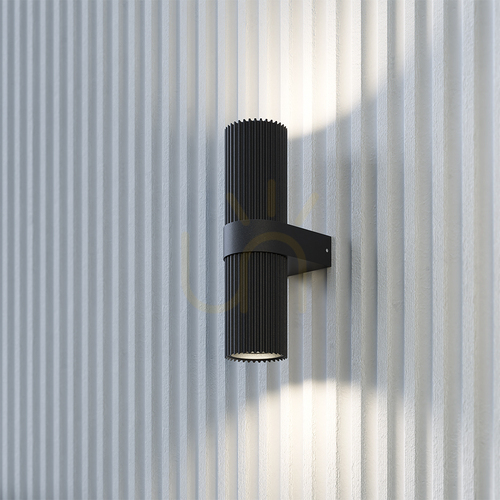
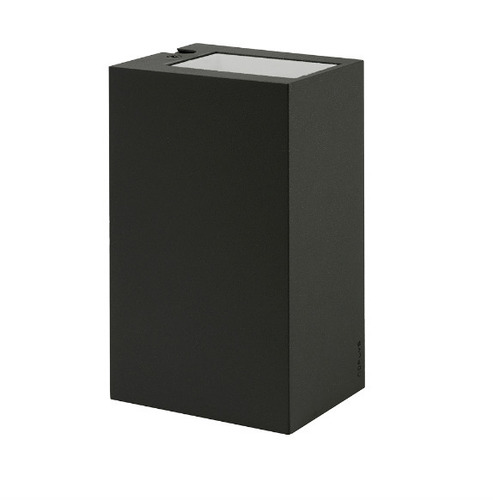
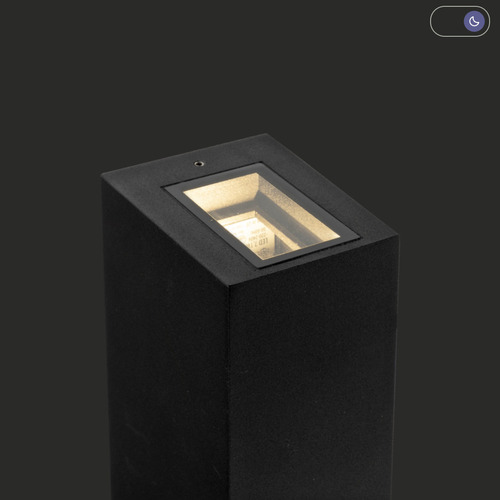
- Up-and-down distribution is the most striking treatment for a façade: two cones of light bring out the texture of render or brick. Just remember that in the up-shining version part of the beam escapes into the sky – near bedrooms and windows choose down-only versions.
- A motion or dusk sensor takes the switch off your mind: a dusk sensor keeps the light on through the night, a motion sensor lights up the entrance only when someone approaches.
- Colour: on the façade stay with warm white 2700–3000 K – consistent with the rest of the garden.
You will find the full choice of weatherproof models – from modern architectural fixtures to glowing spheres – in the Outdoor Wall lamps category.


Light up, down or up-and-down?
The light distribution is, next to the height, the most important decision when choosing a wall light:
- Upwards (uplight) – light bounced off the ceiling gives the softest, shadow-free glow. Ideal as an evening backdrop in the living room and bedroom. Note: it emphasises ceiling imperfections and the shade needs regular dusting.
- Downwards (downlight) – a defined pool of light on the floor or worktop. The best choice where light has a job to do: over stairs, at the entrance, above a reading chair.
- Up-and-down – two cones drawing the signature “hourglass” on the wall. Striking on a façade, a staircase and long living-room walls; the room gets more light overall because both directions work.
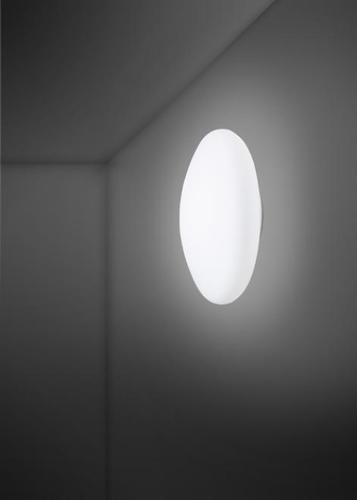
- A diffusing shade (opal glass, fabric) – shines evenly in all directions and never glares from any angle. The safest choice by the bed and wherever the lamp is viewed up close.
One practical tip: open-distribution wall lights look best on smooth, light-coloured walls that reflect the light. On a dark wall the beam “dies” – go for stronger sources or diffusing shades there.
With a switch, with USB or plug-in?
How the light is powered and controlled decides whether it will be convenient day to day:
- A wall light with a switch on the body – indispensable by the bed and wherever the wiring has no separate wall switch. A pull cord or a button on the shade solves the problem without chasing walls.
- A plug-in wall light with a cable – the rescue for flats without wall outlets and for renters: you hang the lamp on two plugs and run the cord to the nearest socket. During a renovation, though, it is worth hiding the supply in the wall for good.
- A wall light with a USB port – two in one in the bedroom: a reading light and a phone charger. Check where the port sits – on the side or the underside of the body is the most convenient.
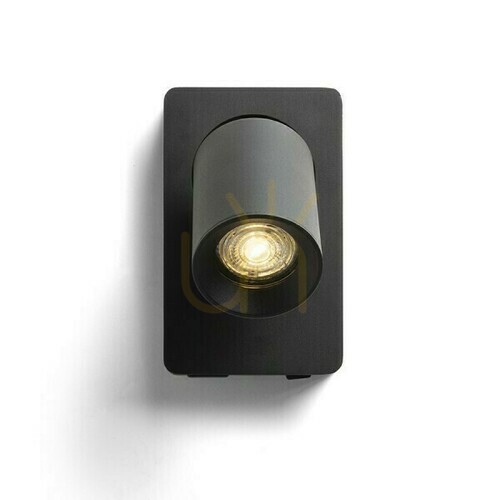
- A replaceable E14/E27 or GU10 source – lets you choose the power, colour and dimmability yourself, and later screw in a smart bulb controlled from your phone – the cheapest route to a “smart” wall light without rewiring.
- Dimmability – if the wall lights are to build the evening mood, choose dimmable sources and an LED-ready dimmer; integrated LED modules cannot always be dimmed.
Which wall light style to choose?
A wall light hangs at eye level, so its form is more visible than any other lamp’s – it pays to match it to the rest of the interior:
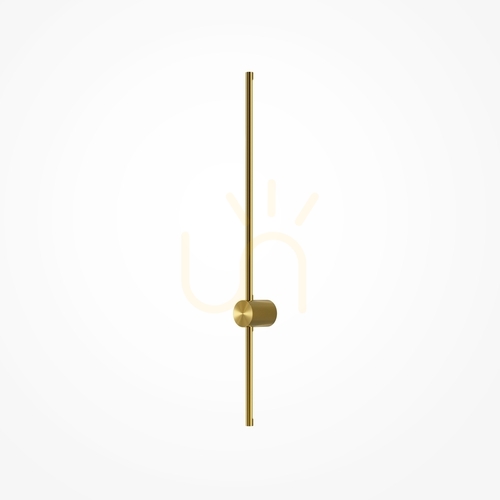
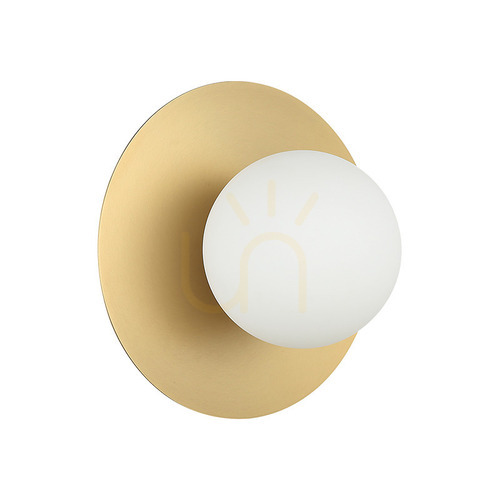
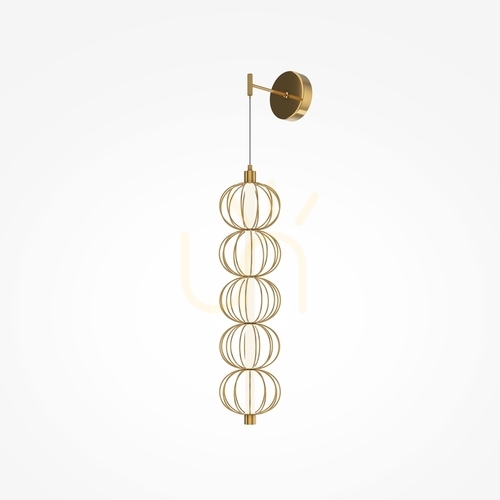
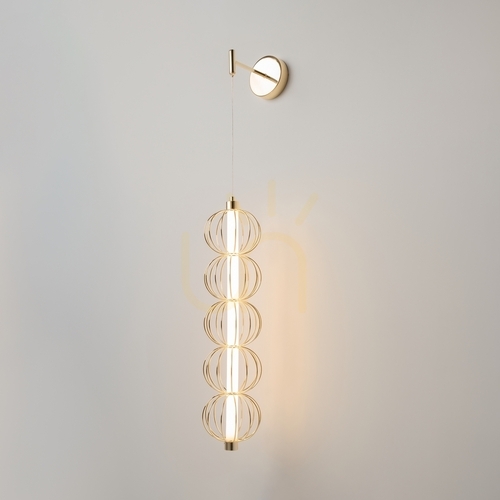
- The gold wall light is currently the strongest trend: brass and gold fixtures warm up modern classic and glamour interiors, and a single gold accent brings even austere minimalism to life.
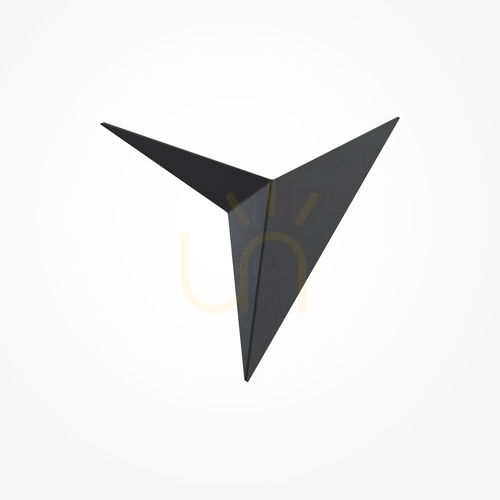
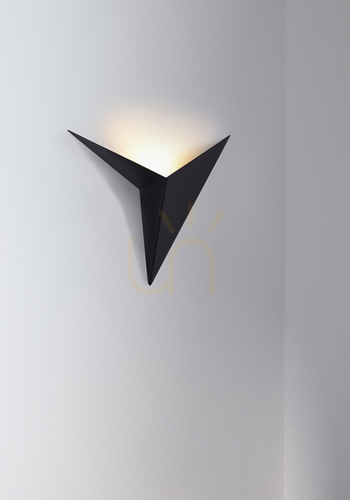
- Black wall lights with simple, graphic forms are a safe bet in lofts and industrial interiors – especially models with an exposed decorative bulb.
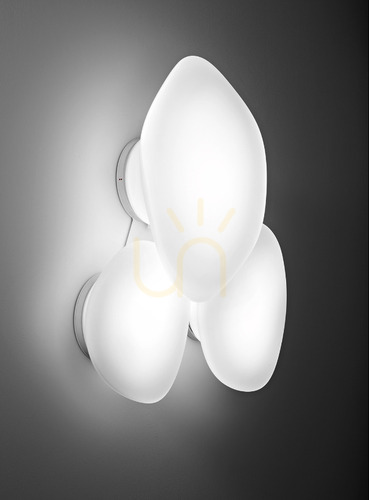
- Glass and spherical forms – milky spheres and opal shades fit everywhere, from Scandinavian bedrooms to elegant hallways, and never glare.
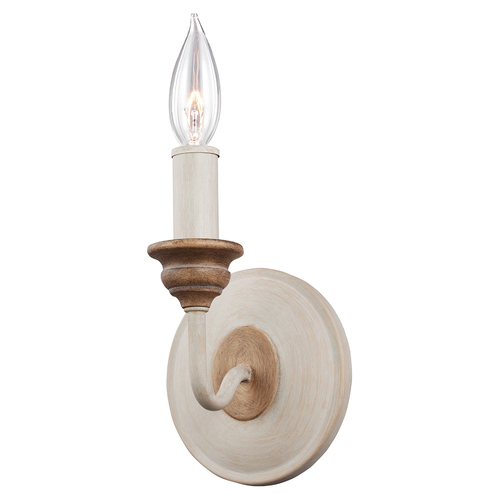
- Wood, rattan and fabric – natural materials and soft light through weave are the signature of boho and japandi interiors.
When choosing several wall lights for one interior, stick to the common-denominator rule: the same finish colour or the same family of shapes. The lamps do not have to be identical – they have to look like one team.


Summary
A well-chosen wall light comes down to three decisions: place, height and light direction. Mount it at 100–120 cm by the bed, 130–150 cm above the sofa, 160–180 cm in the hallway and on the stairs, 150–160 cm on both sides of the bathroom mirror, and 170–180 cm on the façade with at least an IP44 rating. For reading pick an adjustable arm and a switch on the fixture, for mood – a diffusing shade or up-and-down distribution. Style takes care of the rest: browse models from gold to loft in the Wall Lights and Outdoor Wall lamps categories, and moisture-proof bathroom fixtures in the Bathroom lighting category.
Maciej Hudaszek


Maybe you will be interested in products from these categories?
Wall Lights, Outdoor Wall lamps, Bathroom Lamps
Tags & Blog Categories