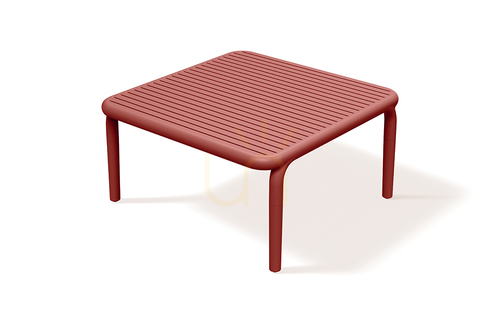
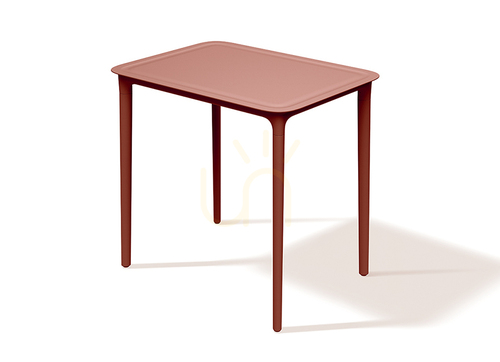
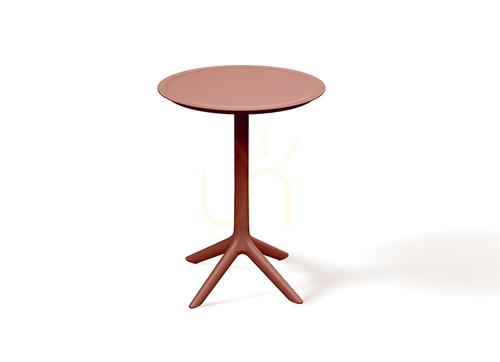
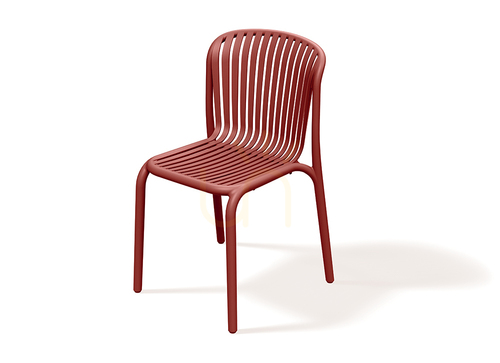
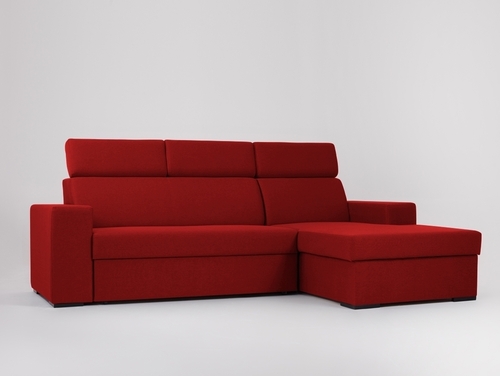
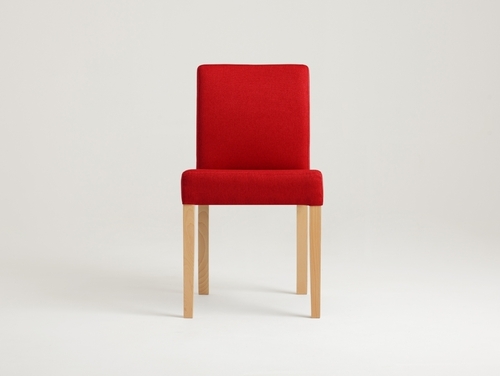
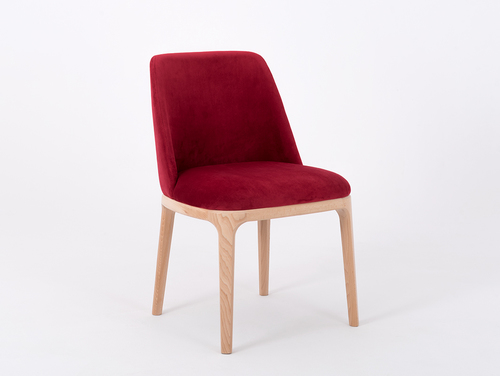
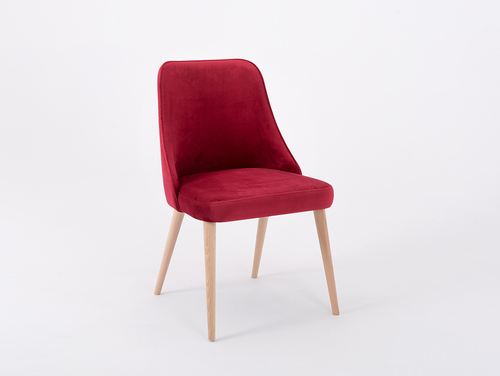
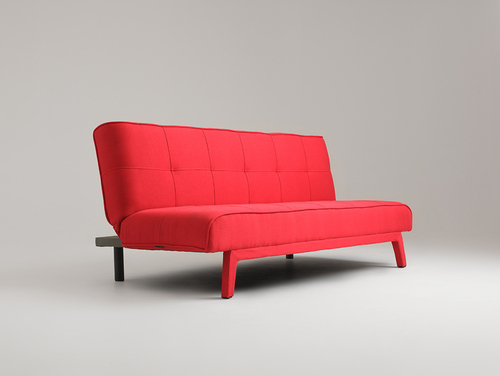
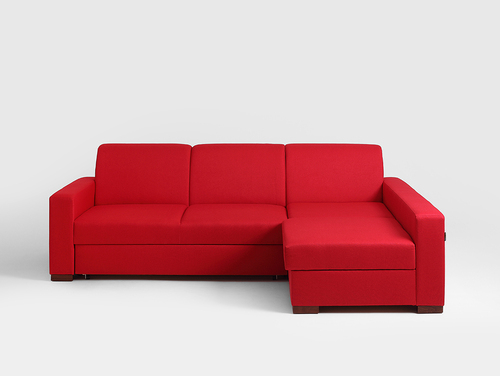
Red furniture almost never arrives as a full set. It works as a single decision inside a room or on a terrace — one chair, one console, one dining table that everything else arranges itself around. A large part of what is sold in red is built for outdoors, in brick and retro shades on powder-coated metal, which is why this filter reads more like a garden page than an interiors one.
One piece per sightline
Red advances. Put a red chair and a charcoal chair side by side and the red one looks nearer and slightly bigger, even when the dimensions are identical. That is the whole argument for restraint: one red object anchors a view, two compete for it, and three start to look like a showroom. If you want more red than that, spread it across textiles and pots rather than across furniture.
The shades are not interchangeable
-
Brick and terracotta reds carry brown in them. They sit quietly against clay pavers, timber decking and planting, and they are the safest choice outdoors.
-
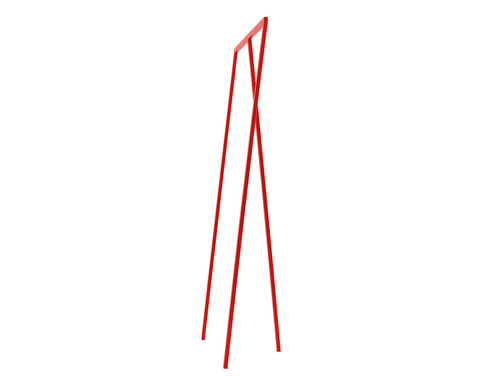
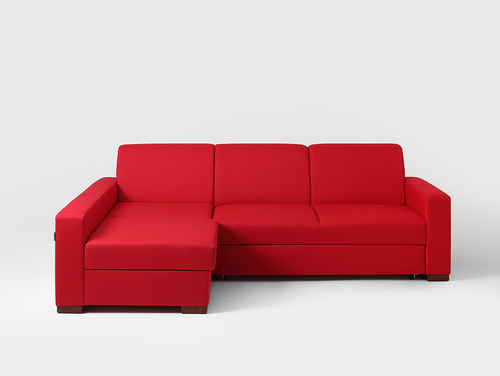
Scarlet and pillar-box reds are pure and loud, with no earth in them. Excellent on a small object, exhausting on a six-seat dining set.
-
Retro reds are slightly muted and warmed, which is what makes them read as mid-century rather than as new.
-
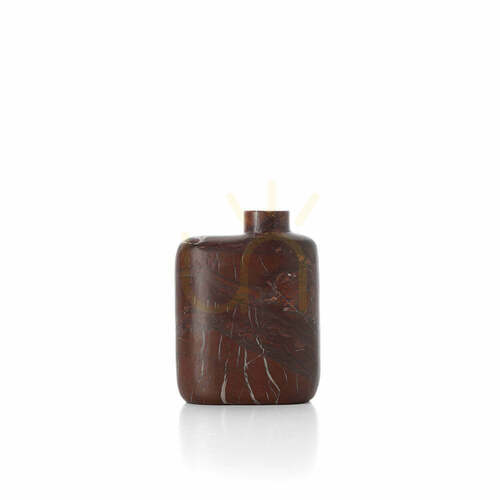
Wine and burgundy lean blue and belong indoors, on upholstery, next to dark timber.
Where a manufacturer quotes a RAL number, use it. Red is the colour the eye is least forgiving about — two nearly-matching reds in one space look like a mistake in a way that two nearly-matching greys never do.
What outdoor red is actually made of
Nearly all of it is powder-coated aluminium or steel. Aluminium will not rust, so a chip stays cosmetic; steel is heavier and stiffer but needs any damage touched in, because water gets under the coating and lifts it from the inside.
The coating matters more than the metal. Red pigments are the least stable under ultraviolet light of any colour family, and a coating formulated for interior use will go chalky and flat on a south-facing terrace within a few seasons. Look for an explicit statement that the finish is rated for exterior exposure rather than the bare word "powder-coated".
Keeping it looking new
Wash with water and a mild detergent. Skip abrasive pads and keep a pressure washer well back — both polish the sheen off the paint, and matt red looks tired far sooner than matt grey does. Store over winter somewhere dry, and slip something between stacked pieces so the coating is not pressed against itself for months. Carry a touch-up stick in the right RAL shade; a scratch dealt with in the first week never becomes a rust bloom.
Indoors the equivalent worry is light fastness on upholstery. A burgundy sofa in full afternoon sun loses depth over a few years, so check the fastness rating or move the piece off that wall.
Questions
Does red furniture work in a small room?
Yes, provided it is one item. Because red advances, it gives a small room a focal point instead of making it feel busier, as long as the walls stay quiet.
What colours go with red furniture?
Warm timber, off-white, matt black and charcoal. Green works outdoors because it is red's complementary, which is why a red frame stands out against a hedge without any help.
Can outdoor red furniture stay out all year?
Mechanically, usually. Cosmetically it is better under a cover or indoors — winter damp plus UV is what dulls the finish, not the cold.
Other colours and pieces are listed under furniture.