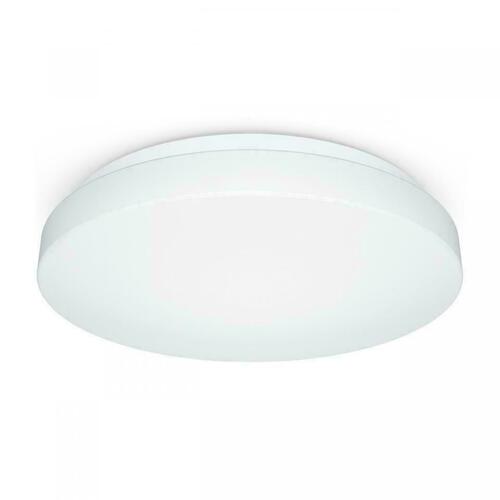
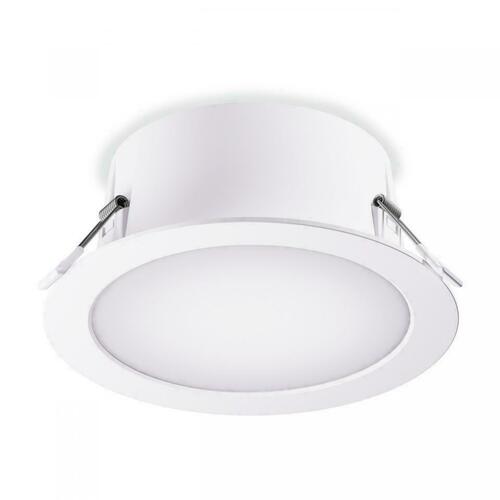
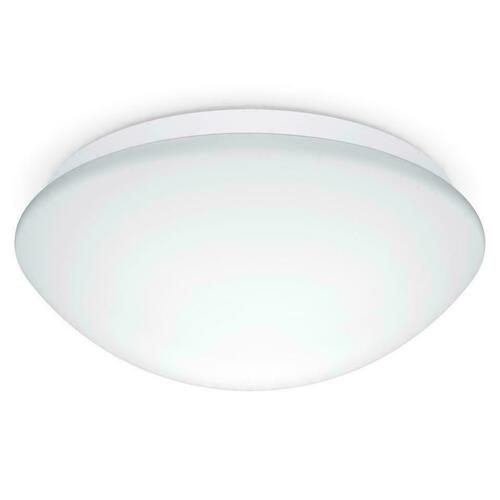
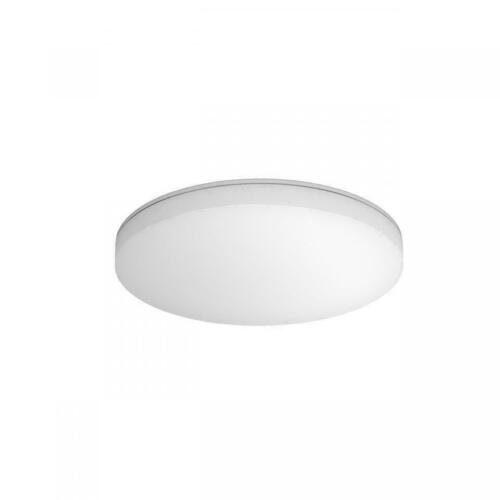
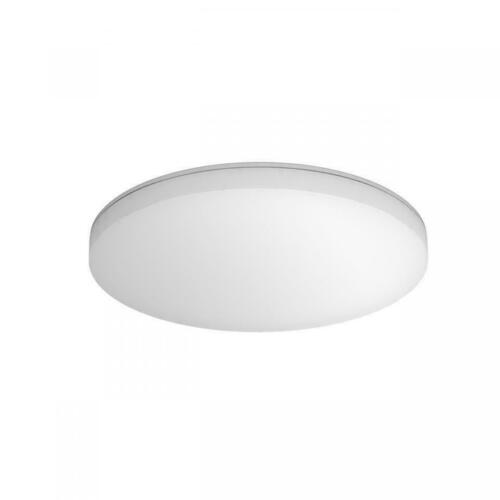
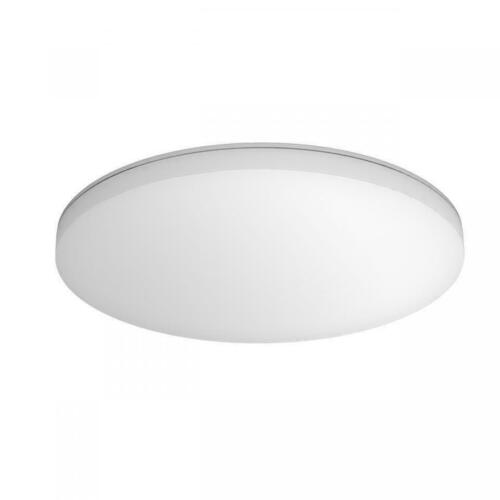
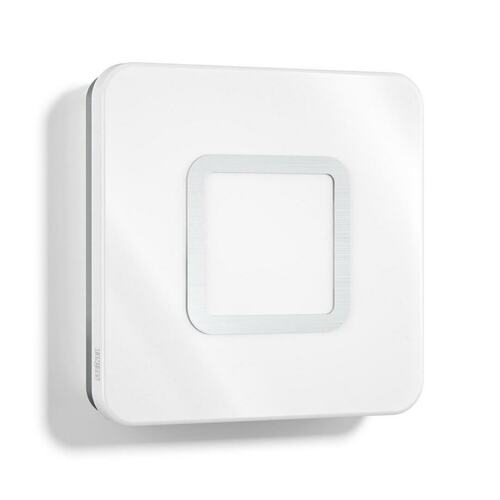
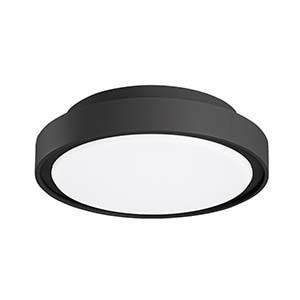
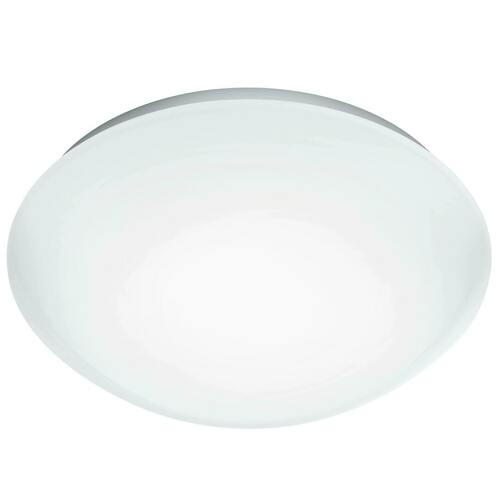
LED lights with a motion and dusk sensor switch on when someone walks past, but only once the room is dark. That second sensor is what separates them from a plain indoor motion sensor light: in daylight the photocell keeps the light off, so a sunny landing or a hall with a glazed front door doesn't light up every time someone passes. After dark, they behave like a light switch you never have to find.
Why the dusk sensor matters indoors
A motion sensor on its own can't tell noon from midnight. Fit one in a bright hallway and it will fire dozens of times a day for no reason. A dusk-only night light, on the other hand, stays on from evening until morning, whether anyone needs it or not. Put the two together and you get light only when it is dark and someone is moving – which is exactly what you want on the stairs at 3 a.m.
One exception is worth knowing. In a windowless hall, an internal bathroom or an under-stairs cupboard it is dark all day, so the photocell never blocks anything. There the light simply works as a motion sensor light around the clock, and brightness and time-out matter more than the dusk setting.
Mains-wired or wireless?
Wireless versions run on AA or AAA batteries or a rechargeable cell topped up over USB. They stick on with adhesive pads or magnets, so they suit renters, wardrobes, stair treads and the gap under a bed. Plug-in night lights go straight into a 13 A socket and need no batteries at all; some double as an emergency light during a power cut. Mains-wired ceiling and wall lights are brighter, usually let you adjust the time-out and the light threshold, and are the better long-term choice for landings, hallways and utility rooms.
Choosing by room
| Where |
Typical choice |
What to look for |
| Landing and stairs |
mains wall or ceiling light, or battery step lights |
wide detection (ceiling units often 360°), time-out of 1–2 min or more |
| Bedroom to bathroom route |
plug-in or battery night light |
warm white around 2700 K, low output of roughly 5–40 lm, mounted low |
| Bathroom |
mains ceiling light with sensor |
IP44 or better in zones 1 and 2, sensor with adjustable lux level |
| Wardrobe, cupboard, under-stairs |
battery LED bar or puck light |
short range of about 2–3 m, cool or neutral white for seeing colours |
| Hallway |
mains ceiling light |
a few hundred lumens, adjustable time-out from seconds up to around 15 min |
PIR or microwave?
Most night lights and wall lights use a PIR (passive infrared) sensor. It picks up the heat of a body moving across its view, so it works best when you walk past it rather than straight towards it, and it needs a clear line of sight. Microwave (also sold as HF or radar) sensors can sit hidden behind a plastic or glass diffuser, which makes for a cleaner-looking ceiling light. The trade-off: they can also detect movement through a thin partition wall or a closed door.
Installation and safety
A mains sensor light connects like any ceiling or wall light, with live, neutral and earth; the built-in sensor does the switching. Leave the existing wall switch on, or the sensor loses its supply. In the UK, bathroom installations fall under the zone rules of BS 7671, so a mains light near a bath or shower needs the right IP rating and is a job for a registered electrician.
A few habits avoid false alarms: keep PIR sensors away from radiators, heaters and air vents, don't aim them at a sunny window, and remember that a cat on the stairs counts as movement. If another lamp shines on the photocell, it will think it is daytime and refuse to switch on.
Frequently asked questions
Are motion sensor lights a good idea indoors?
For places you pass through – stairs, landings, halls, cupboards – yes. They save fumbling for switches and cut wasted light. In rooms where you sit still for long, such as a living room or office, the light may switch off while you are there.
How do you make a motion sensor light stay on?
Some mains fittings have a manual override: switching the wall switch off and on again quickly keeps the light on until the next switch-off. Not every model has this, so check the instructions. Otherwise, set the longest time-out the sensor allows.
What does a motion sensor look like in a house?
In a light fitting it is usually a small dome or lens on the edge or centre of the diffuser, or nothing visible at all with a microwave sensor. Night lights have a small round window on the front, often next to the photocell.
Can I use a motion sensor light in the bathroom?
Yes, provided its IP rating suits the zone. IP44 is the usual minimum for zones 1 and 2; outside the zones a standard rating is generally fine.
Do wireless motion sensor lights work as well as mains ones?
For guiding your way at night, yes. They are less bright and have a shorter range, so for a long hallway or a staircase you would need several.
Will the light come on during the day?
Not while the room is brighter than the dusk threshold. In a room with no window it will react to movement at any hour.
If you don't need the dusk function, read about indoor motion sensor lights. For a sensor that fits into an existing lamp, see motion and dusk sensor light bulbs.