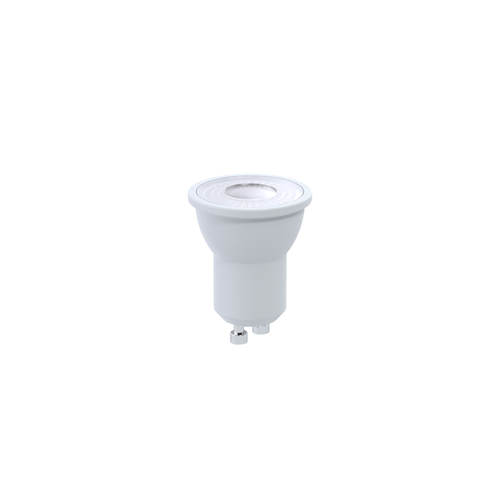
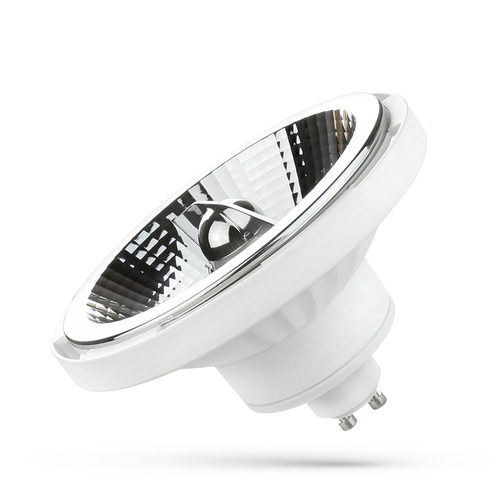
A cool white bulb gives a crisp, clean white at around 4000 K – brighter-looking and more neutral than the yellowish glow of a traditional bulb, yet without the blue edge of daylight lamps. Bulbs in the 4000–5000 K band are the ones to reach for where you need to see properly: kitchen worktops, bathroom mirrors, a desk in the spare room, the garage or the shed.
At 4000 K the light still carries a trace of warmth, closer to mid-morning sun than to a grey sky. Push towards 5000 K and the yellow all but disappears; the room looks sharper and more clinical. Side by side at equal brightness the step is subtle, but across a whole room you notice it.
Cool white, natural white or daylight?
British packaging is not consistent, which is why so many people end up with the wrong shade. Broadly, retailers group lamps like this – but always check the kelvin figure, because one brand’s “cool white” is another’s “natural white”.
| Name on the box |
Typical colour temperature |
Where it tends to work |
| Warm white |
2700–3000 K |
living rooms, bedrooms, dining tables |
| Natural white |
3500–4000 K |
hallways, kitchens in open-plan spaces |
| Cool white |
about 4000 K |
kitchen worktops, bathrooms, home offices |
| Cool white to daylight |
4500–5000 K |
garages, workshops, utility rooms, hobby benches |
| Daylight |
5500–6500 K |
craft and colour-matching work, sheds, warehouses |
Fluorescent and LED tubes often carry a three-digit colour code instead. The first digit gives the colour rendering band and the next two the colour temperature in hundreds of kelvin: 840 means CRI 80 or more at 4000 K, 940 is the same shade with CRI 90+, and 865 is 6500 K daylight.
Brightness is about lumens, not kelvin
A higher colour temperature does not make a bulb more powerful. Check the lumen figure: roughly 470 lm replaces an old 40 W bulb, 806 lm a 60 W, 1055 lm a 75 W and 1521 lm a 100 W. That said, cool white does look a touch brighter to most eyes at the same output, so in a small cloakroom or landing you can often drop one step.
For a kitchen or study, plan on roughly 500 lux at the work surface – the figure BS EN 12464-1 uses for reading and writing at office desks – and choose a CRI of at least 80. Make-up mirrors and wardrobes benefit from CRI 90 or higher, where navy and black stop looking the same.
Fittings you will meet in UK homes
Cool white LEDs are made in practically every format. These are the ones you will come across most often:
-
B22 bayonet cap (BC) – the push-and-twist fitting still found in many British ceiling roses and table lamps.
-
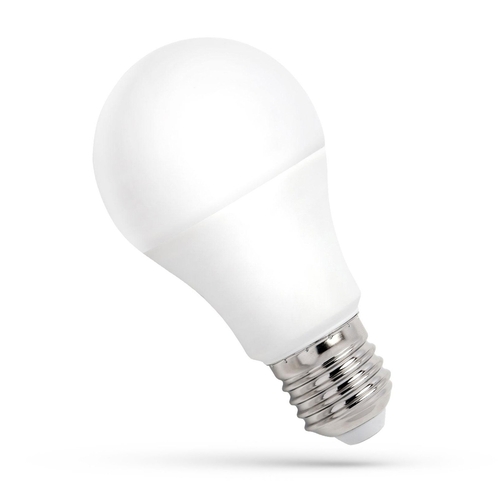
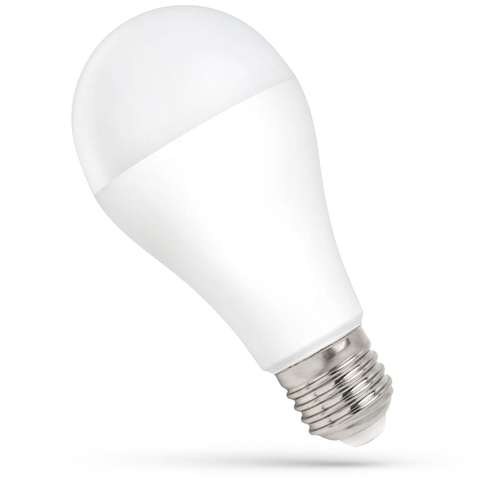
E27 Edison screw (ES) and E14 small Edison screw (SES) – the larger and smaller screw caps; E14 is common in candle bulbs and small table lamps. They are not interchangeable.
-
GU10 – mains-voltage spotlights in kitchen and bathroom downlights; MR16 is the 12 V cousin that needs a transformer or driver.
-
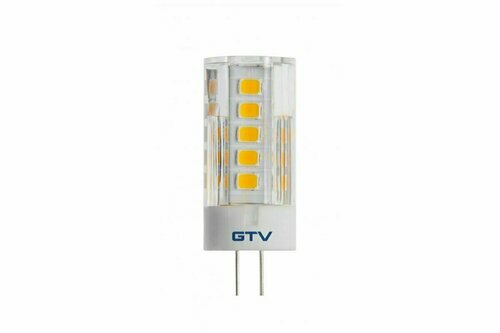
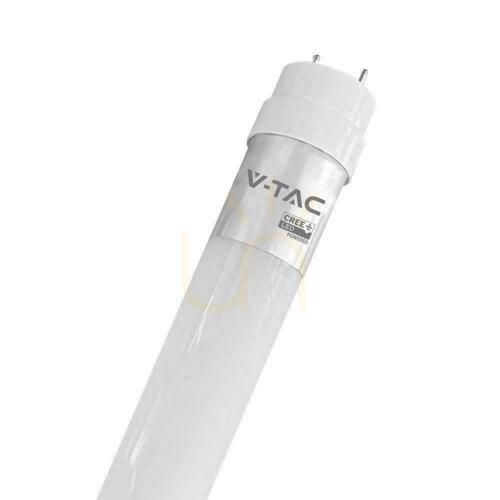
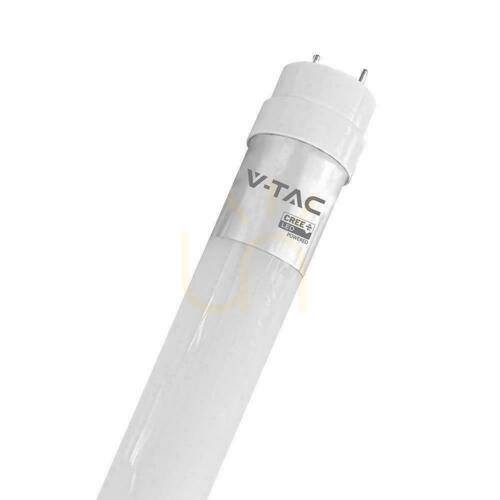
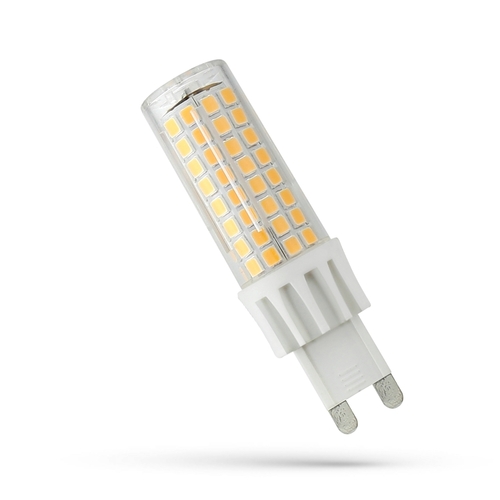
G9 capsules, GX53 discs and T8 LED tubes for garages and workshops.
Decorative filament bulbs mostly come in warm white; cool versions exist but are the exception.
4000 K or 5000 K?
For most homes 4000 K is the sweet spot: bright and businesslike without feeling sterile. Move towards 5000 K where contrast matters more than mood – a workbench, a model-painting desk, a cellar full of shelving. In an unheated garage or shed, LEDs also beat old compact fluorescents by reaching full brightness instantly, even on a frosty morning.
Mixing shades and avoiding common mistakes
In an open-plan kitchen-diner, keep cool white under the wall cabinets and over the island, and a warm pendant over the table, on separate switches. If you cannot decide, colour-switchable bulbs let you flick between roughly 3000, 4000 and 6500 K.
-
Match bulbs in one fitting. Mixed shades in a multi-arm light look patchy. Better lamps state an SDCM rating; 3 steps is good, 5 is typical.
-
Dimmers. Only use bulbs marked dimmable on a dimmer circuit, or expect flicker and buzzing.
-
Enclosed fittings. Heat shortens LED life, so pick bulbs approved for closed shades.
-
Evenings. Cooler light keeps you alert. Bedrooms and children’s rooms usually feel better in warm white.
-
Wiring. Swapping a bulb is a DIY job; fitting a new light to the mains should be done by a qualified electrician to BS 7671.
Cool white bulbs: common questions
Which white is better, cool white or natural white?
Neither wins everywhere. Natural white is gentler for mixed-use rooms and hallways; cool white is better where you prepare food, shave or work at a desk.
What is the difference between cool white and daylight?
Cool white sits around 4000 K and still has a hint of warmth. Daylight is usually 5500–6500 K and looks distinctly bluish indoors.
Which is brighter, cool white or daylight?
Brightness depends on lumens. At the same lumen output, daylight can appear marginally brighter because it is bluer.
Which light bulb is warm white?
Anything at 2700–3000 K, or carrying the code 827 or 830.
Are E14 and E27 the same?
No. Both are screw caps, but E14 is 14 mm across and E27 is 27 mm. Check the old bulb or the fitting before ordering.
Are cool white GU10 bulbs good for a kitchen?
Yes, especially over worktops. Choose a beam of around 36° for general lighting and CRI 80 or above.
For caps, shapes and bulb types in general, see light bulbs. If some rooms call for something cosier, read about 3000 K warm white bulbs.