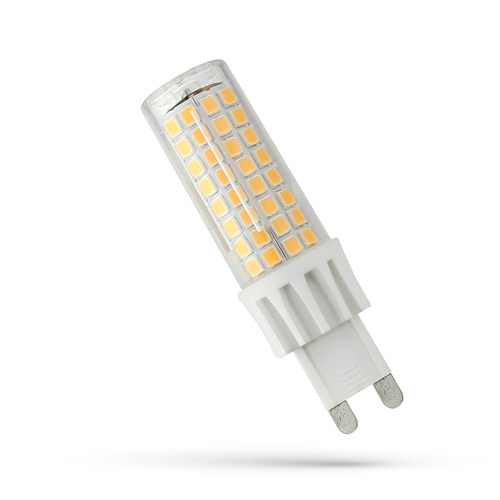
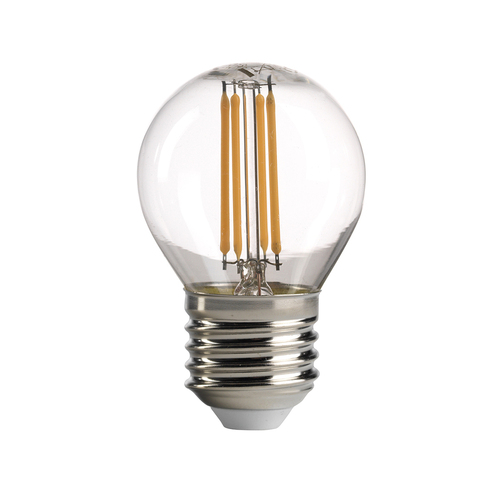
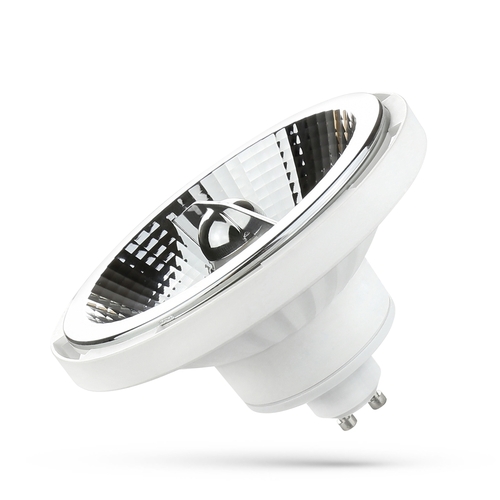
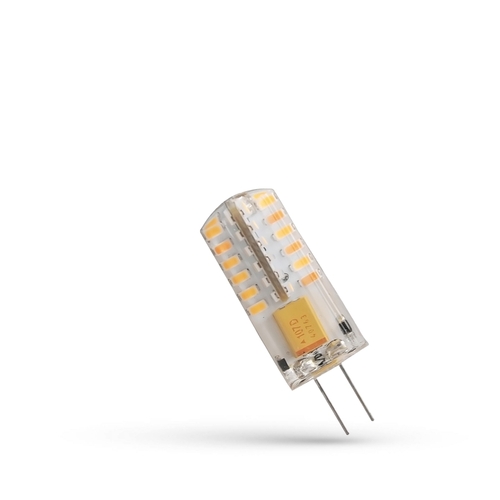
A warm white 3000 K bulb gives a soft, slightly golden white – less yellow than an old incandescent, but nowhere near the stark white of an office. Bulbs between 3000 K and 3500 K are the middle ground of home lighting: cosy enough for the lounge, clear enough for the kitchen worktop and the bathroom mirror.
The Kelvin figure tells you the colour of the light and nothing else. How bright a bulb is comes down to lumens, and how true colours look depends on its colour rendering (CRI), so those two numbers matter just as much.
Where 3000–3500 K sits among the whites
Shops in the UK label colour temperature loosely, which is where much of the confusion starts. As a rule of thumb, ‘extra warm’ or ‘warm white’ on a 2700 K bulb means the familiar incandescent glow; 3000 K is usually called warm white and is the least yellow of the warm whites; 4000 K is cool or natural white. 3500 K, the top of this range, falls just past the point (around 3300 K) where lighting standards stop calling light warm, so it looks fresh without turning cold.
| Label you may see |
Kelvin |
Code on the pack |
How it feels |
| Extra warm white |
2700 K |
827 / 927 |
Golden, like an old filament bulb |
| Warm white |
3000 K |
830 / 930 |
Soft white, close to halogen |
| Warm-neutral |
3500 K |
835 / 935 |
Clean, still friendly in the evening |
| Cool or natural white |
4000 K |
840 / 940 |
Crisp, suits utility rooms and desks |
| Daylight |
5000–6500 K |
850 / 865 |
Bluish, best kept to garages and workshops |
In the three-digit code, the first digit stands for colour rendering (8 means CRI 80–89, 9 means CRI 90 or more) and the last two give the Kelvin value divided by a hundred. For dining tables, dressing areas and mirrors, CRI 90 makes skin, wood and food look noticeably more natural.
Swapping halogen downlights for 3000 K LEDs
Halogen bulbs glow at roughly 2800–3000 K, which is why 3000 K is the go-to choice when replacing the GU10 downlights found in so many British kitchens and bathrooms. The room looks almost exactly as it did, while each spot draws a fraction of the power. A typical LED GU10 that stands in for a 50 W halogen runs at around 5–6 W and gives about 350–450 lm.
Check a few things before you order a full set:
-
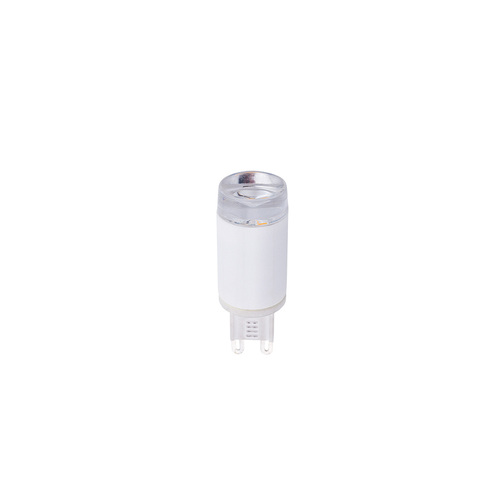
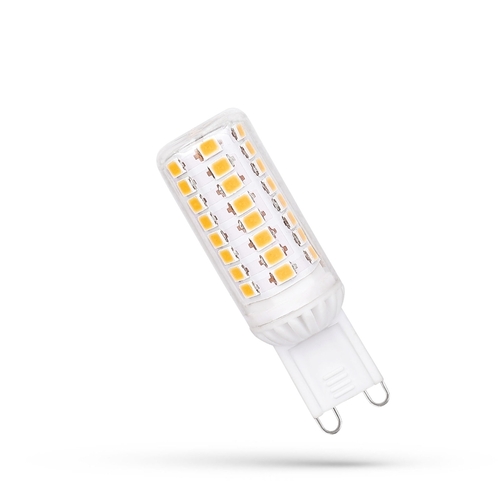
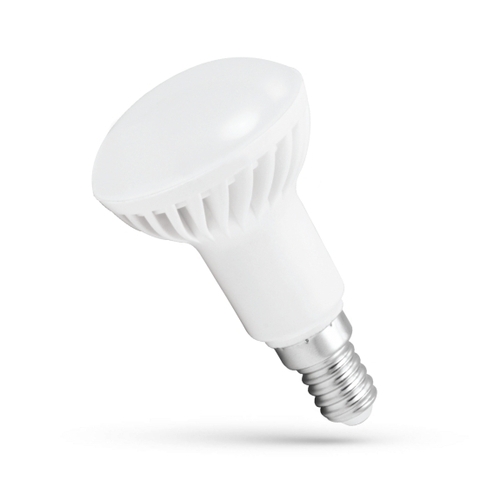
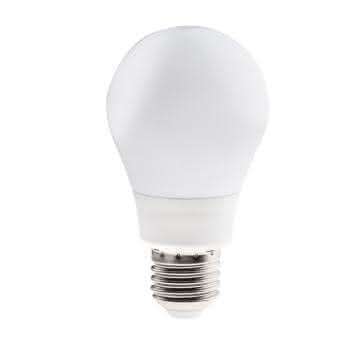
Cap type. Many UK pendants and lamps take B22 bayonet bulbs rather than E27 (ES, Edison screw), and candle lamps often use E14 (SES, small Edison screw). The colour temperature options are the same across caps.
-
Beam angle. Downlights in a high ceiling or over a worktop work best with a narrower beam, around 36–40°; a wider beam suits general light in a low ceiling.
-
Dimmers. Only bulbs marked dimmable will work on a dimmer, and older dimmers built for halogen loads often cause flicker or buzzing. A trailing-edge LED dimmer usually solves it; have a qualified electrician fit it.
-
Bathroom zones. The bulb is only part of the story near water. The fitting needs the IP rating required for its zone under BS 7671, so check it before swapping in a new colour.
Rooms that suit 3000 K, and when to go up to 3500 K
In a lounge or dining room, 3000 K makes a good main light, with warmer lamps on side tables for the evening. In a kitchen-diner it keeps the whole space consistent; if the worktop needs more clarity, add 3500–4000 K under-cabinet strips rather than changing every ceiling bulb. Hallways and landings look welcoming at 3000 K and feel less glaring at night.
Bathrooms split opinion. Glossy white or grey tiles can look sharper under 3500–4000 K, while warm stone, timber and brass are kinder to the eye under 3000 K. Outside, warm white attracts fewer insects than cool white and is the usual dark-sky recommendation, because warm light adds less glow to the night sky.
Common slip-ups
The same number on two boxes does not guarantee the same shade. Bulbs from different makers – or even different batches – can look slightly pink or green beside each other, so buy one model for one room. Mixing 2700 K and 3000 K in a single row of downlights is noticeable, and 3000 K next to 4000 K looks patchy. Standard LEDs also stay at 3000 K when dimmed; they get dimmer, not warmer, unless the box says dim-to-warm.
Frequently asked questions
Which colour is 3000 K?
A warm white with a gentle golden tint. It is whiter than a traditional bulb at about 2700 K and warmer than the neutral 4000 K used in offices.
Is warm white 3000 K or 4000 K?
Warm white is 3000 K or lower. 4000 K is sold as cool white or natural white, so it is worth checking the Kelvin figure rather than the label alone.
What colour is warm white light?
Yellowish to soft white, depending on the exact figure. 2700 K looks golden, 3000 K a touch cleaner, and both feel relaxed rather than clinical.
What’s better, 800 lumens or 1000 lumens?
Neither is better in itself. Around 800 lm matches an old 60 W bulb and suits a lamp or a small room; about 1000 lm is closer to 75 W and suits a larger room with a single ceiling light.
How many watts is a 3000 K GU10?
Most LED GU10s in warm white draw roughly 4–7 W. Compare them by lumens: about 350–450 lm replaces a 50 W halogen spot.
Does 3000 K use more electricity than 4000 K?
No. Consumption depends on the wattage. Warm LEDs can be marginally less efficient per watt, but the difference is small next to the saving over halogen.
More on caps, shapes and light output: light bulbs. If a bedroom or reading corner calls for an even softer glow, read more about 2700 K warm white bulbs.