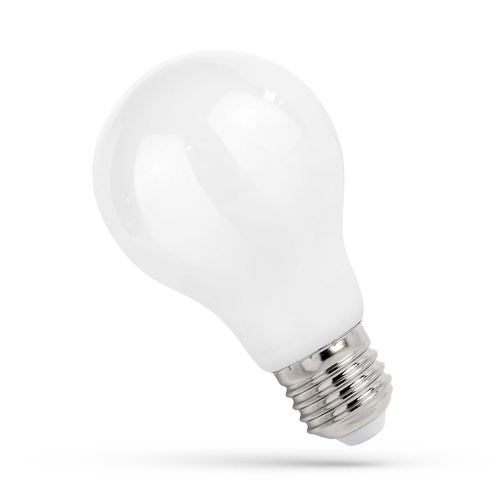
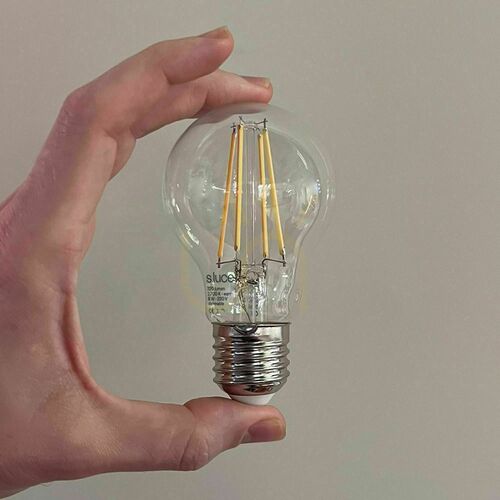
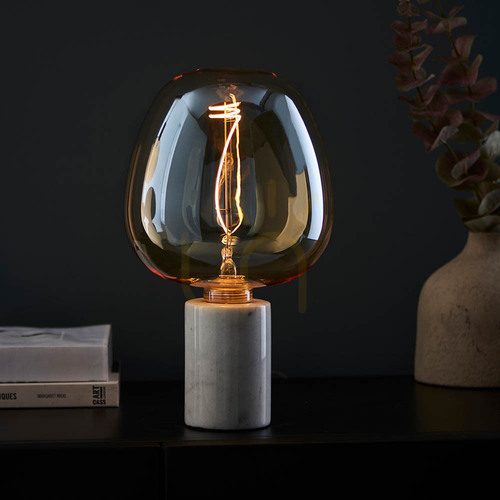
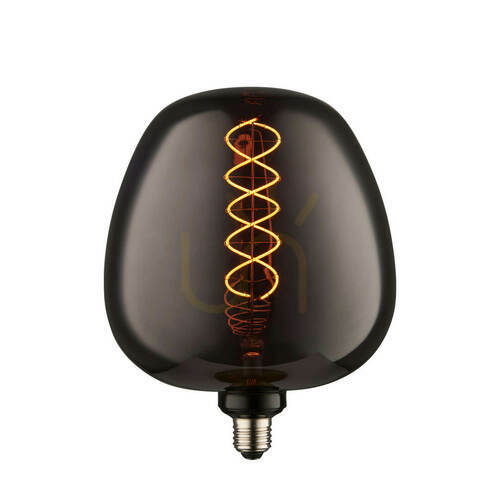
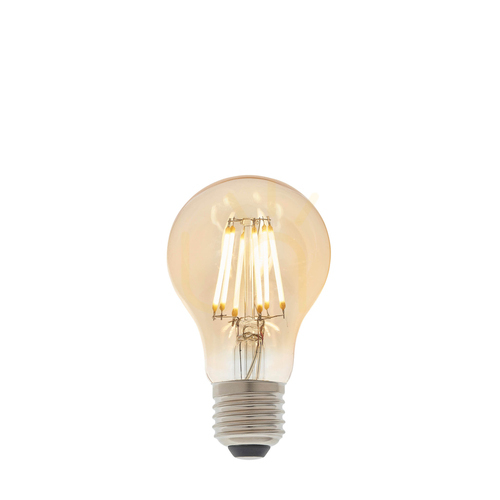
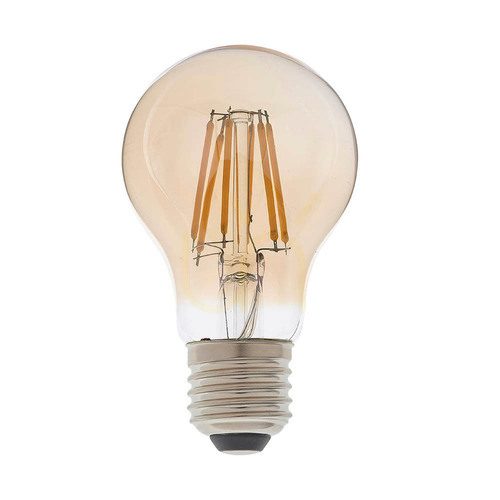
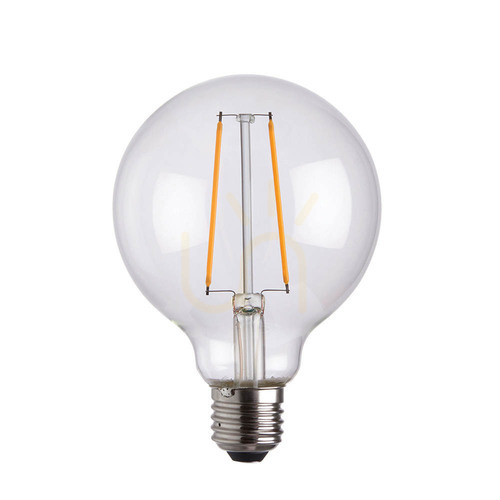
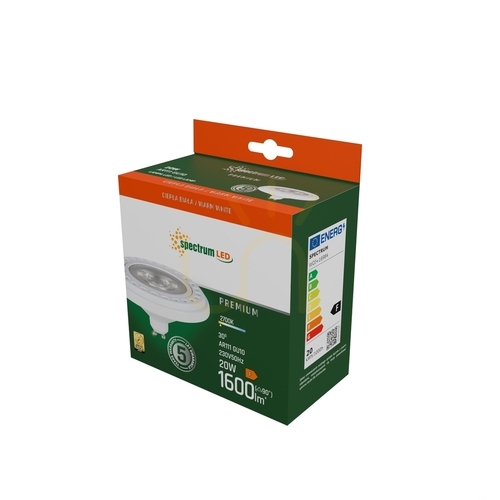
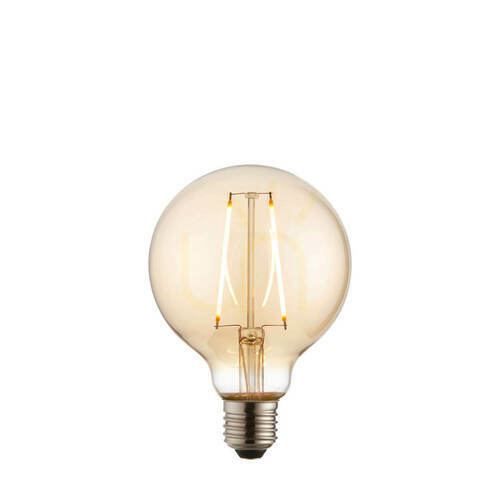
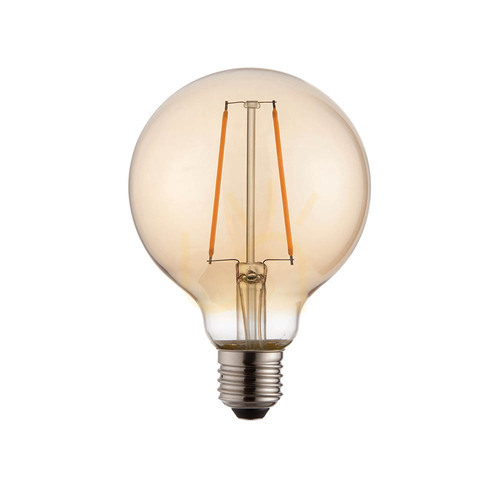
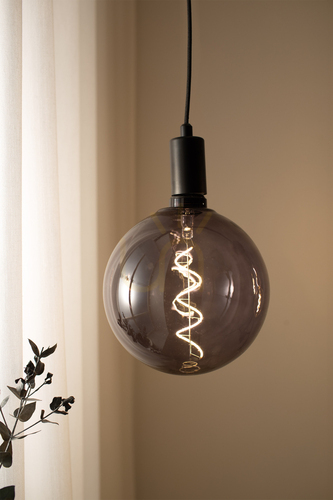
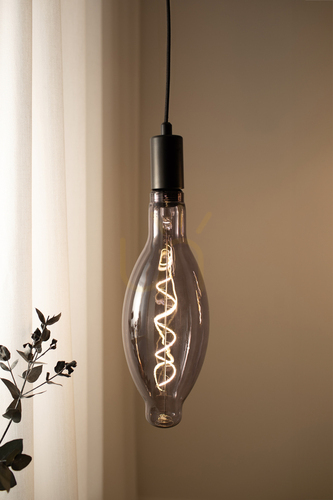
A 2700 K bulb gives warm white light with a soft golden tint, the look most of us remember from the old incandescent bulb. Choosing bulbs at 2700 K or below is the quickest way to make a room feel relaxed in the evening, whatever the cap, shape or wattage you need.
What counts as 2700 K and below
Colour temperature runs the opposite way to what you might expect: the lower the Kelvin figure, the warmer and more amber the light. A candle flame sits around 1800–1900 K, a traditional incandescent around 2700 K, halogen slightly higher, and midday daylight at 5000 K or more. So 2700 K is the warm end of ordinary household lighting, while 3000 K is still warm white but a little crisper.
Bulbs at or below 2700 K fall into three broad groups:
-
Standard warm white at 2700 K – frosted or opal LED bulbs for ceiling pendants, wall lights and table lamps.
-
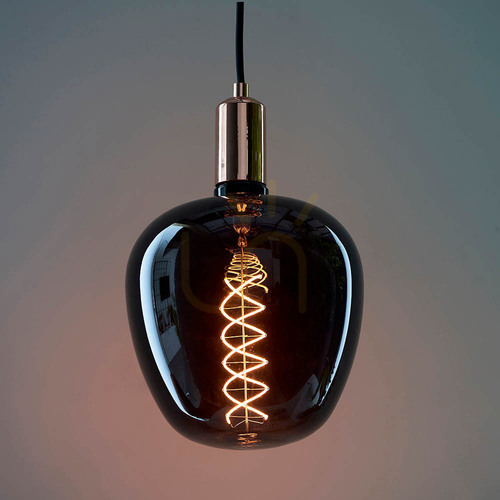
Extra warm at 2200 K or lower – usually LED filament bulbs, often with amber or smoked glass, chosen for their glow rather than their output.
-
Dim-to-warm bulbs – these drift from about 2700 K towards 2200 K as you dim them, mimicking the way a filament bulb used to behave.
Warm white isn’t tied to a particular fitting. UK homes mix bayonet caps (B22), large Edison screw (E27) and small Edison screw (E14), and GU10 spotlights and G9 capsules come in the same colour temperatures.
Choosing the right warm white bulb
Three figures on the box tell you most of what you need: Kelvin for the colour, lumens for the brightness and CRI (Ra) for how faithfully colours show up. The table puts the warm options side by side, with two cooler values for reference.
| Colour temperature |
What it looks like |
Where it suits |
Typical output |
| 1800–2000 K |
amber, candle-like |
decorative pendants, festoons, a terrace after dark |
around 100–300 lm |
| 2200 K |
very warm, orange |
bedside lamps, mood lighting, clear glass shades |
250–470 lm |
| 2700 K |
warm white, faintly yellow |
living room, bedroom, dining room, hallway |
470–1055 lm per light |
| 3000 K (for comparison) |
warm but fresher |
kitchen, bathroom, open-plan spaces |
806–1521 lm |
| 4000 K (for comparison) |
neutral white |
home office, utility room, garage |
806–1521 lm |
If you still think in watts: 470 lm replaces a 40 W bulb, 806 lm a 60 W, 1055 lm a 75 W and 1521 lm a 100 W. Some packs also show a three-digit code – 827 means 2700 K with a CRI of 80–89, 927 the same colour with CRI 90 or above. In warm light the higher figure really shows: oak, linen and skin tones look richer, and reds don’t turn muddy.
Where 2700 K works in a British home
Living rooms, dining rooms and bedrooms are the natural home for 2700 K. It flatters timber floors, brass, brick, wool throws and the warmer paint shades that suit period properties. Bright white kitchens are a different story: very warm light can make white units and tiles look slightly yellow or even pinkish, so many people step up to 3000 K over the worktop and 3000–4000 K in the bathroom.
Shades change the effect too. An amber, smoked or fabric shade warms the light further, so a 2700 K bulb inside can read closer to 2200 K. Opal glass diffuses the light and makes it look a touch whiter.
Common mistakes and care
-
Dimming. A standard LED gets dimmer but not warmer. For the old filament effect, look for dim-to-warm. Only use bulbs marked dimmable, and pair them with an LED-compatible dimmer (usually trailing edge). Older dimmers often cause flicker or buzzing; have a qualified electrician swap them.
-
Too little light. Extra warm filament bulbs at 1800–2200 K look beautiful but rarely give enough light for reading or cooking on their own.
-
Enclosed fittings. Check that the bulb is suitable for a closed lantern or bulkhead before using it outdoors.
-
Dust. A dusty bulb or shade swallows a surprising amount of light. Wipe it dry with the power off.
Frequently asked questions
What is a 2700 K LED light bulb?
It is an LED bulb whose light matches the warm white of a traditional incandescent. The figure describes colour only; brightness is given separately in lumens.
Is 2700 K light too yellow?
Not in a lounge or bedroom, where it reads as cosy. Next to white units, cool grey walls or daylight from a north-facing window it can look yellowish, and 3000 K is usually the better fit there.
Is it okay to mix 2700 K and 3000 K lights?
In separate zones, yes. Side by side in the same fitting or line of downlights the difference is visible, so keep one colour temperature per room where you can, and never mix 2700 K with 4000 K.
Is 2700 K too warm for a bedroom?
No, it is one of the most popular choices for bedrooms. Many people go even warmer, around 2200 K, for bedside lamps they use last thing at night.
Is 2700 K or 3000 K better for outdoor lighting?
Both work. Warmer light tends to attract fewer insects and looks softer in a garden, while 3000 K gives slightly crisper light on paths and steps.
2700 K vs 3000 K for a kitchen?
In a kitchen-diner, 2700 K suits the general light and the pendant over the dining table, where it keeps the room relaxed in the evening. Over white units and worktops 3000 K is usually the better pick: still warm, but it keeps whites clean and makes chopping and cooking easier to see.
For caps, shapes and output across every bulb type, see light bulbs. If the kitchen or bathroom needs something a little fresher, read more about 3000 K warm white bulbs.