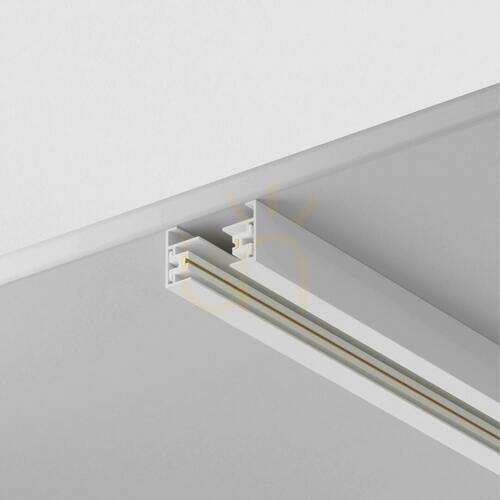
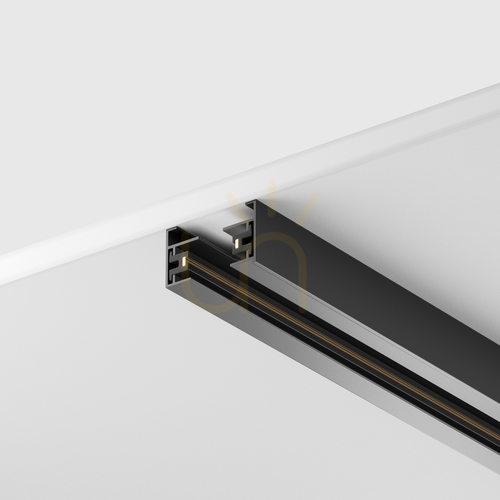
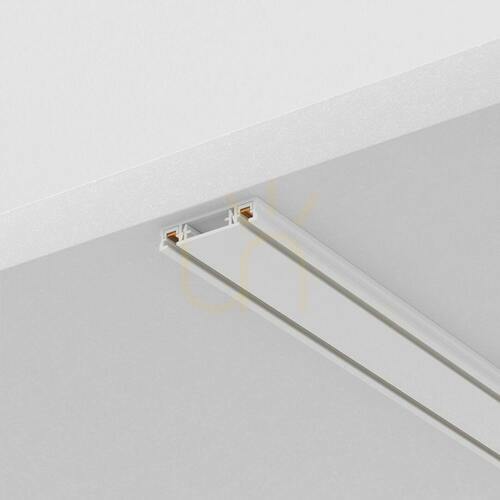
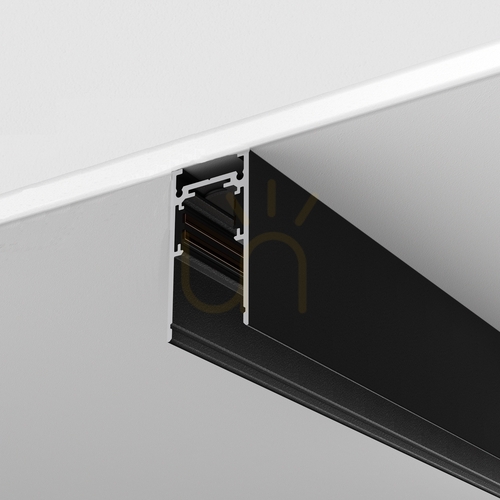
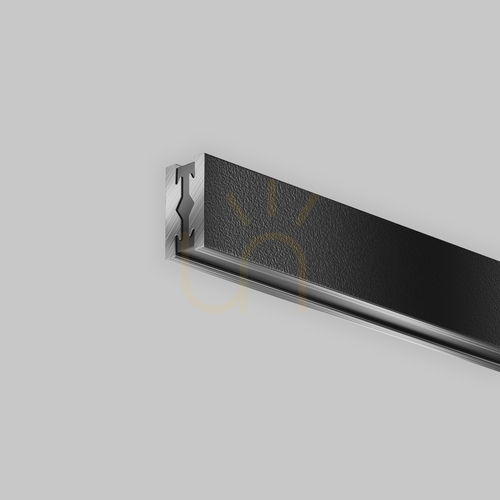
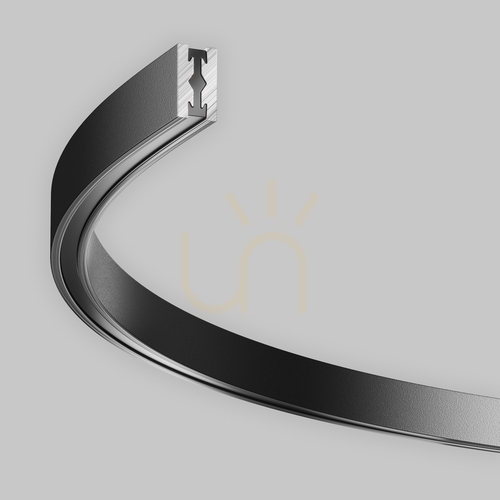
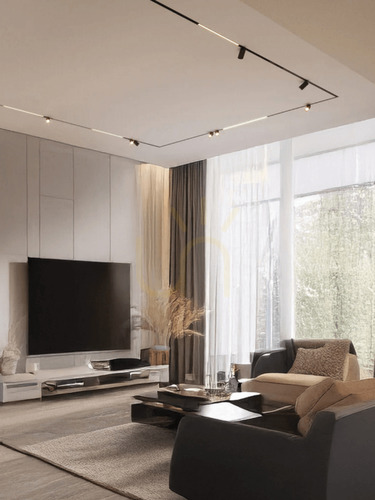
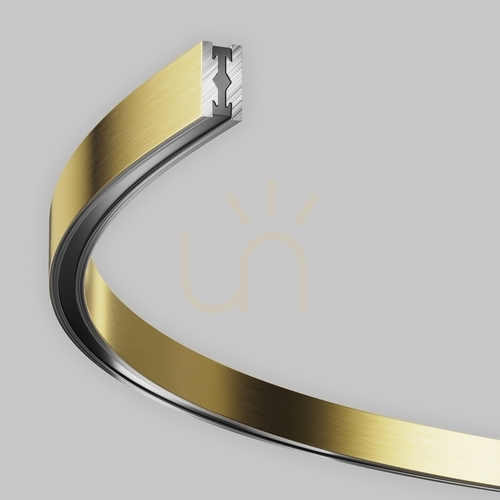
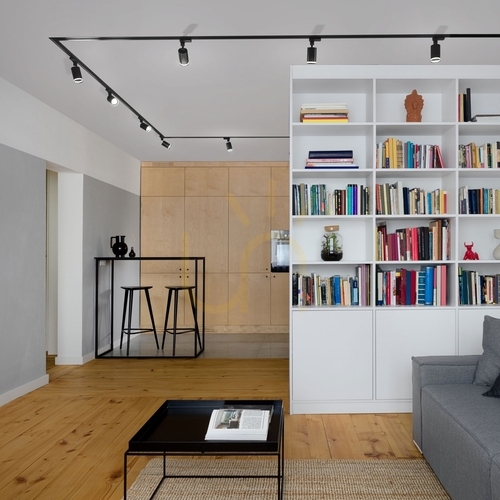
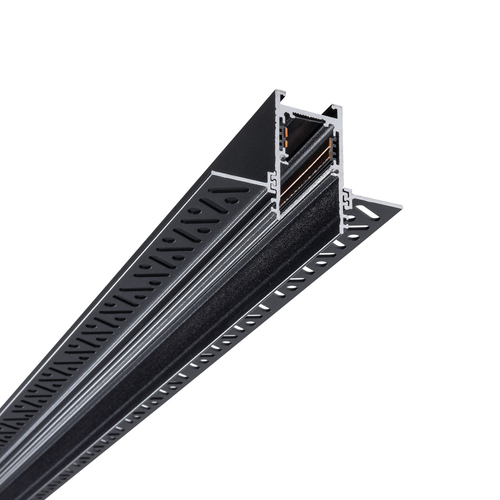
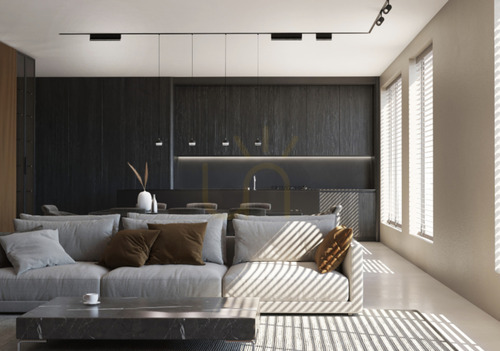
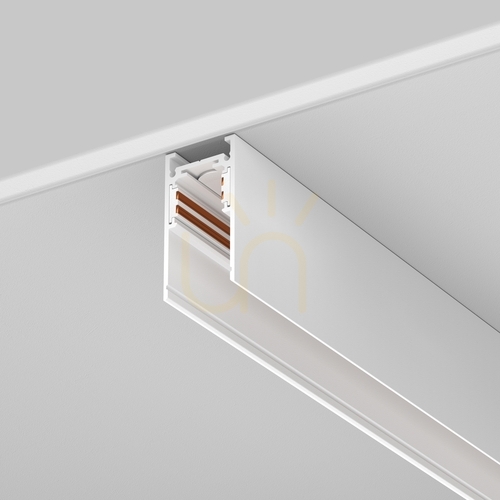
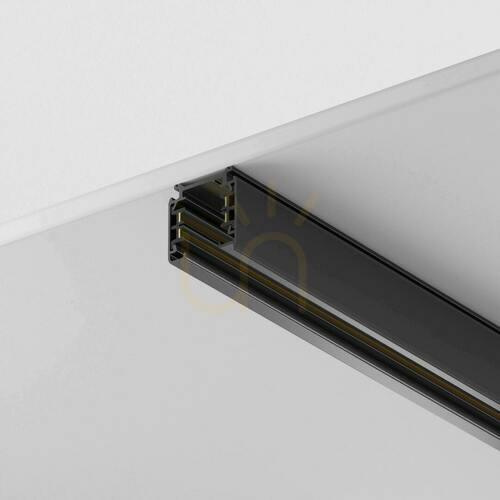
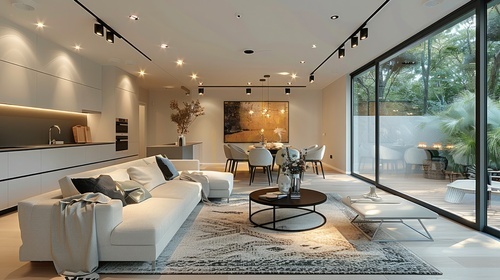
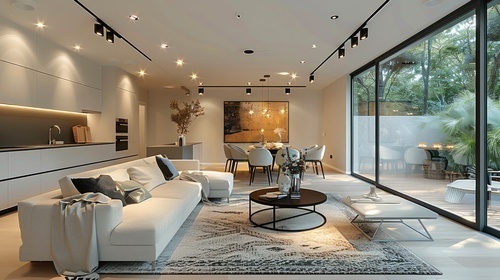
A track lighting rail in aluminium is an extruded metal channel with insulated copper conductors running inside it, so a spotlight or pendant can clip in and draw power anywhere along its length. Aluminium is the standard material for lighting track, and what really separates one rail from another is the finish, the profile size, how it is fixed to the ceiling and which adaptor system it takes.
That makes the choice less about the metal and more about the room: how high the ceiling is, how many groups of lights you want to switch separately, and whether the rail should stand out or disappear.
What are the different types of track lighting?
UK homes and shops mostly use four kinds of aluminium track, and they are not interchangeable.
-
Single-circuit mains track – 230 V, one circuit, every fitting switches together. The usual choice for kitchens and living rooms.
-
Three-circuit (3-circuit) track – three live conductors, so each fitting can be assigned to one of three switched groups. Common in shops and galleries, useful in large open-plan spaces.
-
Two-circuit track – a middle ground that splits general and accent lighting.
-
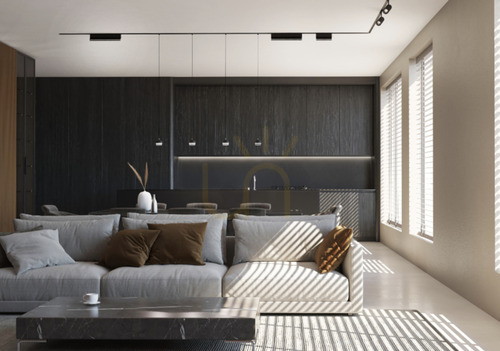
Magnetic low-voltage track – usually 48 V DC from a driver, with fittings that snap on magnetically. Aluminium itself is not magnetic, so the profile normally carries a steel insert for the magnets to grip.
Within the three-circuit family there are several adaptor standards that do not fit each other, so track, connectors and fittings should all belong to one system.
Choosing an aluminium rail: the numbers that matter
| Feature |
Typical in UK homes and shops |
What to check |
| Section lengths |
1 m, 2 m and 3 m; some mains track in 1220 mm and 2440 mm (4 ft and 8 ft) |
longer runs need straight connectors |
| Profile size |
around 30–35 mm for mains track; 15–25 mm for slim magnetic track |
slim profiles read better on low ceilings |
| Finish |
anodised, or powder-coated in matt white, matt black, grey or silver |
match connectors and live ends to the rail |
| Electrical class |
mains aluminium track is normally Class I (earthed) |
the earth must be connected |
| Load |
stated in amps or watts on the data sheet; on magnetic track the driver sets the limit |
add fitting wattages, keep about 20% headroom on the driver |
| IP rating |
usually IP20 |
dry rooms only |
For spacing, one to two spotlights per metre is a sensible starting point in a home. Under a standard 2.4 m ceiling, spots of roughly 300–400 lm each do the job; go brighter in a Victorian room with 3 m ceilings. Warm white at 2700–3000 K suits living rooms and bedrooms, while 4000 K is popular over kitchen worktops.
How does track lighting get installed?
A surface-mounted rail is screwed to the ceiling or wall through the pre-drilled holes in the profile. On a plasterboard ceiling, use cavity fixings or screw into the joists; on concrete, plugs and screws. A live end connects the rail to the lighting circuit, and an end cap closes each open end. Connecting it to the mains is a job for a registered electrician working to BS 7671.
Recessed track sits flush in a plasterboard ceiling and has to be built in before the ceiling is finished – it is covered in more depth under recessed lighting tracks. Where the ceiling is high, the rail can hang on wire or rod suspension kits, typically every 1–2 m as the instructions specify; light aluminium keeps the number of drop points low.
Need a shorter piece? Isolate the power, cut with a hacksaw, file the edge smooth, make sure no conductor touches the metal and fit the end cap. Some magnetic systems must not be cut, so check first.
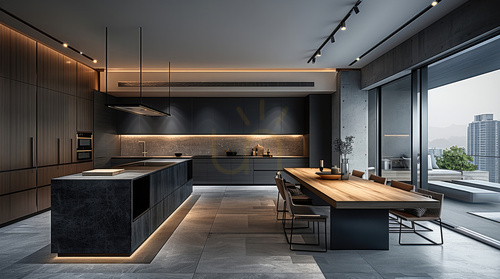
Lighting pictures or shelves? A rail roughly 60–90 cm out from the wall lets each spot hit the wall at about 30°, which lights the artwork without glare for anyone on the sofa. In a kitchen, run the rail above the front edge of the worktop rather than overhead, so you are not working in your own shadow.
Avoiding common mistakes
- Buying fittings for a different adaptor standard – they may look right but not lock or make proper contact.
- Moving spots on a mains rail with the circuit live.
- Putting IP20 track in a bathroom or outdoors.
- Scrubbing the finish: switch off, wipe with a soft dry or barely damp cloth, and skip abrasive creams and solvents that dull anodised or powder-coated aluminium.
FAQ
What is the best track lighting rail for a kitchen?
A single-circuit aluminium rail running parallel to the worktop covers most kitchens. If you want the island, the dining table and the worktop on separate switches, a three-circuit rail is the better fit.
What is better than track lighting?
It depends on the goal. Recessed downlights look cleaner but are fixed in place; a single pendant suits one table. Track wins when you want to aim light at different things and rearrange it later without new wiring.
Can track lighting be dimmed?
Yes, if the fittings are dimmable and the dimmer suits them – on mains track that is usually a trailing-edge dimmer. Magnetic systems are often dimmed through DALI or an app.
Can I hang a pendant from a track?
Yes, with a pendant adaptor from the same system. Check the adaptor's weight limit, often in the range of a few kilograms up to about 10 kg.
Does the colour of the track matter?
White disappears against a white ceiling; black draws a deliberate line and suits industrial or contemporary rooms. Keep the connectors and live ends in the same finish so the run looks continuous.
For systems, lengths and mounting options beyond aluminium alone, see lighting tracks. Once the number of circuits and the ceiling height are settled, picking the aluminium rail comes down to finish and fixing.