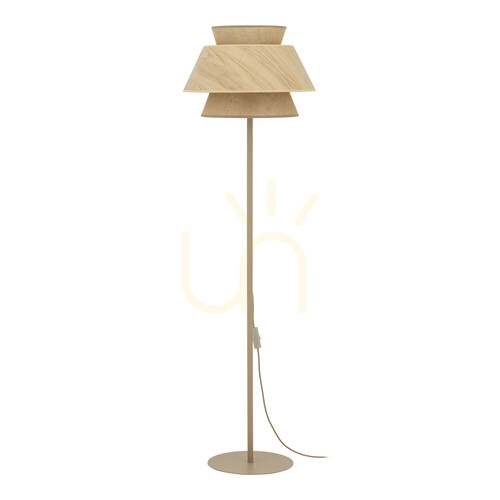
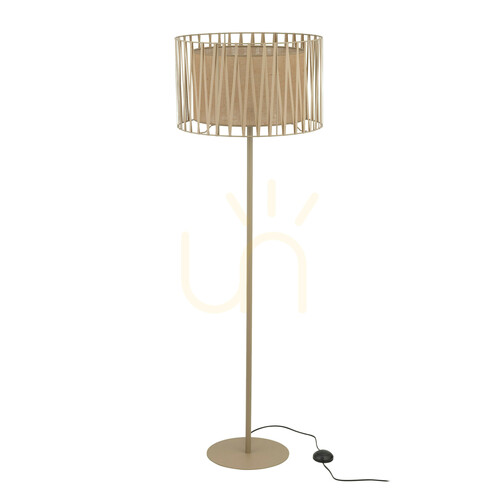
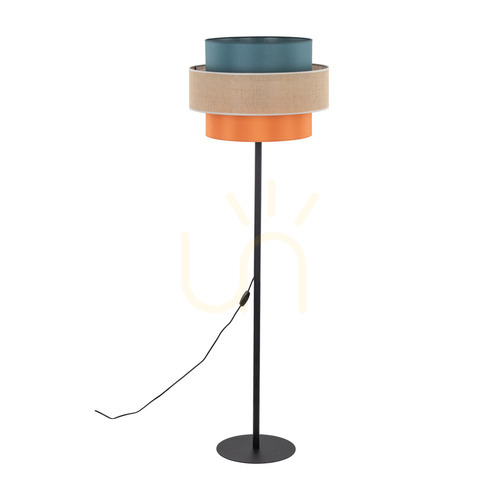
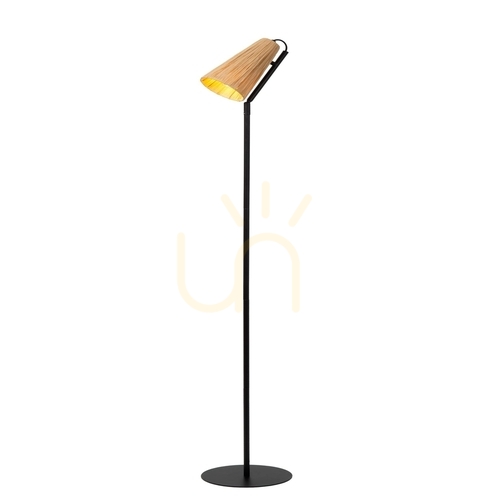
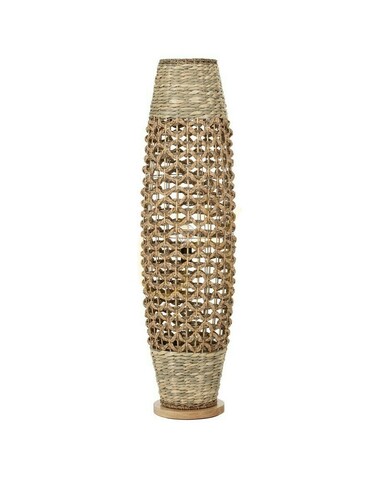
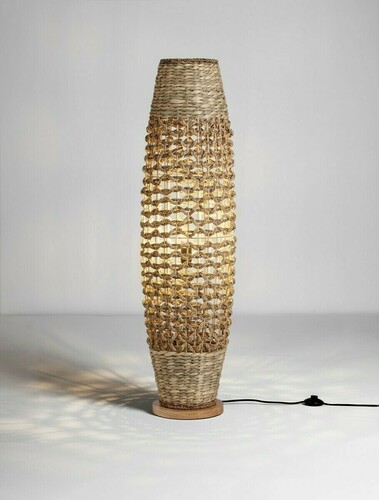
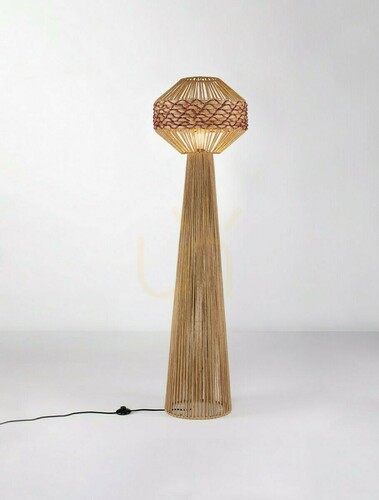
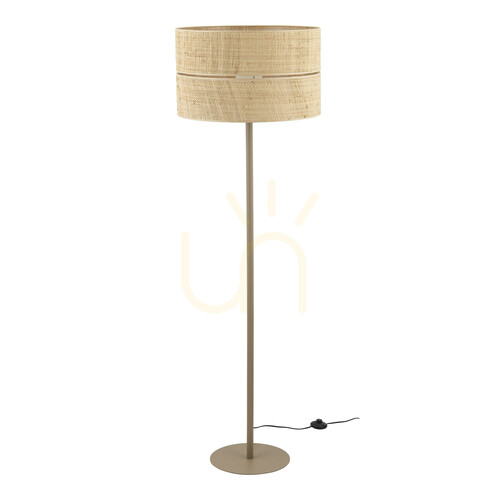
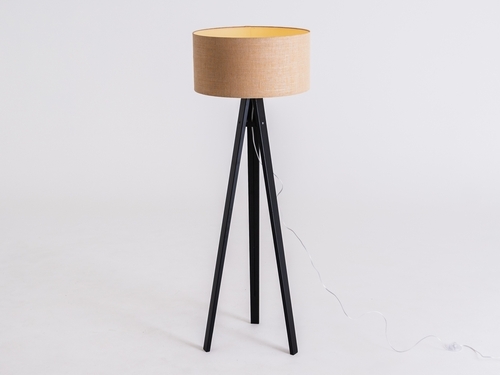
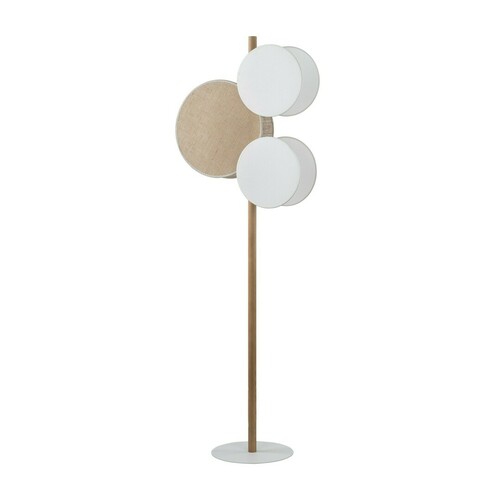
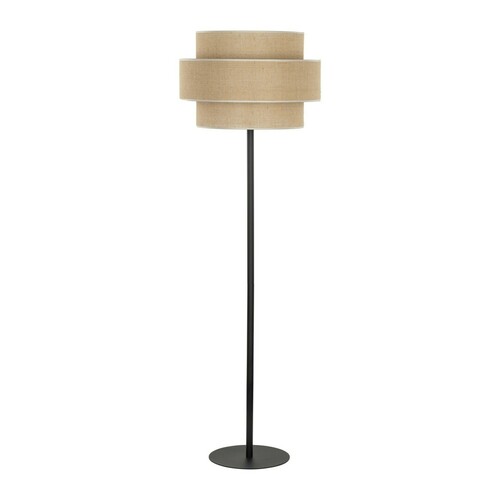
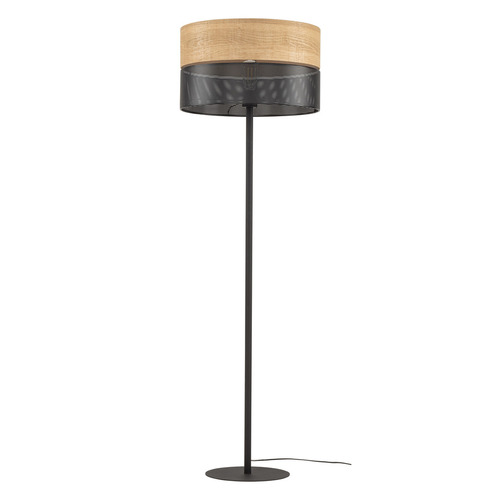
A rattan floor lamp is the boho standing lamp in its most familiar form: a slim stand or woven column topped with a shade of rattan, wicker, bamboo or seagrass. What the boho look changes is the light itself – it filters through the weave instead of pouring out evenly, so after dark the lamp throws a dappled pattern over the walls and ceiling.
That makes a woven floor lamp a different buy from a plain linen one. You are choosing a light source and a piece of texture at the same time, and the weave, height and bulb decide whether you end up with a reading light or a glowing corner.
Which shape suits your room?
Boho floor lamps come in a handful of shapes, and each one lights a room differently:
-
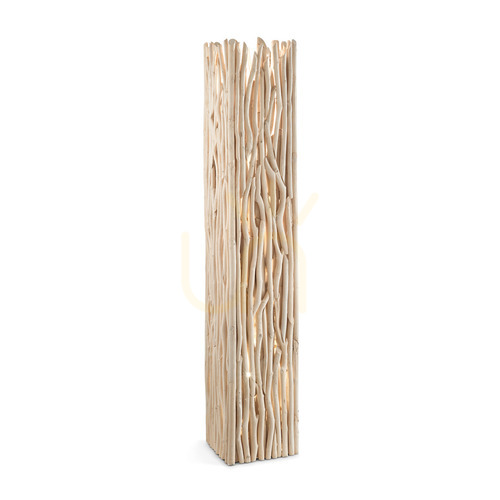
Fully woven column – the whole body is rattan or wicker, so it glows from top to bottom like an oversized lantern. Best in a corner.
-
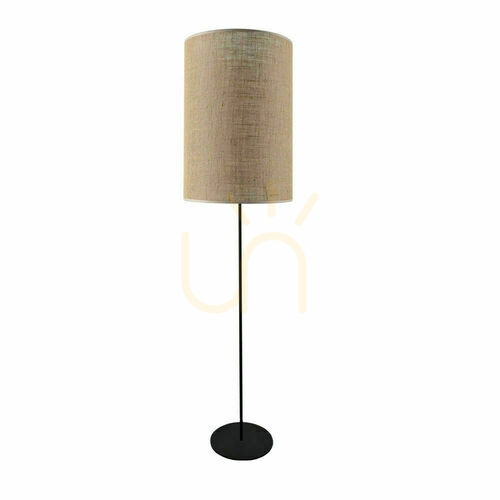
Metal stand, woven shade – the most versatile option. A black or brass-effect stand keeps natural fibre looking modern rather than beach-house.
-
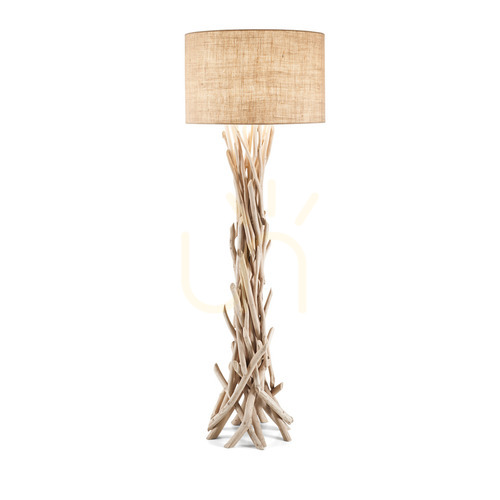
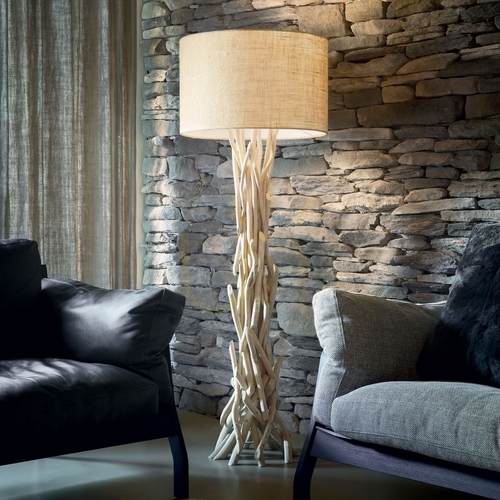
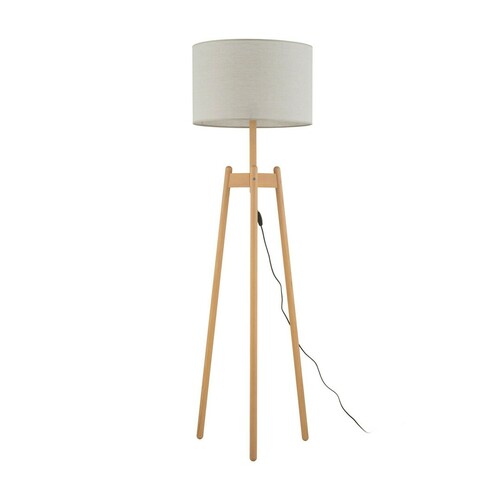
Wooden tripod – usually paired with a linen or jute shade. Warm and relaxed, but the splayed legs need floor space.
-
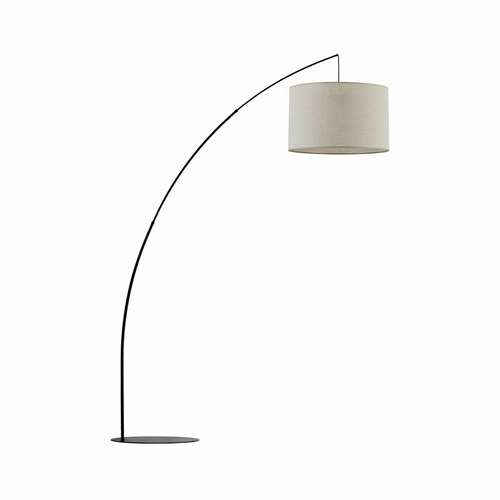
Arc or swing-arm – the shade hangs over the sofa or coffee table, giving overhead light without new wiring in the ceiling.
Tassels, macramé cord and earthy shades of sand, caramel and cream are the classic boho details. A black-stained weave is the modern take, and it reads well against pale walls.
Rattan, wicker, seagrass or bamboo?
The words get used interchangeably, but they are not the same thing. Rattan is a climbing palm: its outer skin is used for binding, and its core, split into round cane, is what most woven shades are made from. Wicker is a weaving technique rather than a material – it can be rattan, willow or even synthetic fibre. Seagrass is denser and slightly greenish, so it gives a softer, more muted glow. Bamboo is usually cut into thin strips or slats, which lets more light through and suits a lighter, more graphic look. Jute and macramé cord sit closer to a fabric shade: very diffuse and best for mood lighting.
Sizing the lamp to the job
Woven shades diffuse light but also hold some of it back – the tighter the weave, the softer and dimmer the result. Use these typical figures as a starting point for a UK home:
| Where it stands |
Typical height |
Weave and shade |
Bulb |
| Living room, beside the sofa |
150–170 cm |
medium or tight weave, less glare on the TV |
LED, 2700 K, ideally dimmable |
| Reading chair |
140–165 cm, shade's lower edge around shoulder height when seated |
open at the bottom or an open weave |
LED, roughly 800–900 lm, 2700 K |
| Empty corner |
160–185 cm |
large open-weave shade or woven column |
LED, 2200–2700 K for mood light |
| Bedroom |
120–150 cm |
tight weave or linen/jute shade |
LED, extra warm, dimmable |
Check the lamp holder before you buy bulbs. Many woven floor lamps use an E27 Edison screw, smaller shades sometimes E14, and lamps made for the UK often take a B22 bayonet cap. In the UK, a lamp with a continental two-pin plug should get a proper fused BS 1363 plug fitted by a qualified electrician rather than living on a travel adaptor.
Getting the light right
Warm white makes all the difference with natural fibre. At 2200–2700 K rattan glows honey-gold; under cool 4000 K light it turns grey and flat. Stick to LED bulbs: they run cool, which matters inside a woven shade, and never exceed the maximum wattage printed on the lamp. On its own, a tightly woven shade rarely lights a whole room, so pair it with a ceiling light or a second, lower lamp.
Place the lamp where its pattern has somewhere to land – a pale wall or a corner – and keep it out of walkways, as woven shades are light but wide and easy to knock.
Care and common mistakes
-
Dust – it settles in the gaps. A soft brush or the brush attachment of a vacuum every few weeks keeps the weave clean.
-
Moisture – wipe marks with a barely damp cloth and let the shade dry completely. Bathrooms and steamy kitchens are no place for natural rattan.
-
Heat and sun – a spot right next to a radiator dries the fibre until it cracks, and strong direct sun bleaches it.
-
Top-heavy lamps – with a big shade, look for a wide, weighted base, particularly with pets or children around.
Frequently asked questions
Are rattan lamps a fire risk?
Not when used with an LED bulb within the lamp's stated wattage. Old-style incandescent or halogen bulbs give off far more heat and are best avoided in any woven shade.
Is a rattan floor lamp bright enough to read by?
It can be, if the shade is open at the bottom and the bulb gives around 800–900 lumens. A closed, dense weave is better treated as mood lighting.
Will a large rattan floor lamp overwhelm a small living room?
A big, open-weave shade needs space and a wall to throw its pattern onto. In a compact room a slim column or a bamboo design gives the same texture with less bulk.
Does a black rattan floor lamp still look boho?
Yes – stained black rattan keeps the woven texture but reads more contemporary. It suits monochrome or Scandi-leaning rooms where natural honey tones might look out of place.
Can I use one outdoors?
Only if it carries an outdoor IP rating such as IP44, and those are usually synthetic weaves. Natural rattan belongs indoors.
How do I clean a rattan lampshade?
Vacuum with a brush attachment or use a soft paintbrush, then wipe stubborn marks with a slightly damp cloth and let it dry fully before switching on.
More on floor lamps beyond the boho look: standing lamps. If you want the same woven look on a sideboard or bedside table, see boho table lamps.