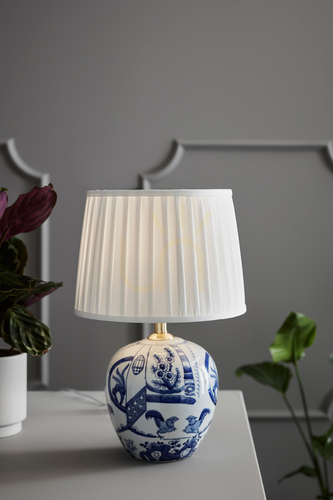
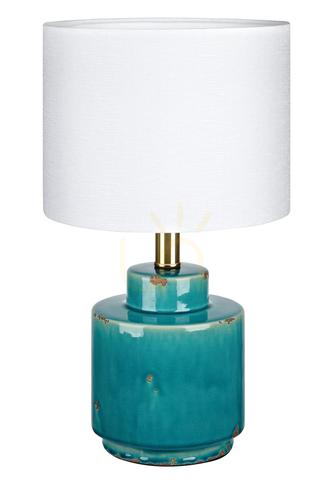
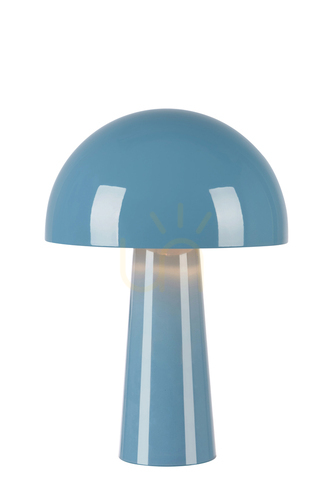
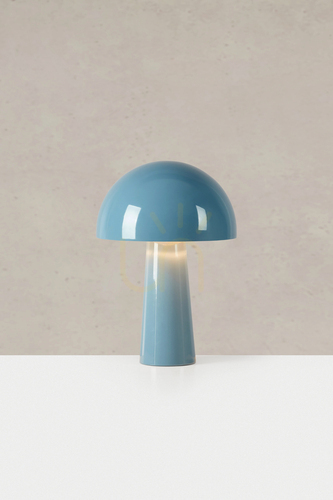
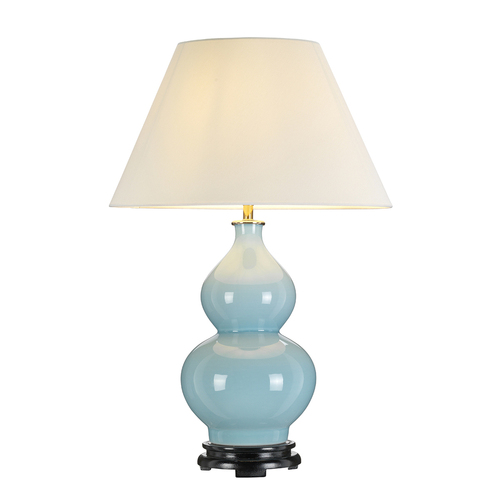
Blue table lamps are the safest way to put a strong colour into a neutral room. A blue base occupies very little visual space — it is a small object on a side table or a console — but it is enough to pick up a rug, a cushion or a spine of books and make the whole scheme look deliberate. The difficulty is that blue is not one colour, and the version you choose behaves quite differently once the lamp is switched on.
Which blue you are actually choosing
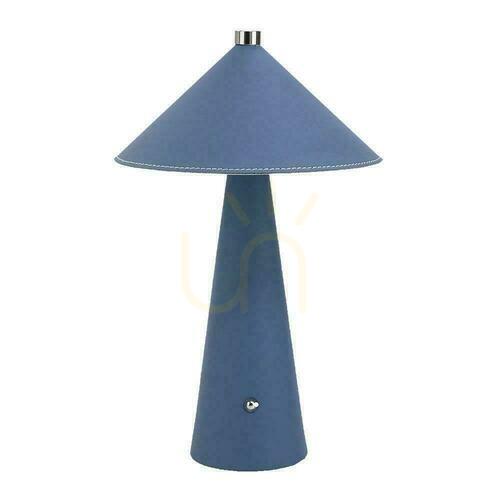
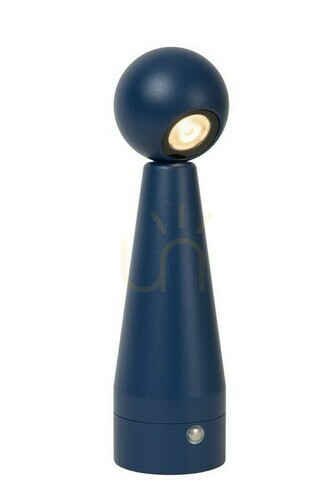
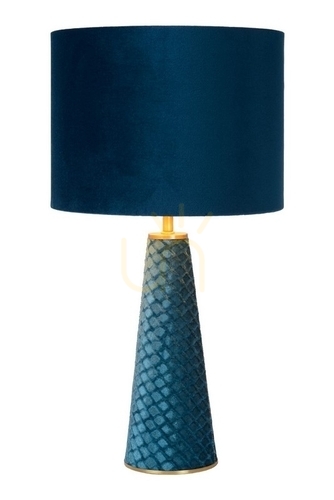
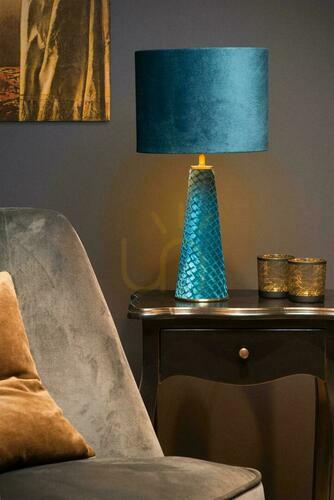
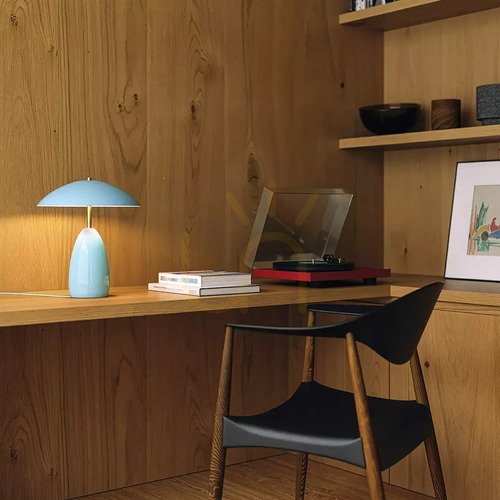
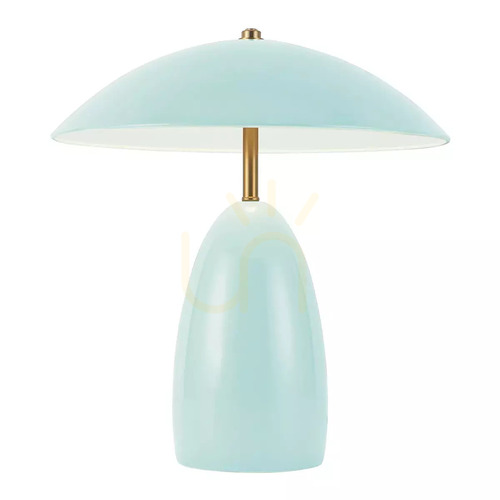
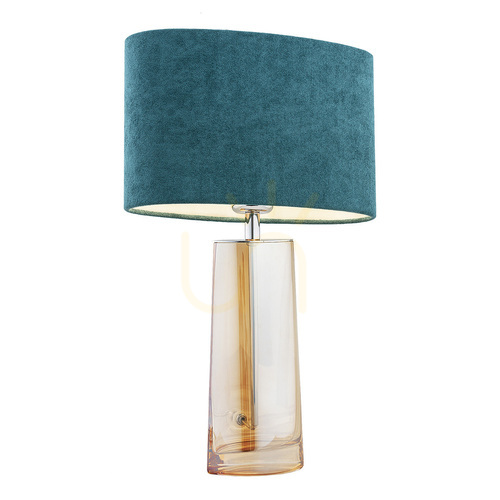
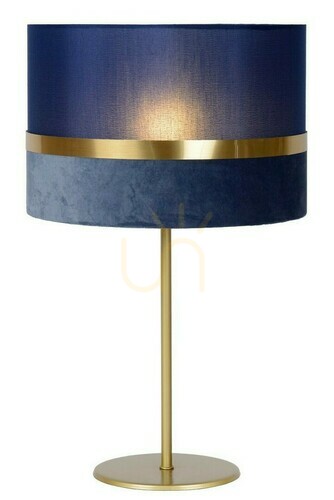
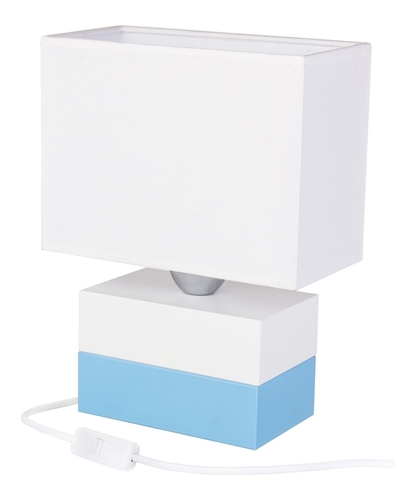
Navy and midnight read almost as neutrals in the evening and pair with cream shades the way black pairs with white, only softer. Teal and petrol carry a green undertone and hold their colour better under warm light than any other blue. Cobalt is the loud one, at its best in glass where light passes through it. Duck egg and powder blue are pale and chalky, more architectural than decorative, and they need a warm material nearby — brass, oak, terracotta — or the room turns cold.
The base is decoration, the shade is the light
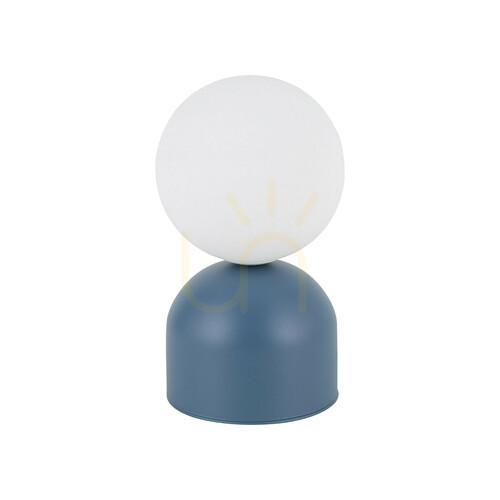
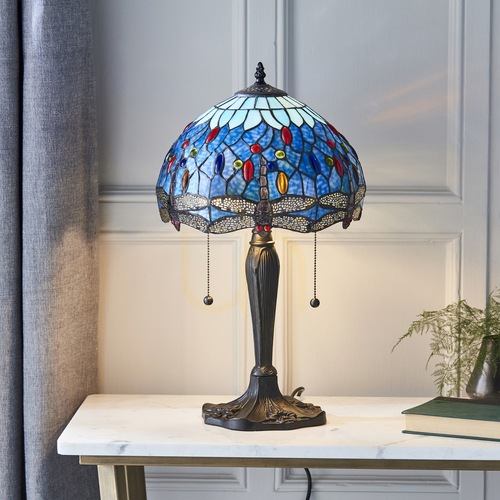
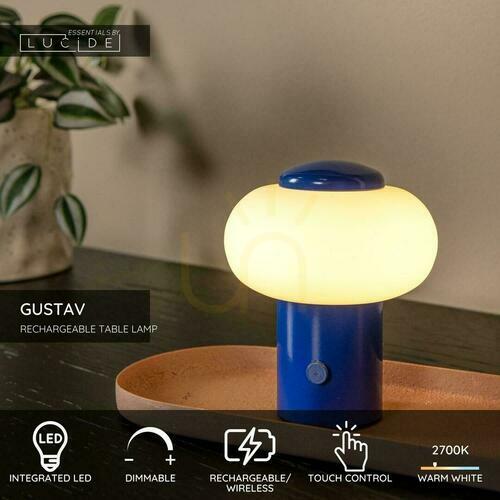
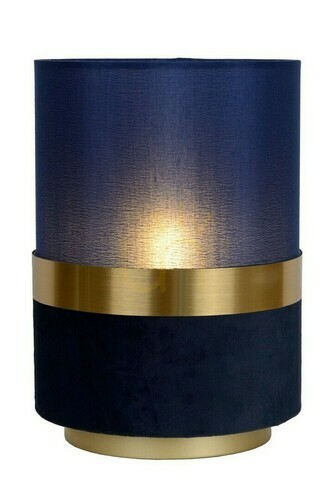
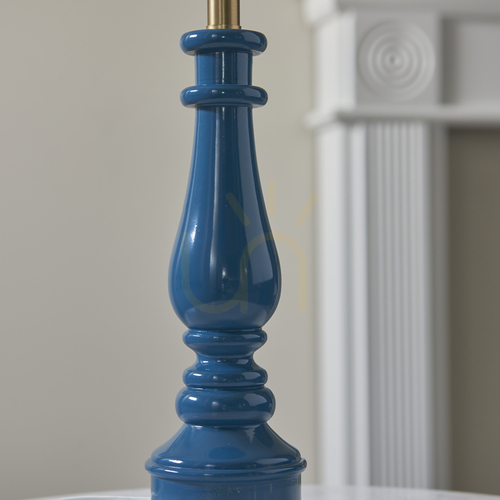
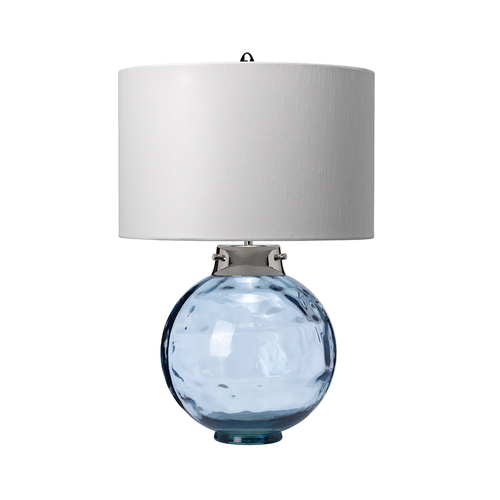
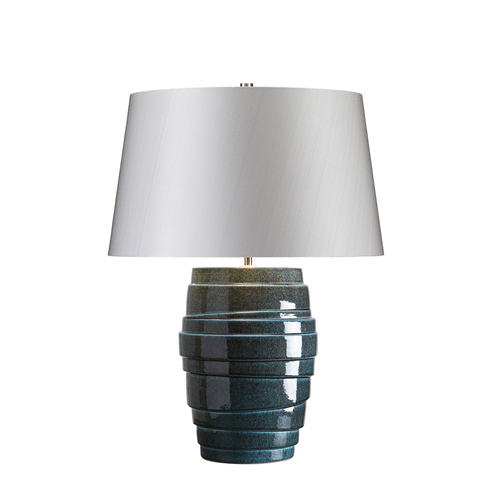
This is the distinction that decides whether you will be happy. A blue ceramic or painted base with a white or oatmeal shade throws ordinary warm light; the colour is purely an object in the room. A blue fabric or blue glass shade tints the light itself and cuts a noticeable share of the output, casting a cool wash on the wall and ceiling. Both are legitimate, but only the first works next to a reading chair. If you want colour and useful light, put the blue in the base.
How the material carries the colour
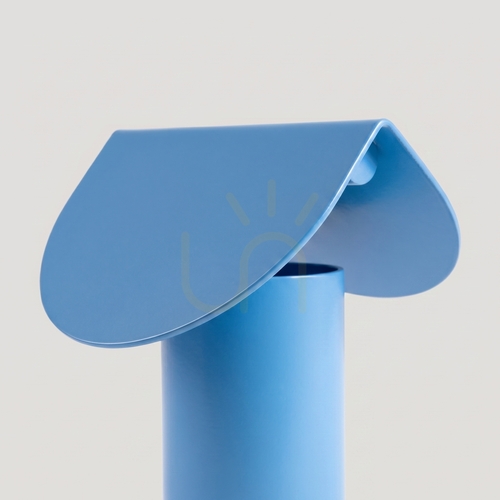
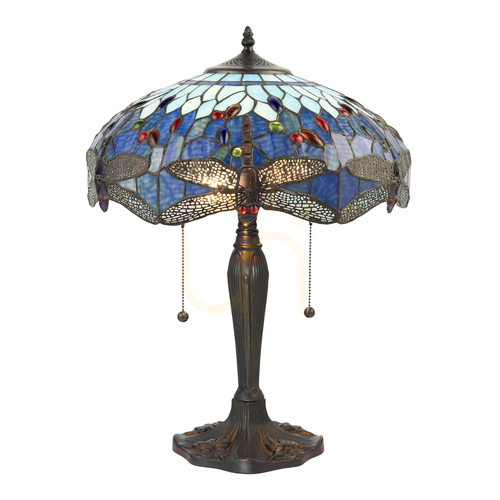
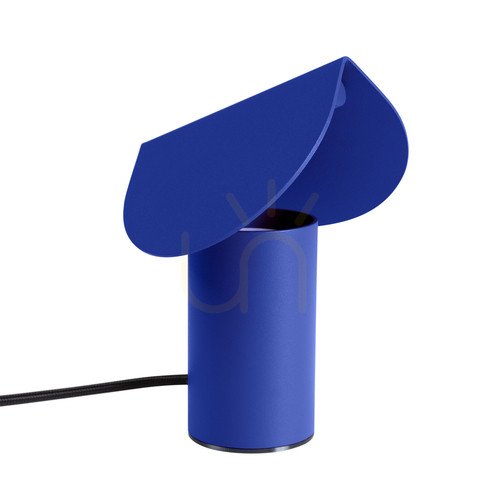
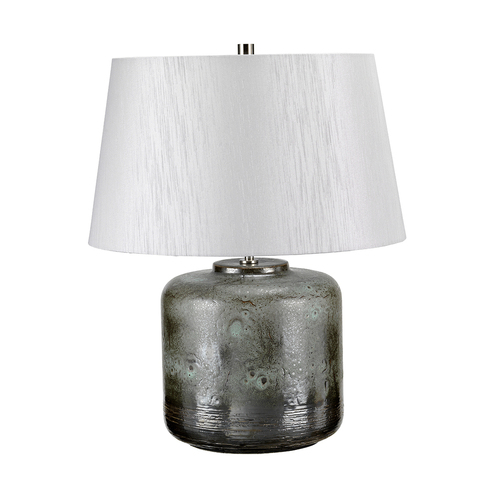
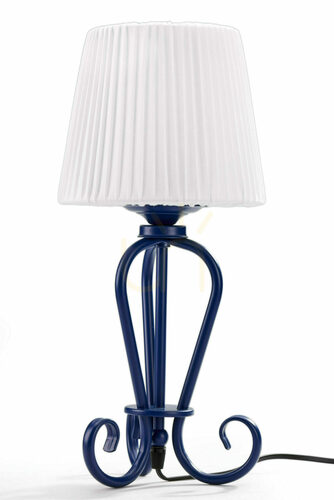
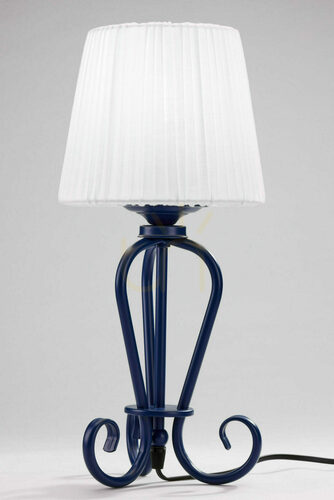
Glazed ceramic gives blue depth, because the glaze has thickness and pools darker in the hollows — reactive glazes in particular break from pale to deep across a single curve. Coloured glass depends on being lit: unlit it looks grey-blue, lit from within it saturates dramatically, which is why blue glass bases are so often designed with the source inside them. Painted or powder-coated metal gives the flattest, most even blue and the crispest edges, and it is the only version that comes in a true matte.
Blue under a warm bulb
Worth testing before you commit. Warm light at 2700 K contains comparatively little blue, so blue surfaces desaturate under it — a bright cobalt looks quieter at night than it did in the shop, and a grey-blue can drift towards green. Teal and navy hold up best. If the lamp will live in a room lit at 3000 K or daylight-heavy, the colour will stay closer to what you saw online.
What sits well beside blue
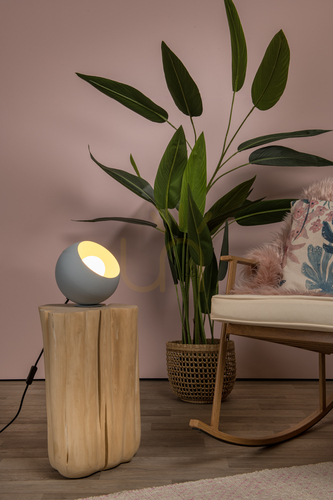
Brass and antique gold are the classic warm counterweight and rescue the paler blues. Natural oak and rattan do the same job more quietly. White and off-white shades keep it clean, while a black shade on a navy base gives a sharper, more tailored look. Blue and blue is the trap — a blue lamp against a blue wall of a slightly different cast simply looks like a mistake, so either match exactly or contrast clearly.
Frequently asked
Does a blue lamp base make the light blue?
No, provided the shade is neutral. Base colour is decoration; only a coloured shade or a coloured diffuser changes the light.
Which shade colour suits a navy base?
Cream, oatmeal or white for warmth and contrast; black for a graphic, more formal pairing. Avoid a shade in a second blue.
Will a pale blue lamp look cold?
On its own in a grey room, yes. Give it a warm neighbour — brass hardware, a wooden tray, a warm-white bulb — and it settles.