
Bathroom Ceiling Light IP44 – How to Choose One and Where to Mount It
The bathroom is the hardest room in the house to light: little space, plenty of moisture, a low ceiling, and jobs as different as precise make-up in the morning and a relaxing bath at night. No wonder the flush-mounted bathroom ceiling light has been the most popular choice for years – it hugs the ceiling, stays out of the way of the shower, and its sealed construction copes with steam. In this guide we explain everything worth knowing before you buy: what IP44 really means and when you need IP65, where a ceiling light may sit relative to the shower and the bath, how many lumens a bathroom needs, which colour temperature won’t lie about your make-up, and how round fittings differ from square ones.

Table of contents
- Why a flush ceiling light is the bathroom’s best friend
- Bathroom zones and what IP44 really means
- A ceiling light over the shower and bath: when to pick IP65
- How much light a bathroom needs: lumens and number of points
- Colour temperature: for make-up and for relaxing
- Round or square? Modern bathroom ceiling lights
- Installation and maintenance
- The ceiling light isn’t everything: light at the mirror
- Summary
Why a flush ceiling light is the bathroom’s best friend
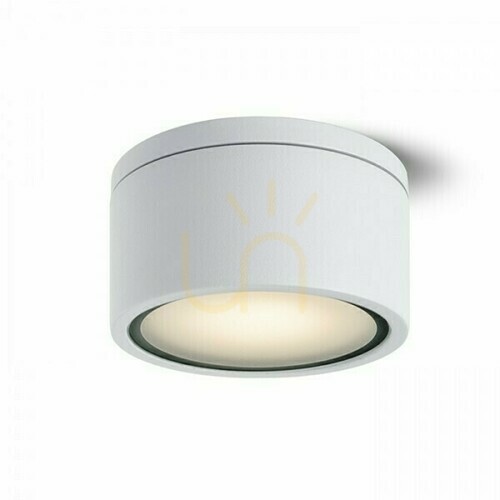
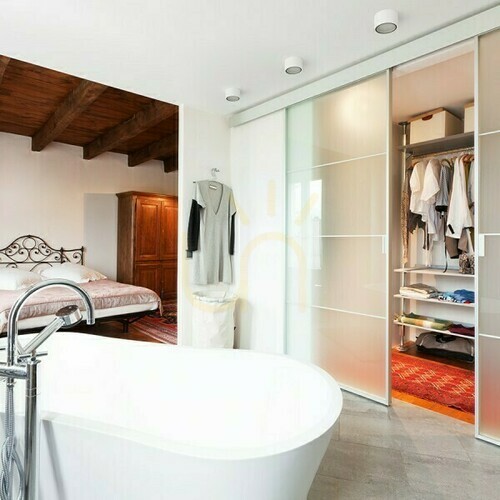
A flush ceiling light – a fitting mounted directly to the ceiling, with no suspension – beats every other lamp in the bathroom for four reasons:
- It steals no height. A typical apartment bathroom is 2.4–2.5 m tall; a pendant over your head is a luxury there is no room for. A fitting 6–10 cm deep simply gets out of the way.
- A sealed version is easy to find. A closed shade sitting flush against the ceiling favours tightness, though what actually decides moisture resistance is the declared IP class – and it is precisely among flush ceiling lights that IP44-and-up fittings are easiest to find.
- It gives even, diffused light. An opal shade brightens the whole room without hard shadows – the perfect base layer, later complemented by light at the mirror.
- It needs no ceiling rebuild. Unlike recessed spots, a ceiling light mounts to an ordinary ceiling in place of the old lamp – no suspended ceiling, no chiselling.
Bathroom zones and what IP44 really means
The IP code (Ingress Protection) describes a fitting’s resistance to solids and water. The first digit covers dust and touch protection, the second – water, and that is the crucial one in a bathroom:
- IP44 – protection against water splashes from any direction; the bathroom standard, sufficient wherever the fitting has no direct contact with the shower stream,
- IP54/IP55 – better dust protection (full dust-tightness only comes with a first digit of 6), and with IPX5 also resistance to water jets,
- IP65 – a dust-tight fitting resistant to water jets from any side (though not to immersion or pressure washing) – the choice with a safety margin right over the cubicle.
Electrical standards divide the bathroom into zones: zone 0 is the inside of the bath or shower tray (only extra-low-voltage SELV fittings, usually 12 V, rated at least IPX7, may be installed there); zone 1 reaches 2.25 m from the floor above the bath and tray – the standard requires at least IPX4 here, and IPX5 wherever water jets can be expected; in practice IP65 is the calmest choice. Zone 2 is the 60 cm belt around them, where IP44 suffices. With an open shower without a tray, the zones are measured from the fixed water outlet (within a 1.2 m radius). Outside the zones the standard no longer imposes an IP class, but in a small, steamy bathroom an IP44 bathroom ceiling light is the sensible minimum for the entire ceiling – the price difference is small and the peace of mind considerable. We’ve covered the full map of zones and regulations in a separate post on IP ratings on this blog; here we keep to the practical essence.




A ceiling light over the shower and bath: when to pick IP65
The most common question is: “can I mount a ceiling light directly over the cubicle?”. The answer: yes, provided it is properly sealed. Zone 1 reaches 2.25 m from the floor – a ceiling at 2.4–2.5 m can formally sit outside it, but steam and splashes don’t read the standards, so directly above the cubicle an IP65 bathroom ceiling light works best: dust-tight, resistant to water jets, and unbothered by a shower head accidentally pointed upwards. Over a bath that nobody sprays towards the ceiling, IP44 fittings mounted above 2.25 m serve well in practice – but if you are buying one lamp for years to come, the surcharge for IP65 is a sensible safety margin.
Three practical tips:
- In cubicles with a rain shower head the steam rises more intensely than with a regular shower – an argument for IP65 even with a high ceiling.
- A ceiling light with a motion sensor is an underrated comfort: the light greets you at the door when your hands are full of towel, and switches itself off – great for a guest bathroom and night-time visits.
- Versions with switchable colour temperature (3000/4000 K) let one fitting handle both the morning wake-up and the evening wind-down – the switch usually hides in the fitting or responds to a double flick of the wall switch.


How much light a bathroom needs: lumens and number of points
A practical rule of thumb (indicative, not normative) for general bathroom lighting is around 300–500 lm per square metre, depending on the wall colours and the amount of chrome and mirrors. Translated into typical sizes:
- a 3–4 m² bathroom – a single ceiling light of 1200–2000 lm at the centre of the ceiling is entirely enough as the base layer,
- a 5–7 m² bathroom – aim for 2000–3000 lm: one stronger fitting, or two smaller ones placed so no corner drowns in shadow,
- a bathroom with a separate shower or WC nook – every architectural “bay” deserves its own point of light; a single central fitting will leave it in half-darkness.
Dark tiles can swallow up to half the light – a bathroom in graphites and blacks needs the upper end of those values. And conversely: white, light stone and a large mirror let you go lower. Remember too that the ceiling light is only the general layer – the face at the mirror always needs its own lighting, more on which in a moment.
Colour temperature: for make-up and for relaxing
Light colour in the bathroom is a compromise between two scenarios:
- Morning and make-up: 4000 K. Neutral white renders skin and cosmetic colours well – 4000 K combined with a high CRI greatly reduces the risk of your foundation surprising you in daylight. Aim for CRI ≥ 90 (ideally with good red rendering, R9): at a low CRI the reds and beiges lie, and the complexion looks sallow no matter how much light there is.
- Evening and bath: 2700–3000 K. Warm white calms you down and doesn’t wake you up before sleep – in a bathroom where you take long evening baths, cold light is sabotage.
How to reconcile the two? Most simply with a fitting with switchable 3000/4000 K colour, or a two-circuit layout: a neutral ceiling light plus warm wall lights, switched separately. A dimmer (a “dimmable” fitting plus an LED-rated dimmer) takes care of the rest – the same bathroom shines at 100% in the morning and smoulders at half power at 11 p.m.
Round or square? Modern bathroom ceiling lights
The shape of a ceiling light is more an aesthetic decision than a technical one, but a few rules help:
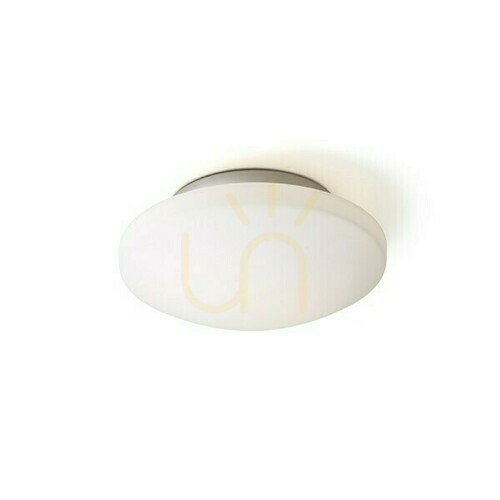
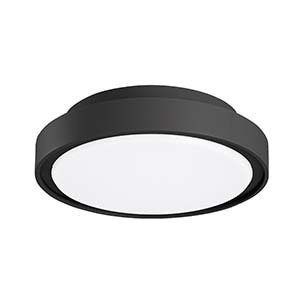
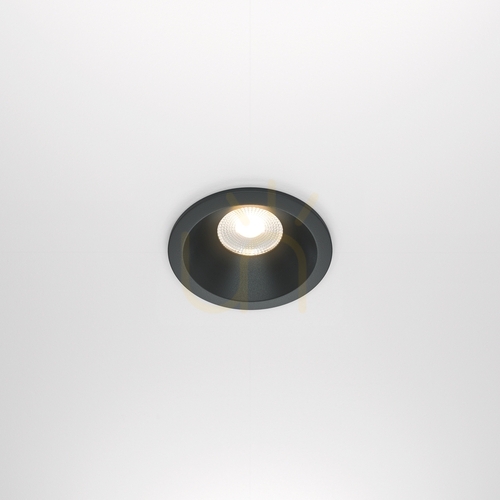
- A round fitting is the safe classic – its soft form matches basins, mirrors and fittings, which in bathrooms are almost always rounded. In small rooms a circle visually “blurs” the ceiling’s boundaries.
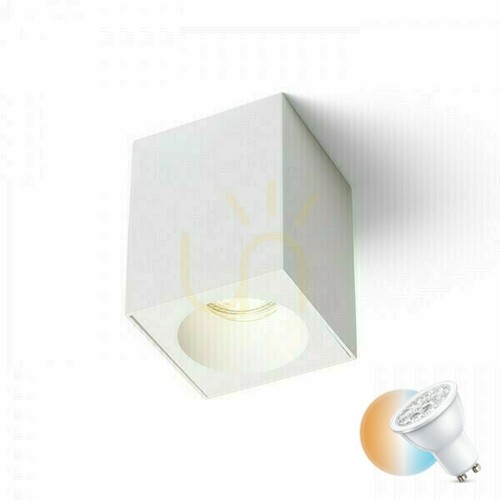
- A square fitting plays along with the geometry of tiles and large-format slabs – in modern, minimalist bathrooms it underlines the order of the lines. Align it parallel to the walls; askew it reads as a mounting error.
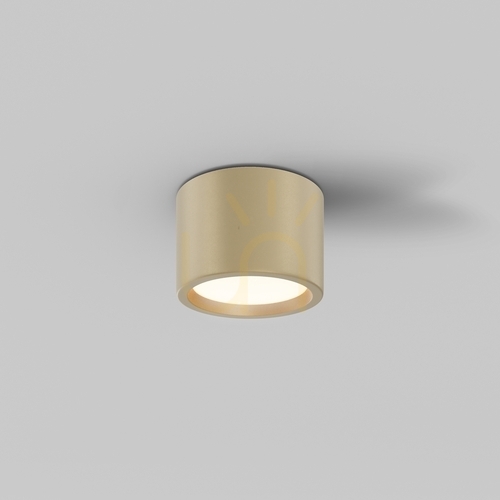
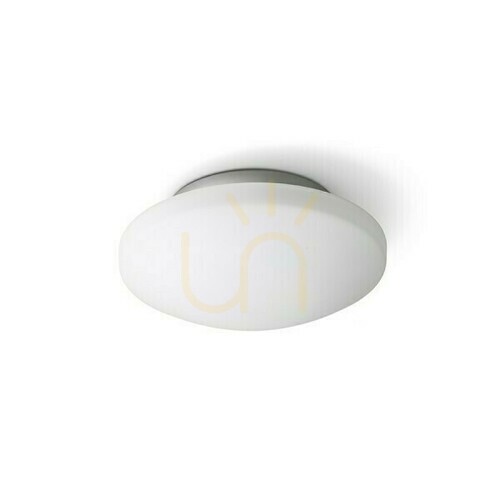
- An opal shade of glass or PMMA gives the most even light and the fewest shadows; metal rings and gold finishes (as in glamour-style fittings) add character but partly direct the light.
- Size: in a typical bathroom, fittings of 25–40 cm diameter work best; below 25 cm the fitting looks like a technical dot, above 45 cm it overwhelms a low ceiling.
Among modern bathroom ceiling lights you will increasingly find versions with integrated LED instead of replaceable bulbs: they are flatter and better sealed, but before buying check the declared diode lifespan and whether the module can be replaced.
Installation and maintenance
A flush ceiling light is the simplest fitting to install, but the bathroom has rules of its own:
- Leave the wiring to an electrician. A damp room is no place for experiments: bathroom circuits must be protected by a residual current device with a trip current no higher than 30 mA, and class I fittings require a properly connected earth wire (class II fittings, double-insulated, do without one).
- Check the gasket. The IP44/IP65 rating depends on the gasket between the shade and the base – when changing the bulb, tighten the shade evenly, and replace a damaged gasket before the fitting loses its class.
- Condensation is a warning sign. Brief fogging at a large temperature difference happens, but persistent moisture, droplets or streaks inside the shade mean the fitting has lost its seal – don’t ignore it.
- Cleaning: opal shades just need a wipe with a damp cloth every few weeks; limescale and steam marks come off with a mild glass cleaner. Avoid abrasive creams on plastics – they dull irreversibly.
The ceiling light isn’t everything: light at the mirror
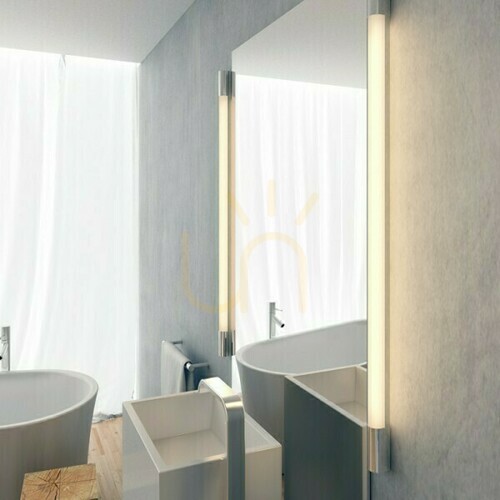
Even the best bathroom ceiling light has one limitation of physics: it shines from above, so it lights the top of your head, not your face. Shadows under the eyes and chin during the morning shave or make-up are not the fault of a too-weak lamp but of a missing second layer – at the mirror what counts is the light falling on the face (roughly 500 lx in the task zone), not the light from the ceiling. Complement the ceiling light with wall lights on both sides of the mirror (at eye level, one on each side) or an illuminated mirror – and the bathroom starts working like a professional dressing room. We’ve devoted a separate guide on this blog to mirror lighting.



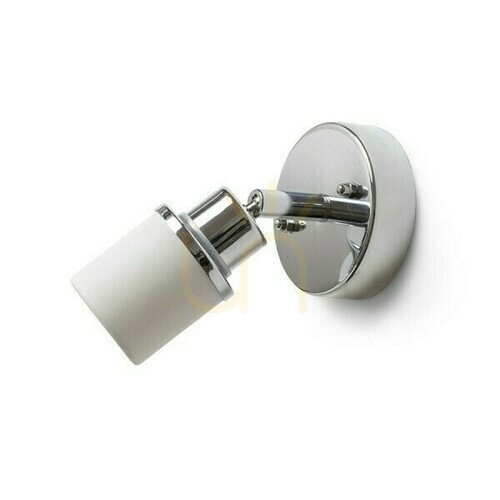


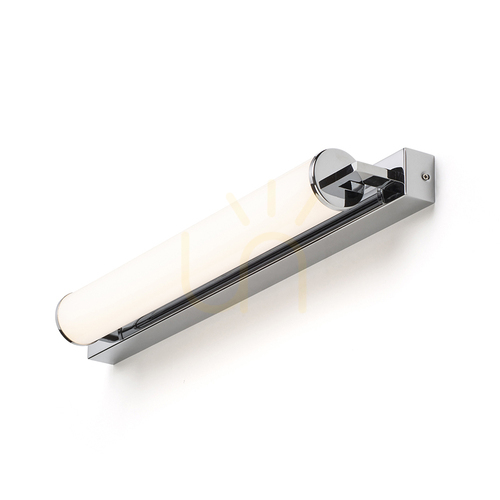


You will find all the sealed fittings – from ceiling lights to mirror-side wall lights – in the Bathroom lighting category, and the full overview of flush ceiling lights, including those for other rooms, in the Plafonds category.
Summary
Choosing a bathroom ceiling light comes down to five decisions: sealing (an IP44 fitting as the sensible minimum for the whole ceiling, IP65 right over the cubicle), luminous flux (300–500 lm/m², i.e. 1200–2000 lm in a small bathroom), colour (4000 K for make-up, 2700–3000 K for the evening – ideally a switchable or dimmable version), shape and size (a round 25–40 cm fitting as the safe classic, square for geometric interiors), and a second layer of light at the mirror, without which no ceiling will ever light a face. Start browsing in the Bathroom lighting category – every fitting lists its IP class there – and you will find ceiling lights for the rest of the home in the Plafonds section.
Andrzej Garbień


Maybe you will be interested in products from these categories?
Plafonds, Bathroom Lamps
Tags & Blog Categories