
Garden string lights and patio lighting – how to create a summery atmosphere after dark?
All it takes is a string of warm-toned bulbs above the table to instantly transform the terrace from an “after-dinner” spot into your favorite place to spend the evenings. Garden string lights are the cheapest and quickest way to create a summery atmosphere around your home—provided you choose a weather-resistant model and hang it properly. We’ll explain the difference between IP44 and IP65 string lights, how to calculate the required length of the string, and how to complement the lighting on your patio or balcony.

Table of Contents
- Why does a string of lights make such a difference?
- IP44 or IP65 – which string lights for outdoor use?
- How to calculate the length of a string light and hang it?
- String light bulbs – color and replacement
- Solar string lights or plug-in string lights?
- Patio lighting – what to pair with string lights?
- Balcony lighting in an apartment building
- Safety, connecting, and common problems
- Summary
Why does a string of lights make such a difference?
The secret of string lights lies in the height and nature of the light. Suspended 2.5–3 meters above the ground, they cast a warm, focused glow from dozens of small light bulbs—instead of a single powerful spotlight that illuminates the terrace “flatly” and is harsh on the eyes. The effect is reminiscent of candlelight: the faces at the table are softly lit, while the rest of the garden remains in a pleasant twilight. It’s exactly the kind of vibe we know from summer vacations in the south—and one that’s been all the rage on Polish patios for several seasons now.
IP44 or IP65—which string lights are best for outdoor use?
The IP rating indicates how resistant the fixture is to dust and water—and it determines whether the string lights will last outdoors for more than one season:
- IP44 – resistance to water splashes from any direction. The minimum length for a garland hung under a patio roof, pergola, or balcony. Many string lights have an IP44 rating, but sometimes this rating applies only to the light fixtures—always check the label on the specific product.
- IP65 – fully dustproof and resistant to water jets. Choose this option if the string is going to hang completely outdoors, between trees, or remain outside year-round (for regular pressure washing, go for IP66).
In addition to the IP rating, look for a rubber-coated cable (UV-resistant) and the ability to connect sections in series —this will help you avoid a tangle of extension cords in longer installations.




How do you calculate the length of the string lights and hang them?
The most common mistake is buying a string that’s too short. Here's how to calculate it:
- Measure the suspension travel (e.g. wall → pergola → tree → wall).
- Add 15–20% extra length for the overhang —a garland hung perfectly straight looks stiff. Slight curves between the support points are half the charm.
- You also need to account for the length to the outlet—some garlands have a short power cord.
Practical installation tips:
- Hang at a height of at least 2.2–2.5 m above the area where people walk or sit.
- For longer sections, run the garland along a steel support cable —this prevents the garland from sagging under its own weight and pulling on the cord.
- Use hooks with dowels for walls, and cable ties or clamp hooks for pergolas and trees. Avoid pulling the cord too tightly.
String light bulbs – color and replacement
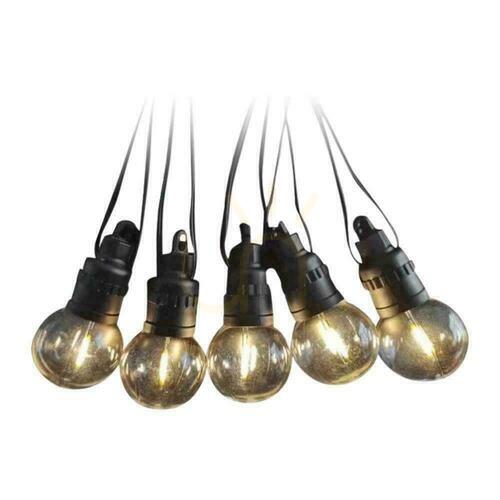
Bulbs with a very warm color temperature of 2200–2700 K look the most beautiful—drop- or ball-shaped filament LEDs (G45, S14) emit a golden, “holiday” glow. It’s best to avoid cool tones: a bluish white can ruin the whole atmosphere.
Choose string lights with replaceable bulbs (usually E27 sockets): a burned-out bulb will then cost just a few zlotys, rather than having to replace the entire string. You can find replacement and decorative models in the category Bulbs for Outdoor String Lights.
Solar string lights or plug-in string lights?
- A 230 V string light glows steadily all night long regardless of the weather, but requires an outdoor outlet or a garden extension cord.
- Solar string lights are wireless—the panel charges the battery during the day, and a twilight sensor turns the lights on in the evening. This is a great solution for places without a power source: at the far end of the garden, by the gazebo, or above the hammock. Just remember that the lighting duration depends on sunlight exposure and tends to be shorter in winter.
In garden arrangements, both types complement each other well: a 230 V string of lights above the table, solar accents in the back of the garden.


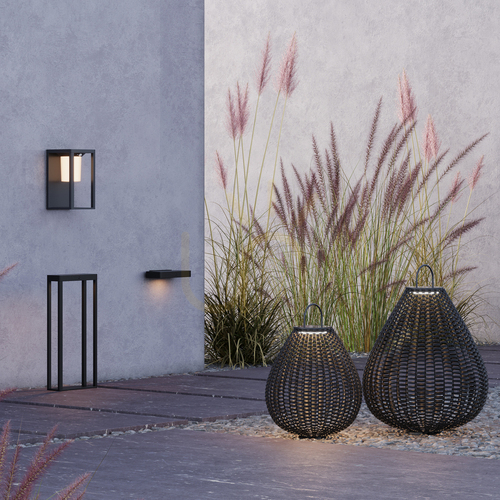
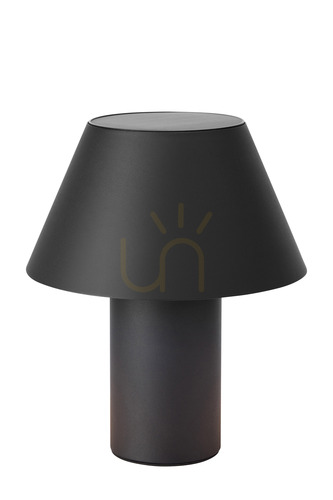
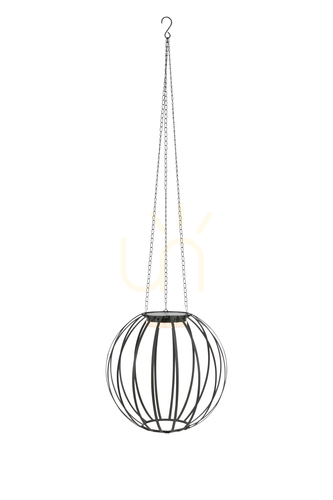
Patio lighting – what to pair with a string light?
String lights set the mood, but evening life on the patio needs two more elements:
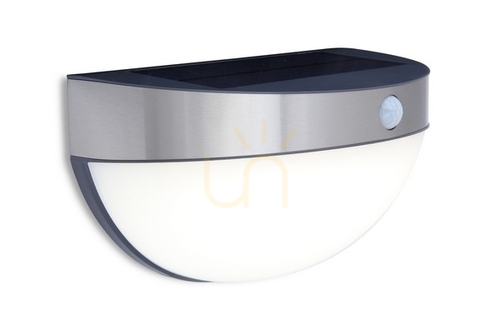
- Functional lighting at the entrance and by the grill – an outdoor wall sconce by the door (preferably with a twilight or motion sensor) lets you safely enter the house with a tray in your hands.
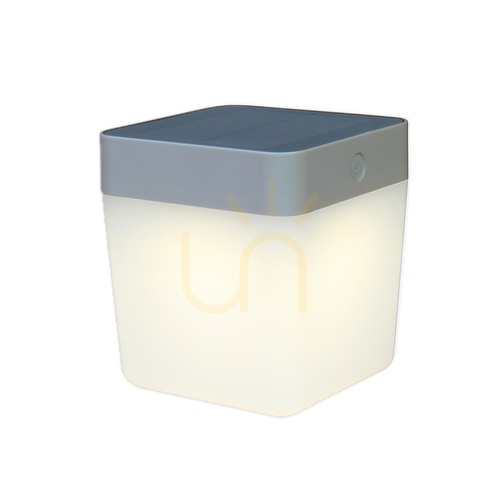
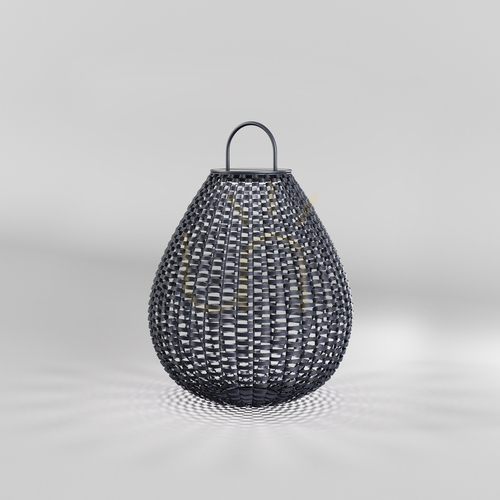
- Green accents – portable floor and table lamps, posts by the steps, illuminated planters, or garden spheres. Low-mounted lights make the terrace appear larger after dark.
Stick to a single light color (warm, 2700–3000 K) across all layers—the terrace will look cohesive, not like a supermarket parking lot.
Balcony lighting in an apartment building
The same rules apply to a balcony, just on a smaller scale. A string of lights draped along the railing or suspended overhead (using adhesive hooks), a single solar table lamp, and perhaps an LED strip under the windowsill—that’s all it takes to turn 4 square meters into an urban oasis. If you don't have an outlet on your balcony, choose solar-powered or battery-operated models. USB string lights can be powered by a power bank. Also, keep your neighbors in mind: downward-facing light and warm tones won’t shine into anyone’s windows.
Safety, connectivity, and common issues
A 230 V string light is an outdoor installation, so a few rules are mandatory:
- An outdoor outlet with a minimum rating of. IP44 and a circuit protected by a residual current device (RCD) —this protects against electric shock if water enters the connection.
- Connect only sets from the same manufacturer and system. String lights connected in series have a specified maximum number of segments (e.g. “up to 10 strings” or “up to X bulbs”). Exceeding this limit may cause a drop in voltage (the bulbs further down the string will glow dimmer) or overload the first plug.
- Keep the connectors off the ground, not in a puddle. Coil up any excess cord, and if necessary, protect the connections with a cover or self-fusing tape.
Why isn’t the string of lights working, or why is only half of it lit? The most common causes, starting with the simplest:
- None of the lights are on – check the fuse in the plug (many 230 V string lights have a replaceable fuse in the plug housing) and the outlet itself.
- Half of it doesn’t light up – in cheaper string lights, the bulbs are often connected in series: if one burns out, it causes the entire section to go dark. Replace the faulty bulb (which is why it’s a good idea to choose models with replaceable bulbs).
- Flickering or dimming – too many segments connected (voltage drop) or moisture in the connector.
- The solar light stays on for only a short time – dirty or shaded panel, worn-out battery (more in our guide on solar lights in winter).
Summary
The recipe for a successful terrace after dark is simple: a string light with a color temperature of 2200–2700 K and replaceable bulbs (IP44 under a roof, IP65 outdoors), hung with a slight overhang on a support cable, plus a functional wall sconce by the door and a few solar accents in the greenery. You can find all garden string lights, bulbs, and lamps in the categories Outdoor String Lights and Solar Lamps.
Victoria


Maybe you will be interested in products from these categories?
Outdoor String Lights, Bulbs for Outdoor String Lights, Outdoor Solar Lights
Tags & Blog Categories